Matthew Parris

Matthew Parris

Matthew Parris is a columnist for The Spectator and The Times.

I’ve found a little Eden in London

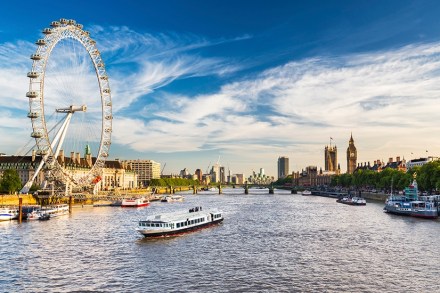
I’m not one of life’s early risers but an exception had to be made on Wednesday last week. In an event organised by Lord Chadlington (Peter Selwyn Gummer), Michael Gove was talking about ‘levelling up’ to an invited audience at the Corinthia hotel in London. This was a breakfast meeting, doors open at 7.45, and I wanted to hear Mr Gove, a politician I know and admire. So I was there. Gove was impressive. But in the end neither he nor the breakfast were what I’ll always remember about that morning. Around nine o’clock we tipped out on to the pavements by Embankment Tube station. It was a glorious morning, fresh and clear in the winter sunshine.

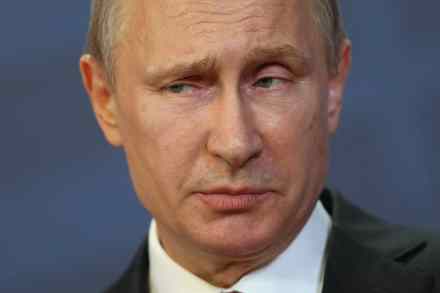
Taking Ukraine would finish Putin

‘Never interrupt your enemy,’ said Napoleon, ‘when he is making a mistake.’ A Russian invasion and occupation of Ukraine would prove (perhaps, by the time this Spectator is published, ‘will’ prove) a terrible mistake. Were it not for the death and despoliation such a mistake would bring — an outcome one could never welcome — the response to Vladimir Putin’s implicit threats should surely be: bring it on! When we told Russia they’d only be hurting themselves, did we not mean it?

The Chancellor’s horrible task ahead

Whether Rishi Sunak is prime minister or still chancellor this spring, fate is handing him a poisoned chalice. Looking back, I cannot remember a time when the British people were readier to believe that responsibility for their welfare lies in the hands of the state. Looking ahead, I see a time fast approaching when the state will appear unusually powerless to help us. The gap between what people have come to expect and what government can deliver has never been wider. And at least in part, it’s a virus that’s to blame. The pandemic from which we’re emerging has elevated the role and power of the state, reliance upon the state, the moral justification for state intervention, and trust in the state, to levels unprecedented since the second world war.

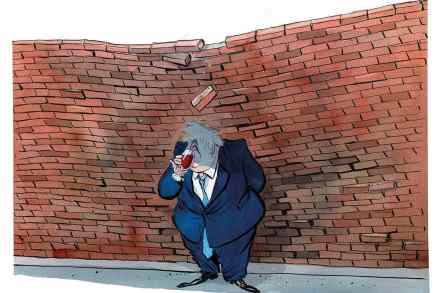
The collapse: how Red Wall MPs turned on Boris

39 min listen

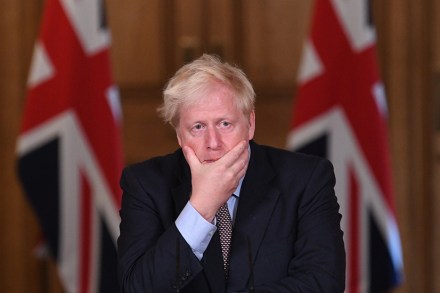
In this week’s episode: Will the Red Wall crush Boris Johnson? In this week’s Spectator, our political editor James Forsyth and our deputy political editor Katy Balls report on the plot to oust the Prime Minister by Red Wall MPs, and No.10’s battle to save Boris. They join the podcast to give their up to date diagnosis. (00:43)Also this week: How to save the BBC?This week Nadine Dorries announced that she is planning a licence fee freeze. In the Spectator this week Paul Wood, a veteran journalist of the BBC writes about his love-hate relationship with the broadcaster. He joins the podcast now along with Domonic Minghella, writer, producer and former showrunner of the BBC’s Robin Hood. (14:45) And finally: Is it moral to do good with bad money?

Good things can come from guilt

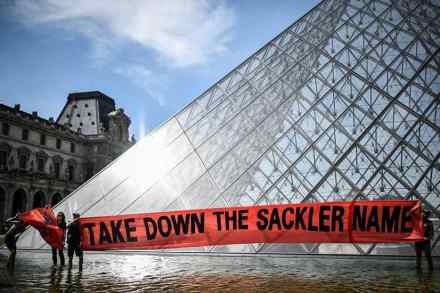
I do not know anyone in the Sackler family. I wouldn’t even have heard of them were it not for recent reports of their return to the large-scale philanthropy with which their name was once associated. These reports have led to criticism of institutions that accepted Sackler charity: the well-worn argument being that the family’s businesses made a fortune from aggressively promoting the use of opioids in America, and opioids have caused serious addiction problems for millions of Americans. Sam Leith wrote thoughtfully about the controversy on the Spectator website last week (‘We should be thankful for the Sackler family’s philanthropy’).

How to wrongfoot an anti-vaxxer

The headline looked promising: ‘How to argue with a Covid anti-vaxxer.’ And, yes, a Times colleague had put together a good, informative feature assessing some of the bogus arguments flying around in this pandemic. But it was not what I was looking for. Since undergraduate days I’ve been fascinated by the category of mental imbalance we call paranoia, believing its milder manifestations to be present to some degree in all of us. Mass paranoia is plainly a strand in the anti-vax movement, and I’ve been listening to a powerful BBC Radio 4 and podcast series researched and presented by Jon Ronson, Things Fell Apart.

The conflict at the heart of the migrant question

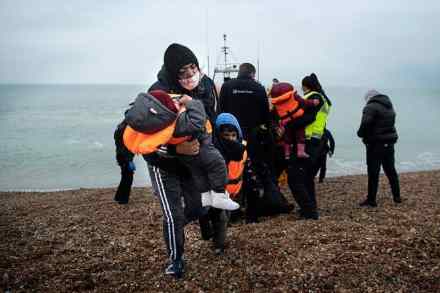
A friend, a Cambridge professor, passing my old college last week, was startled to encounter a young lady standing outside shouting something and carrying a placard exhorting Mathew [sic] Parris to [expletive deleted] off. He wondered if I knew what this was all about. I don’t, but suppose it relates to my Times column arguing (about asylum seekers) that we do not have an equal obligation to all, but rather concentric circles of obligation at the centre of which we stand, the first circle being to self and family, the next to close friends, neighbours and community, then to nation and, finally, to all mankind.

Anticolonialists have their myths too

Much is now being made of the evils of empire. As a child of empire I bridle. I acknowledge the wrong and injustices of colonialism, the racism, and the greed too. I accept that a re-balancing of history was due. It’s good that the darker side of the picture has now moved into the light. But from my own boyhood experience I know that mixed among the aims of empire there were also idealism, principle, and a belief in the betterment of those we governed. And success: there were things to be proud of. The roots of my mix of pride and shame about empire are the impressions a white boy in Africa formed of the continent on which our forefathers had landed. I cannot ignore, as some anticolonial opinion does, the situation they came to.

Why can’t we remember our first few years?

I begin this column on a train from Paris to London. Opposite me are a mother and baby. I don’t know them and will probably never see them again. The baby is nine months old and called Gabriel. A genial and relaxed child, he is grinning at me and waving his soft-toy giraffe. He’s wearing bootees, white socks polka-dotted with little red hearts, pale burgundy trousers and a grey top. He seems uninterested in northern France flashing past our window, though his mother has held him up to look; but he is taken with this new stranger, your columnist. And I reflect: is it not very odd indeed — does it not require explanation — that Gabriel will never remember any of this? It preoccupies him now.

Do you really need to see the GP in person?

Only later, perhaps even a decade later, as the pandemic of 2020-22 shrinks in our rear-view mirror, may we be able to assess its enduring consequences. So I am only speculating when I suggest that one of these may be the beginning of the slow death of general practice in the United Kingdom. And, no, this will not be a column attacking Britain’s GPs, whom I think to be mostly dedicated and hard-working men and women whose careers are demanding, whose work is difficult, and who are not paid excessively for the hours and expertise they bring to their vocation. Rather as with the class for which we use the generic term ‘politicians’, public discontent about ‘GPs’ is felt towards the generality.

The case for road pricing

Thornton Wilder remarked that there are individuals who fall in love with an idea long before its appointed rendezvous with history. We hurl ourselves against the indifference of the age. It is now four decades since one of my first columns was published in London’s Evening Standard. In it I proposed an idea of which (if you read on) you’ll hear more. I got no response. It’s nearly 20 years since I wrote essentially the same piece as a whimsical side column for the Times. Labour’s Alistair Darling had called for debate on the idea. It never happened and my column attracted little notice. Fifteen years later, excited by a competition the Wolfson Foundation ran for the best proposal for implementing the idea, I wrote a serious 1,000-word column for the Times.

We should never have been in Afghanistan

Two important studies have been published this autumn on the apparent failure of our almost 20-year war in Afghanistan. In the Times Literary Supplement my friend Rory Stewart has been reviewing The Afghanistan Papers by Craig Whitlock; and last week I went along to the launch at the Frontline Club in Paddington of the BBC correspondent David Loyn’s The Long War, my copy of which has just arrived. Both look like brilliant accounts of what went wrong, both will surely prove useful guides to a lamentable episode in modern statecraft, but both — and Rory too in his own TLS assessment and recommendations — appear to me to be missing the point.

The life of an ambassador’s wife

‘One day,’ she writes, ‘we had the Minister for Northern Ireland for the night. He arrived wearing a kilt, which must have made the evening memorable for our German guests.’ Writing here (I should explain) is the widow of Sir Julian Bullard, then ambassador in Bonn, the West German capital. ‘Harry [the butler] beckoned to me and whispered “Come and see his bed”… so I followed Harry upstairs. The bed was neatly turned down. Tucked in, with only their heads showing, was a line of stuffed animals.’ The pair are surprised by the minister himself, nipping back to fetch papers. ‘He introduced each animal to me in turn. “Never travel without them. Couldn’t sleep if I did.

Champagne, sex or the Tories: what could you live without?

In idle chatter the other evening, somebody pooh-poohed champagne. He was a brave soul because in certain circles — and this was among them — one is presumed to think the presence of champagne a mark of opulence, extravagance, a special occasion, a treat. In even more exalted circles, of course, a display is made of not thinking it a treat but a staple, and babbling in a familiar manner about ‘Bolly’ as though one had proceeded straight from the breast to the bubbly without passing through lemonade on the way. ‘To be honest,’ said my friend, ‘if Fate were to touch my shoulder and whisper that I would never drink champagne again, would I be bothered? It’s perfectly -pleasant of course, but not something I’d miss much.

Is it cruel to eat fish?

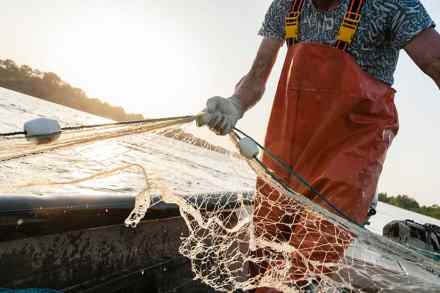
It was a hot late evening on the Greek island of Tinos, and we were sitting at a quayside restaurant outdoors, enjoying a nightcap glass of ouzo. One or two other tables were still occupied by diners, all of them Greek. Foreign tourism is only slowly coming back but Greece has a strong internal holiday market, and Tinos, a lovely island, is only an hour or two by ferry from the mainland. A couple of children, small girls, were playing around the edge of the quay. The tranquil scene was now disturbed. The girls were looking in alarm at something under an unoccupied table. A big fish, beached, more than a foot long, was flopping around on the concrete, gasping. Other diners looked on, unconcerned, but I thought the children were distressed.

The case for travelling abroad

I’m off. In the week when you may read this, my partner and I will be winging our way to the European mainland, exploring, visiting friends, and immersing ourselves in new places, among new people who speak languages other than our own. Even as I write this, I can anticipate a sour response from some who read it. Over the past year I’ve learned that any mention of travelling abroad draws from certain quarters three types of disgruntlement. Three, in fact, of the Seven Deadly Sins. The first is Envy. ‘Oh, bully for you!’, ‘It’s all right for some’, etc. This I disregard.

The death of the dream my family fought for

Before plunging into a vexed question, it’s sometimes wise to point out that one is aware how vexed it is. I haven’t been living in a cave these past few years. Even as I speak, doctoral theses are doubtless being written on ‘identity politics’: whole books have been devoted to what has become very much the topic of the day, and (without always being precise about what we mean by the term) we in the world of politics and the political media sometimes seem to talk of little else. But during a recording for my BBC Radio 4 Great Lives programme this week, it came home to me what these ideas have displaced. Out have gone the beliefs and ideals that meant so much to me as a boy.

My voyage back through the landmarks of my life

I was looking forward to my dinner at Daquise in South Kensington, a Polish restaurant that’s been there for ever yet feels curiously up-to-date; but that wasn’t until 7.30. I’d finished my afternoon’s work, I’d brought in the washing and written two thank-you cards, and it was still only five o’clock. I hate hanging around. By Tube to South Ken is only half an hour — so what to do? ‘Why not go the long way, on foot and by river?’ I thought. My flat is by the Thames in east London, so I could walk along the river to the Canary Wharf jetty and hope for a river bus to Chelsea.

The difference between looking and seeing

By the side of the road from Sudbury in Derbyshire to Ashbourne, there is a lone eucalyptus tree. This is rolling country, small fields bordered by oak, ash and hawthorn. A eucalypt in this unlikely place stands out, its grey-green foliage so different from the more vivid greens of rural England, its pale trunk slimmer, its trailing swishes of narrow leaves more elegant, its thin branches more graceful than those of its stout and stubby British counterparts. You notice. You wouldn’t if you were in Australia.

Boris Johnson has defied the pro-lockdown groupthink

Should the name of Dominic Cummings ever make it into the Oxford Dictionary of National Biography, there’s one Cummings phrase our successors are sure to see. ‘Weirdos and misfits’ were what he valued. He said so in his blog, describing his preferred applicants for a job with his team at No. 10. I like the phrase. Such misfits can so often light the pathway where more timid minds and characters lose their nerve or their way. Cummings has always valued disruptors; always railed against Orwell’s ‘groupthink’; always rated the kind of people who question the conventional wisdom, the nostrums of the hour. And good for him. He’s one of them, and we need such people.