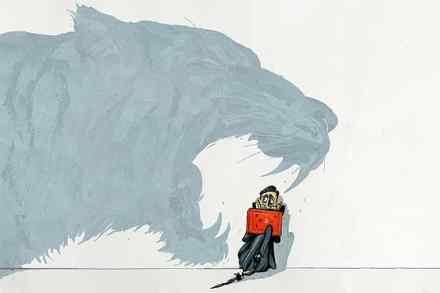
Why does Thatcher loom over the Tory leadership race?
13 min listen
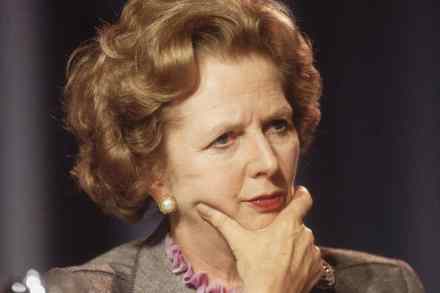
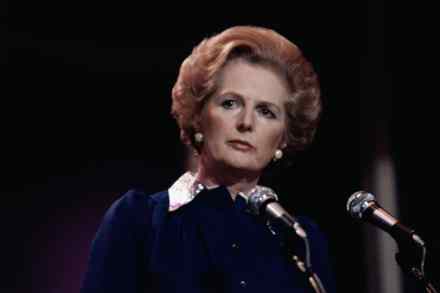
Isabel Hardman speaks to Fraser Nelson, James Forsyth and Matthew Parris about the influence Margaret Thatcher exerts over the Conservative leadership race.
Matthew Parris is a columnist for The Spectator and The Times.
13 min listen
Isabel Hardman speaks to Fraser Nelson, James Forsyth and Matthew Parris about the influence Margaret Thatcher exerts over the Conservative leadership race.
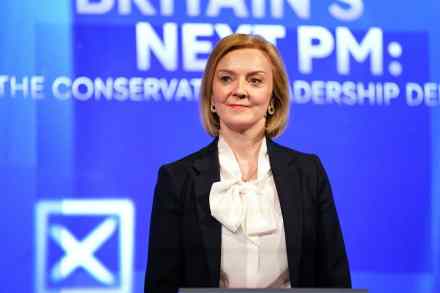
The late Senator Lloyd Bentsen was 26 years older than the young Senator Dan Quayle when in 1988 they crossed swords in a debate in Omaha, Nebraska. Their exchange became famous. Quayle had been comparing himself with the late John F. Kennedy. Old Bentsen hit back: ‘Senator, I served with Jack Kennedy. I knew Jack Kennedy. Jack Kennedy was a friend of mine. Senator, you’re no Jack Kennedy.’ As it happens, I’m 26 years older than Liz Truss. So it’s a temptation to which I yield to quote that exchange, now that Ms Truss, explicitly, both in her wardrobe and the photo opportunities she contrives, is inviting comparison with the late Baroness Thatcher. I can’t quite mimic Bentsen’s claim.
Male Tory MPs molesting young men? Buttock-squeezing and groin-fumbling at a private members’ club? A middle-aged politician slipping into a dressing-gown ‘like a pound shop Harvey Weinstein, with his chest and belly hanging out’ to massage the neck of an Olympic rower? Such are the allegations. ‘What,’ you may think, ‘is the world coming to? It was never like this in my day!’ How wrong you’d be. It was very much like this in the 20th century. There is in fact something tragically old-fashioned about the whole story.
One is not usually surprised by opinions volunteered to parliamentary hopefuls by voters on whose doors the candidate has knocked; but last week, dropping in on the Tiverton and Honiton by-election, I was taken aback by a subject that came up a number of times. It seemed so relatively unimportant. The door-knocker in this case was Richard Foord, the Liberal Democrat candidate in a safe Conservative seat that looked in imminent danger of falling to his party. I was following him around as he canvassed in the Devon town of Honiton. You may know by the time you read this whether the Conservatives clung on, but you don’t need reminding that they were up against it. I should say at once that my sample of opinion was minuscule: I had perhaps an hour with Mr Foord.
‘Steady on, old chap. You’re a bit hard on the boy.’ The arm around my shoulder was that of Boris Johnson’s father, Stanley. I remember where we were standing – it was outside the entrance to the Birmingham International Convention Centre – and I remember the occasion: a Conservative party conference. But which one? All I can say is that this was a long time ago. It was after Johnson minor had become Mayor of London – he was speaking at that conference – and it must have been after (and probably responding to) a column I wrote in the Times more than six years ago: ‘Tories have got to end their affair with Boris.
I have just read an extraordinary new book. It’s by a close and old pal whom I’d count as one of my best friends. He was my lodger in London for ten years. His book is autobiographical. And I now realise I never knew him at all. In Don’t Ask Me About My Dad, Tom Mitchelson charts a life story that is entirely strange to me, and shocking. And yet the weird thing is that I know many of the people in it – or thought I did. His late father, Austin, who helped launch the Sunday Sport, I met and thought a likeable if flaky chap, and good company. He turns out to have been the most appalling wife-beater, liar, drunkard and debtor.
There has been a considerable hoo-hah in the press about the recent World Health Organisation report estimating Covid-related deaths internationally during the pandemic. The measurement chosen has been ‘excess deaths’ – the difference between the number who died during the pandemic and the number who, on average, died in the same place before the pandemic struck. This has enabled us to compare the British figures with excess deaths across the rest of Europe per 100,000 of the population; and it appears we’re not, after all, at the top of the death-league, but near the middle. Though its methodology has attracted serious criticism, I was struck by the report.
I was walking last week from Canary Wharf tube station to my flat in east London – not far, little more than a mile, and the walk follows the Thames on the north side, away from traffic: lovely. But as I headed for the river, I saw trouble. A thick curtain of rain had descended over Blackheath across the Thames, and the wind was blowing strongly from that direction. The storm had not yet reached Greenwich, still clear, but the curtain was moving. After Greenwich the rainstorm would cross the river – and hit me. Umbrella-less, I quickened my pace. Few others seemed to have noticed. People were ambling around, some sitting at outside tables at restaurants, some chatting on park benches.
Glasses chinked. From massive chandeliers, lights glittered beneath the high vaulted ceiling; heroic statuary around the carved stone walls stared eyelessly down; heraldic flags draped from brass rods; and a sense of history and of – how shall I say? – consequence hung in the air. We were dining at the Guildhall in the City of London, and from my place at the top table, flanked by judges, eminent barristers, our host Lord Grabiner QC of One Essex Court chambers, and the justice minister Lord Wolfson of Tredegar, one could survey the whole hall: perhaps 400 of the brightest and best in the English legal world. These were not, for the most part, old men. The occasion was the Times’s annual law awards: an essay competition for young lawyers.
At the heart of the West’s response to Russia’s invasion of Ukraine sits an ambiguity that it is convenient, perhaps even necessary, for our political leaders to maintain. If we can turn the clock back on Putin’s foolish endeavour – if he can be persuaded to withdraw his troops, disavow Russia’s territorial ambitions and return to the status quo ante – then, with Ukraine again an autonomous and independent country, does the West also return to the status quo ante in our own dealings with Russia?
I’m not one of life’s early risers but an exception had to be made on Wednesday last week. In an event organised by Lord Chadlington (Peter Selwyn Gummer), Michael Gove was talking about ‘levelling up’ to an invited audience at the Corinthia hotel in London. This was a breakfast meeting, doors open at 7.45, and I wanted to hear Mr Gove, a politician I know and admire. So I was there. Gove was impressive. But in the end neither he nor the breakfast were what I’ll always remember about that morning. Around nine o’clock we tipped out on to the pavements by Embankment Tube station. It was a glorious morning, fresh and clear in the winter sunshine.
‘Never interrupt your enemy,’ said Napoleon, ‘when he is making a mistake.’ A Russian invasion and occupation of Ukraine would prove (perhaps, by the time this Spectator is published, ‘will’ prove) a terrible mistake. Were it not for the death and despoliation such a mistake would bring — an outcome one could never welcome — the response to Vladimir Putin’s implicit threats should surely be: bring it on! When we told Russia they’d only be hurting themselves, did we not mean it?
Whether Rishi Sunak is prime minister or still chancellor this spring, fate is handing him a poisoned chalice. Looking back, I cannot remember a time when the British people were readier to believe that responsibility for their welfare lies in the hands of the state. Looking ahead, I see a time fast approaching when the state will appear unusually powerless to help us. The gap between what people have come to expect and what government can deliver has never been wider. And at least in part, it’s a virus that’s to blame. The pandemic from which we’re emerging has elevated the role and power of the state, reliance upon the state, the moral justification for state intervention, and trust in the state, to levels unprecedented since the second world war.
39 min listen
In this week’s episode: Will the Red Wall crush Boris Johnson? In this week’s Spectator, our political editor James Forsyth and our deputy political editor Katy Balls report on the plot to oust the Prime Minister by Red Wall MPs, and No.10’s battle to save Boris. They join the podcast to give their up to date diagnosis. (00:43)Also this week: How to save the BBC?This week Nadine Dorries announced that she is planning a licence fee freeze. In the Spectator this week Paul Wood, a veteran journalist of the BBC writes about his love-hate relationship with the broadcaster. He joins the podcast now along with Domonic Minghella, writer, producer and former showrunner of the BBC’s Robin Hood. (14:45) And finally: Is it moral to do good with bad money?
I do not know anyone in the Sackler family. I wouldn’t even have heard of them were it not for recent reports of their return to the large-scale philanthropy with which their name was once associated. These reports have led to criticism of institutions that accepted Sackler charity: the well-worn argument being that the family’s businesses made a fortune from aggressively promoting the use of opioids in America, and opioids have caused serious addiction problems for millions of Americans. Sam Leith wrote thoughtfully about the controversy on the Spectator website last week (‘We should be thankful for the Sackler family’s philanthropy’).
The headline looked promising: ‘How to argue with a Covid anti-vaxxer.’ And, yes, a Times colleague had put together a good, informative feature assessing some of the bogus arguments flying around in this pandemic. But it was not what I was looking for. Since undergraduate days I’ve been fascinated by the category of mental imbalance we call paranoia, believing its milder manifestations to be present to some degree in all of us. Mass paranoia is plainly a strand in the anti-vax movement, and I’ve been listening to a powerful BBC Radio 4 and podcast series researched and presented by Jon Ronson, Things Fell Apart.
A friend, a Cambridge professor, passing my old college last week, was startled to encounter a young lady standing outside shouting something and carrying a placard exhorting Mathew [sic] Parris to [expletive deleted] off. He wondered if I knew what this was all about. I don’t, but suppose it relates to my Times column arguing (about asylum seekers) that we do not have an equal obligation to all, but rather concentric circles of obligation at the centre of which we stand, the first circle being to self and family, the next to close friends, neighbours and community, then to nation and, finally, to all mankind.
Much is now being made of the evils of empire. As a child of empire I bridle. I acknowledge the wrong and injustices of colonialism, the racism, and the greed too. I accept that a re-balancing of history was due. It’s good that the darker side of the picture has now moved into the light. But from my own boyhood experience I know that mixed among the aims of empire there were also idealism, principle, and a belief in the betterment of those we governed. And success: there were things to be proud of. The roots of my mix of pride and shame about empire are the impressions a white boy in Africa formed of the continent on which our forefathers had landed. I cannot ignore, as some anticolonial opinion does, the situation they came to.
I begin this column on a train from Paris to London. Opposite me are a mother and baby. I don’t know them and will probably never see them again. The baby is nine months old and called Gabriel. A genial and relaxed child, he is grinning at me and waving his soft-toy giraffe. He’s wearing bootees, white socks polka-dotted with little red hearts, pale burgundy trousers and a grey top. He seems uninterested in northern France flashing past our window, though his mother has held him up to look; but he is taken with this new stranger, your columnist. And I reflect: is it not very odd indeed — does it not require explanation — that Gabriel will never remember any of this? It preoccupies him now.
Only later, perhaps even a decade later, as the pandemic of 2020-22 shrinks in our rear-view mirror, may we be able to assess its enduring consequences. So I am only speculating when I suggest that one of these may be the beginning of the slow death of general practice in the United Kingdom. And, no, this will not be a column attacking Britain’s GPs, whom I think to be mostly dedicated and hard-working men and women whose careers are demanding, whose work is difficult, and who are not paid excessively for the hours and expertise they bring to their vocation. Rather as with the class for which we use the generic term ‘politicians’, public discontent about ‘GPs’ is felt towards the generality.