Matthew Parris

Matthew Parris

Matthew Parris is a columnist for The Spectator and The Times.

My cure for the common cold

You really don’t want to know about my coughs and sneezes, particularly during the festive season, but bear with me because this it isn’t really about my sniffles. My argument applies to everyone, and it’s cheerful. All of us have a lifetime of experience of seasonal colds and flu, starting with the fact that they don’t always happen in winter. Mine is typical of many. Every year, often about this time, I get a fairly bad cold. Sometimes two in a year. I call it ‘flu’ and women call it ‘man flu’ but let’s not bandy names: it starts with a sudden sore throat and one or two uncomfortable nights. Within a few days this has passed and I feel better — but left with a hacking cough.

The importance of giving offence

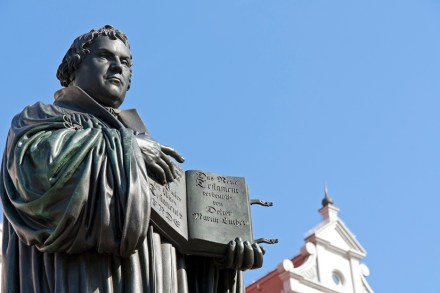
As dons at Cambridge vote on a new protocol on constraints to free speech, we mark this month the 500th anniversary of the public burning of Martin Luther’s books outside the west door of Great St Mary’s, the university church at Cambridge. After the 1517 publication of his famous 95 Theses, raging against the Church’s sale of ‘indulgences’ that purported to pardon sin in exchange for money, Luther had been denounced by Pope Leo X in a papal Bull. This accused him of (among other things) saying things that were ‘offensive to pious ears’. Luther then burned the papal Bull on 10 December 1520, giving further offence. He was excommunicated the following year. Make no bones about it: Martin Luther intended to offend.

Are the Lib Dems too soggy?

17 min listen

In this week's Spectator, Matthew Parris asks why the Lib Dems have lost their ideological backbone. On the podcast, he discusses this 'soggification' of the party with Katy Balls and Polly Mackenzie, former special adviser to Nick Clegg and now chief executive of the think tank Demos.

Soft-left squatters have taken over the Lib Dems

I was never afraid of Jeremy Corbyn, never afraid of Momentum. I’ve never really feared Britain’s hard left at all. They’re wrong, of course, and they can do some serious localised damage; but their ideology is so obviously daft and has so comprehensively failed wherever in the 20th century it was tried that they occupy in my mind a position similar to that of Satanists. Grisly, yes, but a threat to civilised society? Hardly. The hard left always gets found out in the end, and always will. Their doctrines have no natural appeal to the middle-of-the-road British (which is most of us) and in the unlikely event they were ever elected to government, they’d soon enough crash the car.

It’s shameful how we have locked down our elderly

There’s a lot I don’t know about care home visits during this pandemic. I don’t know how straightforward it would be to find a way for close relatives to make proper and regular visits to the very frail. I don’t know details of the arrangements for staff in those care homes to work there and go home afterwards, as hospital staff do too. I don’t know the floor-plans of the thousands of care homes in the United Kingdom, nor how each could be adapted to allow high-priority visits from a relative. There are some 15,000 homes in England alone, and some half a million old people living in them. I don’t know how the management or staff of these homes would view making it easier for visits by relatives, or whether they would have the staffing to arrange this.

Matthew Parris, Lionel Shriver and Douglas Murray

25 min listen

On this episode, Matthew Parris talks about how, on free school meals, he's truly fallen behind the zeitgeist; Lionel Shriver on why she's voting for Biden, warts and all; and Douglas Murray's reflections from America in the days before the election. Tell us your thoughts on our podcasts and be in for a chance to win a bottle of Pol Roger champagne by filling out our podcast survey. Visit spectator.co.uk/podcastsurvey.

Why I’m ducking the Rashford debate

Moments arrive when it becomes clear you’re losing the zeitgeist. Whatever might be the spirit of the era, you don’t get it any more. For me such a moment occurred last week as I followed news and commentary about the footballer Marcus Rashford’s campaign for meal vouchers for disadvantaged children during the school holidays. A Nottinghamshire Conservative MP, Brendan Clarke-Smith (Bassetlaw), had spoken in the Commons debate. ‘Where is the slick PR campaign encouraging absent parents to take some responsibility for their children?’ he asked. ‘I do not believe in nationalising children.’ ‘Brilliant!’ I thought. And well put.

Get yourself to Sweden – while you still can

An idea gains ground that we shouldn’t go abroad any more: that the very act of travelling without urgent reason is somehow irresponsible. I don’t subscribe to this. To me, travel has always been such an important and productive part of life, a source of knowledge and happiness. So while I can travel, I will. But quarantine is making it harder. My partner and I belong to what one survey reports is the 18 per cent of quarantined people who actually do stay at home. Much as I love our Derbyshire home, 14 days quarantined in one corner of the Peak District is a serious deterrent from visiting most of the rest of the world. But not from visiting Sweden, yet.

The memo Dominic Cummings never sent

There’s something about Dominic Cummings I will always like, and perhaps partly it’s the danger. I hardly know him well — perhaps at all, really — but will never forget an evening many years ago after a Times debate, when a few of us participants repaired to a restaurant called Fish near London Bridge. We sat up late, talking and drinking until we were just a handful; and one was Dominic. Hours with this arresting man sped by. He reminded me of one of my heroes in politics, the late Sir Keith Joseph, though Cummings is relaxed and loose, and Keith could be stiff and shy. What they shared, though, beyond a beguiling intellectual confidence, was an appetite for stripping things back to first principles and following the logic.

The next generation of gay men will be far more boring

Last week we broadcast my BBC radio Great Lives episode on Kenneth Williams. The effervescent comedian and presenter Tom Allen chose him. It was just enormous fun. You don’t, as a presenter, need talent to lead a programme on Williams: you just play archive clips and everybody falls about laughing. We certainly did. Funniest of all was his ‘Julian and Sandy’ sketch, about a holiday in Portugal. In the ‘Polari’ gay lingo Williams popularised, he described how they’d both been badly stung. ‘Portuguese man o’war?’ asked their interviewer. ‘I never saw him in uniform,’ Williams replied.

Are liberal conservatives now history?

It was a luminous late August sunset, and we were in France, dining outdoors with some friends who have a magical, charming place in the countryside there. We were discussing audiobooks of the kind you could listen to on a long car journey and I mentioned how Julian, my partner, and I had enjoyed my Times colleague David Aaronovitch’s memoir of childhood and youth, Party Animals: My Family and Other Communists. If you haven’t read it, do. David’s family were hardline members of the British Communist party. He was brought up to believe that ‘God Save the Queen’ was an anthem of imperialist oppression, and the revolution, hopefully peaceful, was perhaps just around the corner.

Why should anyone be forced to shield?

The best way (and with politicians sometimes the only way) to know whether people are aware they’ve made a mistake is seldom to put that question point-blank. A reflexive ‘oh no I didn’t’ kicks in. Do you honestly think, for example, that government ministers are privately confident that as Covid-19 swept the country, hospitals were right to send elderly patients back untested to care homes, even with the limitations to our knowledge at the time? Of course not. But something stupid about British politics appears to constrain them from saying so. Possibly, before trying to persuade us, they have persuaded themselves they were justified; and we all do this to some degree.

In an age of science, why are face masks a matter of opinion?

In 1846 Vienna, as across much of the world, a relatively new disease called puerperal (or ‘childbed’) fever had reached epidemic proportions in the local maternity hospital. Death rates of mothers and babies after childbirth were averaging 10 per cent, sometimes twice that. Across the western world millions were dying, the rate reaching 40 per cent in some hospitals. A Hungarian doctor in Vienna’s hospital, Dr Ignaz Semmelweis, began to wonder whether the problem might be something on the hands of doctors who’d been conducting post mortem examinations on the fever’s victims. He suggested handwashing with a chlorine solution. It worked. Deaths plummeted.

The Spanish approach to face masks

We self-critical British should never forget that other nations are pretty crazy too. I write this from Andalusia, Spain; and when it comes to cockeyed rules for limiting the spread of Covid-19, the Spanish offer us some stiff competition. One is reminded of the Mad Hatter’s Tea Party. Very gradually (I’d guess) over the months during which Spaniards have been subject to a face-mask regime, people seem to have lost touch with the reasons the rules were laid down in the first place. Practices have simply been absorbed into popular culture, their origins now ignored, forgotten or never understood.

The thin blue line: why are relations between police and black youths just so bad?

45 min listen

On the podcast this week, a former police officer gives his take on why black youths loathe the police (01:05); we discuss why Downing Street would prefer Joe Biden to win (17:25); and will anything really change after the pandemic? (30:50).With former Surrey Police and Crime Commissioner Kevin Hurley; campaigner Katrina Ffrench; the Spectator's Political Editor James Forsyth; the Spectator's Economics Correspondent Kate Andrews; and our columnists Matthew Parris and Rory Sutherland.Presented by Cindy Yu.

Will the shock of Covid change anything?

Earlier this month, a curious report caught my attention. Apparently there exists no rigorously established evidence that electric shock therapy, or ECT (electroconvulsive therapy), works. At all. In Electroconvulsive Therapy for Depression: A Review of the Quality of ECT versus Sham ECT Trials and Meta-Analyses, Dr John Read, Professor Irving Kirsch and Dr Laura McGrath have shown that the therapy, commonly administered for severe depression, has not (despite claims) been shown to have any significant positive effect, ever. It can be dangerous, carrying a small risk of death and a higher risk of serious memory loss, yet (the authors say) more than a million people worldwide are undergoing this therapy today, for no proven benefit.

In praise of statue-toppling

I couldn’t disagree more with Sir Keir Starmer (it was ‘completely wrong,’ ‘it shouldn’t have been done in that way’) or with Boris Johnson (‘if people wanted the removal of the statue there are democratic routes which can be followed’). No, there was something magnificent about the sight of the Bristol mob throwing into the harbour the statue of a man whose trade was notorious for throwing sick slaves with no monetary value into the sea. 1890s Britain raised that statue.

Covid has all but left London. Why?

My partner, Julian, hovered at my shoulder on Friday as I tapped out my Times Saturday column (about travel quarantine). I’d slipped in a paragraph with my own thoughts about the transmission of Covid-19. ‘Cut the lot,’ he said. ‘You’re not an epidemiologist. Nobody’s interested in your theories.’ This was probably good advice so I put my own thoughts on hold. Until now. Because something’s still nagging me. I know I’m not an epidemiologist, but silences speak loud in science, and from those experts put up for media interview I notice a curious silence — a silence on what feels like a most important report and, from their interviewers, a timidity about pressing them. The question the experts should be asked is about London.

Does Google know me better than I know myself?

My research assistant, John Steele, is also a songwriter. A friend emailed him with the lyrics of a Fleetwood Mac number. These days Google often appends emails with a shortcut to save you typing your own answer by suggesting one or two likely responses. In the Fleetwood Mac lyric a former lover wonders whether her ex can see her reflection in the snow-covered hills. Google’s suggestion was ‘No’. Musicians have pondered some of life’s most profound questions, so John and I tried posing a few in emails, to see Google’s suggested response. Some were hilarious. If only David Bowie were here to know that ‘Yes!’, there is life on Mars. To Freddie Mercury’s ‘Is this the real life?’ the suggested answer is ‘Yes’.