Matthew Parris

Matthew Parris

Matthew Parris is a columnist for The Spectator and The Times.

Is ‘woman’ now an offensive word?

I do not know whether the Speaker of the House of Commons called the present Leader of the House a ‘stupid woman’. It certainly wouldn’t have been a nice thing to say, but I’ve found it hard to decide whether MPs should boot him out. Many Tory friends seethe with dislike for the man; there are plenty of allegations of partiality or vindictiveness towards individuals, and one does get the impression he doesn’t much care for the present government. Yet few Speakers in recent decades have stood up to ministers more resolutely, or done as much as Bercow in opening up the building and its institutions to a wider public.

Brexit has driven me mad, but I can’t let it go

Rosé wine is, I know, considered naff. Were you unaware of this you’d fast conclude as much from the incidence of lifestyle commentary informing us that rosé is newly smart. As with those columns advising that everyone is drinking sherry now, or that some prosecco is actually OK, or that men will be wearing skirts this summer, it’s usually a safe assumption that the opposite is true but an enterprising journalist aims to surprise us with an amusing unlikelihood. Anyway, I love rosé wine and we had brought a case of pretty inexpensive stuff back from Rioja, of all places. The bank holiday weather was glorious, the llamas were frolicking and blackbirds sang in the wood as I sat outside in the Derbyshire sun and sipped. But there was a shadow.

They say Enoch Powell had a fine mind. Hmm

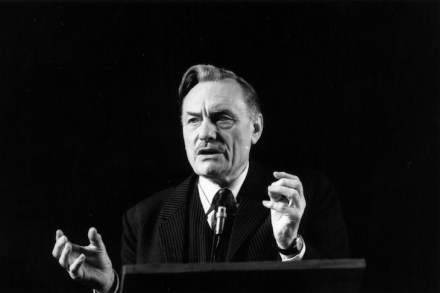
Enoch Powell has been in many minds this month. It’s the 50th anniversary of his famous ‘Rivers of Blood’ speech and I took part in a BBC radio programme discussing this — and hearing the speech itself read superbly by the actor, Ian McDiarmid. The small campaign against the very broadcasting of the speech fizzled out — not least, I think, because the ghastly text does Mr Powell no favours, and many of us who had never read it in its entirety were shocked not only by its tone but by its careless inaccuracy and faltering logic. Yet there’s been a widespread popular view that, agree or disagree with him, the man had a fine mind, a fastidious regard for facts, and courage.

I can never resist a trip to the rubbish dump

I was back at the tip on Sunday. I cannot help it. What art galleries or rock concerts or online porn are to some, Derby-shire County Council’s dump at Rowsley is to me. I can’t keep away. Any excuse will do, and on Sunday it was a bit of cardboard and a broken fan heater. Yes, yes, I know, they could have been saved up until there was enough rubbish to fill the bed of my old pickup truck, but … well, the stuff was already in the back and I was driving down the A6 anyway and the pull as I came within the magnetic field of this state-of-the-art recycling centre was just too much to resist. An invisible hand nudged mine into an indicate--left tweak on the lever, and we peeled off down the service road, my rubbish and I. The place was packed with addicts.

Why the John Worboys case should stay closed

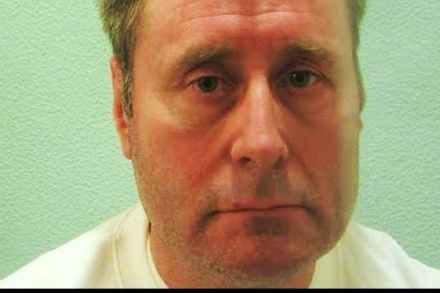
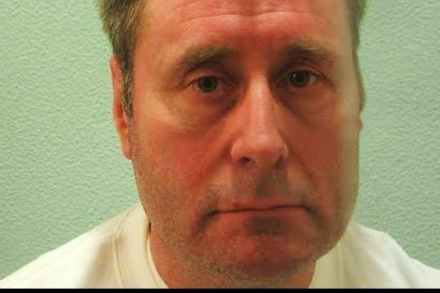
The decision to release John Worboys has been overturned in a ruling by the High Court, which said that the Parole Board must reconsider its verdict, and also make its decision transparent. In the piece below, which was first published in the Spectator in January, Matthew Parris questions whether parole boards’ decisions should be open to challenge. Here, James Forsyth argues that more transparency is a good thing. Hard cases make bad law. The release on parole of the ‘black cab rapist’, John Worboys, is a hard case. But ministers should not be panicked into throwing open parole board decision--making to public inspection. The police have blundered, the sentence was surely too lenient, and the failure to inform his victims was disgraceful.

The camp was calm. Then the river began to roar

When Rudolf Hess, Hitler’s deputy, ejected from the aeroplane he was flying solo to Scotland, he parachuted to the ground and, injured, was taken to the local police station. This was 1941 and he had come on a doomed mission to draw the United Kingdom into peace negotiations. Hess’s aim was to deliver his proposals to the 14th Duke of Hamilton, another keen aviator and the first man to fly over Mount Everest, whom he fancifully supposed might be sympathetic. Douglas Douglas-Hamilton met him, then flew straight to England to report to Churchill.

Lake Turkana, Kenya: postcard from the edge

As I write, a great gale is blowing in from Lake Turkana. The dry hills on the other side, always faint, have disappeared. Sheets of warm rain lash our tent, rollers crash on to the white sandy shore, huge pelicans struggle against the wind, the flamingos are gone, and fishermen like thin black sticks — Lowryesque — from the Turkana tribe can be seen streaking up the beach ferrying equipment from their now-beached wooden fishing canoe to a clump of doum palms where they’ll shelter. But nobody is cold. The lake feels like a tepid bath when we swim (where humans fish, the Nile crocodiles stay away), while the air temperature has plummeted within hours from about 45˚C (113˚F) to more like a muggy English summer.

It’s not all Twitter mobs – the internet can be a force for good

Few readerships of any intelligent national magazine will be more alive to the perils and downsides of 21st--century cyber-life than you, fellow Spectator readers. Many of you might share my use of the generalised expression ‘the internet’ for the whole damn thing — while not being quite sure what we’re referring to. Few, on the other hand, will be more likely to show a lively appreciation of community, locality, the sense of belonging and of place that even in this fast-paced and mobile age, our country at its best can still nurture. You might think those two dispositions make comfortable bedfellows.

How I miss Auberon Waugh

Every now and then one suddenly misses somebody. I miss Bron, who died 17 years ago last month. There’s an Auberon Waugh-sized hole in British satirical journalism. Listening to the radio last week — it was all about famous women, women in history, women’s suffrage, sexual harassment of women, equal pay for women at the BBC, women this and women that — I felt vaguely irritable. Not that I seriously disagreed with anything being said, or wished to rain on any suffragist’s parade, or have ever been remotely sympathetic to inappropriate male behaviour towards women … no, I’d place myself on the ‘politically correct’ side of the argument on every one of these issues. So why the urge to switch off the Today programme? How can I put this?

Building more houses won’t solve anything

This piece first appeared in last week's Spectator.  Britain does not have a housing shortage. We have a problem with the cost not the availability of homes. This can’t be solved by building more houses, because it is not caused by an insufficiency of houses. I’m no economist. My understanding of the dismal science is rudimentary. I may be shot down in flames as an ignoramus. But here goes. Residential property has become a kind of currency, prized more for value than utility; and its role as a financial asset is messing with its ability to perform the function of actually housing people. Straining to increase the supply of housing will no more restrain price than straining to increase gold production would make much difference to the price of gold.

There’s no housing shortage. It would be easier if there were

Britain does not have a housing shortage. We have a problem with the cost not the availability of homes. This can’t be solved by building more houses, because it is not caused by an insufficiency of houses. I’m no economist. My understanding of the dismal science is rudimentary. I may be shot down in flames as an ignoramus. But here goes. Residential property has become a kind of currency, prized more for value than utility; and its role as a financial asset is messing with its ability to perform the function of actually housing people. Straining to increase the supply of housing will no more restrain price than straining to increase gold production would make much difference to the price of gold.

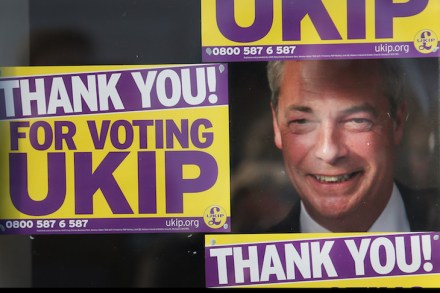
Nigel Farage is wrong: the French are doing us a big favour in Calais

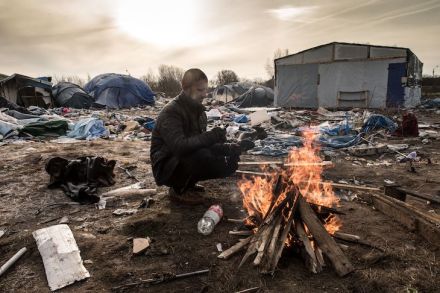
Last week Nigel Farage described the deal we’ve done with France over the refugee camp near Calais as a ‘humiliating capitulation’. His was the most disgruntled voice among a number of others. The disgruntlement arose from the ‘Sandhurst’ deal struck with France during President Macron’s visit to Britain. The Prime Minister had agreed (at Sandhurst) to pay some £44.5 million more for the maintenance of security on French soil, mostly around Calais, and undertaken to speed up the snail’s-pace processing of applications from refugees with family connections in Britain.

No, minister: the John Worboys case should stay closed

Hard cases make bad law. The release on parole of the ‘black cab rapist’, John Worboys, is a hard case. But ministers should not be panicked into throwing open parole board decision--making to public inspection. The police have blundered, the sentence was surely too lenient, and the failure to inform his victims was disgraceful. But it was not upon some careless whim that Parliament barred parole boards from giving reasons, and the new Justice Secretary, David Gauke, should think hard before reversing the interdiction. Much of the furore provoked by the release of this serial attacker of women after ten years in prison really arises not from the parole board’s decision but the original sentence and the flawed prosecution process which helped produce it.

Leave Brexit alone and get on with governing

I return often to Cambridge and was there recently. Julian Glover, my partner, was talking to the History Society at Trinity about his new biography of Thomas Telford, the 18th-century roads, bridges and canals engineer. We spent the night at Trinity, and I had time to update my acquaintance with this fast-changing city. ‘Fast’ hardly does justice to the speed of change. ‘Silicon Fen’ may be a smart-Alecky sobriquet, but something huge is happening here, something very much of our time. Though the university nucleus remains reassuringly familiar, the river Cam sits at the centre of the biggest and most sustained expansion and boom I’ve ever seen in England.

The royals don’t exist, so they have my full support

Prince Harry does not exist and soon Meghan Markle will cease to exist too. None of the royal family exist. This truth, which has come to me rather late in life, has taught me how to stop worrying and love the monarchy. Despite my boyhood admiration for King Sobhuza II of Swaziland, I was always a bit of a republican. Not a tumbrils and guillotine kind, nor even, really, a campaigner for abolition, because as the decades have rolled it has become impossible not to feel respect for the Queen’s hard work; and besides, as the Australians have learned, there’s not a lot of point in removing the monarchy unless you can agree on the alternative. What alternatives suggest themselves?

The era when you could love a car is over

There are four of us in this relationship: my partner and I, his horse and my truck. His horse is 12, my truck 18. I’m jealous of his horse. He’s beastly about my truck. In our household Julian has only to say ‘nitrogen dioxide’ over dinner and my jaw tightens. ‘Particulants’ saps my appetite. ‘Scrappage scheme’ will drive me from the table. But, yes, I cannot dispute it: my beloved machine is a filthy polluter. The grey 1999 Vauxhall Brava five-seater ‘king-cab’ pickup illuminates every red light on the Guardian environmentalist George Monbiot’s dashboard. It’s noisy, smelly and smoky, and it’s older-generation diesel. But it’s my faithful friend and has barely done 100,000 miles.

The sex scandal is what psychologists call ‘displacement activity’

There are three reasons why Britain’s political and media world finds itself in the present ludicrous uproar over sexual misbehaviour at Westminster, and only one of them has anything to do with sexual misbehaviour. But let us start with that. And, first, a caveat. Can there be an organisation anywhere in discovered space which, subjected to the intense media scrutiny that the House of Commons now attracts, would not generate a comparable stock of report and rumour? Imagine a workplace — indeed imagine a workplace like our own august Spectator offices – peopled by a lively mixture of creatives, eccentrics, wannabes, rascals, saints, absolute bricks, total pricks and drones.

Go naked on the green mountain

‘I was last night sent officially to witness the execution by harakiri (self-immolation through disembowelling) of Taki Zensaburo… As the harakiri is one of the customs of this country which has excited the greatest curiosity in Europe… I will tell you what occurred…’ In The Spanish Ambassador’s Suitcase, my anthology of dispatches from British diplomats abroad, this one, dating from 1868, is the oldest. The first eye-witness account of harakiri ever given by a European, it’s also the most grisly. I cannot match the horror or novelty, nor can I match its author, Bertie Mitford, in fine writing.

Why May must stay | 12 October 2017

As from the Manchester conference hall I watched Theresa May’s big moment falling apart, as I buried my head in my hands while her agonies multiplied, I suppose I thought this could spell the end for her premiership. But even as I thought that, then reminded myself that the same failure of the larynx has afflicted me in front of a big audience and could strike anyone and is in itself meaningless, I knew such an outcome would be unjust. There may be reasons why the Tories should find a new leader, but the triple-whammy of a frog in the throat, some joker’s idiotic stunt, and the failure of two magnetic letters to stick to a board, can hardly count among them.

At last! The subversion of Brexit has begun

The Brexit crowd are right to smell a rat. In any great national debate a columnist may feel tempted to go beyond openly rooting for one side. Rooting for one side is acceptable, of course. Though some Brexiteer readers do struggle with the idea it could be legitimate for a columnist to dis-agree with the verdict of a referendum, I will merrily insist that the word ‘Comment’ at the top of a page allows for the expression of an opinion. But what if the columnist detects a possible conspiracy to help his own side win? And, further, suspects that for the plan to work, it would be better not to write about it for the time being?