Matthew Parris

Matthew Parris

Matthew Parris is a columnist for The Spectator and The Times.

The one thing that really gets better with age

On the London Underground last week the carriage was crowded. No seat. No problem. I’m only 67 and content to stand. But a younger man offered his seat, and, having some way to travel and a book to read, I accepted with the appropriate grunt and nod of gratitude. Later, approaching my station, I noticed he was still there. Should I thank him properly before alighting? But he was in another part of the carriage. It might look silly to elbow my way over. Let it pass. Then a voice in my head spoke, a voice that over the decades has become so familiar. Don’t misunderstand me: this was not my conscience. My conscience was clear. It was definitely not necessary to thank this chap again.

We live in a golden age of swearing

Authors’ book tours are often fun but rarely easy. For me the long train journeys are a delight, but on arrival at bookshop or literary festival a doubt mars any pleasant anticipation: what are they expecting? Your likely audience has come for you rather than the book. Maybe that sounds conceited, as I’m hardly A-list, but I do excite a measure of (possibly morbid) curiosity. As to my audience’s interest in the book itself, well, they haven’t read it. It has only just been published. Their attitude tends to be neutral. How do I interest them? My latest presents me with a particular challenge. As a personal anthology of abuse and invective, Scorn contains some very rude words.

Can we trust the people? I’m no longer sure

The election of Donald Trump as president of the United States may have signalled the death of the closest thing we have to a religion in politics. On both sides of the Atlantic, democracy risks being knocked from the high altar as an unmitigated and unquestioned good. The man’s obviously a fool and a nasty fool too. The contest should have been a walkover for Hillary Clinton. But it wasn’t. What happened? Can we be sure any longer that democracy works? Is it really the reliable bulwark against political madness that we always supposed? Without hesitation I plead guilty to the obvious charge: Trump supporters could level it at me, enthusiasts for Brexit do.

Can we trust the people? After Trump, I’m no longer sure

This piece is from the new issue of The Spectator, out tomorrow. https://twitter.com/spectator/status/796349211113619456 The election of Donald Trump as president of the United States may have signalled the death of the closest thing we have to a religion in politics. On both sides of the Atlantic, democracy risks being knocked from the high altar as an unmitigated and unquestioned good. The man’s obviously a fool and a nasty fool too. The contest should have been a walkover for Hillary Clinton. But it wasn’t. What happened? Can we be sure any longer that democracy works? Is it really the reliable bulwark against political madness that we always supposed?

Why didn’t I celebrate Oscar Wilde’s birthday?

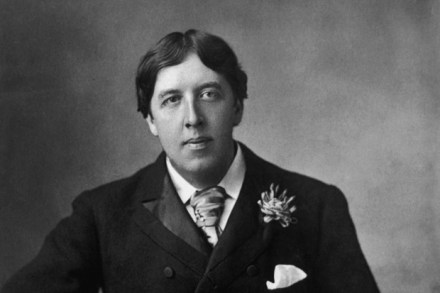
On Wednesday 19 October at the Grosvenor House Hotel on Park Lane in London, a reception was held to celebrate Oscar Wilde’s birthday. Invited by the excellent Gyles Brandreth, I arrived in good time. But as I approached the doors of the reception room, something stopped me. These are the facts. But what is the explanation? A few months ago Boris Johnson wrote two newspaper columns, one in favour of a proposition, one against. As an exercise in clearing one’s mind, the approach has much to commend it. So, to clear my own mind, let me try the same plan. There follow two alternative submissions of the diary item that could follow the first two paragraphs above. Version One [CONTINUES] [NEW PAR] I struggle to explain.

At all three party conferences, I felt cut adrift

Perhaps it’s age, perhaps disillusion, or perhaps party conferences really aren’t what they used to be, but I have struggled this autumn against something that has seemed to be carrying me away. As with a swimmer drawn from the shore by a strong current he cannot see, I’m trying not to leave but the people on the beach seem to be getting smaller, and the holiday noise, the shouts and laughter, grows faint. I knew my duty on arriving on the south coast for the Liberal Democrats’ annual gathering. It was to sit through conference debates in the vile windowless warehouse that is the Brighton Centre, scarring the waterfront with a great slab of concrete that’s blind to the sea, and take the temperature of a party in sharply reduced circumstances.

Let the metropolitan elite lead the way

How does one join the Liberal Metro-politan Elite? What should be the qualifications? I must be an LME member because literally thousands of my readers have (over the years) told me so. They don’t mean it kindly, but I take it kindly. ‘Elite’ means ‘the best’, I should hate to be called illiberal, and I have a nice flat near central London. How, though, do we LMEs maintain the exclusivity of our club? The 48 per cent of voters who voted Remain will soon be hammering on our door for admission, plus (I’ll bet) a fair few repentant former Leavers too.

A remarkable testament of hope for Zimbabwe

‘One who never turned his back but marched breast forward, Never doubted clouds would break, Never dreamed though right were worsted, wrong would triumph Held we fall to rise, are baffled to fight better, Sleep to wake.’ This comes from Robert Browning’s ‘Epilogue’. It is quoted (though not of himself) in a staggering book by an author who in my eyes holds as good a claim to exemplify its spirit as anyone in the 20th-century history of Africa. Yes, anyone, including the many brave black freedom fighters, from Nelson Mandela down, who kept their heads held high when the odds seemed all against them. Even on Robben Island, even in the winter of his discomfort, -Mandela knew that history was on his side.

My fascist moment on the ship of failures

There are no roads from the Peruvian river port of Iquitos, but the rich take aeroplanes. Those who cannot pay to fly may pay the premium for the 40ft motorised express canoes that take only a day to roar to and from the upriver port of Yurimaguas with its bus station. But losers in the global race cannot afford speed. For them there are only the big, slow, hot, lumbering cargo boats: nearly four days’ journey from Iquitos to Yurimaguas. So the moment a passenger walks up the gangplank and strings their hammock between the iron rafters of the open--sided deck, we can guess he or she is not one of life’s winners. Anyone who was wouldn’t travel this way. No less than among the rich there is social stratification among the poor, and the river fast shakes people down.

Something must be done for Wales

On Monday 25 July we climbed Cader Idris. No particular reason except a free Monday and a memory of what a fine mountain it looked when, many years ago and heading for the north Wales coast, I skirted this massive ridged hunk of green and black rising from oak forests. Some hills have a strong sense of their own identity and Cader Idris impresses itself on all who see it. It’s a walk, really, not a climb, but at just under 3,000 feet a big, steep walk, taking four or five hours up and down. So we set out from Derbyshire at seven and were there in three-and-a-half hours. In a little sunshine and some misty drizzle we left the car and followed the trail. Our route was to be circular, clockwise, right over the top.

The Bible is too important to be left to believers

May I write a review of a review? I have to get this out of my system, having been unable to sleep last night, for anger at Christopher Howse’s beastly, scoffing and unjust treatment of a new book: Simon Loveday’s The Bible for Grown-Ups, reviewed in our 30 July issue. Somebody needs to call a halt to the tedious practice of using review to show off at somebody else’s expense. It happens that I feel a special protectiveness towards this book, having seen the manuscript last year and encouraged its author to seek a publisher. Icon books have now published him, and done his study proud. The book deserves it. Let me tell you first (as Mr Howse, who writes about religion for a national newspaper, finds no time to tell his readers) what Mr Loveday sets out to do.

Don’t knock ‘secret deals’. We’ll need one soon

As a founder member of the Guild of Blair-Bashers, someone who reacted strongly against him from our first encounter at dinner when he was only an opposition spokesman, as a commentator who railed against the invasion of Iraq the moment the idea was mooted and right through to the end, and as a journalist who throughout Tony Blair’s time at No. 10 beat my tiny fists against the imposter I always thought him to be, perhaps I may deserve your attention now, after Chilcot, that I have something to say in Mr Blair’s defence? I don’t believe that in any important way the former Prime Minister lied. And I don’t agree there would have been anything wrong with his giving secret undertakings to the President of the United States.

For the first time, I feel ashamed to be British

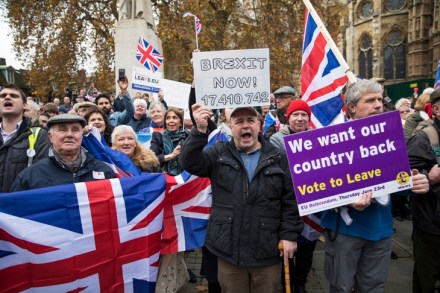
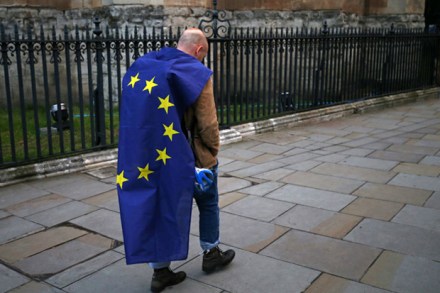
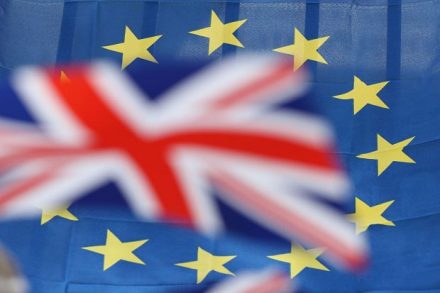
Before even writing this I know what response it will meet. Some who fought for Leave on 23 June will be contemptuous. ‘Bad loser’, ‘diddums’, ‘suck it up’, ‘go and live somewhere else’. From the online Leave brigade who stalk the readers’ comments section beneath media columns I’m already familiar with the attitudes of the angry brigade; but aware that there were also plenty of perfectly sane and nice people who took a considered decision to vote for our exit from the EU. To what I shall say, such people can reasonably reply that their side have beliefs too, and Remain can claim no monopoly on reason or conscience. What follows, however, is not an argument, but a report.

Was there any way not to traduce Cliff Richard?

Sir Cliff Richard will not be charged with historic sex offences, say the police and Crown Prosecution Service. There is ‘insufficient evidence’. You, reader — yes, you: I cannot reveal your name because I’m making this up, but let’s call you Alan, and let’s suppose my reader-ship know very well who you are… you, Alan, respectable, hitherto-well-regarded Alan, are not going to be charged with smuggling into Britain a stash of sadomasochistic scatological pornography as a young man in 1983 because there is ‘insufficient evidence’. How do you feel about that announcement, Alan?

The six best reasons to vote Remain

Like almost everyone, I’ve piled angrily into this fight. But as the debate nears resolution I feel ashamed of all my furious certainties. In the end, none of us knows, and we shouldn’t pretend to. So I’ll try now to express more temperately six thoughts that persist as the early rage subsides. From the first three you’ll see that I’m beginning to understand that for many the EU is now a whipping boy. ‘Europe’ has become for many what in other ages Rome, or communist plots, or America, or international Jewry, or big business represented: a conspiracy against us, an explanation. In the words of Cavafy’s poem ‘Waiting for the Barbarians’, ‘a kind of solution’. Europe has become a punchbag for our fears and frustrations.

If I were in charge of Leave, here’s what I’d say…

It may be too late. But with only about three weeks before our referendum on EU membership I am itching to take the leadership of the Leave campaign. I could do them a power of good. Two serious objections may be raised to my bid. First, I couldn’t chair a parish meeting, let alone a snakepit of warring Leave enthusiasts. Secondly, I certainly don’t think Britain should leave the European Union. Setting these disqualifications aside, however, as a former speechwriter and politician I see so clearly the strategic direction the Leave campaign should set if they are to stand an outside chance of winning — and a much greater chance of losing with honour. I find myself barking advice at the radio whenever one of them is on.

RIP Gussie, my plainspoken llama

Gussie is the name of a grumpy and ill-natured llama, her coat largely white and somewhat unkempt, and much given to aggressive expectoration. When there’s corn in a bucket, it has been her habit greedily to spit other llamas away, not because she wants corn but to stop them getting any. And Gussie is also the name of an entirely imaginary creature — another llama, but who can make phone calls, surf the internet, and send emails and texts. This Gussie has been a keen if censorious student of human nature, a particular student of the faults and foibles of my partner, Julian, and me. The fictional Gussie grew from the real one, taking such distinct shape over many years that by the end there has been virtually no connection between them.

Brexit Tories are feeling disrespected. How awful

There are moments when one wonders whether one is seeing and hearing the same things as others. For me such a moment occurred a fortnight ago when reading The Spectator’s weekly column by our political editor, James Forsyth. James is exceptionally well plugged in to the world of Westminster, but — beyond that — a person of cool and sensitive judgment, so I read what he writes with attention. He said this: ‘[The Prime Minister] is campaigning with no thought for the feelings of those in the party who disagree with him. It is one thing for a leader to disagree with close to half of his MPs and most of his activists, but quite another not to do it respectfully.’ And for the first time in my life I had literally no idea what James was on about.

The wisdom of pitchfork-waving crowds

In a way the headline to my fellow columnist Dominic Lawson’s Sunday Times commentary on 12 April said it all. ‘Join the pitchfork wavers on tax, Mr Cameron, and you end up skewered.’ The column had something of an 18th-century ring to it, conjuring in my mind’s eye an elegant London dinner party, with men-about-town in powdered wigs twitching back the heavy damask curtains to sneak worried glances at a riot outside: an unruly and enraged mob rampaging up the street. But Dominic had a powerful argument. It was, he suggested, noblemen like David Cameron and George Osborne who had unwittingly energised the rabble.

The wisdom of pitchfork-wielding crowds

In a way the headline to my fellow columnist Dominic Lawson’s Sunday Times commentary on 12 April said it all. ‘Join the pitchfork wavers on tax, Mr Cameron, and you end up skewered.’ The column had something of an 18th-century ring to it, conjuring in my mind’s eye an elegant London dinner party, with men-about-town in powdered wigs twitching back the heavy damask curtains to sneak worried glances at a riot outside: an unruly and enraged mob rampaging up the street. But Dominic had a powerful argument. It was, he suggested, noblemen like David Cameron and George Osborne who had unwittingly energised the rabble.