Matthew Parris

Matthew Parris

Matthew Parris is a columnist for The Spectator and The Times.

Dear Leavebugs, it’s time to admit your mistake

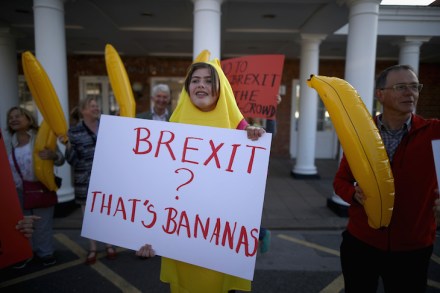
‘Brexit,’ says my friend David Aaronovitch, ‘is dying.’ We Remainer irreconcilables certainly hope so. But there’s a slim chance the grisly Brexit project could yet pull through, and it’s right to acknowledge this. So in a spirit of candid friendship I write this letter to die-hard Leavers, of whom a small — but vigorous — colony survives on these Spectator pages… Dear Leavebugs, You know I am not of your number, but I understand you. I even feel for you. The Leave/Remain split is not a divide between two halves of the British population, but a war within the breast of each person. Every feeling you’ve had, I’ve experienced too. Civil wars are always bitter; wars within ourselves the most bitter of all.

How not to handle an independence referendum

If David Cameron seeks any testament to his handling of Britain’s difficulties with Scottish separatism, the mess that Spain is making of a very comparable demand from Catalan separatists could stand as grisly evidence of how not to do it. The government of Catalonia in Barcelona has defied Madrid by announcing an October referendum on independence. The Spanish government calls the referendum illegal and threatens to suspend Catalonia’s autonomous administration should it go ahead, if necessary by force. ‘Send in the tanks’ is the shorthand for Madrid’s apparent threat, and somebody is going to have to climb down or the prospects are dire.

What should party leaders be allowed to believe?

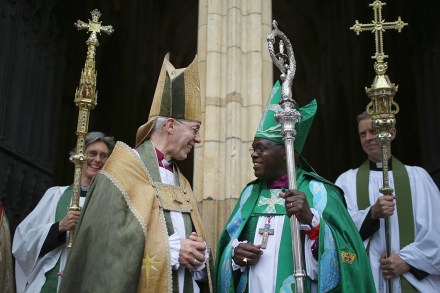
‘If he can’t be in politics,’ the Archbishop of Canterbury tweeted last week after Tim Farron resigned the leadership of his party, ‘media & politicians have questions.’ So prelates now think complex theological concerns can be despatched within the Twitter limit of 140 characters. They cannot. Let me now unpack Dr Welby’s abbreviated consideration of this subject and examine what’s behind it, because the subject is of profound importance —and not only for Christians. Nobody has said Mr Farron can’t be in politics. He has been returned as MP for Westmorland and Lonsdale with the support of 26,686 voters.

The Tories have been diminished by this election

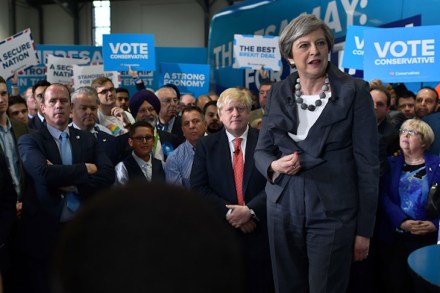
There’s an expression used in football to describe an approach to the game that discounts the virtues of elegance, style, beauty, originality and daring, and — concentrates on blocking, frustrating and grinding down. It’s called ‘winning ugly’. While degrading the game, it often works. But having won a match, a football team does not have to govern the country for five years. It does not need our love, our patience or our intellectual respect. The Conservative party attempted to win the general election by winning ugly, and in doing so, they have lost some of our love and our respect. That, I reflect, is what, without direction from the top, ‘professional’ modern campaigning risks achieving.

A dementia tax would be a euthanasia bonus

Had Theresa May not on Monday summarily abandoned her manifesto threat to raid the savings of those who end up senile in care homes, I had planned to defend the idea here in terms that might have added to her woes.  I’ll do so regardless. The so-called dementia tax would, over time, have become a euthanasia bonus. And that would be a good thing. As I argued on this page two weeks ago, morality is the father of religion, and not the other way around. Secular morality can be largely explained by social Darwinism.

Why it’s obvious that morality precedes religion

At a beautiful church service recently I encountered again a Gospel parable that left me, again, torn between sympathy and doubt. You will recognise Matthew 25: 35-40, for its phrasing has entered the idiom: ‘I was hungry and you gave me food … sick and you visited me … in prison and you came to me … a stranger and you took me in … naked and you clothed me … ’ The story is of a king praising his subjects for these kindnesses to him. This puzzles them: ‘When did we see you hungry, and feed you … a stranger and take you in…’ (etc)? The king replies: ‘Inasmuch as you did it to one of the least of these, my brethren, you did it to me.

What would Darwin make of trainspotters?

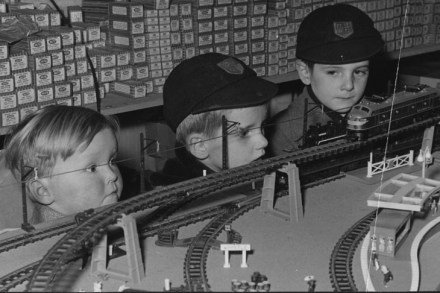
Why are men so much more likely to be interested in trains than women? I believe this to be a question of profound importance. It has implications for the debate about whether behavioural gender differences are inborn or learned. And implications for our understanding of male thinking. When at a dinner party did you ever hear an intense conversation between two women about railway timetables? How many teenage girls have you ever noticed among groups of trainspotters? Do small girls ask for a train set as a birthday present? Doesn’t this stark disparity between genders on a matter which touches equally the lives of both, and in which both are equally competent to take an interest, deserve attention? Women use trains just as men do, because they are a convenient means of transport.

In defence of the Church of England

The Algerian government’s official tourist guide describes ‘the walled town of Beni Isguen — normally closed to foreigners — where the women, clad entirely in white, reveal only one eye to the outside world’. Rod Dreher’s Easter call to devout Christians to separate themselves as a community from what he believes to be the degeneracy of our western culture puts me in mind of that sad, disturbing place. Beni Isguen is one of the oasis towns near Ghardaia in southern Algeria. I visited many years ago and can be sure there has been little change since, for the community has clung to unchanging and uniting beliefs for hundreds of years.

Give me the Anglican option

The Algerian government’s official tourist guide describes ‘the walled town of Beni Isguen — normally closed to foreigners — where the women, clad entirely in white, reveal only one eye to the outside world’. Rod Dreher’s Easter call to devout Christians to separate themselves as a community from what he believes to be the degeneracy of our western culture puts me in mind of that sad, disturbing place. Beni Isguen is one of the oasis towns near Ghardaia in southern Algeria. I visited many years ago and can be sure there has been little change since, for the community has clung to unchanging and uniting beliefs for hundreds of years.

Our dangerous impulse to make sense of murder

‘On Friday noon, July the 20th, 1714,’ begins the small, perfect 20th-century novel The Bridge of San Luis Rey, ‘the finest bridge in all Peru broke and precipitated five travellers into the gulf below.’ In the coincidence of crossing the bridge at the same time, explains the writer, Thornton Wilder, these five seemed to have been assembled by pure chance. Or had they? He entitles this first chapter ‘Perhaps An Accident’. He spends the rest of his book tracing the lives of each until the moment when, in a twang of rope, fate hurled all together into the abyss. Thus is the reader’s interest engaged for the human histories that unfold. But Wilder, an American Christian humanist, falters in his rationalism.

You don’t have to be good to do good

I am a regular listener to the Sunday morning service just after eight on BBC Radio 4. It’s a habit owed to my old bedside clock radio. Purchased in 1978, its controls have gone wonky and the radio takes ages to retune; so I just leave it on Radio 4 all the time. Every week, therefore, I awake on Sunday to the sound of hymns. I like hymns. Their melodies and words are often trite, their message sanctimonious, but from a churchgoing boyhood I know them so well, and early on a Sunday morning there’s something comforting in the familiar. Besides I’m not a very fierce kind of atheist.

From now on, I’ll greet Brexiteers with a grin

I’m cheering up about Brexit. The moaning has to stop. Why be downhearted and edgy when you’re confident of your argument? Leavers: you’re all wrong. I’m not totally sure — one never can be — and certainly I could be mistaken: and one day we’ll know. Meanwhile I place my confidence in the judgment of those in British politics I most admire, people like Michael Heseltine, Chris Patten, John Major, Ruth Davidson and Kenneth Clarke; and, sticking to my guns and with a merry two fingers up to the lot of you, I leave you Brexit types to the snarling din emanating from your Brexit cave. Chins up, Leaver trolls — you won — remember? It’s all going to be fabulous — remember? Why the cross faces?

In (conditional) defence of John Bercow

James Duddridge is not wrong. The Tory MP for Rochford and Southend East, who has put down a ‘no confidence’ motion in Mr Speaker Bercow, says John Bercow has abused ‘his employment contract’ by his openly political remarks. The last straw was telling students at the University of Reading that he voted Remain in last year’s European referendum. Duddridge is a fiercely outspoken Leaver, but his complaint is that the Speaker should not have revealed any preference at all. Few should contest this. Anger over the Reading revelation builds on a history of complaint: the most recent example is still fresh.

Insistent, splenetic, almost crazed – Brexiteers are being driven mad by Brexit

I am worried about the mental state of many Brexiteers. The author of The Spectator’s weekly Notes, Charles Moore, always a sharp observer of the passing scene, noticed my worry almost before I noticed it myself. He complained here a few weeks ago that I’m citing among my reasons for distrusting the Leave case the fact that so many of its adherents strike me as headbangers. He went on to suggest I’ve become psychologically incapable of even listening to their argument. Personality traits displayed by Brexit-eers do indeed worry me and help inform my response to their case. To help me weigh an argument, I’m in the habit of taking a long and careful look at the person making it.

Brexiteers need ladders to climb down

I am worried about the mental state of many Brexiteers. The author of The Spectator’s weekly Notes, Charles Moore, always a sharp observer of the passing scene, noticed my worry almost before I noticed it myself. He complained here a few weeks ago that I’m citing among my reasons for distrusting the Leave case the fact that so many of its adherents strike me as headbangers. He went on to suggest I’ve become psychologically incapable of even listening to their argument. Personality traits displayed by Brexit-eers do indeed worry me and help inform my response to their case. To help me weigh an argument, I’m in the habit of taking a long and careful look at the person making it.

What really drives us in the big game of life?

When were you last in a game reserve? Perhaps most Spectator readers will be familiar with the experience and if you’re anything like me it’s a happy one. Where would I rather be than in an open-topped Land Rover as the sun rises over the African bush, wandering on wheels through the savannah, pausing unhurried to look around: switching off the engine, listening, watching, drinking it all in? But do I care if I spot a hyena to tick off on my list? Do I seriously fret about whether that graceful creature is an oryx or an eland, whether that glittering and iridescent bird is a greater blue-eared starling or a red-tufted malachite, or whether this giraffe we’ve just startled is reticulated or Rothschild’s?

An age of bright new lights on ugly new estates

‘Trying to determine what is going on in the world by reading newspapers,’ remarked the journalist and screenwriter Ben Hecht, ‘is like trying to tell the time by watching the second hand of a clock.’ He was right, but the fault lies not with the newspapers. The problem arises from the idea of news. ‘News’ cannot see so much of what’s happening that matters. As the new year begins I’d ask you to consider a small example: the most visible change to the built environment in Britain. I’ve yet to read anything you could call a ‘splash’ on the subject, but gradually, steadily, and in time no doubt universally, we’re losing our yellow-orange ‘sodium’ streetlights, in favour of blue-white LED ones.

For the first time in my life, I feel ashamed to be British

We’re closing 2016 by republishing our ten most-read articles of the year. Here’s No. 3: Matthew Parris's article from July, where he says the fallout from the referendum has left him feeling ashamed to be British for the first time. Before even writing this I know what response it will meet. Some who fought for Leave on 23 June will be contemptuous. ‘Bad loser’, ‘diddums’, ‘suck it up’, ‘go and live somewhere else’. From the online Leave brigade who stalk the readers’ comments section beneath media columns I’m already familiar with the attitudes of the angry brigade; but aware that there were also plenty of perfectly sane and nice people who took a considered decision to vote for our exit from the EU.

The one joy of old age

On the London Underground last week the carriage was crowded. No seat. No problem. I’m only 67 and content to stand. But a younger man offered his seat, and, having some way to travel and a book to read, I accepted with the appropriate grunt and nod of gratitude. Later, approaching my station, I noticed he was still there. Should I thank him properly before alighting? But he was in another part of the carriage. It might look silly to elbow my way over. Let it pass. Then a voice in my head spoke, a voice that over the decades has become so familiar. Don’t misunderstand me: this was not my conscience. My conscience was clear. It was definitely not necessary to thank this chap again.

The six reasons why I voted ‘Remain’ in the referendum

We’re closing 2016 by republishing our ten most-read articles of the year. Here’s No. 7: Matthew Parris's article, written two weeks before the referendum, in which he called on Spectator readers to vote 'Remain' Like almost everyone, I’ve piled angrily into this fight. But as the debate nears resolution I feel ashamed of all my furious certainties. In the end, none of us knows, and we shouldn’t pretend to. So I’ll try now to express more temperately six thoughts that persist as the early rage subsides. From the first three you’ll see that I’m beginning to understand that for many the EU is now a whipping boy.