Matthew Parris

Matthew Parris

Matthew Parris is a columnist for The Spectator and The Times.

Labour’s failure isn’t necessarily the Tories’ success

A moment arrives when one does just have to admit defeat. We shall leave the European Union and there isn’t a lot of point going on about it any more. I’m still sure it’s a mistake, but there we are. In a democracy the majority is entitled to make a mistake, just as the minority is entitled to say so. I say so. I’d hoped we could change people’s minds but we haven’t, so enough from me on that. A general election is a different matter. Here too, of course, the majority is entitled to make a mistake, but resistance remains possible and legitimate because there’s always the opportunity at the next election to reverse the electorate’s previous decision. The trouble is, however, that I don’t want to.

I’m calling it: the Tories will win a majority

It’s time to stick my neck out. What follows is anecdotal and my hunches have often been wrong. But I think that though Boris Johnson will get his overall majority, Tory strategists’ hopes of surfing a tidal wave of new support from ‘tribal’ Labour voters in the English Midlands and the North will not be fulfilled. Mr Johnson will win this time, but there will be no substantial and enduring shift northwards of Tory support. I live in the north Midlands. The two closest constituencies to that (safe) Conservative seat of Derbyshire Dales neatly fit the description political pundits offer of the sometimes struggling Midlands and northern seats where Johnson’s Tories hope to make huge, game-changing advances on 12 December.

What on earth are the Lib Dems up to?

Jo Swinson is right. Most of the gains that it’s worth her party aiming for would be made at the expense of the Conservatives. There are three reasons. First, glance at the 29 seats where the Liberal Democrats came second in 2017. Some 22 produced a ‘close’ result. Sixteen of these are held by the Tories, and only four by Labour. As my Times colleague Oliver Wright explains: ‘Even quite a dramatic swing from any of the other parties towards the Lib Dems could still reap very little reward.’ Secondly, Conservative and Lib Dem ideologies are not diametrically opposed. Anyone who’d even consider voting Tory would be fiercely resistant to Jeremy Corbyn. Lib Dems strike us, the Conservative--inclined, as comparatively harmless.

I’ll vote Lib Dem – but I can’t join them

I don’t believe that before last week I’ve ever quit any organisation on an issue of principle. I tend to find people tiresome who make a song and dance about doing so. I never thought that one day I’d be ‘making an exhibition of myself’ (as my father used to say) and certainly not so late in my life. But in my Times column on Saturday that’s what I did. And it’s futile to deny I was attention-seeking. Of course I was. A columnist earns his bread by drawing attention to himself and his opinions. Quitting the party you joined 50 years ago is just a rather theatrical way of doing that. But I haven’t enjoyed the attention much. A sadness has hung over me since: the sadness, really, of parting from an old friend.

The question a second referendum must ask | 26 October 2019

Mostly I stay confident the Prime Minister’s team are playing a weak hand badly, but my confidence does occasionally falter. Then Downing Street does something really stupid (like expelling 21 of its own parliamentary party) and I’m reassured that these people aren’t clever at all. This happened last weekend when I opened my Sunday Times to find there a personal attack on Sir Oliver Letwin by ‘senior sources’. These sources had scoffed to journalists that when, before the Commons vote on his amendment, Letwin was at Downing Street to discuss it, he was taking ‘conspiratorial phone calls’ on his mobile phone, giving him ‘instructions’ from David Pannick.

The question a second referendum must ask

Mostly I stay confident the Prime Minister’s team are playing a weak hand badly, but my confidence does occasionally falter. Then Downing Street does something really stupid (like expelling 21 of its own parliamentary party) and I’m reassured that these people aren’t clever at all. This happened last weekend when I opened my Sunday Times to find there a personal attack on Sir Oliver Letwin by ‘senior sources’. These sources had scoffed to journalists that when, before the Commons vote on his amendment, Letwin was at Downing Street to discuss it, he was taking ‘conspiratorial phone calls’ on his mobile phone, giving him ‘instructions’ from David Pannick.

All ages are gullible – including our own

In the great days of the Daily Telegraph’s Peter Simple column, when I was a youth, that acid but hilarious satire on contemporary Britain had a cast of imaginary characters of whom one of my favourites was the Very Reverend Dr Spacely-Trellis, the ‘go-ahead Bishop of Bevindon’. Spacely-Trellis was a ‘modern’ Anglican of the sort disposed to question the Virgin Birth, the divinity of Christ, and quite possibly the existence of a deity. Most of those interludes featuring the left-of-centre bishop ended with him in the pulpit and in full cry about the evils of the hour, concluding ‘We are all guilty!’ as his despairing flock dived for the nearest door or window.

All ages are gullible – including our own

In the great days of the Daily Telegraph’s Peter Simple column, when I was a youth, that acid but hilarious satire on contemporary Britain had a cast of imaginary characters of whom one of my favourites was the Very Reverend Dr Spacely-Trellis, the ‘go-ahead Bishop of Bevindon’. Spacely-Trellis was a ‘modern’ Anglican of the sort disposed to question the Virgin Birth, the divinity of Christ, and quite possibly the existence of a deity. Most of those interludes featuring the left-of-centre bishop ended with him in the pulpit and in full cry about the evils of the hour, concluding ‘We are all guilty!’ as his despairing flock dived for the nearest door or window.

Eight reasons why I know I’m a Conservative

‘Why don’t you just join the Liberal Democrats?’ If I’ve heard that once in the past couple of years I’ve heard it a hundred times. In online posts beneath my Times column, in public debates or private conversations, the question is sometimes a genuinely puzzled enquiry but more often an implied: ‘What the hell are you doing posing as a Tory?’ It’s all about Brexit, of course: the questioner’s assumption being that, strip from a Conservative the ambition that Britain should leave the European Union, and there remains nothing important to distinguish him or her from a Liberal Democrat.

History will soon judge this fraught time

Good stories have a dénouement. The Act III moment when all is revealed and the narrative comes in to land is critical to most plays and novels. And so we want it to be with Brexit. Who will turn out to have been right, and who wrong? Whose bluff will have been called, and to whom will go the secret pleasures of ‘I told you so’? Real life usually disappoints, however. No single event settles matters, and both sides of a dispute tend to find ways of maintaining that they were right all along, and if outcomes confound them then this was somebody else’s fault.

Who’s to blame for my terrible journey?

Look out. Here comes a column banging on about something that, in the grand scheme of things, really doesn’t matter. But I’ve just turned 70 and surely among the compensations for old age must be the right to have a jolly good grumble from time to time. Mine, here, will be about the new hard train seats. ‘They feel like sitting on an ironing board,’ passengers are complaining. Since the beginning of last year, and all over the country, rail operating companies have been rolling out (hallelujah! — a chance to use this ghastly expression entirely appropriately) a new kind of railway carriage. First it was Thameslink; then it was GWR; and last week I suffered in one of these carriages going all the way to Leeds. My buttocks ache at the very recollection.

Remainers, Leavers, post-imperial dreamers

Our involuntary responses know us better than we know ourselves. As I left King Charles Street in Whitehall last week and passed under the archway into the great court of the Foreign Office — and before I knew where it came from or why — an old and familiar feeling inhabited me. Dejection. This is where I started my working life as an administrative trainee, and those two years were a wretched time: a gradual understanding stealing upon me that I had no talent for this job. This courtyard was the opening scene of my every working day. It struck misery into my soul then, and 45 years later it still does. I blame myself, however, not our Foreign and Commonwealth Office.

We Remainers aren’t going away | 20 July 2019

My voice is often recognised by people who don’t know me. My face, which is unmemorable, less so. But once I open my mouth it’s not uncommon at railway stations, on buses or at the supermarket till for someone to approach and ask me to confirm I’m Mr Parish, or Malcolm Parris, or whatever. I make no boast: anyone who appears from time to time on radio and television gets recognised a bit, and over many years this has been my experience too. But something has changed in recent months, something I can’t ignore. In the past, the enquiry ‘Are you Matthew Parris?’ was made mostly out of curiosity.

We Remainers aren’t going away

My voice is often recognised by people who don’t know me. My face, which is unmemorable, less so. But once I open my mouth it’s not uncommon at railway stations, on buses or at the supermarket till for someone to approach and ask me to confirm I’m Mr Parish, or Malcolm Parris, or whatever. I make no boast: anyone who appears from time to time on radio and television gets recognised a bit, and over many years this has been my experience too. But something has changed in recent months, something I can’t ignore. In the past, the enquiry ‘Are you Matthew Parris?’ was made mostly out of curiosity.

Re-wilders forget that humans are ‘nature’ too

‘Life pours back in.’ A score of us, listening to Charlie Burrell at the Knepp estate ten days ago, will always remember his words: so palpably true. We could see just what he meant as he took us through his work ‘re-wilding’ the estate in West Sussex where he and his wife, Isabella Tree, live at Knepp Castle. The family have owned and farmed these 3,500 acres for more than two centuries. Sir Charles, 10th Baronet, and Isabella are giving their all to this brave project, for which they have become pioneers, leaders, opinion--formers and evangelists. And the religion is spreading. Everyone in the world of environmentalism talks about re-wilding now.

When good men go bad

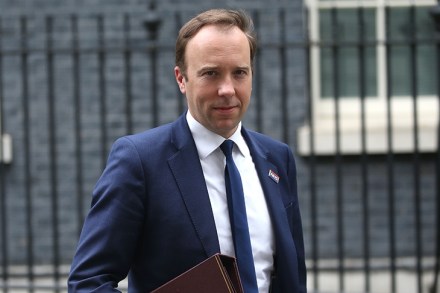
It was when Matt Hancock went over to Boris Johnson that something snapped. ‘Every time a child says “I don’t believe in fairies,”’ said Peter Pan, ‘there is a fairy somewhere that falls down dead.’ When Matt Hancock said this week that he did believe in Boris Johnson, something in me died. I remember Matt practising with a few of us for his speech to Conservative candidate selection meetings. He needed more work on the fluency — he still does — but was outstandingly bright, quick, endearingly ambitious, full of bounce and, most important, he seemed to me a good person.

How I very nearly became the victim of an online scam

Please don’t suppose I’m unaware I’ve been an idiot. I recount what happened to me last week without expecting your sympathy or understanding, and this account carries only the very slightest plea in mitigation: the suggestion that it could happen to you too, even if you don’t think you’d ever be so stupid. Because I certainly didn’t think I was. I’m not IT-illiterate, I’m not particularly slow-witted, I’ve attended ‘take online security seriously’ lectures, and I do know about the new ways thieves steal from the unsuspecting these days. I’m forewarned. So I thought myself proof against such attempts when the landline phone rang on Friday morning.

Boris is just the man to bury Brexit

Sit down, my swivel-eyed Brexiter friend, and pour yourself a stiff whisky. I’ve something to tell you that’s going to be a bit difficult for both of us. Sitting comfortably? Your swivel-eyed Remainer columnist has discerned just the tiniest glint of a silver lining to the dark cloud of a possible Boris Johnson premiership. And the reason? It’s this. The most important ability the next Tory leader must possess is the ability to break bad news. To get away with this and bring the voters with you, real leadership is required: not just eloquence, not just empathy, but the command, the confidence and the sheer guts to face the inevitable, grab the bull by the horns, and spit it out.

Are you a Tweedy or a Trainer?

‘Too tweedy? Goodness gracious me!’ Rory Stewart sounded startled. A contender for the Tory leadership, he was being interviewed by the BBC’s Paddy O’Connell last Sunday morning on Radio 4’s Broadcasting House. O’Connell asked the MP for Penrith and the Border how he responded to the criticism that ‘the Conservative party is too tweedy’. A short discussion of the relationship between 21st-century Toryism and tweed followed, during which Stewart revealed that in his rural constituency ‘quite a lot of us wear some tweed’. Only ‘some’ tweed, mind you: Stewart sensed he was on tricky ground here. Leadership candidates in all parties get used to being asked if they’ve ever smoked weed — but worn tweed?

Do we need a Brexit inquiry?

How will future generations revisit the Brexit years? Through what glass will we be seen? This spring and, I suspect, for many seasons to come, we’re in too deep for any attempt to stand back and assess. There has been much talk (particularly by some of my fellow Remainers) of a review along the lines of the Chilcot inquiry after the Iraq war; but even with the benefit of time, Brexit will not lay itself open to easy analysis. Almost by their nature, inquiries start from the assumption that something went terribly and avoidably wrong, and culprits in the form of guilty individuals or badly mistaken assumptions are sought.