Matthew Parris

Matthew Parris

Matthew Parris is a columnist for The Spectator and The Times.

Eight reasons why I know I’m a Conservative

From our UK edition

‘Why don’t you just join the Liberal Democrats?’ If I’ve heard that once in the past couple of years I’ve heard it a hundred times. In online posts beneath my Times column, in public debates or private conversations, the question is sometimes a genuinely puzzled enquiry but more often an implied: ‘What the hell are you doing posing as a Tory?’ It’s all about Brexit, of course: the questioner’s assumption being that, strip from a Conservative the ambition that Britain should leave the European Union, and there remains nothing important to distinguish him or her from a Liberal Democrat.

History will soon judge this fraught time

From our UK edition

Good stories have a dénouement. The Act III moment when all is revealed and the narrative comes in to land is critical to most plays and novels. And so we want it to be with Brexit. Who will turn out to have been right, and who wrong? Whose bluff will have been called, and to whom will go the secret pleasures of ‘I told you so’? Real life usually disappoints, however. No single event settles matters, and both sides of a dispute tend to find ways of maintaining that they were right all along, and if outcomes confound them then this was somebody else’s fault.

Who’s to blame for my terrible journey?

From our UK edition

Look out. Here comes a column banging on about something that, in the grand scheme of things, really doesn’t matter. But I’ve just turned 70 and surely among the compensations for old age must be the right to have a jolly good grumble from time to time. Mine, here, will be about the new hard train seats. ‘They feel like sitting on an ironing board,’ passengers are complaining. Since the beginning of last year, and all over the country, rail operating companies have been rolling out (hallelujah! — a chance to use this ghastly expression entirely appropriately) a new kind of railway carriage. First it was Thameslink; then it was GWR; and last week I suffered in one of these carriages going all the way to Leeds. My buttocks ache at the very recollection.

Remainers, Leavers, post-imperial dreamers

From our UK edition

Our involuntary responses know us better than we know ourselves. As I left King Charles Street in Whitehall last week and passed under the archway into the great court of the Foreign Office — and before I knew where it came from or why — an old and familiar feeling inhabited me. Dejection. This is where I started my working life as an administrative trainee, and those two years were a wretched time: a gradual understanding stealing upon me that I had no talent for this job. This courtyard was the opening scene of my every working day. It struck misery into my soul then, and 45 years later it still does. I blame myself, however, not our Foreign and Commonwealth Office.

We Remainers aren’t going away | 20 July 2019

From our UK edition

My voice is often recognised by people who don’t know me. My face, which is unmemorable, less so. But once I open my mouth it’s not uncommon at railway stations, on buses or at the supermarket till for someone to approach and ask me to confirm I’m Mr Parish, or Malcolm Parris, or whatever. I make no boast: anyone who appears from time to time on radio and television gets recognised a bit, and over many years this has been my experience too. But something has changed in recent months, something I can’t ignore. In the past, the enquiry ‘Are you Matthew Parris?’ was made mostly out of curiosity.

We Remainers aren’t going away

From our UK edition

My voice is often recognised by people who don’t know me. My face, which is unmemorable, less so. But once I open my mouth it’s not uncommon at railway stations, on buses or at the supermarket till for someone to approach and ask me to confirm I’m Mr Parish, or Malcolm Parris, or whatever. I make no boast: anyone who appears from time to time on radio and television gets recognised a bit, and over many years this has been my experience too. But something has changed in recent months, something I can’t ignore. In the past, the enquiry ‘Are you Matthew Parris?’ was made mostly out of curiosity.

Re-wilders forget that humans are ‘nature’ too

From our UK edition

‘Life pours back in.’ A score of us, listening to Charlie Burrell at the Knepp estate ten days ago, will always remember his words: so palpably true. We could see just what he meant as he took us through his work ‘re-wilding’ the estate in West Sussex where he and his wife, Isabella Tree, live at Knepp Castle. The family have owned and farmed these 3,500 acres for more than two centuries. Sir Charles, 10th Baronet, and Isabella are giving their all to this brave project, for which they have become pioneers, leaders, opinion--formers and evangelists. And the religion is spreading. Everyone in the world of environmentalism talks about re-wilding now.

When good men go bad

From our UK edition

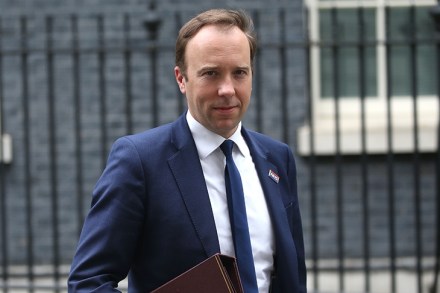
It was when Matt Hancock went over to Boris Johnson that something snapped. ‘Every time a child says “I don’t believe in fairies,”’ said Peter Pan, ‘there is a fairy somewhere that falls down dead.’ When Matt Hancock said this week that he did believe in Boris Johnson, something in me died. I remember Matt practising with a few of us for his speech to Conservative candidate selection meetings. He needed more work on the fluency — he still does — but was outstandingly bright, quick, endearingly ambitious, full of bounce and, most important, he seemed to me a good person.

How I very nearly became the victim of an online scam

From our UK edition

Please don’t suppose I’m unaware I’ve been an idiot. I recount what happened to me last week without expecting your sympathy or understanding, and this account carries only the very slightest plea in mitigation: the suggestion that it could happen to you too, even if you don’t think you’d ever be so stupid. Because I certainly didn’t think I was. I’m not IT-illiterate, I’m not particularly slow-witted, I’ve attended ‘take online security seriously’ lectures, and I do know about the new ways thieves steal from the unsuspecting these days. I’m forewarned. So I thought myself proof against such attempts when the landline phone rang on Friday morning.

Boris is just the man to bury Brexit

From our UK edition

Sit down, my swivel-eyed Brexiter friend, and pour yourself a stiff whisky. I’ve something to tell you that’s going to be a bit difficult for both of us. Sitting comfortably? Your swivel-eyed Remainer columnist has discerned just the tiniest glint of a silver lining to the dark cloud of a possible Boris Johnson premiership. And the reason? It’s this. The most important ability the next Tory leader must possess is the ability to break bad news. To get away with this and bring the voters with you, real leadership is required: not just eloquence, not just empathy, but the command, the confidence and the sheer guts to face the inevitable, grab the bull by the horns, and spit it out.

Are you a Tweedy or a Trainer?

From our UK edition

‘Too tweedy? Goodness gracious me!’ Rory Stewart sounded startled. A contender for the Tory leadership, he was being interviewed by the BBC’s Paddy O’Connell last Sunday morning on Radio 4’s Broadcasting House. O’Connell asked the MP for Penrith and the Border how he responded to the criticism that ‘the Conservative party is too tweedy’. A short discussion of the relationship between 21st-century Toryism and tweed followed, during which Stewart revealed that in his rural constituency ‘quite a lot of us wear some tweed’. Only ‘some’ tweed, mind you: Stewart sensed he was on tricky ground here. Leadership candidates in all parties get used to being asked if they’ve ever smoked weed — but worn tweed?

Do we need a Brexit inquiry?

From our UK edition

How will future generations revisit the Brexit years? Through what glass will we be seen? This spring and, I suspect, for many seasons to come, we’re in too deep for any attempt to stand back and assess. There has been much talk (particularly by some of my fellow Remainers) of a review along the lines of the Chilcot inquiry after the Iraq war; but even with the benefit of time, Brexit will not lay itself open to easy analysis. Almost by their nature, inquiries start from the assumption that something went terribly and avoidably wrong, and culprits in the form of guilty individuals or badly mistaken assumptions are sought.

Why aren’t Leavers backing a second referendum?

From our UK edition

My first encounter with a plan to hold not one but two referendums on Britain’s European Union membership happened more than three years ago. At least two individuals were actively entertaining the idea. Both were Leavers. Dominic Cummings had proposed it in one of his blogs. Boris Johnson had not publicly endorsed such a thing, but (I know) was discussing it with interest privately. The thinking, as I recall, was similar in both cases. The first referendum would be the one we then faced: asking voters for a yes or no to the idea that in principle we should quit. If the result was Remain, we’d remain. If Leave, there would follow two years negotiating a draft withdrawal agreement.

What’s left for Brexiteers?

From our UK edition

My first encounter with a plan to hold not one but two referendums on Britain’s European Union membership happened more than three years ago. At least two individuals were actively entertaining the idea. Both were Leavers. Dominic Cummings had proposed it in one of his blogs. Boris Johnson had not publicly endorsed such a thing, but (I know) was discussing it with interest privately. The thinking, as I recall, was similar in both cases. The first referendum would be the one we then faced: asking voters for a yes or no to the idea that in principle we should quit. If the result was Remain, we’d remain. If Leave, there would follow two years negotiating a draft withdrawal agreement.

The view from a street corner in Beirut

From our UK edition

A pale sun had emerged from wintry clouds and the hillsides were topped snowy white. But all around me was the workaday bustle of Beirut streets still wet from overnight winter rain. This was the Armenian quarter, near the docks, at morning coffee time. I was standing on the Rue Qobaiyat, opposite a downtown petrol station and outside a corner barber’s shop, Salon Anto. My partner and his mother wanted to go to a museum and I’m not a great one for museums, and needed a haircut. ‘There’s a barber just around the corner,’ said the helpful owner of the little Baffa House lodge where we were staying. ‘A bit … old-fashioned. Nothing “cool”, you know.’ ‘Just my place,’ I said; and soon found it.

Make an example of Shamima Begum

From our UK edition

The three most popular justifications for punishment under the law all (as it happens) begin with R. They are retribution, rehabilitation and removal. But the fourth and to my mind the most important seems to have fallen rather out of public consideration. Yet that fourth, deterrence, is by far the best reason for the investigation and interrogation of Shamima Begum and — if there is a case against her to answer — her detention and trial. Leading all other reasons for the prosecution according to due process — and, if convicted, the punishment — of those who may have committed a criminal offence is deterrence: the discouragement of others who may be tempted to commit similar offences. I can’t understand why more is not being made of this.

An epic drive through snowy Spanish mountains

From our UK edition

‘Don’t even try,’ said the man on the car deck as Brittany Ferries’ Finistère tied up on the dock in Santander, late because of the winter storm. ‘You’d be lucky tonight to get through the snow to Valladolid. Find a hotel here and try tomorrow morning.’ He was one of those confident Englishmen you meet who seem to know. Working across northern Spain, his business took him always on the road. Passengers had been warned that roads were closed by the snow, and winter tyres and snow chains were a must. ‘The Guardia Civil will stop you and those guys don’t mess about. They’ll check you have neumaticos de invierno.’ Which I didn’t. Or snow chains.

There’s something very un-Conservative about warning about civil unrest

From our UK edition

There’s a famous (or infamous) method of negotiation or interrogation called ‘Good cop, bad cop’. You’re probably familiar with the idea. An individual whose cooperation is sought is approached by an apparently reasonable negotiator whose friendly advice is to co-operate because if he doesn’t then his colleague, who has a nasty temper, may fly into a rage — in which case our friend cannot answer for what this dreadful fellow might do. The good cop holds himself out as anxious to protect the individual from somebody much worse than himself. He does not of course condone this person’s behaviour in any way, but he’s sadly beyond his control.

Those who warn of Brexit unrest invite it

From our UK edition

There’s a famous (or infamous) method of negotiation or interrogation called ‘Good cop, bad cop’. You’re probably familiar with the idea. An individual whose cooperation is sought is approached by an apparently reasonable negotiator whose friendly advice is to co-operate because if he doesn’t then his colleague, who has a nasty temper, may fly into a rage — in which case our friend cannot answer for what this dreadful fellow might do. The good cop holds himself out as anxious to protect the individual from somebody much worse than himself. He does not of course condone this person’s behaviour in any way, but he’s sadly beyond his control.

Leavers don’t actually want to leave

From our UK edition

When intelligent, informed and rational people make a choice that onlookers can see confounds their own declared interests, we are wise to look to psychiatry for an explanation. This is where my thoughts turn, now that Tory Brexiteers have conspired to block Theresa May’s road from Chequers to the deal the Commons so spectacularly rejected this week. Until the last minute, I hesitated to accept the Tories’ European Research Group would join this rebellion. Cautiously I inserted ‘probably’, ‘by all accounts’ and ‘apparently’ into every column I drafted. That hardline Brexiteers would in the end want to kill the Prime Minister’s deal didn’t make sense. We Remainers have been unable to believe our luck.