Matthew Lynn

Matthew Lynn is a financial columnist and author of ‘Bust: Greece, The Euro and The Sovereign Debt Crisis’ and ‘The Long Depression: The Slump of 2008 to 2031’

Today’s GDP data reveals one thing: Mark Carney should have kept his cool after Brexit

Inflation is rising. Real wages are stagnant, and GDP is being revised downwards, putting us down there with the likes of Italy. If Theresa May had a script for the final fortnight of the election campaign it probably didn’t include figures like those. Today’s revision of the quarterly GDP number, down to a sluggish-looking 0.2 percent, from the initial 0.3 percent, will no doubt be seized upon by critics of the government, and by the increasingly battle-weary battalions of hardcore Remainers, as evidence that the wheels are finally coming off the economy, and the impact of a ‘hard Tory Brexit’ is finally being felt. In fact, however, it tells us something quite different. The UK is certainly slowing down in the first half of this year.

The Tories’ biggest gamble? Over-estimating the strength of the post-Brexit economy

Unemployment is down. Retail sales are still strong. House prices are stable. Even the Great British Peso, the currency formerly known as the pound, has recovered much of its losses of the past year. After the vote to leave the EU, the UK economy has been remarkably strong. Even triggering Article 50, which some said would be the point when the whole pack of cards collapsed, doesn’t seem to have made any difference. With that wind in behind the UK’s sails, it is easy to understand why the Conservative party is feeling fairly secure about the state of the economy. And that may help explain why there is remarkably little in the manifesto to strengthen the competitiveness of the country. Sure, the commitment to reduce corporation tax to 17percent is maintained, and that is great.

Labour’s manifesto adds up… to economic ruin

Another day, another tax rise. So far in this campaign, the Labour party has rolled out one hit or another on the wealthy and big business just about every morning. The City is getting a Robin Hood tax on every financial transaction. Companies are getting a one-third increase in corporation tax. Anyone on more than £80,000 will see their income tax go up, and a new levy in high-earners will whack any business paying a star performer more than £330,000. They haven’t slapped a 50pc VAT rate on Range Rovers and Marc Jacobs crocodile handbags – but heck, it is still only Tuesday and there are still three more weeks of this stuff to go. As it launched its manifesto today, the party made the audacious claim that its programme was ‘fully costed’.

The last thing Brexit Britain needs is Labour’s old-fashioned socialism

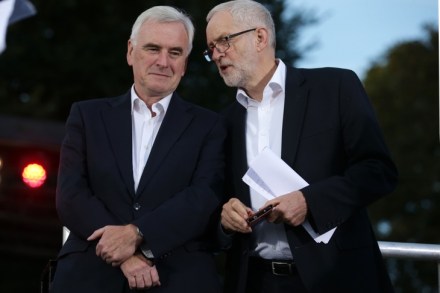
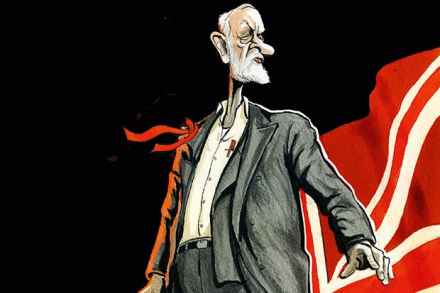
Big hikes in corporation tax. A sweeping programme of nationalisation. Large increases in the minimum wages, a 20-1 cap on executive pay, and, just in case it gets lost in that blizzard of promises, hefty tax increases on anyone earning more than £80,000 a year. Even in a normal year, the leaked Labour party manifesto has more than enough in it to make anyone in business or industry feel just slightly nervous. But hold on. This is hardly a normal time for the British economy. We know Jeremy Corbyn and John McDonnell would like to pretend it simply wasn’t happening, but 2017-22 will also see the most crucial, and in many ways scary, challenge the UK has faced since the first full bracing blast of Thatcherism in the early 1980s.

The four major flaws with Theresa May’s energy cap

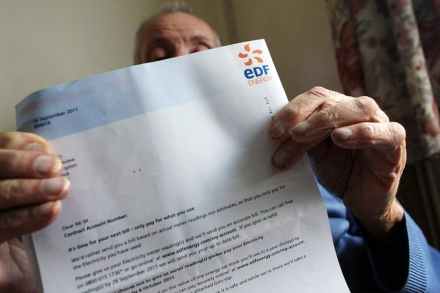
Better access to education. Tax cuts for anyone in the struggling middle. More affordable homes, and more money for the National Heath Service. There is nothing wrong with Theresa May seeking to stake out the centre ground of British politics and stop Brexit turning into a right-wing campaign to turn back the clock. But one might have imagined she’d use conservative means to achieve this, rather than raiding Ed Miliband’s last manifesto for ideas. The proposed price cap on energy companies is an alarming example of Mrs May’s left turn. There are so many ways in which the price cap is a genuinely terrible idea that it is hard to find space to list them all. But here are four big flaws to be getting on with.

Why Theresa May’s 1970s-style energy price caps won’t work

Better access to education. Tax cuts for anyone in the struggling middle. More affordable homes, and more money for the National Heath Service. There is nothing wrong with Theresa May seeking to stake out the centre ground of British politics and stop Brexit turning into a right-wing campaign to turn back the clock. But one might have imagined she’d use conservative means to achieve this, rather than raiding Ed Miliband’s last manifesto for ideas. The proposed price cap on energy companies is an alarming example of Mrs May’s left turn. There are so many ways in which the price cap is a genuinely terrible idea that it is hard to find space to list them all. But here are four big flaws to be getting on with.

We should jump at the chance to pay off the EU in euros

Thirty billion? Fifty billion? Eighty billion, and we have to cover the cost of Jean-Claude Juncker’s martinis for the next decades, plus pick up the dry cleaning for every member of the European Parliament. The debate over Britain’s final exit bill for leaving the EU looks set to be among the most acrimonious issues as we negotiate our departure. But hold on. The first-class brains over in Brussels have made a slip. They are demanding that all the bills be settled in euros, rather than pounds. And yet they seem to have forgotten that their currency remains uniquely vulnerable to a catastrophic collapse. In fact, Philip Hammond should take that deal – because it might turn out to be very good one for the UK.

Nicola Sturgeon’s ‘neverendum’ is hammering the Scottish economy

Its economy will be destroyed by leaving the single market. Losing access to European sales will destroy swathes of industry, and without free movement, employers will be crucified by skill shortages. Nicola Sturgeon is no doubt already preparing her lines for a vote on Scottish independence once the UK leaves the EU. Right now, that looks as if it could come a lot sooner than anyone imagined. It is reported that as soon as the Prime Minister Theresa May triggers Article 50 and starts the process of leaving the European Union, Scotland’s First Minister will announce plans for a second referendum on independence – a demand that May could find impossible to resist. But hold on.

Mark Carney finally gets it: the real risk is a Brexit boom

It is possible that Mark Carney is not quite the last person to notice that the post-Brexit economy is positively booming. Jean-Claude Junker might be too busy working out new ways to ‘punish’ Britain to have paid attention to the statistics. Gina Miller is possibly working on some bizarre High Court action to keep us in the EU. There might even be a leader writer somewhere at the FT who is still worrying away about the collapse of the economy. But just about everyone else has woken up to the fact that ever since we voted to leave the EU, the British economy, far from falling off a cliff, seems to have got markedly better. So Carney may not be absolutely the last person to the party.

Marine Le Pen’s plan to leave the euro is deranged

Unemployment is crucifyingly high. Factories have lost competitiveness. The share of euro-zone exports is in relentless decline. Industrial production is still lower than it was in 2008. The euro might have been a French idea – but France has turned into one of its main victims. The National Front Leader Marine Le Pen is certainly right to insist that France can’t recover while it is inside the single currency. There is a problem however. Her plan for getting out is completely deranged. The first round of voting in the Presidential election is only three months away, and the National Front leader seems almost certain to make the second round.

If the single market is so great for Wales, why is it so poor?

Industry will shrivel. Exports will dry up. The few remaining steel works will be closed down. And rugby will be banned. Okay, I made that last one up. But in a report today, the leaders of Welsh Labour and Plaid Cymru have laid out the case for keeping the principality in the single market - and warned that the economy will be virtually destroyed if they come out. 'Severing ties with the single market to control our borders would be an act of catastrophic self-harm,' according to the Welsh First Minister, Carwyn Jones. Like a kind of mini-me Nicola Sturgeon, it is possible to see what Jones, or certainly the Plaid leadership, might be playing it. They see membership of the single market as a way of driving a wedge between Cardiff and London, and winning more power for themselves.

After Brexit and Trump, it’s time for Davos Man to admit defeat

Business cards. Check. Contacts book. Check. Stylish ski jacket. Check. If it is mid-January, the global elite, and certainly anyone who aspires to membership of that slightly nebulous group, will be packing their bags and flying, preferably by private jet, to the chic Swiss ski resort of Davos. Over the course of a few days, they will sort out the world’s problems, between munching canapés, and bagging some lucrative contracts for their bank. If globalisation has a spiritual headquarters, it is the World Economic Forum, to give it its full name. When the political scientist Samuel Huntingdon coined the term 'Davos Man', he turned it into a short-hand for the globe-trotting elite that moves seamlessly from business, to policy work, to academia and consultancy.

Economists called Brexit wrong, but so did the Bank of England

As confessions go, it was hardly the most revelatory. Cheryl Fernandez-Versini admits she has problems with relationships. Sir Philip Green accepts he made a bit of a hash of BHS. Ed Miliband owns up to struggling with bacon sandwiches. They would have all come as more of a surprise than the chief economist of the Bank of England, Andy Haldane, finally admitting that when it came to forecasting the impact of Brexit they were a couple of alphas short of a full algorithm. Well, thanks Andy. Who knew? The problem is that Haldane, and more importantly the Bank, is still deflecting the blame. Haldane argues there is a general problem with economic forecasting. There is some truth in that.

A Brexit bust? No, the real danger lies in the debt-fuelled boom

At the Westfield shopping centre in east London, the queues started at 2 a.m. on Christmas night. In Wrexham, people started lining up at three, getting ready for a six o’clock start. In Edinburgh, hardy shoppers braved flurries of morning snow to make sure they were first in line for Boxing Day bargains. Whatever else is happening at the close of this year, British shoppers are as indefatigable as ever in their determination to keep spending. Surely it wasn’t meant to be like this? In the wake of the vote to leave the EU back in June, mainstream economists were unanimous in their view that we would be in a recession by now.

The real Brexit risk

At the Westfield shopping centre in east London, the queues started at 2 a.m. on Christmas night. In Wrexham, people started lining up at three, getting ready for a six o’clock start. In Edinburgh, hardy shoppers braved flurries of morning snow to make sure they were first in line for Boxing Day bargains. Whatever else is happening at the close of this year, British shoppers are as indefatigable as ever in their determination to keep spending. Surely it wasn’t meant to be like this? In the wake of the vote to leave the EU back in June, mainstream economists were unanimous in their view that we would be in a recession by now.

Scotland has nothing to gain from staying in the single market

The Scottish economy will be left in ruins. Tens of thousands of people will be thrown out of their jobs. The tax base will shrivel. To listen to the latest round of complaints from the Scottish National Party, membership of the single market is absolutely vital to the country’s economy. Indeed, it is so important that it now wants to maintain it, even if England and the rest of the UK leaves. That might be clever politics, if it can be turned into a platform for a second referendum and if you choose to believe that the constitutional lawyers in Brussels can come up with a way of keeping one part of a country inside the single market with the rest outside. But it is terrible economics. Why? Because Scotland gets even less from it than the UK does.

If the Fed kick-starts global rate rises, the UK shouldn’t be left behind

One is growing at 2.9 percent, the other at 2.1 percent. In one retail sales are growing at 1 percent, in the other at 7.5 percent. In one wages are growing by 2.4 percent a year, in the other by 2.3 percent. In one, the establishment is coming to terms with a populist revolt against the elite. In the other, the establishment is, er, coming to terms with a populist revolt against the elite. What are they? They are, of course, the US and the UK economies. What is remarkable right now is how similar the economic outlook is in both countries. True, there are some minor differences, with the Americans doing better on some measures, and the British on others. But from simply looking at the statistics, it is quite hard to tell them apart. Their performance is just about the same.

Sorry Remoaners. The British peso is on its way back

We were about to see parity with the dollar. It was fetching less than an euro at the airport. Spiralling costs were about to wipe out what little remained of our manufacturing industry, and the RXS’s – that’s the racist, xenophobic scum, in case you were wondering - were all about to lose their jobs. A collapse in the value of the pound over the summer and the autumn was one of the few genuinely worrying economic consequences of our vote to leave the EU – and the Remain camp used it endlessly to demonstrate that the economy was in freefall. It wasn’t quite a full-blown sterling crisis, of the sort that used to crash the British economy.

The Bank of England made a mistake. It should have admitted it

The currency has been devalued by more than 30 per cent. Interest rates have been pushed all the way up to 20 per cent. The IMF is standing by with an emergency package, and capital controls and dollar rationing have been maintained. It has been a heck of a morning for the pound – although, fortunately enough for most us, the Egyptian rather than British one. Over here, it has all been rather quieter. The Bank of England, as most people expected, has stuck with its decision over the summer to take rates all the way down to the 0.25 per cent. It now looks inevitable that it will hold them there – potentially for as long as the seven years at which they were left at 0.5 per cent. And yet that is surely a mistake.

The markets couldn’t care less whether Mark Carney stays or goes – and neither should we

A crash in the pound, with sterling trading down at $1.15, and heading to parity. A spike in gilts, and a flight by bond investors in a panic over the state of the British economy. As the headlines are dominated by reports that the Governor of the Bank of England might decide to pack his bags and return to his native Canada as early as next year, there has been lots of speculation about the havoc that might inflict on our already jittery post-Brexit economy. Right now, no one seems to know whether Mark Carney is likely to stay on as Governor beyond his initial five-year term or not. But ignore some of the more fevered speculation you read in the press. In truth, the markets don’t care very much. Why not?