Matthew Lynn

Matthew Lynn is a financial columnist and author of ‘Bust: Greece, The Euro and The Sovereign Debt Crisis’ and ‘The Long Depression: The Slump of 2008 to 2031’

Labour’s nonsense about the cost of the state

Less than the cost of a Spotify subscription. Less than Netflix charges you every month. True, you might not be able to get the latest Taylor Swift remix or episodes of Stranger Things, but the Labour Party is trying to reach out to the streaming generation with the claim that the state costs you less than either your music or TV fix. According to its Twitter feed, someone earning just £82,000 a year has to pay only £8.33 a month for ‘free healthcare, free education, properly funding the NHS, lifting children out of poverty, ending the climate crisis, and ending homelessness.’ https://twitter.

A US-UK free trade agreement will bring benefits on both sides of the Atlantic

From our US edition

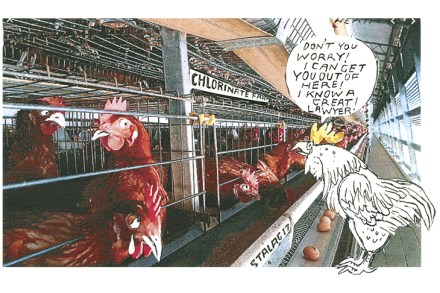
It will no doubt be met with furious resistance in parliament and on the streets. There will be an outcry over chlorinated chickens. There will be scare stories about the National Health Service being sold off. And the farmers will be angry at the prospect of the country being flooded with food that is far cheaper than anything they can produce. Even so, assuming the Conservatives win the election, we leave the European Union and Donald Trump wins re-election to the White House (OK, I will agree the hypothetical is doing some heavy lifting in that clause), Britain and the United States are going to attempt a comprehensive free trade agreement. That will be a big deal. America and the UK are, respectively, the biggest and fifth biggest economies in the world.

us-uk

London’s Uber ban leaves us all worse off

It is unregulated, arrogant, unsafe and has destroyed the livelihood of the traditional black cabs. Ever since it was launched, the ride-sharing app Uber has been as controversial as it has been popular. Now it faces a ban in London that could see the ubiquitous Toyota Priuses favoured by its drivers disappear from the capital’s streets. It won’t happen immediately, because the decision will be appealed, but it could happen very soon. True, that will be a blow to the company, and a relief both to its ride-sharing rivals and even more to the cabbies. With three million passengers and more than 45,000 drivers, London is one of the company’s biggest markets.

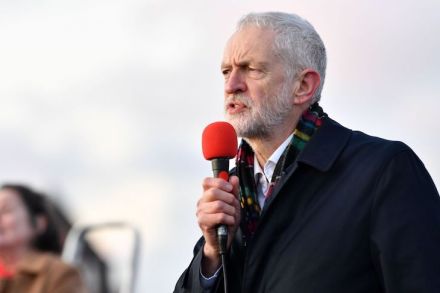
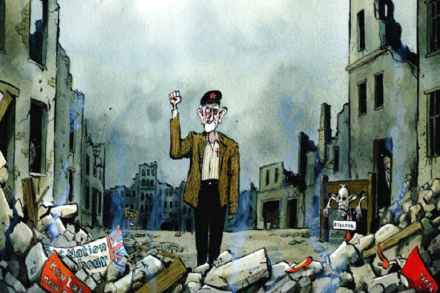
Chaos and capital controls: the first 100 days of PM Corbyn

The morning of 13 December. A series of salacious revelations about his private life have sunk Boris Johnson’s campaign. A re-energised Nigel Farage has led a Brexit party surge in the north, splitting the Leave vote. The ousting of Jo Swinson in a coup organised by refugees from the People’s Vote campaign led to Remainers flocking back to Labour. The SNP has swept Scotland. Plaid Cymru and the Greens have picked up a dozen seats where they co-operated. And a couple of Tory rebels have managed to hang on as independents. After the dust settled on the most chaotic election campaign in memory, Jeremy Corbyn had just enough votes to lead a Labour/SNP/Green/Plaid/Independent coalition. The first 100 days of the Corbyn government were to prove a challenge, however.

A British Broadband Corporation is Labour’s worst idea yet

If you wanted to completely destroy a modern twenty-first century economy there are various places you could start. You could print money to finance unlimited government spending. You could put up tariff barriers on all your main imports. You could even try raising the minimum wage to £30 an hour, while cutting the working week to three days. In truth, however, if you wanted to do some real long-term damage your best bet would probably be this. Nationalise the broadband network. Unfortunately, that is what the Labour party has just proposed. Labour has made a splash today with a headline grabbing proposal to provide free broadband for everyone by 2030.

Today is the day that Project Fear died

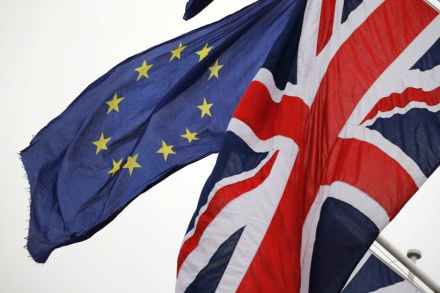
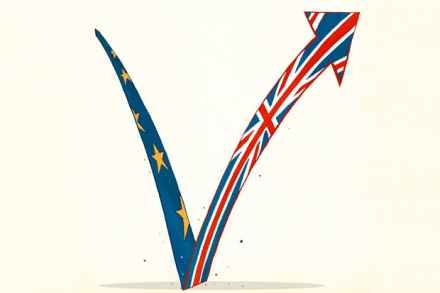
We were about to crash out of the EU without a deal. The political system was in deadlock. Businesses were fleeing the country and investment was drying up, all against a backdrop of global trade wars and slumping demand across the eurozone. And what happened to the British economy against all those headwinds? As we learned this morning, it sailed right through the storm with steady, if hardly spectacular, growth. It now looks certain that far from reducing us all to poverty, leaving the EU won’t even create a brief technical recession. The predictions of catastrophe could hardly have been more wrong. If you had to choose a day to officially declare Project Fear dead, this would be it.

The Lib Dems’ £50bn ‘Remain bonus’ is nonsense

The schools will all get new books. The hospitals will all be rebuilt. Long-suffering public sector workers will finally get a pay rise and there will be a ton of money to fight climate change. Liberal Democrat leader Jo Swinson is promising there will be a £50 billion ‘Remain Bonus’ to spend on public services after she has won the general election and cancelled our departure from the European Union. If she weren’t quite so humourless she might even be tempted to put that figure on the side of a bus. But hold on. From die-hard Remainers, who accuse the other side of peddling dodgy figures and who pride themselves on ‘evidence-based’ policy-making, that claim is more than little outrageous.

Could ‘catastrophe Christine’ crash the euro?

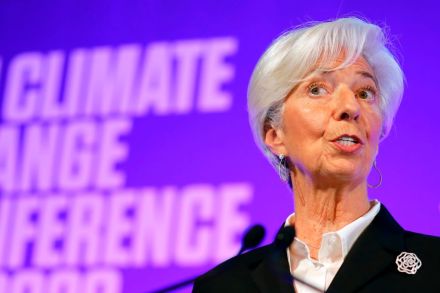
As president Sarkozy’s finance minister, Christine Lagarde ran up one of France’s largest ever budget deficits and moved so slowly on reforms it cost him re-election. As managing director of the International Monetary Fund, she collaborated in a ruthless deflation that created the worst recession in recorded history in Greece. She then led the IMF into potentially its worst ever losses with a failed bail-out of Argentina. Wherever Christine Lagarde goes she leaves an economic train wreck behind her. And now, extraordinarily, she has been put in charge of the most fragile currency in the world. Today, Lagarde moves from the IMF to the presidency of the European Central Bank. On the surface, that might appear nothing more than switching one technocrat for another.

It’s time for economists to stop forecasting Brexit

The uncertainty will be lifted. Businesses will know where they stand. Our politics can return to something approaching normality, and the government can get on with tackling all the other issues the country faces. Whatever the precise pluses and minuses of Boris Johnson's Withdrawal Agreement for getting out of the EU, you might think that finally resolving the issue would be helpful for the economy. Except apparently not. Just when you might think we had seen enough forecasts of this deal or that to last several lifetimes along comes the National Institute of Economic and Social Research with the alarming news that not only will leaving the EU make us poorer, this particular way of leaving will make us even poorer than Theresa May's deal. By how much?

Five reasons why the Brexit extension is bad news

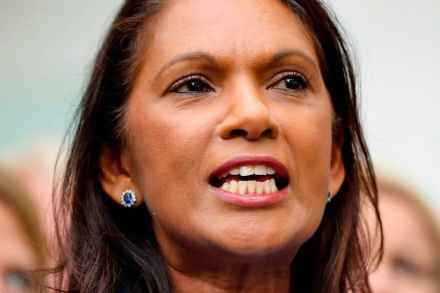
Some fiddly amendments from Sir Oliver Letwin that no one quite understands. A legal action against someone or other from Gina Miller. Lots of protest marches. A petition or two – and possibly even an unreadable novella from Ian McEwan/JK Rowling/John Le Carre (delete as applicable) ranting against Brexit. We don’t quite know yet how exactly we will fill up the latest three-month extension to the already protracted saga of our departure from the EU. It probably won’t be a great deal different from the last three months, or the three months before that. There is one thing we should know for sure by now, however. It will be very bad for the economy.

Pizza Express’s collapse would be no great loss

It was where we went on our first date. It was where we took our kids for meals out. And it was the one place we always knew we could get something decent to eat when we were stranded in a strange town. As Pizza Express runs into trouble and could ultimately fold, there has been a wave of nostalgic affection for the chain. Twitter is alive with campaigns to come to its rescue, and the tabloids are serving up elegiac farewells. At this point, it would hardly be a great surprise if John McDonnell called for it to be nationalised, or if Boris Johnson stepped in to create a ‘People’s Pizza’ company to buy it out. True, it was a great business in its day.

Foreign takeover bids prove Brexit Britain is flourishing

From our US edition

The Hong Kong Stock Exchange has tabled a $37 billion bid for its London rival. Li Ka-shing is buying the pub chain Greene King for $3.3 billion. The American buy-out firm Advent has offered $5 billion for aerospace supplier Cobham. On an almost weekly basis, foreign predators are swooping on one British company after another. But hold on: the UK is meant to be plunging into an economic abyss. A chaotic departure from the European Union, a political system in meltdown and the looming threat of a Marxist hard-left government have made Britain the one country that investors don’t want to touch. To many, the ZAVs — Zimbabwe, Argentina, and Venezuela  — look attractive by comparison. And yet, the flurry of buyouts by foreign firms is not as odd as it may seem.

Brexit grifters are making a killing selling useless advice

Over the past three years, as we have torturously debated our departure from the European Union, we have heard a lot from the Brexiteers about the industries that might benefit from leaving the EU. Some of these predictions may materialise, others may not. There is one industry, however, that is already doing very well as a result of the referendum. Lots of consultants are making a shedload of money. In the past few weeks, it has become clear just how much.

Here’s the flaw in the Boris hedge fund conspiracy theory

It is one of the most diabolical plots of all time, a conspiracy so vast, so deep, and so wicked it could have come from the pen of Dan Brown. A small cabel of powerful hedge funds have installed Boris Johnson at Number 10, paying for his campaign and his advisers. Once there, his task is to crash the UK out of the European Union without a deal, plunging the economy into chaos, and sparking a rout of sterling and a collapse in the FTSE. In the background, those same hedge funds will have ‘shorted’ the pound and the London equity market. In the process, they will make a few quick billion before they disappear to their Cayman Islands' mansions to sip champagne and chuckle over the brilliance of their scheme.

Brexit is already changing the British economy – for the better

The government has lost its majority. The constitution has fallen apart. The country no longer has any idea whether it is leaving the European Union or not. Historians and political commentators are queuing up to tell us this is the lowest point in the country's history since the Suez Crisis/Civil War/Dissolution of the Monasteries (delete as applicable). And yet, amid all this chaos and confusion, something else is happening. The economy, slightly surprisingly, is purring along quite smoothly. The explanation? In truth, the EU doesn't make much difference to the economy anymore. And insofar as it does, leaving is a marginal improvement. The City expected the economic data released this week to make grim reading.

Sajid Javid’s free-spending spending review

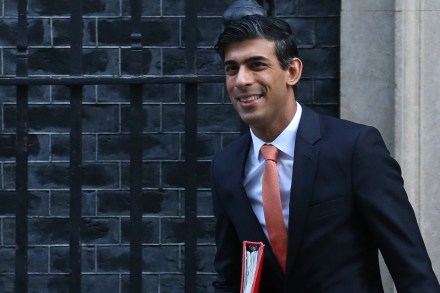
Close your eyes, and you could have been listening to Gordon Brown in his pomp. Seven billion for schools. Six billion for the NHS. Money for youth centres, the police, and social care with overall spending rising at the fastest rate for fifteen years. If Chancellors were measured simply by their ability to spend more of other people’s money than any of their rivals – and in truth plenty of them see that as their main goal – then Sajid Javid would have already got off to a great start. But will it be enough to win the looming election? Sure, it will help – but he will need to do a lot more to command a majority for his Prime Minister. It is a long time since we have seen a Chancellor as free-spending as this.

Macron’s no-deal Brexit gamble could backfire

The ‘Non’ was not quite as frosty as it might have been. When Boris Johnson met up with France’s president Emmanuel Macron there were at least some pictures of the two men talking amicably. Even so, while Germany’s chancellor Angela Merkel and some of the EU’s other leaders have at least left the door a tiny bit open to renegotiating the UK’s departure from the EU, Macron made it clear it was almost completely shut. In fact, Macron is making almost as big a bet as Johnson. His calculation is that a no-deal Brexit will work to France’s advantage. Yet he may well have mis-calculated – and it could easily drive his own economy into recession.

Boris’s ‘boosterism’ isn’t complete nonsense

Lots and lots of optimism. Some can-do spirit. A dash of hope, a sprinkle of belief, some added willpower and a pinch of positive thinking. Oh, and in case you forgot, some more optimism (and a few rays of sunshine as well). A whole week into his premiership, which is longer than some of the sceptics gave it, and one thing is clear about Boris Johnson. He is planning to ride through our departure from the European Union, and any damage to output and jobs it may create, simply by making everyone feel better about it. Indeed, ‘boosterism’ as it now appears to be known inside Number 10, has turned into a major plank of the government’s economic strategy.

Get ready for a ‘Boris bounce’

Global trade would collapse amid a tariff war. The dollar would be in free-fall as investors fled the chaos. The stock market would tank as money was pulled out of the country. When Donald Trump was elected as President of the United States, there were lots of dire predictions about the impact it would have on the economy and the Dow Jones index. And what happened? The 'Trump Bump' as it became known on Wall Street was one of the strongest for any President in a long time. In the year after his election, the S&P 500 rose by 21 per cent, which was the best return since George Bush Senior way back in 1988, and, as it happened the fourth best ever (the record, in case you happen to interested, is held by Roosevelt with a 30 per cent gain in 1932).

The billionaire space race is the new dash to the moon

There will be exhibitions, television documentaries, and a gala concert organised by Nasa. Over the course of this weekend, the world will quite rightly be celebrating the fiftieth anniversary of the first time a man walked on the surface of the moon. Even after the passage of half a century, it remains an unchallenged achievement and one that has still not really been bettered. And yet, there will also quite rightly be a nagging question behind that: what happened to all that innovation and drive? The answer? It hasn’t disappeared. But it has been privatised. And we can now find it in the vast sums spent on blue-sky research by the giants of the technology industry. With the benefit of hindsight, the moon landings were a dead end.