Matthew Lynn

Matthew Lynn is a financial columnist and author of ‘Bust: Greece, The Euro and The Sovereign Debt Crisis’ and ‘The Long Depression: The Slump of 2008 to 2031’

Rishi Sunak’s wartime economy

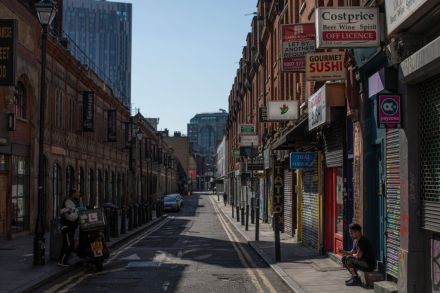
At least no one can say it isn’t bold. The United States is fiddling around with some possible cuts to payroll taxes. Most of Europe is stuck with some printed money from the ECB. But the UK is embarking on one of the most radical experiments in modern economic theory, and one that will no doubt be studied for decades to come. With his latest announcement today, a whole 48 hours after his last intervention, the Chancellor Rishi Sunak has effectively turned the UK into a wartime economy.

Tory taboos must be broken in the fight against coronavirus

A £330 billion package of loans to business. A huge tax break to any company in the hospitality or leisure industry. Mortgage holidays to anyone who has been impacted by the coronavirus. People can accuse the Government of being behind the curve on delaying the spread of Covid-19 through the population. But it is hard to accuse it of not moving quickly enough to mitigate its financial impact.  Only last week, alongside a rate cut from the Bank of England, the Chancellor Rishi Sunak announced huge rises in Government spending. Today he followed that with a massive round of state intervention, more money for industry, and the hint of a rolling programme of bail-outs as companies run into trouble.

The eurozone’s coronavirus response has been dire

A dramatic dawn cut in interest rates. A huge blast of public spending. And immediate cash help for companies that might find themselves temporarily in trouble as their customers stay at home and staff call in sick. We will find out over the next few weeks whether the British government has done enough to fight the coronavirus emergency it suddenly faces. But there can be no question it has at least done everything it can to fight the economic crisis that will surely follow. Likewise in the United States, the Federal Reserve has already sprung a cut in interest rates on the markets and may well make another move before the end of the month. President Trump has already announced a plan to cut payroll taxes, and is working on a stimulus package.

Sunak’s leaked tax plan sends precisely the wrong message

It is too expensive. It mostly goes to Southerners who already have plenty of money. And it doesn’t even work very well, while the money would be better spent elsewhere. As the Chancellor puts the finishing touches to his Budget, the leaks suggest that the most generous tax relief for entrepreneurs will either be curbed, reduced or potentially even scrapped completely. But hold on. That's crazy. It's just about possible that there might be a worse message to send out about post-Brexit Britain – nationalising the banks, perhaps, or a three-day working week – but it is hard to think of one. In fact, entrepreneur’s relief has been a huge success. Instead of scrapping it, we should think about extending it.

Three ways to stop a coronavirus recession

Supply chains are shutting down. Factories and offices are closing. Flights are being cancelled, conferences postponed and football and rugby games rescheduled. It remains to be seen how much of a blow the spread of the coronavirus turns into for the global economy. But one thing is now certain: it is going to lead to a sharp slowdown. And the real question now is this: how should governments and central banks respond? The medical response is already clear. Communities are put into lockdown. The infected are quarantined. Borders are closed where necessary. And treatment centres are braced for a vast increase in the number of patients. How well it works, and how quickly, remains to be seen. But at least a plan has been put in place. The economic response?

Gina Miller should leave the Bank of England’s new boss alone

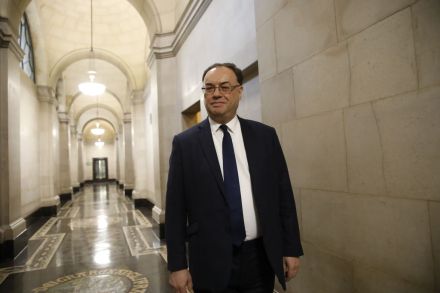
She’s back. With Brexit ‘done’ and with most of the country just grateful to have moved on from the whole saga, we might have thought we had heard the last of Gina Miller. Miller, who became something of a figurehead in the anti-Brexit movement, could quietly return to doing whatever it was she used to get up to. Not so. Now she is back on the attack, demanding a ‘review’ of the appointment of Andrew Bailey as Governor of the Bank of England. What’s her complaint this time? Apparently as head of the Financial Conduct Authority, Bailey presided over “a toxic cocktail of negligence, incompetence and indifference to the needs of ordinary depositors, investors and pensioners”.

Trade friction with the EU is nothing to be afraid of

We will export less. There will be less competition. Prices will be higher and productivity lower. Textbook economics tells us that trade friction – that is anything that makes it harder for goods or services to flow across borders – is a very bad thing. So why is the British Government suddenly accepting trade frictions with the EU? As chief Brexit negotiator David Frost made clear in his key speech yesterday, the UK is willing to accept some restrictions on trade with the rest of Europe if it has to. The answer? Because they are not necessarily as bad as the textbooks predict and the prize is a big one. True, in an ideal world we would have completely free trade with the EU. There would be no tariffs or quotas. We would remain members of the Single Market.

Three better ways to spend £200bn than HS2

It will be big, shiny and it will make a difference. Even with its astronomical and rising cost and its wobbly economics, it is possible to see the gut appeal of HS2, especially to a big spending government such as this one which can borrow freely at virtually zero cost. After all, it needs to do something to close the gap between the regions. It also needs to improve the country’s transport infrastructure and this project is, at least, almost ready to start. The trouble is, there are far better ways of spending what is likely to be £200 billion by the time the final bill is due. After all, high-speed trains are a 40-year old technology. There is nothing especially modern about them anymore.

Boris’s eco plans will end in tears

At least no one will be able to accuse it of not caring about the environment. The government has just bought forward its ban on all diesel, petrol and hybrid cars to 2035. From that date onwards, you will only be allowed to buy electric or hydrogen vehicles. The gas-guzzling, polluting SUVs we all like so much will be banished from the road, and all those petrol stations will be replaced with sleek charging stations. There is a problem, however, and it is far from a minor one. The government shouldn’t be telling us what to drive – because consumers left to themselves can decide for themselves. True, there is nothing wrong with electric cars. They are far, far better for the environment.

Three ways Britain should refuse to stick to the EU’s rules in trade talks

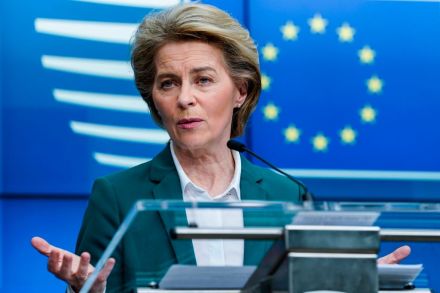
It is hard to imagine there will be much of a meeting of minds. As the new president of the European Commission Ursula von der Leyen meets with the newly re-elected British Prime Minister Boris Johnson today the pleasantries will quickly give way to a strong clash of views. With our departure from the EU set for the end of the month, trade talks are about to open. Brussels is desperate to lock the UK into its regulatory system. But quite rightly, the government is resisting that. After all, there was no point in leaving only to accept all the EU rules and regulations, except this time with no say over how they are made. In fact, the UK government should make it absolutely clear there are a whole series of industries where we are determined to break free.

2020 will be the year the UK market outperforms the world

Stock markets are hitting record highs. New companies are being listed. Fortunes are being minted. The last year has been a great one for investors, and so has the last decade, as what was already one of the longest bull markets acquired fresh impetus. There is one exception to that, however, and if you happen to be British it is sadly close to home. The London market has woefully under-performed the rest of the world. In 2020 that will finally start to change. Why? With our departure from the EU finally resolved global money will come flooding back, the Government is set on a huge stimulus, and the Bank of England will decide to go for growth. For once, the UK may start to do better than its rivals. True, anyone who invested in the UK had an okay 2019.

Three reasons to walk away from a trade deal with the EU now

Just when you might have thought that our departure from the EU was finally dealt with it turns out another cliff edge is looming. We have only a year to agree a trade deal with the rest of Europe. Already there are scare stories about how we may crash out without one, and plenty of controversy about what kind of concessions we will have to make to Brussels. By the time the first tulips are flowering in the spring, Project Fear will be back up and running again. But hold on. Before we start negotiating we should ask ourselves a bigger question. Do we really want a trade deal with the EU? The answer might well be that we don’t. Sure, of course we’d want a deal if it didn’t come with conditions attached. It would be crazy to say no.

Who can salvage the CBI’s reputation after Brexit?

The most vocal opponents of our decision to leave the European Union have been the City and big business. For the last three years, from the CBI to the Bank of England to the FT and countless FTSE chairmen and trade groups, there have been hysterical warnings about the consequences of leaving. As Project Fear steamed forward, they were in the ship’s engine room throwing coal into the furnaces. That was a big bet on the decision being reversed. If leaving could be made difficult enough and if the voters could be cowed into submission, there was a chance of a second referendum overturning the result. And yet, in the wake of the general election, it is clear that gamble has been lost. Whatever else happens, we are leaving in six weeks' time.

Five places to flee to if Jeremy Corbyn becomes PM

It is still too close to call. And the odds are still on a Tory victory. Even so, with the polls narrowing, with lots of constituencies likely to change hands and with plenty of voters still to make up their minds, there is still a real chance that by Friday morning Jeremy Corbyn could be moving into Number 10. For anyone with money and worst of all anyone who owns a company, a reign of terror will be about to begin. The Labour party has come up with so many different ways to harass and intimidate business it is hard for even the nerviest plutocrat to keep track of them all. Whole industries will be nationalised without much in the way of compensation. The Treasury will grab ten per cent of most companies under the guise of worker’s control. Union rights will be increased.

Labour’s nonsense about the cost of the state

Less than the cost of a Spotify subscription. Less than Netflix charges you every month. True, you might not be able to get the latest Taylor Swift remix or episodes of Stranger Things, but the Labour Party is trying to reach out to the streaming generation with the claim that the state costs you less than either your music or TV fix. According to its Twitter feed, someone earning just £82,000 a year has to pay only £8.33 a month for ‘free healthcare, free education, properly funding the NHS, lifting children out of poverty, ending the climate crisis, and ending homelessness.’ https://twitter.

A US-UK free trade agreement will bring benefits on both sides of the Atlantic

From our US edition

It will no doubt be met with furious resistance in parliament and on the streets. There will be an outcry over chlorinated chickens. There will be scare stories about the National Health Service being sold off. And the farmers will be angry at the prospect of the country being flooded with food that is far cheaper than anything they can produce. Even so, assuming the Conservatives win the election, we leave the European Union and Donald Trump wins re-election to the White House (OK, I will agree the hypothetical is doing some heavy lifting in that clause), Britain and the United States are going to attempt a comprehensive free trade agreement. That will be a big deal. America and the UK are, respectively, the biggest and fifth biggest economies in the world.

us-uk

London’s Uber ban leaves us all worse off

It is unregulated, arrogant, unsafe and has destroyed the livelihood of the traditional black cabs. Ever since it was launched, the ride-sharing app Uber has been as controversial as it has been popular. Now it faces a ban in London that could see the ubiquitous Toyota Priuses favoured by its drivers disappear from the capital’s streets. It won’t happen immediately, because the decision will be appealed, but it could happen very soon. True, that will be a blow to the company, and a relief both to its ride-sharing rivals and even more to the cabbies. With three million passengers and more than 45,000 drivers, London is one of the company’s biggest markets.

Chaos and capital controls: the first 100 days of PM Corbyn

The morning of 13 December. A series of salacious revelations about his private life have sunk Boris Johnson’s campaign. A re-energised Nigel Farage has led a Brexit party surge in the north, splitting the Leave vote. The ousting of Jo Swinson in a coup organised by refugees from the People’s Vote campaign led to Remainers flocking back to Labour. The SNP has swept Scotland. Plaid Cymru and the Greens have picked up a dozen seats where they co-operated. And a couple of Tory rebels have managed to hang on as independents. After the dust settled on the most chaotic election campaign in memory, Jeremy Corbyn had just enough votes to lead a Labour/SNP/Green/Plaid/Independent coalition. The first 100 days of the Corbyn government were to prove a challenge, however.

A British Broadband Corporation is Labour’s worst idea yet

If you wanted to completely destroy a modern twenty-first century economy there are various places you could start. You could print money to finance unlimited government spending. You could put up tariff barriers on all your main imports. You could even try raising the minimum wage to £30 an hour, while cutting the working week to three days. In truth, however, if you wanted to do some real long-term damage your best bet would probably be this. Nationalise the broadband network. Unfortunately, that is what the Labour party has just proposed. Labour has made a splash today with a headline grabbing proposal to provide free broadband for everyone by 2030.

Today is the day that Project Fear died

We were about to crash out of the EU without a deal. The political system was in deadlock. Businesses were fleeing the country and investment was drying up, all against a backdrop of global trade wars and slumping demand across the eurozone. And what happened to the British economy against all those headwinds? As we learned this morning, it sailed right through the storm with steady, if hardly spectacular, growth. It now looks certain that far from reducing us all to poverty, leaving the EU won’t even create a brief technical recession. The predictions of catastrophe could hardly have been more wrong. If you had to choose a day to officially declare Project Fear dead, this would be it.