Matthew Lynn

Matthew Lynn is a financial columnist and author of ‘Bust: Greece, The Euro and The Sovereign Debt Crisis’ and ‘The Long Depression: The Slump of 2008 to 2031’

Silver linings: the asset that’s outperforming gold

From our US edition

It could have been technology stocks such as Amazon and Zoom, of course; or government bonds; or cash; or a property, preferably in the countryside. As the COVID-19 crisis rippled around the world and locked-down economies crashed into one of the worst recessions ever recorded, there were plenty of different ways investors might have tried to ride out the storm. But there was one asset they could easily have overlooked, and yet which would have outperformed almost any of them: silver. For much of the past decade, silver has been ignored as a largely irrelevant alternative to gold. In the past few months, however, it has started to shine. The precious metal has soared in price, outperforming most alternatives.

silver

The great Bounce Back fraud bonanza

Fake companies set up under false names. Phantom employees invented to claim compensation. Start-ups trousering loans for ventures that don’t exist. Meals that were never eaten. The British economy has been in a bad place for the last six months. But it turns out one small corner of the economy has been flourishing: defrauding the public purse. The Chancellor's extraordinarily generous range of schemes to keep businesses afloat may have been necessary to prevent a complete collapse in output. But they have also proved a bonanza for spivs, chancers and con men, and that too will have a cost.

Why is Jamie Oliver so against freedom of choice?

It will involve hundreds of hours of haggling over thousands of different products. It will have to pass torturous debates in Congress. And it will have to survive an election cycle or two. There are lots of hurdles in the way of a British trade deal with the United States. But now we have perhaps the greatest obstacle of all. Jamie Oliver doesn’t like it. Fresh from tidying up the collapse of his restaurant chain, and reminding us all how to get through lockdown by rustling up a tasty pasta bake, the chef is back with a new campaign, this time against ‘sub-standard’ American food. There is a problem, however. There is a very simple solution to the different ways food is produced on either side of the Atlantic.

Winning shot: how the vaccines race has become a power struggle

34 min listen

Vaccines are normally in the realm of scientists; but not this time as world leaders race to be the first. (00:50) Brexit is heating up, but is the government in a stronger position than it seems? (13:35) And a modern day Caligula - the life and times of the Thai king Rama X. (22:40)With journalist Matthew Lynn; immunologist Beate Kampmann; our political editor James Forsyth; YouGov pollster Marcus Roberts; and Asia historian Francis Pike.Presented by Cindy Yu.

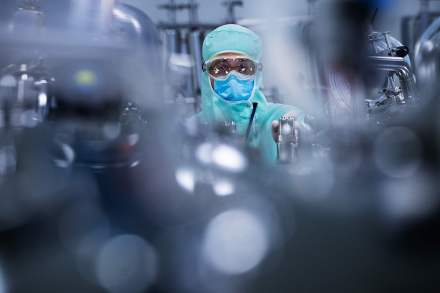
The race to find a Covid vaccine has become a global power struggle

It could be the most audacious piece of political theatre of modern times. At the end of next month, just a week or so before Americans choose their next president, we could see Donald Trump standing on the White House lawn in front of a handful of friendly journalists, rolling up his sleeve and looking solemnly into the camera with hardly a wince as a nurse expertly administers America’s newly licensed coronavirus vaccine. ‘We did it,’ he will announce, adding that the biggest mass vaccination programme in history is ready to roll out. ‘An American vaccine that has made America great again.’ Far-fetched? Ridiculous? Perhaps not. Even though trials of Britain’s Oxford vaccine were paused this week, others remain on track.

Oxford’s vaccine delay has thrown the global race wide open

Even a politician as tenaciously optimistic as Matt Hancock was struggling to put any positive spin on it: the world has woken up to the disappointing news that trials of the Oxford vaccine for Covid-19 had been paused after an adverse reaction in one patient. The Oxford-AstraZeneca vaccine was one of seven in Phase 3 trials, in which doses are administered to thousands of people of different ages and varying states of health. A spokesperson at Oxford has said the pause ‘is a routine action which has to happen whenever there is a potentially unexplained illness in one of the studies, while it is investigated, ensuring we maintain the integrity of the trials.

Rishi Sunak needs to learn to add up

It is, by any measure, a heck of a lot of pizza. The ‘Eat Out to Help Out’ scheme turns out to have been a huge success. We learned today that is was used more than a 100 million times in August. In many cities, it was virtually impossible to get a table from Monday to Wednesday. Plenty of restaurants were grateful for the sudden boom in business, and no doubt a few were saved from closure. There is a problem, however, and it is a significant one. It turns out that we have a Chancellor who struggles to add up, and Treasury officials who don’t know much about basic economics – and that matters. By any measure, Rishi Sunak’s half-price meal deal, launched to persuade us all to get back into the habit of eating out again, has been a hit.

In defence of vaccine nationalism

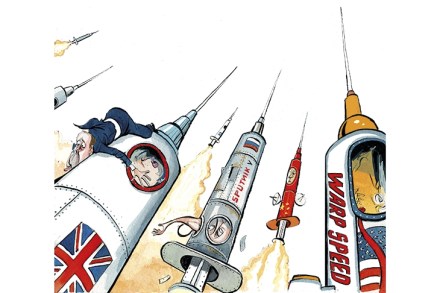
Donald Trump is, perhaps predictably enough, pulling out of the World Health’s Organisation’s global vaccine programme. The Russian president Vladimir Putin has been cutting every corner to get a Russian shot out first, while allegedly sending spies to steal the Oxford one. And China is racing to have the first vaccine on the market, already trying one out on the military, and allegedly hacking the US company Moderna. As the Covid-19 crisis drags out, ‘vaccine nationalism’ is rampant. Everyone from the WHO to the European Union to the United Nations solemnly condemns that. We all have to work together to find a vaccine, and then distribute it fairly, we keep being told.

The work from home brigade should be careful what they wish for

No more commuting. An end to irritating conversations with slightly dull colleagues. The boss can’t monitor how much time you spend on Facebook anymore, and you have plenty of time to bake sourdough bread/try out online pilates/read the whole of Proust (delete as applicable). A few of us might even be able to carry on earning a salary while spending much of the year in Provence or Tuscany. It is perhaps no great surprise that the British have taken to working from home so enthusiastically. After all, what’s not to like? Well, perhaps this: while it may be great for now, many staffers may soon find that they aren’t employees anymore, simply expendable gig workers – and that isn’t quite so much fun.

The stock market isn’t the success story Trump thinks it is

From our US edition

COVID-19 is still raging, with little sign of coming under control. The economy is already a tenth smaller than it was at the start of the year. Joblessness is soaring. And the budget deficit? Don’t even ask. But, hey, perhaps we shouldn’t worry about any of that. As the President of the United States keeps pointing out, the stock market is doing great, and, in his opinion, anyway, that means America, to borrow the kind of slogan that fits neatly onto a baseball cap, is great again as well. There is a problem, however, with Trump’s breezy 21-character analysis. It is not really true. The main equity indices reflect many different things, and the health of the economy is not always one of them. https://twitter.

stock market

Why are we so sniffy about the Russian vaccine?

It didn't help that it was unveiled by a swaggering Vladimir Putin. Or that it was called Sputnik V – a hardly subtle reference to the Cold War. Nor that we have grown used to Russian meddling and mis-information. Even so, there is still something a little surprising about the hostility towards the Russian vaccine for Covid-19 going into production this week, and set to be made widely available by October. Medical opinion seems to be universally hostile, condemning the vaccine as untested and potentially unsafe. The WHO sounds suspicious, and a range of government agencies have started to sound alarmed. A few have even started to make the argument that releasing a vaccine too early may well set back the fight against the virus.

Sweden’s Covid-19 strategy is already paying off

There are lots of different ways of measuring the terrible state of the global economy. The collapse in overall output. The fall in trade as ports and airports empty. The trillions printed by central banks, and the soaring price of gold as investors lose faith in a recovery. But one is surely this: keeping the drop in GDP in single digits actually looks pretty good. Sweden this morning reported its flash estimate of second quarter GDP. Output was down by 8.6 per cent compared with the first quarter, and 8.2 per cent compared with the same quarter last year. It was, as the release helpfully pointed out, the worst result it had recorded since it started this series of statistics in 1980. Without the Scandinavian reserve, however, it could have put a different spin on the figures.

Covid doesn’t care about your political theories

The President of the European Central Bank, Christine Lagarde, took some time out from presiding over the worst collapse in economic history last week to deliver a short lecture on how women leaders have proved better at dealing with Covid-19 than men. According to the impeccably politically correct French politician, they were more 'caring', better at dealing with the science, and smarter at delivering clear messages on health. Not very surprisingly, there was a lot of gushing commentary to support her view, at least in the liberal press. Indeed, the superiority of women Prime Ministers and Presidents has been a common theme ever since the epidemic started. But hold on. Less than a week later, the evidence for Lagarde’s claim is not looking quite so strong anymore.

Europe’s coronavirus rescue fund is dead on arrival

Just imagine what would happen if real money was at stake. Over the last four days, the leaders of the European Union have been furiously haggling over their Coronavirus Rescue Fund. France’s President Macron has been banging the table angrily, the Dutch have taken on the role vacated by the British of the ‘bad Europeans’, and the Germans have been cautiously digging into their wallets to pay for the whole thing. In the end, however, they came up with a deal. Arch-federalists will hail this as a ‘Hamilton Moment’ – a decisive step towards a more united Europe where the richer states help rescue the poorer, distributing money around the continent in a moment of ‘solidarity’.

Apple has struck a blow against the EU’s out-of-control federalists

A massively profitable American technology giant that pays small amounts of tax on vast profits, while massively over-charging for products that quickly become obsolete. Apple is a hard company to love, and an unlikely champion of anything apart from its own bottom line. And that might explain why many people instinctively cheered when the European Union slapped a massive 13 billion euro (£11.8bn) tax bill on Apple. Surely it was about time the company was cut down to size? Well, hold on. It now turns out the EU was wrong. The General Court of the EU today overturned the decision after the Irish (and Apple) appealed against it. It will probably go up to a higher court.

Britain’s GDP figures are dreadful but Sunak must still hold his nerve

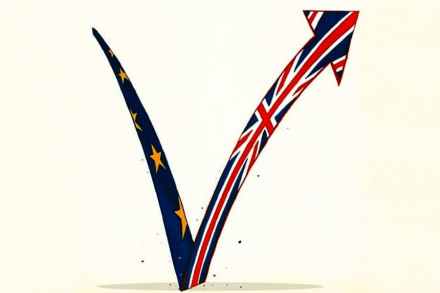
A five hundred quid shopping voucher for everyone. Five per cent off VAT across the board. Maybe suspending income tax for a couple of months, or getting rid of corporation tax until the end of the year. As today’s disappointing GDP numbers landed on his desk, the Chancellor Rishi Sunak must have been tempted to reach for the Treasury folder marked ‘extreme emergency measures’. The V-shaped recovery he was no doubt hoping to engineer is increasingly looking more like an L – a big drop followed by a flat line. Another round of government stimulus right now would be tempting. But it would also be a mistake: the Treasury has already borrowed and spent enough. All it can do now is to steadily re-open the economy and let supply catch up with demand.

Rishi Sunak should try something new: silence

A huge increase in job centre advisers; special grants for companies taking on trainees; free cash for anyone insulating their home; cuts to National Insurance; reduction in VAT, and a £500 shopping voucher to re-boot a collapsing High Street. Oh, and an emergency GCRF, or Garden Centre Rescue Fund, to subsidise anyone who helps our heroic horticultural industry by building a new rockery or water feature. Okay, I’ll admit, I made that last one up. But all the others are suggestions that have been put forward for the Chancellor’s mini economic statement tomorrow. But perhaps Rishi Sunak should try something new: silence. In truth, the government has done an extraordinary amount to help people and businesses through this epidemic.

Boris’s Roosevelt remedy isn’t what Britain needs

Huge infrastructure projects. A massive rise in public spending, and the creation of public works for an army of unemployed. Prime Minister Boris Johnson has started pitching himself as the new Roosevelt, modelling himself on the 1930s American president who spent big to pull the country out of the Great Depression, and re-wrote the rules of economics in the process. At this rate, he’ll be making speeches about there being nothing to fear ‘except fear itself’ and starting fireside chats over the wireless by the end of the week. But hold on. Is FDR a model we really want to emulate? Not really. We don’t face anything like the same challenges, and the solutions that worked ninety years ago won’t necessarily work today.

The EU’s new bond isn’t as solid as it seems

Its rescue fund will bail out the poorer states. It will fuel a rapid economic recovery. And perhaps most of all, it will finally turn the European Union into a fiscal union, raising its own money, and distributing it based on which region needs its most. The EU’s new €750 billion (£680 billion) rescue fund has been hailed as a huge step forward for the Union. Perhaps it will be. There is a problem, however. Some analysts are starting to argue the new shiny new EU bonds should be rated as junk – or something close to it. On the surface, you might think an EU bond should be completely solid. After all, this is a £14.5 trillion economy, the largest single bloc in the world, with the world’s second-largest currency, the euro.

Trump is right to pick a fight with Germany

He doesn’t know much about how to control a virus. Nor does he show much sign of being able to run an administration with any semblance of competence. But there is one thing that Donald Trump does know how to do. Hit a raw nerve. And in his decision to attack Germany, and its increasingly destabilising role in world affairs, he looks to have done that again. The president’s latest campaign speech in Tulsa mainly attracted attention for its reckless approach to Covid-19 and its inflammatory racial remarks on the Chinese origins of what, with his typical playground humour, he referred to as the ‘kung flu’.  But Trump also took a few swipes at the largest European country, and the place where the Trumps originally came from.