Matthew Lynn

Matthew Lynn is a financial columnist and author of ‘Bust: Greece, The Euro and The Sovereign Debt Crisis’ and ‘The Long Depression: The Slump of 2008 to 2031’

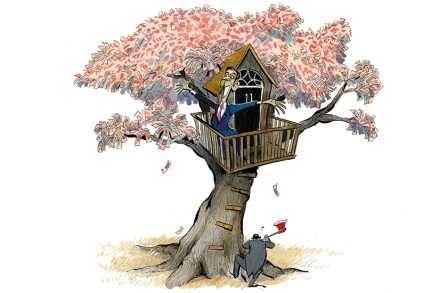
Is the furlough scheme too generous to be stopped?

You can get 80 per cent of your salary, and sometimes even 100 per cent, without actually working. Companies are getting virtually free loans, and can dump their often troublesome staff on the Treasury payroll, and entrepreneurs can get direct injections of cash from the state without actually having to launch any products. Sure we can understand why the Government has stepped in with so much cash. It needs to stop the economy collapsing, and a lot of businesses would have gone under already if that support was not available. But there's a catch. We’ve just created the biggest free lunch in history, and we shouldn’t be surprised if some people start to enjoy it.

Macron talks grandly about Europe – and then cuts a deal with Germany

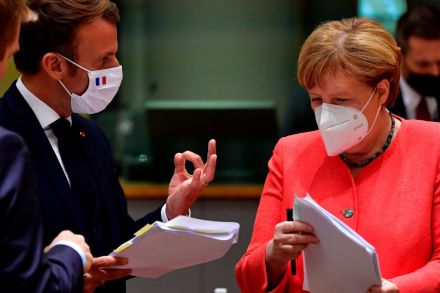
Emmanuel Macron is, for all his carefully polished image as a radical moderniser (and with the possible exception of not having multiple mistresses), a very traditional French president. He protects domestic industries, especially if they happen to manufacture cars or guns. He subsidises farmers, sends soldiers to small African states, and accumulates more and more debt. Oh, and also in keeping with tradition, he gives interviews to either the Financial Times or the Economist full of high-flown rhetoric about European solidarity before quietly doing a deal with Germany. This week it was the turn of the FT. In an interview with the paper’s new editor, he argued that Europe now ‘faced a moment of truth’.

Ursula von der Leyen and the EU owe Italy more than an apology

Italy's hospitals have been overwhelmed. Its mortality rate is among the highest in the world. Its economy has cratered, its bond yields have soared. And it is starting to drown under the weight of its accumulated debts. But, hey, at least the EU commission president Ursula von der Leyen feels sorry about the way Italy has been treated, and is willing to apologise. But hold on. The truth is that Italy has been shamefully neglected by the rest of Europe and it is owed far more than a few crocodile tears.

Ursula von der Leyen’s ‘Marshall Plan’ is doomed

Solidarity will be strengthened. Countries will find new ways to co-operate. And Brussels will support the economy, making sure the strong support the weak. European Commission president Ursula von der Leyen is set to unveil the EU's response to the coronavirus crisis, promising a ‘new Marshall Plan’ to prevent the continent plunging into deep recession. It is a nice idea. The financial help offered by Harry Truman’s secretary of state George C. Marshall to rebuild Europe after World War II is rightly credited with salvaging its shattered economy and laying the foundations for half-a-century of peace and prosperity. The trouble is, the reality is nothing close to the rhetoric.

The Bank of England’s big coronavirus gamble

Ten billion here. Twenty billion there. At least we now know where Rishi Sunak is getting all the money from. As of today, the Bank of England has quietly started directly financing the government. Instead of selling gilts to fund the difference between what it raises in taxes and what it spends the Bank is simply going to increase the government's account, normally a relatively trivial £370 million, to what it discreetly describes as an 'unlimited amount'. How much might that be? No one knows, but the final number could easily have ten zeros at the end of it. What is known in the economics textbooks by the rather dramatic name of 'helicopter money' – where the government simply prints lots of cash and chucks it out of helicopters onto grateful citizens – has begun.

Anneliese Dodds isn’t the woman to steer Labour back to economic sanity

In some ways we will miss John McDonnell. His reheated 1970s student union Trotskyism was always an easy target for a column. From free broadband, to nationalising great swathes of industry, to raising taxes to punitive levels, and banning just abut anything he disapproved of, he managed to come up with a constant stream of terrible ideas. But, hey, never mind. Now there is Anneliese Dodds. The new shadow chancellor may be painted in some places as representing a shift back towards the moderate centre. And yet while she may have endeared herself to working parents on lockdown everywhere with her daughter’s impromptu appearance on Sky News this morning, we should also get real about her very limited abilities.

Coronavirus has again exposed the euro’s fatal flaw

Rising death rates. Economies closing down. People forced to stay at home. The coronavirus is a health, social and economic emergency for every country where it hits. But in Europe it has also mutated very quickly into something else as well, and which, while it may not be quite so threatening in the short-term, could well do even more damage in the years ahead. A currency crisis. Over the last couple of weeks the eurozone has been engulfed by a furious argument over ‘coronabonds’ – a joint eurozone financial instrument that could raise money to help deal with the crisis. The highly-indebted Southern economies, along with France, are in favour. Predictably, Germany and the Netherlands are against. You can argue about the rights and wrongs of that proposal.

Rishi Sunak has badly miscalculated his coronavirus bailout

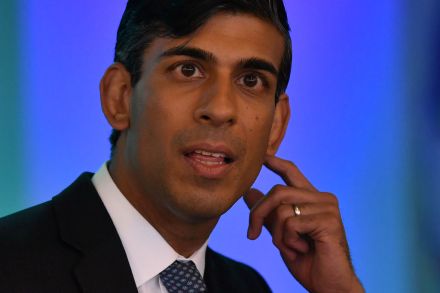
Ten billion? Twenty billion? Thirty billion? To borrow a phrase from the American senator Everett Dirksen when scrutinising the escalating costs of the military, ‘pretty soon you are talking about real money.’ Chancellor Rishi Sunak has already thrown huge sums of money at rescuing the economy. He may well spend a lot more over the next few weeks. You can argue about the rights and wrongs of that. But one thing is already becoming clear, and the more you pause to think about it the more worrying it becomes. It is already looking like he has hugely miscalculated the cost.

Self-employed workers richly deserve a coronavirus bail-out

It will be impossible to calculate. There will be widespread fraud. And there is no mechanism for sending out the money. As the Chancellor Rishi Sunak scratches around for ways to bail out the UK’s five million self-employed in the same way he has done for employees he faces plenty of obstacles. No doubt his Treasury officials have come up with a list of reasons why any scheme he comes up with won’t work in practise, will prove too expensive, will break the IT system, or can’t be implemented until 2029 at the earliest. But hold on. That's crazy. In fact, the self-employed deserve their bail-out more than anyone. Sure, it is difficult. The self-employed don't have regular salaries in the way employees do.

Rishi Sunak’s wartime economy

At least no one can say it isn’t bold. The United States is fiddling around with some possible cuts to payroll taxes. Most of Europe is stuck with some printed money from the ECB. But the UK is embarking on one of the most radical experiments in modern economic theory, and one that will no doubt be studied for decades to come. With his latest announcement today, a whole 48 hours after his last intervention, the Chancellor Rishi Sunak has effectively turned the UK into a wartime economy.

Tory taboos must be broken in the fight against coronavirus

A £330 billion package of loans to business. A huge tax break to any company in the hospitality or leisure industry. Mortgage holidays to anyone who has been impacted by the coronavirus. People can accuse the Government of being behind the curve on delaying the spread of Covid-19 through the population. But it is hard to accuse it of not moving quickly enough to mitigate its financial impact.  Only last week, alongside a rate cut from the Bank of England, the Chancellor Rishi Sunak announced huge rises in Government spending. Today he followed that with a massive round of state intervention, more money for industry, and the hint of a rolling programme of bail-outs as companies run into trouble.

The eurozone’s coronavirus response has been dire

A dramatic dawn cut in interest rates. A huge blast of public spending. And immediate cash help for companies that might find themselves temporarily in trouble as their customers stay at home and staff call in sick. We will find out over the next few weeks whether the British government has done enough to fight the coronavirus emergency it suddenly faces. But there can be no question it has at least done everything it can to fight the economic crisis that will surely follow. Likewise in the United States, the Federal Reserve has already sprung a cut in interest rates on the markets and may well make another move before the end of the month. President Trump has already announced a plan to cut payroll taxes, and is working on a stimulus package.

Sunak’s leaked tax plan sends precisely the wrong message

It is too expensive. It mostly goes to Southerners who already have plenty of money. And it doesn’t even work very well, while the money would be better spent elsewhere. As the Chancellor puts the finishing touches to his Budget, the leaks suggest that the most generous tax relief for entrepreneurs will either be curbed, reduced or potentially even scrapped completely. But hold on. That's crazy. It's just about possible that there might be a worse message to send out about post-Brexit Britain – nationalising the banks, perhaps, or a three-day working week – but it is hard to think of one. In fact, entrepreneur’s relief has been a huge success. Instead of scrapping it, we should think about extending it.

Three ways to stop a coronavirus recession

Supply chains are shutting down. Factories and offices are closing. Flights are being cancelled, conferences postponed and football and rugby games rescheduled. It remains to be seen how much of a blow the spread of the coronavirus turns into for the global economy. But one thing is now certain: it is going to lead to a sharp slowdown. And the real question now is this: how should governments and central banks respond? The medical response is already clear. Communities are put into lockdown. The infected are quarantined. Borders are closed where necessary. And treatment centres are braced for a vast increase in the number of patients. How well it works, and how quickly, remains to be seen. But at least a plan has been put in place. The economic response?

Gina Miller should leave the Bank of England’s new boss alone

She’s back. With Brexit ‘done’ and with most of the country just grateful to have moved on from the whole saga, we might have thought we had heard the last of Gina Miller. Miller, who became something of a figurehead in the anti-Brexit movement, could quietly return to doing whatever it was she used to get up to. Not so. Now she is back on the attack, demanding a ‘review’ of the appointment of Andrew Bailey as Governor of the Bank of England. What’s her complaint this time? Apparently as head of the Financial Conduct Authority, Bailey presided over “a toxic cocktail of negligence, incompetence and indifference to the needs of ordinary depositors, investors and pensioners”.

Trade friction with the EU is nothing to be afraid of

We will export less. There will be less competition. Prices will be higher and productivity lower. Textbook economics tells us that trade friction – that is anything that makes it harder for goods or services to flow across borders – is a very bad thing. So why is the British Government suddenly accepting trade frictions with the EU? As chief Brexit negotiator David Frost made clear in his key speech yesterday, the UK is willing to accept some restrictions on trade with the rest of Europe if it has to. The answer? Because they are not necessarily as bad as the textbooks predict and the prize is a big one. True, in an ideal world we would have completely free trade with the EU. There would be no tariffs or quotas. We would remain members of the Single Market.

Three better ways to spend £200bn than HS2

It will be big, shiny and it will make a difference. Even with its astronomical and rising cost and its wobbly economics, it is possible to see the gut appeal of HS2, especially to a big spending government such as this one which can borrow freely at virtually zero cost. After all, it needs to do something to close the gap between the regions. It also needs to improve the country’s transport infrastructure and this project is, at least, almost ready to start. The trouble is, there are far better ways of spending what is likely to be £200 billion by the time the final bill is due. After all, high-speed trains are a 40-year old technology. There is nothing especially modern about them anymore.

Boris’s eco plans will end in tears

At least no one will be able to accuse it of not caring about the environment. The government has just bought forward its ban on all diesel, petrol and hybrid cars to 2035. From that date onwards, you will only be allowed to buy electric or hydrogen vehicles. The gas-guzzling, polluting SUVs we all like so much will be banished from the road, and all those petrol stations will be replaced with sleek charging stations. There is a problem, however, and it is far from a minor one. The government shouldn’t be telling us what to drive – because consumers left to themselves can decide for themselves. True, there is nothing wrong with electric cars. They are far, far better for the environment.

Three ways Britain should refuse to stick to the EU’s rules in trade talks

It is hard to imagine there will be much of a meeting of minds. As the new president of the European Commission Ursula von der Leyen meets with the newly re-elected British Prime Minister Boris Johnson today the pleasantries will quickly give way to a strong clash of views. With our departure from the EU set for the end of the month, trade talks are about to open. Brussels is desperate to lock the UK into its regulatory system. But quite rightly, the government is resisting that. After all, there was no point in leaving only to accept all the EU rules and regulations, except this time with no say over how they are made. In fact, the UK government should make it absolutely clear there are a whole series of industries where we are determined to break free.

2020 will be the year the UK market outperforms the world

Stock markets are hitting record highs. New companies are being listed. Fortunes are being minted. The last year has been a great one for investors, and so has the last decade, as what was already one of the longest bull markets acquired fresh impetus. There is one exception to that, however, and if you happen to be British it is sadly close to home. The London market has woefully under-performed the rest of the world. In 2020 that will finally start to change. Why? With our departure from the EU finally resolved global money will come flooding back, the Government is set on a huge stimulus, and the Bank of England will decide to go for growth. For once, the UK may start to do better than its rivals. True, anyone who invested in the UK had an okay 2019.