Matthew Lynn

Matthew Lynn is a financial columnist and author of ‘Bust: Greece, The Euro and The Sovereign Debt Crisis’ and ‘The Long Depression: The Slump of 2008 to 2031’

Factories close, offices shut: what happens if the UK runs out of gas

The stove won’t light. The boiler won’t fire up. Pipes are frozen and the water has stopped running. Welcome to Christmas 2021. Amid a fierce cold snap, with another ‘Beast from the East’ blasting across the country, the UK’s meagre stockpiles of gas have been exhausted and the country is plunged into a crisis. Old people are dying and the rest of us are doing our best to keep warm. The closest thing to the apocalypse most of us will experience in our lifetimes has arrived. Well, perhaps. It is easy to sketch out lurid scenarios of what might happen if the country runs out of gas. In reality, it won’t be that bad. Before we get there, we will see industrial closures and then some form of rationing.

Was furlough the worst £70 billion ever spent?

Concorde obviously. The Iraq War perhaps? Or Scottish devolution? It is not hard to come up with a list of really terrible ideas that the British government has wasted money on over the last 50 years. Even so, and despite some tough competition, we now have a fresh contender. It looks as if the furlough scheme will top them all. The scheme ends today, with roughly a million people still collecting a slice of their wages from the Treasury. The total bill is set to come in at around £70 billion. To put that in context, for the same money we could have tripled spending on policing and just about eliminated crime. Or we could have suspended student loans for four years and made university free again.

Von der Leyen is the real winner of the German elections

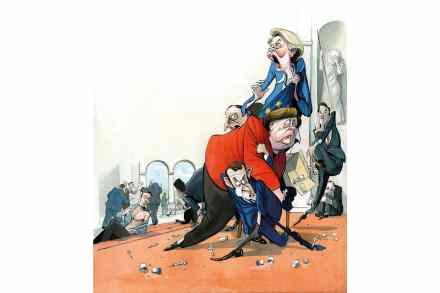
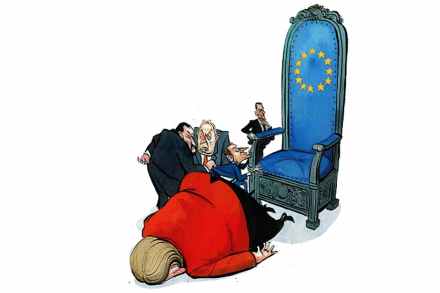
The bald guy who leads the Social Democrats. The earnest looking Green lady. Or perhaps the guy in the charcoal-grey suit who leads the oddly named Free Democrats — free from what exactly? — who may end up picking the next chancellor. Lots of commentators will argue for a long time about who is the real winner of the German elections. But in fact there can be no real dispute about who has come out in a far stronger position. The President of the European Commission Ursula von der Leyen. A power vacuum in Berlin will be filled by a hyper-active, ambitious Commission There are two reasons for this. First, she is now by far the most powerful German politician.

The EU should keep out of France’s spat with Australia

Ursula von der Leyen has demanded a full investigation. EU officials are considering pulling out of technology talks with the US. And negotiations over a trade deal with Australia have been put in doubt.  Over the last 24 hours, the full might of the European Union has been deployed on the side of France in the row over a cancelled submarine contract and the creation of the Australian-US-UK defence pact.  But hold on. Why exactly is the EU getting behind what is, after all, just an export order for a French arms manufacturer?

Payday: who’s afraid of rising wages?

45 min listen

In this week’s episode: is Brexit to blame for the rise in blue-collar wages? With labour shortages driving wages up, many have blamed Britain’s removal from the single market. However, this week in The Spectator, Matthew Lynn argues that shocks and price signals are how the free-market economy reorganises, and that we are experiencing a global trend just like America and Germany. Simon Jenkins, columnist for the Guardian, joins Matthew to discuss. (00:45)Also this week: the British Medical Association has dropped its opposition to assisted dying, but is euthanasia really a dignified and painless process? Dr Joel Zivot asks this question in The Spectator magazine, drawing upon his own experience as an expert witness against the use of lethal injection in America.

Payday: who’s afraid of rising wages?

During the Brexit referendum, Stuart Rose, the former boss of Marks & Spencer, and chair of the Remain campaign, claimed that if Britain left the EU, wages ‘will go up’. This was, he added, in a rare moment of candour, ‘not necessarily a good thing’. But the idea that salaries might rise was exactly the reason that a great many people voted for Brexit. They were well aware that it suits the likes of Lord Rose to keep wages low, and they resented it. It is now nine months since Brexit’s transitional arrangements came to an end, completing the UK’s break with Brussels and Stuart Rose’s prediction has come true — spectacularly so. Wages are rising at the fastest rate in decades.

Three big problems with the government’s planned tax hike

We are in the middle of a once-in-a-generation shift: working from home. There are skill shortages across the economy, supply bottlenecks, and empty supermarket shelves. A couple of million people are still set to come off furlough, back into jobs that may no longer exist. The labour market is in utter chaos. But, hey, here’s a good idea. Let's whack a tax on jobs. Really? The government’s widely leaked plan to increase National Insurance, a tax on jobs, could not come at a worse possible time.  The government’s widely leaked plan to increase National Insurance, a tax on jobs, could not come at a worse possible time We can all debate whether the government should raise taxes to fund social care.

Rishi Sunak should blame Brexit for ditching the pensions triple lock

Car workers in Sunderland are doing just fine. Construction workers still have jobs. And the food is still getting to the supermarkets, even if there are some occasional disruptions to supply.  Not many of the dire warnings about the consequences of leaving the European Union have actually come to pass. There is, however, one group that looks likely to be hit, even if no one quite predicted it. The pensioners. It looks certain to cost them the ‘triple lock’ on their pensions: although since many of them voted for Brexit, they can hardly complain. The government is tying itself up in knots on how to wriggle out of the ‘triple lock’ The government is tying itself up in knots on how to wriggle out of the ‘triple lock’.

President Barnier would be a disaster for Britain

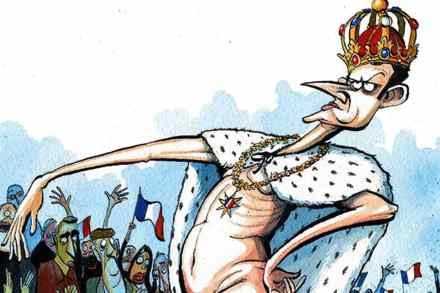
An arrogant, aloof, wordy, pro-EU centrist drawn from the same narrow elite that has dominated the country for decades. It's not that hard to see how French voters might choose to replace Emmanuel Macron with Michel Barnier. Apart from the fact he is older, his hair is greyer, and his wife is slightly younger, it is quite hard to tell the difference between them.  His hardline stance meant both sides ended up with a far worse deal than was necessary and an atmosphere of mutual mistrust Even so, the veteran politician has this week launched his candidacy for next year’s presidential election, vying to become the centre-right challenger to the incumbent. Who knows, he might even win.

Post-Brexit divorce is getting messy

The City has resigned itself to being locked out of the EU. The hauliers are adjusting to all the extra paperwork. Now it looks as if the lawyers will have to get used to no deal as well — and while that won't do any serious long term damage to the profession's booming global status, it now looks as if a lot of divorcing families will be collateral damage.Over the last month, it has become clear the EU plans to block the UK from joining the Lugano Convention, which helps settle in which jurisdiction disputes should be resolved. The reason is no great mystery to anyone. Brussels wants to make it harder for London's firms to sell their services globally, and take some of that business for competitors in Paris, Amsterdam and Frankfurt.

After Afghanistan, the economy is the next Biden catastrophe

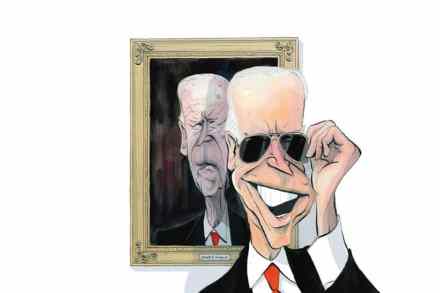
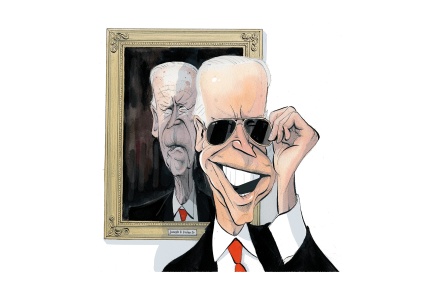
The debacle in Iraq. The fall of Saigon at the end of the Vietnam War. The failed 'Bay of Pigs' invasion of Cuba. You can debate where exactly the collapse of Afghanistan ranks in the list of American military and foreign policy disasters. But one point is surely certain. It is a major setback, and one that will undermine the credibility of the United States for years to come. Here is the real problem, however. It is not going to end there. The economy will be the next major catastrophe of Joe Biden’s increasingly chaotic presidency. Biden has embarked on a drive for a bigger state, with more control over the economy and society It may well have been a mistake for the US, and of course Britain, to imagine it could ever rebuild Afghanistan by force.

Jonathan Miller, Matthew Lynn and Melissa Kite

19 min listen

On this week's episode, Jonathan Miller, author of France, a Nation on the Verge of a Nervous Breakdown talks about the French 'vaccine passport' protests; Financial columnist Matthew Lynn reflects on 50 years without the gold standard; and Melissa Kite tells us about her own ways of treating Covid.

How the ‘Nixon shock’ reshaped our economy

The dotcom bubble. The financial crisis of 2008 and 2009. The oil price spiral of the 1970s. The launch of the single currency. It would be fun, in a nerdish kind of a way, to debate which was the most seismic economic event of postwar history. But in fact the answer would be this: the ‘Nixon shock’, a fateful day when the final link between gold and the money you carry around in your pocket, or on your bank card, was finally severed. And it happened 50 years ago this week. A half-century on — enough time for some historical perspective — how’s it going?

Google’s war on home workers was inevitable

Tapping out some code in the back garden. Working on a sales presentation while watching the school sports day. Or even better, traveling though a continent or two while still pulling down a ritzy six figure salary.  Over the last year, middle class professionals have bought into the Work From Home Dream – or WFHD as it's known in HR circles – to create a working life that combines the best of all possible worlds. It is hardly surprising that so many highly-paid workers are happy to stay away from the office on a permanent basis. Forget Zero Covid. The WFH warriors will be aiming for Zero Flu and Zero Colds before they get back to their desks Google's move illustrates two big problems with WFH But hold on. It turns out there is dark side to that dream.

Rishi Sunak’s warm words won’t persuade workers back to offices

It will be better for our careers. We will network more effectively, spark ideas off one another, and learn new things from our colleagues, as well as getting a reminder from time to time of how annoying they are.  Chancellor Rishi Sunak took a break today from his usual occupation of dishing out vast sums of free money to remind us all of how much he learned from working in an office. Sunak is urging us all to get back to the skyscraper, shop, warehouse, or whatever, as quickly as possible. But hold on. Sure, there is nothing wrong with a few warm words to that effect – but we need more than that to get us back to the office.

Australia shows the cost of zero Covid

The UK is growing at the fastest pace in 80 years. The United States, fuelled by President Biden’s stimulus programme, is expanding at a breath-taking pace, while Sweden is growing at a rapid rate. Most of the global economy is bouncing back from the Covid recession at remarkable speed. There is, however, one exception. Australia. What has long been one of the most successful economies in the world is heading back not just into lockdown but into recession as well — and giving the world a sharp lesson in the cost of ‘zero Covid’. Over the last year, Australia, along with New Zealand, has been heaped with praise for the way it has managed to keep Covid-19 under control. There is, of course, plenty of justification for that.

Boris’s Brexit deal isn’t worth sacrificing Northern Ireland for

There will be chaos at the borders. Food will run out at the supermarkets. Travellers will face long queues, and companies yet another round of disruption. As the UK lays the groundwork for breaking with the Northern Ireland Protocol, we will hear plenty of scare stories about how it might mean losing the Free Trade Agreement with the European Union. There is an element of truth in that, of course. The EU may well decide that if we are not sticking to the Protocol then the free trade deal has to go as well. But there is a flaw in that argument, and it is not exactly a minor one. In truth, the FTA is not worth saving – and certainly not worth sacrificing Northern Ireland for.

The EU’s Brexit bill doesn’t add up

A dozen hospitals. A hundred million doses of the Pfizer vaccine, and a lot more of the Oxford one. Or even a few trips in one of Jeff Bezos’s new space rockets. Even with inflation, there is still plenty you can buy with an extra three to four billion pounds.  In recent days, it has emerged there is a big gulf between what the European Union insists we owe under the terms of our departure agreement, and what the UK believes is due.  In the EU’s accounts, it put the sum at £40.5 billion. The UK now says it will be £37.3 billion, or £3.2 billion less than the EU reckons. Despite this discrepancy, the EU continues to insist the UK should pay that full sum of money.

Branson vs Bezos: In praise of the billionaire space race

They are rich boys with some very expensive toys. As Richard Branson completes his first space flight, it would be easy to dismiss the race between the Virgin founder and Amazon’s Jeff Bezos to be the first billionaire in space as the self-indulgence of a couple of tycoons with too much testosterone and too much money.  The competition will be seen by some on the liberal left as a symbol of widening inequalities. They will view it as the emergence of a plutocratic class separated from the rest of us, and as proof of the argument that space should be left to the public sphere. Of course there is an element of truth in all of those complaints.

Why has the EU let German car manufacturers off the hook?

Two billion? Five billion? Perhaps ten billion to make it a nice round number? For colluding on diesel emissions you might think the European Union would hand out a pretty stiff fine to the big German auto-manufacturers. After all, it has hit American tech giants with huge penalties for far lesser transgressions.  Yet in the end, its response was predictable: the EU has largely let them off the hook. The reason? It turns out that protecting German auto manufacturers is what the Commission really cares about – and nothing else matters.