Matthew Lynn

Matthew Lynn is a financial columnist and author of ‘Bust: Greece, The Euro and The Sovereign Debt Crisis’ and ‘The Long Depression: The Slump of 2008 to 2031’

The flaw in Boris’s levelling up agenda

Regional agencies pumping money into research and development. Targets for education and healthcare. Another layer of meddling local government, and possibly a new bus route or two. The government plans for 'levelling up' unveiled today are a mixture of 1960s statism, which could have been taken straight from Harold Wilson’s government, mixed up with some wishful thinking. But don't despair: there is a far better strategy. The Tories should simply offer some meaningful tax breaks and incentives and let the private sector do the hard work for us. That approach can't be worse than what has been offered up by the government. Even by the recent dismal standards of the Johnson administration the ‘levelling up’ plans outlined today are thin stuff.

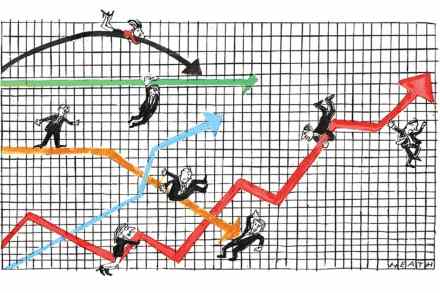
The WFH bubble has burst

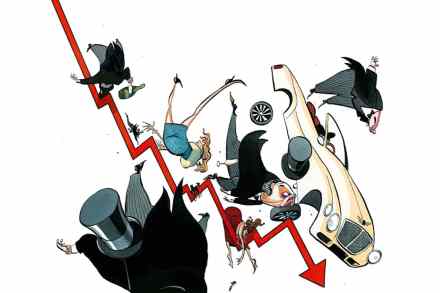
We would work over Zoom. We would all exercise on our Peletons. We would order in organic vegetable boxes, stream live shows, and network globally from our kitchens. At the height of the pandemic, with most of the major economies locked down, a group of work-and-live-from home companies boomed. And yet, right now that is starting to turn. The headlines might be dominated by stories of a stock market crash. In fact, however, something else is happening. The WFH bubble is bursting. There are a whole series of reasons why the stock market has turned very wobbly this month. Inflation is soaring and central banks, led by the Federal Reserve, are about to raise interest rates to control that.

Has Macron shot France’s energy industry in the foot?

Gas prices are soaring. Europe could be about to witness electricity shortages. Power companies are collapsing by the day, and, on top of all that, the government is set to phase out traditional energy to meet its net zero target.  So might think that a cable to ship in cheap, greener electricity from the other side of the Channel is something of a knight in shining armour. Yet the government blocked the proposal today, and it was absolutely right to do so. Britain may need all the electricity it can get its hands on right now — but the last thing it should do is increase its dependence on Macron and Putin.

The real crisis that could finish the Tories

Endless drinking parties at No. 10. Expensive flat refurbishments paid for by someone else. And plenty of ambitious rivals jostling to take the crown. There are plenty of threats to Boris Johnson and to the Conservative party right now. But the real one is buried in the small print of the labour market report today. Real wages are starting to fall sharply. On the surface, today’s data from the Office for National Statistics was very encouraging for the government, especially at a time when very little has been going right for it. Despite the end of the furlough scheme, the partial closure of businesses during the latest wave and chaotic supply global supply chains, the British economy remains a formidable machine for creating new jobs. There are now 29.

Joe Biden has lost control of the economy

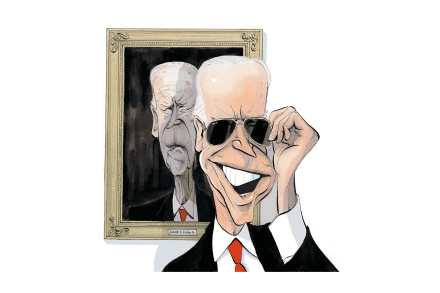
A nudge on interest rates from the Federal Reserve. A gradual winding down of quantitative easing. No more stimulus cheques flying out of the White House window. And rising energy prices dropping out of the annualised headline rate. This was meant to be the month when the spurt of inflation in the United States turned out – as president Joe Biden and his officials insisted it would – to be mostly transitory. We were told that it would die down over the course of this year. For Biden and the US economy, there is now no easy way back But, whoops, if that was the plan, it has already gone badly off the rails. Today’s inflation figure for the US was genuinely shocking.

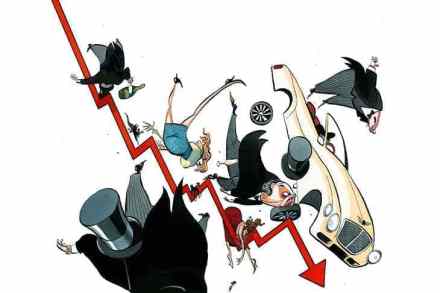
When will the Tesla bubble burst?

How much would you pay to park a shiny new Tesla on the driveway? Perhaps fifty thousand pounds? Or seventy thousand? If you were looking at a top-of-the range Model X, which retails in the UK at £81,000, but allows you to look down smugly on all the gas-guzzling SUVs also clogging up the streets of Chelsea, perhaps ninety or a hundred thousand?  Well, here is an odd fact: the stock market is valuing each of those cars at more than a million dollars (£750,000). This is surely the clearest sign yet that the company’s extravagant valuation has reached bubble territory. Does the absurd stock market valuation of Tesla make any sense? Earlier this week, the electric vehicle manufacturer announced blockbuster delivery figures.

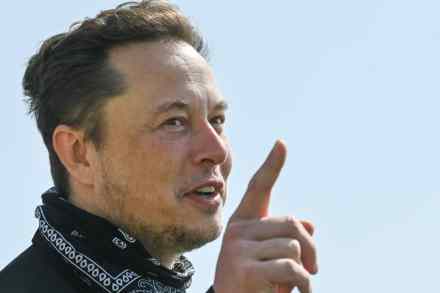
The hypocrisy of Elon Musk

Tesla's sleek, if expensive, electric cars are leading the battle against climate change. Its batteries are moving renewable energy into the mainstream, while its founder Elon Musk, the world’s richest man, likes to present himself as a free-thinking radical. It is hard to think of a company more right on than Tesla — well, okay, perhaps Unilever — or one that depends more on its politically correct credentials. But hold on. There turns out to be one opposed minority that Tesla couldn’t care less about: China’s Uighurs. Most of the corporate world will sooner or later have to make a tough decision: do they care about human rights?

What happened to the great Brexit turkey shortage?

Fights breaking out at the checkout counters in Waitrose as angry shoppers battled for the few remaining stocks. Reports of black market birds changing hands for thousands in the posher parts of London. Twitter feeds cluttered with pictures of nut roasts, tofu crowns, and chestnut bakes taking pride of place on the Christmas table, as people desperately tried out the alternatives. You probably noticed the Great Turkey Shortage this year. Christmas went ahead more or less as normal, but of course Brexit meant there weren’t any turkeys available anywhere, just as the farmers had warned. Only a couple of months ago, we were all being told that turkeys would inevitably be in short supply this year.

Is the EU heading for a booster crisis?

The Omicron variant spreads far more quickly. It infects far more people. And it is already rampant around the world, and probably unstoppable no matter how quickly borders are closed, or restrictions on socialising are put in place. Still, despite that, the one thing we already know for sure is that booster jabs are very good at controlling serious disease, and governments are scrambling to get as many shots into arms as quickly as possible. There is just one problem. If you happen to live in Germany, there are not enough of them to go round. And, even more worryingly, that may be the first sign the European Union is about to head into a booster crisis every bit as serious as the vaccine crisis that delayed the roll-out of the inoculation campaign at the start of this year.

The Bank of England is right to hike interest rates

The Omicron variant of Covid-19 is rampant. Bars and restaurants are in crisis as thousands of bookings are cancelled. And travel restrictions are back in place, with a full lockdown looming. To make matters worse, so far there is little sign of the Chancellor Rishi Sunak stepping in with any support.  Most businesses probably imagined that the very last thing they would have to cope with right now was a rise in interest rates. As a result, there will be plenty of business owners complaining that the Bank of England’s decision to up rates to 0.25 per cent will be the final blow that will push the economy back into recession. But hold on. In fact, the Bank is completely right to hold its nerve and raise rates – and Omicron was no reason for postponing.

Joe Biden is running out of other people’s money

Abba have reformed. Nato is working out how to deal with an aggressive Russian president. And there are shortages of everything. There were already plenty of clues, but now it is surely official: the 1970s are back. The United States has recorded its highest inflation rate for 32 years, with a 6.8 per cent rate that far surpassed anything even the most pessimistic forecasters expected. In truth, Joe Biden is about to turn into the new Jimmy Carter, a lame duck Democratic president presiding over a failing economy – and the crisis is entirely of his own making. We already knew the US was witnessing a bout of inflation. Even so, the latest numbers still came as a shock. At 6.

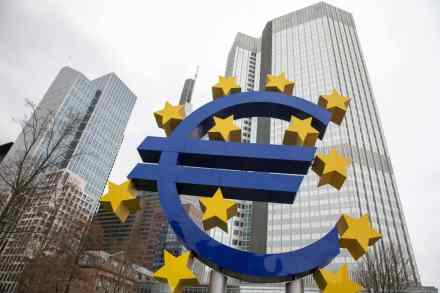
Has Christine Lagarde just let slip the truth about the euro?

Ursula von der Leyen dispensing vaccines, with a halo over her head perhaps? Emmanuel Macron riding a tank to symbolise the continent’s strategic autonomy? Or various commissioners whose names no one can quite remember setting carbon targets, fining Google and Apple, and dishing out grants for roads, bridges and tunnels?  It remains to be seen just what the European Central Bank comes up with for its planned re-design of the euro banknotes. One point is perfectly clear, however: the makeover will reveal the currency’s true colours as a vehicle for European integration rather than an effective instrument of economic policy.

Germany’s new coalition is a recipe for stagnation

A new, fresh leader. Bold radical ideas. And a programme for rebooting an economy that, for all its formidable strengths, is, to put it kindly, a little stuck in the 20th century. Later today, Germany is set to anoint its first new Chancellor in 15 years, and, at the very least, you might expect some new ideas. The trouble is, there is little sign of them from Olaf Scholz. Instead, the country is opting for the euro-zone’s slow lane, falling behind a rapidly reforming Italy and France. After two months of complex negotiations, following an inconclusive election in September, the Social Democrat leader Olaf Scholz will finally present his coalition agreement later today.

Is Joe Biden ready for the looming war with the Fed?

He isn’t especially bothered by global warming. He doesn’t think monetary policy has very much, if anything, to contribute to combating racism, promoting gender equality, or making the world a fairer place. And he doesn’t want to go to war with Wall Street, or bring any billionaires to heel. By re-appointing Jay Powell, a Republican first chosen by Donald Trump, as chairman of the Federal Reserve, Joe Biden has finally stood up to the Democratic party’s left wing. And yet, perhaps without realising it, Biden is also setting up what will sooner or later turn into an epic fight with the central bank over economic policy. This is a battle that could make or break his presidency.

Shell’s Dutch departure is a vote of confidence in Brexit Britain

The City was meant to be hollowed out. Shortages would cripple the economy. And major multinationals would move their headquarters, listings, and all the wealth those create, to somewhere safely inside the EU’s Single Market. Some hardcore supporters of the UK remaining inside the EU made lots of predictions about the consequences of the decision to leave. And yet, one by one, they have failed to materialise. Now, oil giant Shell has said it will move its tax residency to London, a decision that could mean it ditches the ‘Royal Dutch’ from its name.

The EU’s threats against London have been exposed as bluster

Francois Hollande could hardly have been clearer in his intentions. In the immediate aftermath of the 2016 vote that took the UK out of the European Union, the French president was adamant that the City of London would have to lose one of its most important strategic assets, the right to clear trades denominated in euros.  'The City, which thanks to the EU was able to handle clearing operations for the eurozone, will not be able to do them,' he thundered. 'It can serve as an example for those who seek the end of Europe...It can serve as a lesson.'  In reality, like so many of the EU’s threats, it was just bluster It is hard to see much wriggle room there.

Has JP Morgan changed its tune on Brexit Britain?

Supermarket shelves are bare. There may not be enough turkeys for Christmas. Wages and prices are rising. And the government is sinking into a pit of sleaze. As if that were not enough, the EU is about to launch a full-scale trade war against the country.  Following the day-to-day news, you could well be forgiven for thinking the British economy was sinking into permanent chaos, doomed to replay the dark days of the 1970s. But hold on. Amidst all this gloom, the world’s biggest and most powerful investment bank, JP Morgan, says now is the time to be buying British.

The Bank of England’s inflation rate stunt

He isn’t Canadian. He doesn’t dominate the Davos circuit with platitudes about climate change. And he isn’t constantly warning that the British economy will turn into a cross between Ethiopia and Argentina now that we have left the European Union. In many ways, the current Governor of the Bank of England Andrew Bailey is an upgrade on his high-profile predecessor Mark Carney. And yet, in the most important respect, he is turning out to be very similar. He is constantly threatening to raise interest rates, and then backing off at the last moment.  An increase in interest rate from the ‘emergency’ level of just 0.1 per cent was not quite a done deal for today’s meeting on the Bank’s Monetary Policy Committee. But it was widely expected.

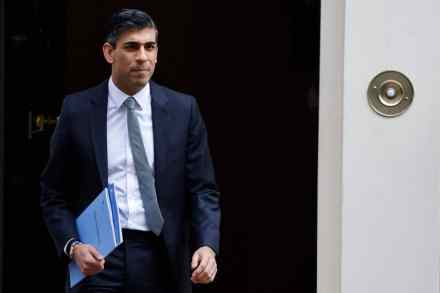
Rishi Sunak has blown his premiership

The amount the state takes out of the economy will rise to the highest level in 70 years. An unreformed public sector will be showered with cash, with the health service allowed to spend whatever it likes. A tax system that was already creaking under the weight of its own complexity has just been made slightly more complicated, and it has been made a lot less competitive. The Chancellor Rishi Sunak with his usual panache sailed through his Budget yesterday. The problem, however, is this. While he might get away with pushing up taxes and spending for now, sooner or later it is going to catch up with him. And in truth, he has just blown his premiership.

Matthew Lynn, Tanya Gold, James Innes-Smith

13 min listen

On this week's episode, we’ll hear Matthew Lynn’s thoughts on how the gas shortages could lead to a very cold winter. (00:51) Then, Tanya Gold with a critical take on critics. (04:41)And finally, James Innes-Smith bigs up the bungalow.