Matthew Lynn

Matthew Lynn is a financial columnist and author of ‘Bust: Greece, The Euro and The Sovereign Debt Crisis’ and ‘The Long Depression: The Slump of 2008 to 2031’

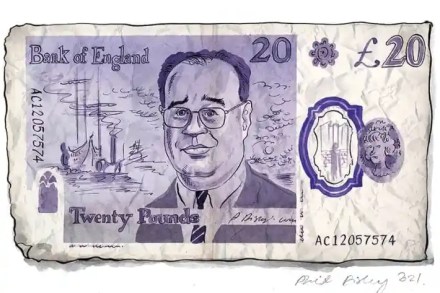
What if Jeremy Hunt’s rebooted centrism doesn’t calm the markets?

He will control spending, reverse the few remaining tax cuts that are still in the works, and bring in every kind of official body imaginable to check over all the figures. Jeremy Hunt made the best of a very difficult hand of cards in his first outing as Chancellor on Saturday morning. He was calm, rational, sensible, and conciliatory. His strategy was clear enough. To calm the markets, and buy the government some breathing space while it figures out what to do next. There is a catch, however. What if it doesn't work? Hunt’s real problem is that he has no plan for growth Hunt’s plans as Chancellor are clearly very different from his short-lived predecessor. In a nutshell, it is George Osborne Mark II.

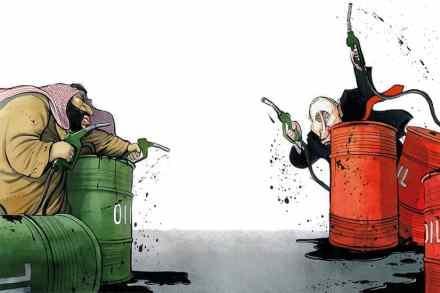
Opec will regret taking on the US

Production will be cut. Supplies to the rest of the world will be curbed. And inflation will rise just a little bit higher. No one ever expected the oil-cartel Opec(+), led by Saudi Arabia, to be friendly to the West, or to help out when it was needed. Even so, its decision this week to effectively side with Russia, and to make the energy crisis even worse, may quickly backfire. In reality, Opec was already in long-term decline. Picking a fight with the US will just make that worse. It was certainly the kind of news the energy markets didn’t need.

Will anyone ever be able to cut the 45p tax rate?

Well, that went well. Kwasi Kwarteng's decision to axe the 45 per cent top rate of income tax triggered a crash on the financial markets. It then ran into so much opposition from the public and from Conservative MPs fearful for their seats that it had to be scrapped completely. Right now, it seems unlikely that any politician will want to revisit the subject any time in the next two or three millennia. Abolishing Christmas would be less toxic. If they do, however, one point is surely clear: the 45 per cent rate is here to stay. The only way any politician will ever be able to scrap it now is by stealth. For all the hullabaloo around the 45 per cent top rate of tax, it makes little sense for the economy.

This isn’t a return to boom and bust

Massive tax cuts. A huge budget deficit. And a wild dash for growth, stoking a short-lived boom, before it all ends in a spectacular crash. As the new government unveiled the widest ranging tax cuts since the 1980s, along with a huge increase in the budget deficit, City commentators and the wiser sort of newspaper pundit are already comparing it to the ‘Barber boom’ of 1972 or the ‘Lawson boom’ of 1988. Both of those ended very badly. In their dreams, Sir Keir Starmer and Rachel Reeves are probably already fantasizing about an ashen-faced Liz Truss and Kwasi Kwarteng calling in the IMF for an emergency bail-out – before getting wiped out at an election. But hold on. In fact, this is not a return to Tory boom n’ bust.

The painful road to lower inflation

In the end, it could have been worse. The Federal Reserve might have followed Sweden’s lead, with a whole one point rise in interest rates, or it could have even decided to short-circuit the whole process and go straight for a 1.5 per cent increase. Instead, it opted for the safer course, imposing a 0.75 per cent increase in rates much as the market expected. Even so, it made one thing absolutely clear. It is not going to let up in its battle to bring inflation back under control – and the rest of the world will have no option but to follow its lead. The markets were primed for another rise in rates from the Fed chairman Jay Powell today. That was precisely what he delivered. American interest rates will go up to 3.

It’s time to scrap the cap on bankers’ bonuses

Critics say that scrapping the cap on bankers' bonus will encourage a return to excessive risk taking. It will provoke retaliation from the European Union, they warn. And perhaps, worst of all, it could prove fatal politically, rewarding a few rich Tory friends while the rest of the country struggles with the cost-of-living crisis. Chancellor Kwasi Kwarteng will get lots of criticism if, as predicted, he does decide to bin the cap in his upcoming financial statement. Even so, he should ignore the naysayers. It will certainly be a controversial move. The controls on City bonuses were imposed right across the EU in the wake of the crash of 2008/2009. These rules limit the amount that traders and bankers can earn in relation to their basic salaries.

Center Parcs’s royal blunder

Whacking up the price of black ties given the extra demand. Running advertising campaigns for cut price comfort food to get the nation through a painful few days. Or putting your zero hours workers on call for the whole of Monday just in case they are needed, while rushing out a quick line of over-priced memorabilia to sell along the streets of London. There were probably worse ways for companies to mark the passing of the Queen. Even so, the decision by Center Parcs, the family friendly chain of resorts, to kick everyone out for the day of the funeral must be one of the crassest imaginable.

President Biden still can’t get a grip on inflation

Oil prices have been falling steeply, reducing prices at the pumps. Wheat prices have dropped as supplies from Ukraine start to hit the world market again. And supply chains are steadily getting back to normal as trade routes recover from the pandemic, with shipping costs back down to their level at the start of the year. So when the US inflation figures were published today, the markets expected both headline and core rates to be coming back down. But – yikes – they were disappointed. Instead, prices are still climbing – and it is becoming more and more clear that President Biden’s wild spending is the real problem. The inflation numbers out of the US today are, once again, alarming.

How Liz Truss can solve the energy crisis

It will be expensive. It will last far longer than anyone expects. And it will distort the market even more than it already is. Barring a major upset, Liz Truss will move into No. 10 Downing Street later today. Once she's there, Britain's new prime minister will have little choice but to take control of soaring energy prices. How she does that will be the first big test of her premiership. If Truss can do it in a way that boosts output, and encourages investment, it will be worthwhile. But if she opts for just another bail-out she will get stuck in the same dismal groove as Boris Johnson and Rishi Sunak.  If there were a couple of LNG tankers for every proposal for fixing the energy crisis no one would be worrying about how to keep the lights on this winter.

Who is Sunak kidding with his warnings about sterling?

There will be a run on sterling. The gilts market will be in freefall. And the FTSE will tumble as global investors take fright and sell off every form of British asset. It might take only a few days, or the government might stagger through until the end of September, but before long Liz Truss and her new Chancellor Kwasi Kwarteng will have been forced to call in the IMF to stabilise a collapsing economy. That is, at least, according to the former Chancellor Rishi Sunak. With just a few desperate days left in his doomer leadership campaign, he has declared his opponent's tax and spending plans so wild and reckless they risk a full-blown sterling crisis of the sort we have not seen since the 1970s.

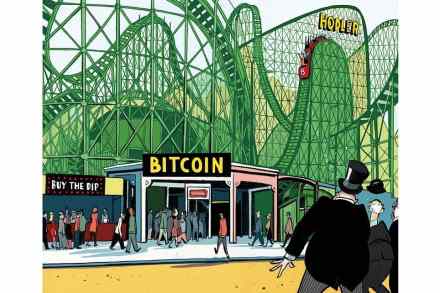
Is crypto back?

This time it was surely all over. As inflation started to rise towards a 40-year high, as central banks started raising interest rates for the first time in more than a decade, and as the monetary printing presses finally stopped running, the crypto-currencies crashed. What a crash it was. Bitcoin, the best-known crypto, fell all the way from $61,000 last November to less than $19,000 in June, a spectacular drop of more than two thirds. Ethereum, Solana and other, frailer ‘coins’ – as well as the even flimsier digital collectors’ items known as NFTs – all tanked. This appeared finally to confirm what the doubters had said all along.

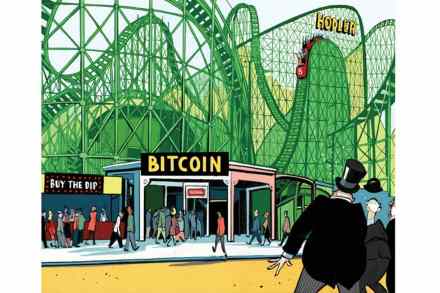
Crypto keeps bouncing back

This time it was surely all over. As inflation started to rise towards a 40-year high, as central banks started raising interest rates for the first time in more than a decade, and as the monetary printing presses finally stopped running, the cryptocurrencies crashed.  What a crash it was. Bitcoin, the best-known crypto, fell all the way from $61,000 last November to less than $19,000 in June, a spectacular drop of more than two thirds. Ethereum, Solana and other, frailer ‘coins’ – as well as the even flimsier digital collectors’ items known as NFTs – all tanked. This appeared finally to confirm what the doubters had said all along.

Team Rishi is losing the plot on taxes

It would be an ‘electoral suicide note’. It would condemn the party to ‘the impotent oblivion of opposition’. And it would push petrol prices up to eight quid a litre, and mean the electricity grid would have to be turned off at eight every evening to preserve power. Okay, okay, I made the last two up. But to be honest Dominic Raab might as well have thrown them into today’s attack on Liz Truss’s fairly modest plans for cancelling some of Rishi Sunak’s planned tax increases – along with a few more dire predictions as well. In truth, Team Rishi is increasingly losing the plot on taxes – and the hysterical tone of the attacks only serve to illustrate that.

Liz Truss stiffened the Bank of England’s resolve on inflation

It turns out there is nothing like getting your homework marked by a tough new teacher to make everyone concentrate a little harder. Over the last couple of weeks of her campaign to lead the Conservative party, Liz Truss has made one point again and again. The Bank of England has been far too relaxed about inflation. And, surprise surprise, it has suddenly got a lot tougher. Today the Bank raised interest rates by half a percentage point, the largest single move in almost thirty years. Rates are now at the highest level in almost two decades. There was no great mystery about why. Inflation is already running at 9 per cent and, shockingly, the Bank predicted today that it would hit 13 per cent before it peaked.

Only one tax cut can save Rishi Sunak

Rishi Sunak's promises on tax are lacklustre. He's announced a fiddly one-off tax break on energy that will last for just a year which hardly anyone will notice due to inflation. There's also income tax cuts up to seven years in the future, even though he is hardly likely to be Prime Minister by then (and he seldom keeps any promises on taxation for more than a few hours anyway).  Sunak’s promises and u-turns on taxes are making him look inconsistent at best, and a cynical opportunist at worst. The Tory members are right to regard his words with suspicion. But there is one tax cut that could still win the membership over: abolishing inheritance tax.

Rishi Sunak’s energy bill u-turn is too little, too late

A tweak to the landfill tax perhaps? A minor adjustment to the airport levy? Rishi Sunak no doubt stayed up late into the night sifting through all the most minor tax cuts he could offer before re-launching his campaign with a dramatic u-turn. In the end, he plumped for axing VAT on energy bills, promising to scrap it for a year. Sunak's campaign insist it will save the average household an estimated £160 as prices go up. The trouble is, it is too little, too late: if Sunak wanted to cut taxes he needed something far bigger and bolder. Sunak has gone for the most minor tax tweak imaginable, making himself look inconsistent and weak without winning any extra votes Sunak's announcement is a sign of desperation.

Don’t blame Brexit for the Dover chaos

Queues stretching back for several hours. Children going crazy in the back seat. Cars breaking down in the heat, and holidays thrown into chaos by delays at the terminal. Anyone who imagined that they were making their lives easier by avoiding the airports and driving to continental Europe this summer will have had a nasty surprise. The ferries are just as bad, with a major incident declared at Dover as cars were snarled up in long jams. And yet, at the risk of disappointing hard core Remainers, that turns out to have nothing to do with Brexit – and a lot to do with French incompetence. In fact, the delays have been caused by a shortage of French border guards It would be easy to blame our departure from the European Union for the chaos at Dover this weekend.

Is the eurozone about to plunge into a recession?

A reforming prime minister has been ousted by a fractious, divided parliament. The central bank is raising interest rates to try and stem inflation that is running out of control. Everyone is being urged to use as little electricity as possible as officials scramble around to secure enough energy, and the currency is crumbling as the economy turns down. It would, in fairness, be a reasonable description of a chaotic and struggling Brexit Britain. As it happens, however, it is a summary of the EU and the euro-zone as it stumbles towards its next crisis. As chaotic as Brexit Britain is looking, it will be just as difficult on the other side of the Channel. It is turning into a terrible summer for the eurozone.

Soaring inflation could tank Rishi Sunak’s Tory leadership bid

Wages are rising. The economy is growing. The stock market is on the way up, and exports are booming. As he prepares for a long summer trying to persuade the membership of the Conservative party to make him prime minister, Rishi Sunak probably wishes he could be transported to some parallel universe where he could boast about his record as Chancellor. The trouble is, he is stuck with this one: and the news is relentlessly bad. This morning, inflation was up yet again, hitting a 40-year-high of 9.4 per cent. Yesterday, it was real wages falling sharply, as workers' income failed to keep up with rising prices. Over the next six weeks, as Sunak is out on the hustings hustling for votes, it is only going to get worse and worse.

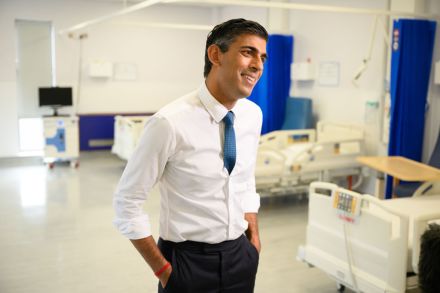
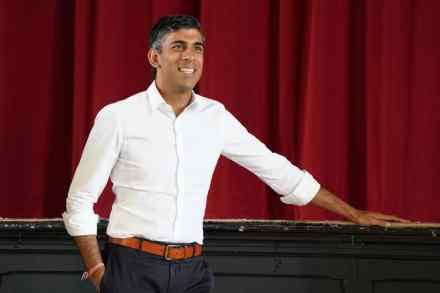
How Sunak can save his stumbling campaign

He has the widest support among MPs. He easily beats any other candidate with the voters, and is the only one consistently ahead of Sir Kier Starmer in the polls. He has experience, a fluent manner on TV, and as his slick campaign has reminded everyone, he is the most professional campaigner among the politicians left in the race. Against an often underwhelming, inexperienced group of rivals, the former Chancellor Rishi Sunak should be a certainty to become leader of the Conservative party, and so Prime Minister, by the autumn. There is just one catch: his stubborn attachment to raising corporation tax – when in truth, ditching that policy would be the one sure way of rescuing his stumbling campaign.