Matthew Lynn

Matthew Lynn

Matthew Lynn is a financial columnist and author of ‘Bust: Greece, The Euro and The Sovereign Debt Crisis’ and ‘The Long Depression: The Slump of 2008 to 2031’

Britain will pay a high price for its doomed EV transition

It is starting to look very likely that the government will drop the complete ban on the sale of petrol cars after 2035 and ease up on the targets for the transition to battery-powered vehicles (EVs). The industry is not ready for it, the infrastructure does not seem to be in place, and it is all costing too much money. But will watering down government targets for how many EVs the industry sells actually solve any of these problems? The charging networks will need compensation, while it will take a lot of money to rebuild the domestic industry. In reality, Britain will still have to pay a high price for the doomed attempt to centrally plan the car market. It may just be a matter of time before the 2035 ban on the sale of new petrol cars is scrapped.

What Labour should actually do to help entrepreneurs

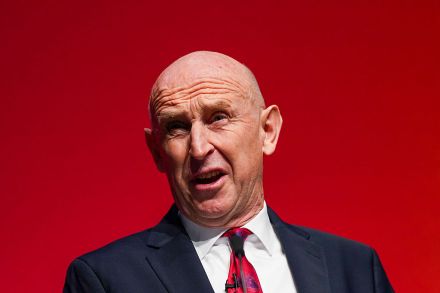
The Resolution Foundation will have to scrap its plans for higher capital gains tax, the Institute for Fiscal Studies will have to redraft the arguments for an exit tax, and the Fabian Society will have to stop thinking about ways to tax dividends more heavily. The left-wing think tanks may have been hoping for a Budget that would be packed with all their pet schemes for raising more revenue from ‘the rich’, but it seems they will be disappointed. Apparently the Chancellor John Healey is planning a ‘budget for entrepreneurs’. After the hammering entrepreneurs have taken over the last decade that would not be very hard – the trouble is it does not seem very likely.

Does John Healey want to kill off the family business?

Rachel Reeves made a great start – but now it looks as if her successor as Chancellor John Healey is determined to finish the job. With yet another tax raid reportedly being planned, the Treasury has clearly decided that family-owned businesses are an easy target as it struggles to balance the books ahead of next week’s Budget. Clearly, though, the Treasury seems not to know that family-owned businesses are critical to keeping the economy running. We would certainly miss them if they go. The Labour government has already dealt one blow to family-owned companies by imposing inheritance tax on them when they are passed from one generation to the next. The latest leaks ahead of the Budget suggest Healey wants to double down on that. But how?

An online tax crackdown is a mistake

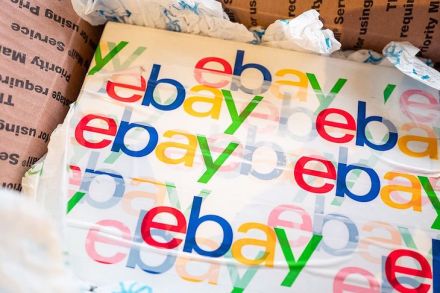
When he presents his first Budget later this month, Chancellor John Healey won’t have many ‘bash the rich’ or ‘hammer big business’ levies to cheer up his backbenchers. A stiff rise in capital gains tax has been ruled out and the threshold for the mansion tax most probably won’t be lowered. It looks likely, however, that Healey will introduce an online tax crackdown. But is there a chance this could backfire? In the Budget, Healey is expected to announce that online marketplaces, such as Amazon, eBay and China’s Temu, will be forced to be responsible for collecting the VAT due on the products sold on their platforms. At the moment, lots of shell companies sell lots of stuff through the big web retailers, and then they are closed down again before any VAT has to be paid.

John Healey faces an impossible task at the coming Budget

Twelve billion pounds a month, £3 billion a week, or £420 million a day. If we divide the latest estimate of the size of the ‘black hole’ in the public finances facing Chancellor John Healey by the time he has been in office, the shortfall is starting to grow at an alarming rate. It is very clear that there is no easy way out of the mess he has inherited from his predecessor Rachel Reeves. All Labour Chancellors seem run out of money eventually, but Healey appears to be getting there in record time.  With only a couple of weeks left until Healey's first Budget, the Institute for Fiscal Studies (IFS) has nothing but bad news for the Chancellor. Higher than expected inflation means the cost of welfare payments is rising rapidly.

Jaguar’s new electric car is a terrible mistake

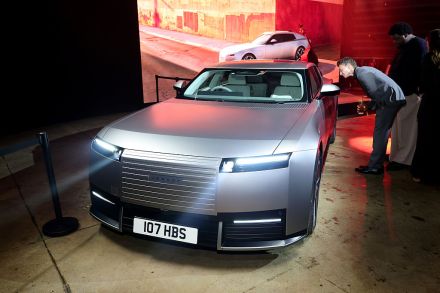
At least it has dropped the bright pink. But in every other respect the new, all-electric Jaguar launched in New York yesterday was exactly the same as the widely ridiculed ‘barbie-mobile’ that was first revealed as a concept car two years ago. Despite all the evidence, Jaguar has decided it has the right design, and it is sticking with it. ‘Brave’ would be one word for that. But a more accurate one would be ‘fatal’. The reason? It is very hard to see how the manufacturer can survive if this model does not succeed.  The only thing Jaguar still has going for it in a very crowded EV market is the heritage of its brand The reaction to the Type 01, Jaguar’s planned flagship for the exciting new world of electric vehicles, was, to put it politely, underwhelming.

Will tariffs stop China taking over Britain’s car market?

If you have your eye on a shiny new Jaecoo 7, affectionately known as the ‘Temu Range Rover’, or a BYD Sealion or an MG4 then you probably need to scoot down to your local dealer as quickly as possible. The government is considering imposing tariffs on Chinese imports that could add 40 per cent or more to the cost. We all know why: the Chinese auto companies are taking the British car market by storm. But are tariffs enough to stop them in their tracks? In truth, it seems all we can do is learn the lessons from the electric vehicle fiasco and try not to repeat it.

The national debt is back with a vengeance

From our US edition

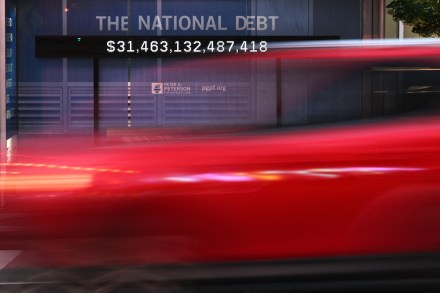
The 5 percent barrier has long since been left behind. This week, the yield on 30-year American government bonds hit 5.6 percent, its highest level since way back in 2002, while the cost of ten-year borrowing rose to its highest level in 20 years. However hard the Treasury Secretary Scott Bessent tries to control it, the interest rate the American government has to pay to finance its vast deficit keeps on rising relentlessly. As it climbs towards 6 percent and perhaps even higher, surely we must soon see a change in the political debate. Three decades of financial complacency will be swept aside – and the politics of deficit reduction will be back.

Burnham’s Rejoin speculation is going to tank the economy

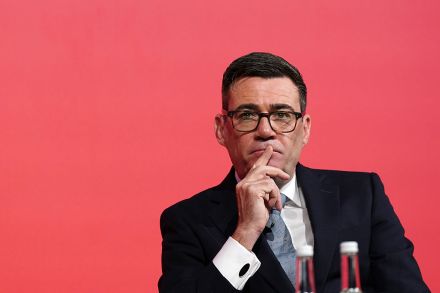
It could be the Customs Union? It could be the Single Market? Or it could be rejoining completely. The Prime Minister Andy Burnham this morning set out his ambitions for a closer relationship with Europe. There is just one problem. It is hard to see how the economy can withstand a whole decade of Rejoin uncertainty. It certainly isn't going to be a quick process. Burnham is looking at a whole range of options for moving closer to the rest of Europe. In truth, he doesn't seem to be certain what he wants himself. But signing back up to full membership is clearly back on the table. The British economy still bears the scars of a decade of arguments about Brexit Of course, there will be plenty of hardcore Europhiles who will welcome that. They never wanted to leave in the first place.

Will a return to shipbuilding really boost Britain’s economy?

We already know that Andy Burnham, with his talk of public ownership and ending ‘neoliberalism’, wants to take the county back to the 1970s. But now it turns out that his Chancellor John Healey plans to go one better: he wants to take us back to the 1950s. In his speech to the Labour party conference today he has pledged to put shipbuilding at the heart of his plans to reindustrialise the British economy. But is shipbuilding really the industry of the future? It at least made a change from ministers blathering on about AI or the opportunities in space. When he addressed the Labour party faithful in Liverpool, the Chancellor offered something that he clearly thinks will prove more substantial. He promised 'a new age of industrialisation'.

High energy prices are crippling Britain

He is a tax exile, he lives in Monaco, and, perhaps worst of all, he supported Brexit. As Sir Jim Ratcliffe, the founder of the chemicals giant Ineos, accuses the Labour government of ‘economic vandalism’, there will be plenty of MPs, and probably even a few ministers, who will dismiss it as an embittered rant by an over-entitled billionaire. The trouble is, he is also about to close down three perfectly efficient petrochemical plants, and unless Andy Burnham and his team can come up with a way to bring energy costs down they will end up presiding over deindustrialisation on a scale that even Mrs Thatcher, the one politician they most dislike, would have found unacceptable.

Scott Bessent versus the world

From our US edition

It was the kind of line that Robert De Niro would deliver perfectly in a gangster epic. “I am the house now,” the United States Treasury Secretary Scott Bessent declared confidently last week. “And you can bet against me if you want.” It was the most aggressive attempt yet by the most powerful financial official in the world to take on and tame the traders of Wall Street. With major interventions underway to control the yen-dollar exchange rate, and the yields on America’s $40 trillion national debt, Bessent’s message was clear. They will lose money if they dare to defy his will. Well, perhaps they will in the short term. With a background at the world’s most successful hedge fund, Bessent knows more about the market than most people. There is just one snag.

Bessent

Don’t bet against Nvidia – yet

Last night revealed another set of outstanding results from Nvidia. Its quarterly revenues were up by 105 percent year-on-year, comfortably ahead of expectations. Its earnings per share doubled. Its gross margin remained at an impressive 75 percent. And its guidance for the third quarter was for another significant rise in revenues. The chip manufacturer's founder Jensen Huang bullishly declared that the Artificial Intelligence industry had reached its “golden age” without risking ridicule. Nvidia's share had been flat-lining for much of the past few months, and rival chipmakers have been crashing, as investors started to doubt whether the massive investment in AI, and the data hubs that power it, could be sustained. And yet, once again, the company proved its critics wrong.

Andy Burnham has discovered the cost of nationalisation

The buses would run on time. The trains would be cheaper. And perhaps most of all, the water companies would start providing a far better service. Andy Burnham was vague about most of his promises while campaigning to become Prime Minister. But he was very clear about one thing: back under greater public control, the utilities would start working for the whole country again, and not just for a handful of greedy shareholders. There is one catch. It is turning out to be far more expensive than he realised.

Warsh Derangement Syndrome will prove very expensive

From our US edition

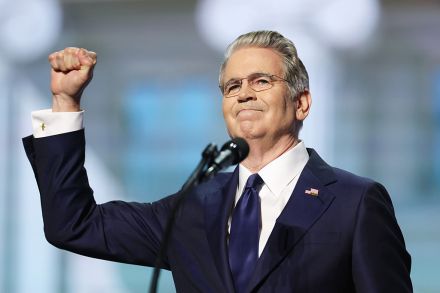
One of the sub-plots of the last twenty years has been the growth of “derangement syndromes.” It started with Bush Derangement Syndrome at the start of the century, morphed into the far more powerful Trump Derangement Syndrome, took a side trip to the other side of the Atlantic with Brexit Derangement Syndrome, and then turned into Tariff Derangement Syndrome. The basic symptoms are always the same. Some fairly minor, and probably not even very radical reforms, get reframed as an existential threat to the economy, democracy and even civilization itself. We are now seeing the latest example. Warsh Derangement Syndrome, named after the new Chairman of the Federal Reserve, Kevin Warsh – and for investors it is likely to prove the most expensive yet.

Kevin Warsh

Will Britain back down on the digital services tax?

The Trump White House has been complaining about Britain's digital services tax for months. But now it is ramping up the pressure, calling on Andy Burnham's new government to scrap the levy. Will Chancellor John Healey surrender?  The US has long taken umbrage with the digital services tax, which is levied at 2 per cent on the revenues of tech giants such as Google and Amazon. Because the companies targetted by the tax happen to be almost exclusively American, the White House sees it as discriminating against the country's most successful companies.

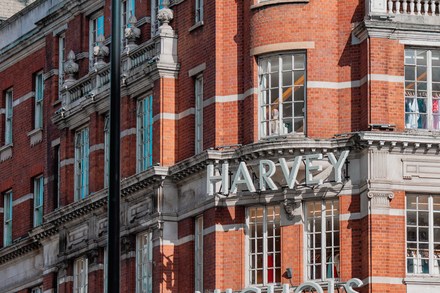
Can Mike Ashley save Harvey Nichols?

It would be easy to make fun of the takeover of Harvey Nichols by the Sports Direct founder, Mike Ashley, this week. And yet, there is also an element of truth in it. Ashley is, without question, a very smart retailer. But he is more Newcastle than Knightsbridge – and it will be very hard to restore Harvey Nichols to its former glory.  It is a mark of how much London’s economy has declined over the last few years that there was so little interest in buying Harvey Nichols. Once Princess Diana’s favourite store, it was at one time one of the most glamorous fashion retailers in the world. Its owner, the Hong Kong tycoon Sir Dickson Poon, had, however, tired of its recent losses.

America gets the AI boom. Europe gets the layoffs

From our US edition

The management consulting giant Accenture has laid off 11,000 people. The reason? It turns out that a smart chatbot can churn out meaningless waffle about “boiling the ocean” just as well as a recently hired MBA. Oracle has cut more than 20,000 jobs, as it discovered that Claude or ChatGPT could code as effectively as the quiet guy with glasses, while the legal giant Baker McKenzie is laying off as many as 1,000 people after figuring out that a machine could churn out a letter about “the aforementioned party of interest” as effectively as any of their junior lawyers. America is getting both sides of a process of ‘creative destruction’ Almost every day, another round of white collar professionals falls victim to the AI-driven jobs apocalypse.

A Burnham wealth tax looks inevitable

In the run-up to his elevation to prime minister, it would be safe to say that Andy Burnham did not have a great reputation among investors. Last year he declared he didn’t want to be in ‘hock to the bond markets’. He also had many plans to spend billions nationalising the utility companies and reducing the cost of living. Securing Lord Jim O’Neil, a former adviser to Gordon Brown and once a senior economist at Goldman Sachs, as part of his team was meant to be a great help. And yet today we learned that O'Neil may decide against joining Team Andy after all. Why? Because, among other things, he opposes a wealth tax – and he is completely right to do so.

Burnham must resist the urge to tax banking profits

The cheaper bus fares will have to be paid for. So will the modest cut to electricity bills, along with the shelters to end rough sleeping. The new prime minister Andy Burnham has made plenty of extra spending pledges during his first few days in office, but, some creative accounting aside, has said very little about how it will all be paid for. Still, never mind. The major banks have helpfully reported bumper profits, and Barclays has even had the gall to pay out bumper bonuses to the people who made them. Burnham could just slap an extra levy on them. Problem solved. Except if he does so, he will also do huge damage to what remains of the British economy. It has been a good week for the banks. Today Lloyds reported £4.