Matthew Dancona

Party queen

From our UK edition

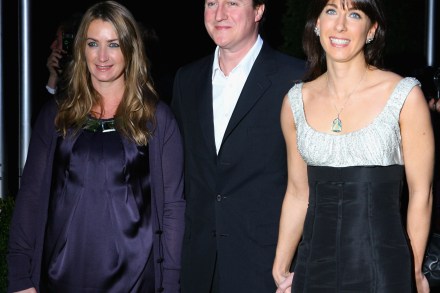
If a party can be judged by its parties, then the Conservatives are heading for office. Last night’s Black and White party, masterminded by the brilliant Anya Hindmarch, was a triumph. Michael Spencer, the Tory treasurer, looked understandably pleased with the money flowing into the party’s coffers (all legit: the auction programme included stern extracts from the Political Parties, Elections and Referendums Act 2000). But the deeper significance of the event was its sheer stunning style, wit and aesthetic touch. Traditionally, the Black and White party is a chore for the party’s senior figures, a drab affair that resembles an explosion in a cummerbund factory with lots of talk of “Rhodesia” and Enoch.
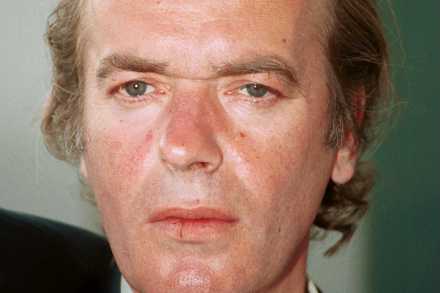
Amis dissects the modern order

From our UK edition

There is an important interview with Martin Amis by Johann Hari in today’s Independent. Read it and make your own mind up: it is a serious piece, and Johann has the intellectual firepower to take on the great novelist. They spar over demographic change, the proper limits of state retaliation to terrorist atrocity and the origins of al Qaeda (US foreign policy, or subterranean psychosis?). Unlike most interviews, it is a proper conversation, edgy without being confrontational. Not surprisingly, I agree with Amis on the elemental scale of the Islamist threat, and applaud his refusal to explain it away as the product of Western policy errors.

The slow erosion of government

From our UK edition

Black Wednesday exercises such a grip over our imagination that we sometimes forget that governments collapse because of the slow erosion that precedes the big storms. It is the drip-drip, not the tsunami, that does for them. In John Major's case, it was the daily farce of Back to Basics and the never-ending saga of 'sleaze' - as much as Britain's ignomious exit from the ERM - that ensured electoral disaster for the Tories in 1997. For Gordon Brown, the involvement of Alan Johnson in yet another donations story must be the cause of something approaching despair: were any of the candidates for the Labour deputy leadership paying attention to the (completely clear and straightfoward) rules set out in the 2000 legislation?

Punctuating politics

From our UK edition

The always-incisive Martin Kettle has a fascinating piece in today's Guardian, in which he assesses Peter Hain's exit not as a "sleaze" story or a test of Gordon's moral fibre, but as a generational punctuation mark. Hain, Martin writes, is the last of the Sixties era  politicians in the Cabinet - apart from the rather more pragmatic Jack Straw - and his departure will change the complexion of this Government irrevocably.  I wrote last October about Labour's "spoilt generation" of young "Fauntleroys", the youthful cohort of apparatchiks which has gained an even stronger grip upon the Government as a result of last week's reshuffle.

Matthew suggests | 26 January 2008

From our UK edition

THEATRE I can strongly recommend God of Carnage, the new play by Yasmina Reza, which tracks the descent into madness of a meeting between two couples to discuss an altercation between their respective sons. All starts with impeccable manners, stilted conversation and discussion of recipes. And then, in a sort of Moulinex blend of Abigail’s Party and Lord of the Flies, bedlam breaks out. The cast, led by Ralph Fiennes, is flawless, and, while the philosophical points are well made, it is the belly laughs you remember. CINEMA Plenty to see at the movies right now. For those who like classy ghost films, The Orphanage, directed by Juan Antonio Bayona, is a superior effort, with some genuinely terrifying editing.

Matthew suggests

From our UK edition

I have three books on the go at the moment: Charles Leadbeater’s brilliant analysis of web-world, We-Think, The Craftsman, by the Spectator’s own in-house magus, Richard Sennett (another masterpiece), and Marcus Du Sautoy’s intriguing exploration of symmetry, Finding Moonshine. I have known Marcus since we are at All Souls together and as well as being the cleverest person I have ever met he also has an astonishing talent for making impossibly complex mathematical ideas accessible to the layman. All three warmly recommended. I am longing to see the Russian exhibition at the Royal Academy and want to sneak in one last time to see The First Emperor at the British Museum – a landmark exhibition if ever there was one.

Let Joy be unconfined

From our UK edition

Matthew d'Ancona on Paul Morley's latest book In 1980, the Manchester pop impresario, Tony Wilson, showed Paul Morley the dead body of Ian Curtis, the lead singer of Joy Division, who had hanged himself. Wilson hoped that Morley would one day write the definitive account of the band and Curtis’s martyrdom. He also knew that Morley’s father had committed suicide, and that, alone with the body in a room in Macclesfield, the young journalist would be confronting much more than the earthly remains of his favourite singer. Another book about Joy Division? No, the book.

Posthumous glory

From our UK edition

At the risk of trivialising a tragic death, I have been musing over Heath Ledger’s now-posthumous performance as the Joker (see my earlier post as well as this article detailing the potential fate of Ledger's incomplete film projects) and the impact that death can have upon the reception of art, literature and entertainment. Here is my thumbnail list of posthumous precedents. There must be many, many others. Which would Coffee Housers add?

Unknown pleasures of the post-punk scene

From our UK edition

As this is the last week of my thirties, I feel entitled to indulge in a spot of pop culture nostalgia (or more than usual, at any rate). In tomorrow’s Spectator, I review Paul Morley’s masterly book on Joy Division, which I recommend to anyone who is interested in the music, ideas and social currents of the late Seventies and early Eighties. Looking back on three decades of writing about the Manchester band, Morley explains why the group, and the Factory records label pioneered by the late Tony Wilson, were so important in the history of rock and the redevelopment of the North. Absolutely terrific. And while I am at it, the DVD of last year’s Control is out soon and is similarly indispensable (even if you don’t care much for post-punk music).

Heath Ledger RIP

From our UK edition

“Why so serious?” say the teaser posters for the forthcoming Batman movie, The Dark Knight. This slogan acquired a bleak subtext last night when 28-year-old Heath Ledger – who plays the Joker in the new film – was found dead in his New York apartment, apparently as the result of a drug overdose (the autopsy is to be held today). As anyone who has seen Monster’s Ball or Brokeback Mountain can attest, Ledger was a hugely talented actor whose troubled private life seems to have overwhelmed him.

The verdict is in

From our UK edition

A must-read this morning is Anatole Kaletsky’s damning assessment of the yesterday’s developments in the Northern Rock saga. Kaletsky is one of the most respected economic commentators in the world and – as a former colleague – I know that he does not make such sweeping statements lightly. He was, moreover, well disposed to Gordon Brown from the start, and certainly has no ideological axe to grind. His verdict – that the Prime Minister’s economic competence is shot to pieces – will send a chill through the already glacial corridors of Number Ten.

Boris strengthens his position

From our UK edition

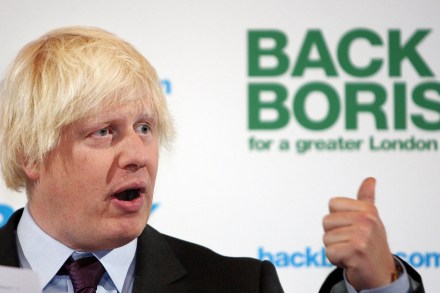
Excellent news for the Spectator’s mayoral candidate in today’s Standard. A YouGovStone poll of 533 influential Londoners shows Boris well ahead of Ken on voting intention (44 to Livingstone’s 38), and with a narrower lead as the candidate who “will do most to enhance London’s reputation”. Boris trails Ken on the issue of trustworthiness in the event of another terror attack and has some work to do with second preference votes (interestingly, Sian Berry, the Green candidate, leads on this question). But it is clear that Boris can win. Tonight is a big night in the mayoral contest: Martin Bright’s Dispatches programme on Ken airs at 8pm on Channel 4, and Boris faces a panel of Londoners, at an event organised by the Standard.

Villains that steal the show

From our UK edition

I took Peter’s advice and went to see No Country for Old Men over the weekend. This is indeed the Coen brothers at their absolute best (which is saying something), as well as a welcome return to the bleak terrain of Blood Simple, the film that made their name in 1984. The core of the movie is a trio of fine performances: Josh Brolin as the guy who stumbles into the aftermath of a drugs shoot-out and takes the cash, Tommy Lee Jones as the baffled, weather-beaten sheriff and Javier Bardem as the psychotic hitman and collector, Anton Chigurh. The film is worth seeing for Bardem’s Golden Globe-winning performance alone which is quite simply one of the most chilling evocations of evil ever brought to the screen.

Leave those schools alone

From our UK edition

Is there anything more depressing in an age of prosperity, choice and freedom than the spectacle of an old fashioned public sector rationing system doing its bleak work? The criticisms levelled by Jim Knight, the schools minister, at the best schools over the implementation of the statutory admissions code are a horrible revival of the language of a bygone era when public goods were controlled by rigorously enforced queuing. And, in keeping with Fraser’s warnings, this is another example of the Brown government undoing the public service reforms of the Blair years (such as they were). The decision to make the admissions code statutory rather than advisory was a sop to the Left during the trust schools controversy.

Labour was against presumed consent for organ donation before it was for it

From our UK edition

Mulling over the organ donations row, and the fascinating posts by Coffee Housers, I went back to the last time the Commons debated the issue properly – which was on an amendment to the Human Tissue Bill in June 2004 calling for “presumed consent”. I recommend the debate to anyone interested in the forthcoming controversy over Gordon Brown’s proposals. The amendment four years ago was put forward by Dr Evan Harris, the Lib Dem MP for Oxford West and Abingdon, although Tam Dalyell recalled that he had championed similar measures decades before. This was Harris’s summary of the case for change: First, it creates a default position that life should be saved rather than a default position that life could be lost.

The Wiki Man | 16 January 2008

From our UK edition

Anyone who is interested in the wonderful world of Web 2.0 or simply likes great writing – or both – should read Rory Sutherland’s new technology column starting in tomorrow’s Spectator. As well as being Vice-Chairman of Ogilvy Group UK, and generally regarded as the best writer in his highly competitive business, Rory is a masterly and witty guide to the revolution that is taking place on our phones, computers, ipods and other devices. So if you don’t know your wikinomics from your beta application, and you still think a mouse is a cheese-eating rodent, then this man can help. A warm welcome to the Spectator’s very own Wiki Man.

Our bodies do not belong to the state

From our UK edition

There are interesting pieces on the organ donation row by Libby Purves and Polly Toynbee today. Polly seethes that “rightwing commentators are sharpening their pencils for what they see as an excellent ideological dividing line…here we have an important battle of ideas – and the Conservatives have just instinctively plonked themselves on the wrong side.” What is certainly true is that this issue does test one’s fundamental attitude to the relationship between the individual and the state. Locke’s notion of “self-ownership” is not absolute: we do not accept that you can sell yourself into slavery, or (for that matter) sell your organs while you are alive.

Hain on the outs

From our UK edition

Peter Hain is toast. Gordon Brown’s defence of him in The Sun today is not so much luke warm as broken-boiler Arctic. On Friday, the PM’s spokesman said that Gordon had “full confidence” in the Work and Pensions Secretary – always a bad sign. This has now been down-graded even further to a statement of support which is entirely conditional, and implies that GB himself is not yet sure precisely how bad what Hain did actually was. “He took his eye off the ball,” says Brown, “and he has apologised. The matter must rest with the authorities, who will look at these matters.” If I was Hain, I would get my coat.

Hands off our bodies, Mr. Brown

From our UK edition

I find Gordon Brown's notion of 'presumed consent' for organ transplants, unveiled in the Sunday Telegraph, morally repugnant. It goes without saying that those who choose to give their organs after their death, and carry Donor Card to ensure this happens, are behaving commendably. They take a clear, proactive, individual decision about the fate of their physical remains, and one which is self-evidently to be applauded. What the Prime Minister now proposes is effectively the nationalisation of the body - with a new 'right' to opt out of the otherwise automatic procedure that your corpse will be stripped of organs for recycling.

Clegg steps up

From our UK edition

I spent the morning at the LSE, listening to Nick Clegg’s first big speech at Lib Dem leader and then participating in a panel on the issues he had raised. After a scrappy campaign, this was Clegg back to his formidable best. All comparisons with Blair’s Clause Four moment are flawed in one way or another, but this was certainly the moment when the new leader made clear to his party that he intends to take them on and to shake up some of their laziest preconceptions. Try this for size: The last ten years has shown that money isn't everything. The big questions now are these: how do we make Britain a fairer place without raising the overall tax burden? How do we promote real social mobility without relying on the discredited politics of Big Government?