Matthew Dancona

The Labour beauty contest

From our UK edition

The beauty contest begins: read Polly Toynbee in the Guardian today and her praise for James Purnell, the arch-Blairite Work and Pensions Secretary who is making a speech calling for Labour to emphasise fairness and social justice. David Miliband also enters the lists this week with a lecture in honour of his father, Ralph. Charles Clarke is expected to intervene (again) shortly. There will be others. I am reminded horribly of the period 1994-7 when the prospective successors to John Major jostled for position, all making speeches coated in plausible deniability but with a core of political gelignite: vote for me as the next leader.

Congratulations Boris

From our UK edition

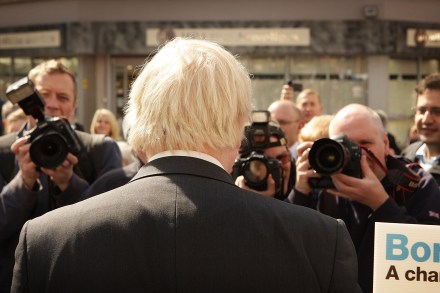
Greetings to all CoffeeHousers from the 29th Floor of Millbank Tower, where the faithful have gathered to toast our new Mayor - who, poor fellow, is stuck at the count waiting for official public confirmation of the triumph that Downing Street conceded hours ago, the bookies have already accepted, and the Evening Standard has announced in a special late edition. It is a pleasure and a privilege to congratulate Boris on his victory - as his successor at the Spectator, his friend and (above all) a Londoner. Be in no doubt: this is a sensational achievement. Ken Livingstone has dominated London politics for a quarter century and presided over a coalition of formidable strength. In 2000, he ran rings around the New Labour machine at its mightiest.

Back Boris | 1 May 2008

From our UK edition

We have had the debates. We have had the interviews. We have had acres of newsprint, some sensible, some way off the mark and some downright scurrilous. Can anyone doubt that this has been an exciting mayoral race? But it isn't just about excitement. This is the real thing: Londoners, today you must vote for change or more of the same. A fresh start and a candidate fizzing with ideas, or a tired municipal socialist demanding four more years for his rusty old gravy train. And those outside London: watch and keep your fingers crossed. Whatever national politicians say to the contrary, this contest will be a hugely important punctuation mark in this Parliament and the narrative arc leading inexorably towards the next general election.

Massaging the story

From our UK edition

Further to James's observations about the Mail on Sunday’s coverage of Lord Levy's book: I was struck, to say the least, by the disclosure that His Lordship was deputed by the Blair inner circle to have a word with the then PM about the lengthy massages he was receiving from Carole Caplin. The account of the two men's embarrassment during this exchange is intrinsically hilarious, of course. But it also shows that the controversy which quickly became known as 'Cheriegate' - flats bought through convicted conman Peter Foster, his eccentric girlfriend Caplin, her Svengali-like role as style guru to Cherie - could so easily have been 'Tony-gate'.

Joking apart: why Boris is the man for the job

From our UK edition

Boris Johnson has confounded his critics, says Matthew d’Ancona. The contest will go to the wire, but our man has proved himself to be both shrewd enough and serious enough to take charge ‘Ladies and gentlemen, please welcome the next Mayor of London...’ A January dinner at the Dorchester in honour of Boris Johnson, and it falls to me, as one of the hosts, to introduce the Tory candidate. I look across the room at the high-rollers, hacks, friends and acquaintances who have come along to toast the candidate and, in some cases, to see if he is for real. Many are already Boris-positive; others merely Boris-curious. Not for the first time, I appreciate the predicament that confronted Boris when he decided to run for mayor last July.

A chilling masterpiece

From our UK edition

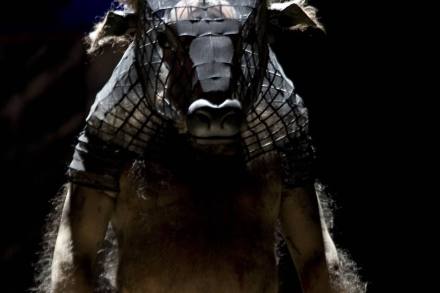
Sometimes music speaks not only to your mind and heart, but grabs at your very viscera in the most primal way imaginable. Such was the experience of last night's world premiere of Harrison Birtwistle's The Minotaur at the Royal Opera. Demanding and disturbing, the overture, played against the backdrop of dark and menacing waves, warned us of darkness to come. This was no idle threat, either. Rape, massacre and the consumption of the Minotaur's half-dead sacrificial victims, the Innocents, by the greedy Keres, vulture-like harpies: all were to follow. The mission of Theseus to enter the Cretan labyrinth, slay the beast and whisk Ariadne back to Athens provides the opera with its narrative framework.

A better effort. Just

From our UK edition

Take two: Gordon did better in his interview with the BBC today than in his exchange with Nick Robinson last week. As I wrote in the Sunday Telegraph, Brown answered Robinson’s questions in the earlier exchange about people’s anxieties over the economy without a shred of apparent empathy or feeling for worried mortgage holders and aspiring home owners. Today, the PM tried hard – so hard – to show the emotional intelligence that you just knew his media handlers had been urging upon him. So today it was different: deep breath: “I wake up in the morning thinking about how I can help those people who have mortgages or are looking for mortgages for the first time.” Back of the net!

Brown shouldn’t fear the stalking horses

From our UK edition

It is a modern ritual that when a party political leader's fortunes plummet - and Gordon Brown's certainly fit that category - there is talk of a leadership contest and, specifically, of a "stalking horse" candidate. Here's an entertaining look in Slate at the origins of the phrase. But, for most of us, the words trigger memories of Sir Anthony Meyer's challenge to Margaret Thatcher for the Tory leadership in 1989 - doomed in itself, but the key that turned the lock to her downfall a year later. The Conservative leadership rules in those days were sufficiently flexible to make such a challlenge meaningful, and enabled contenders to step into the second round of a contest. In the Labour context, talk of "stalking horses" is completely meaningless.

His own worst enemy | 13 April 2008

From our UK edition

There is a must-read piece in the Mail on Sunday by the impeccably connected Sue Cameron, who provides a compelling inventory of the Brown administration's dysfunctions. My favourite detail - so rich in irony - is that Number Ten is frustrated by the poor flow of information from the Treasury, and that the PM's aides were especially furious that details of the changes to capital gains tax were settled without reference to them. The reason? Habit. During the Blair-Brown years, the Treasury's entire culture was founded on the principle that its officials kept Number Ten in the dark until absolutely necessary. 'We don't normally tell No 10 what we're doing,' according to one senior official quoted in the article. 'We haven't been telling them for the past ten years.

The schools battle

From our UK edition

As Jonathan Freedland and Coffee House favourite Steve Richards have pointed out, the row over school admissions is turning into a proper Left-Right punch-up. And quite right, too. For much too long, the most publicly visible battle lines (expertly drawn by Gordon Brown) have been between “Labour investment versus Tory cuts” – mostly nonsense, but politically adhesive. Now, there is a different and no less rowdy argument rising in prominence: namely between the central control of the supply of public goods and the drive to make public service institutions free of central control and encourage diversity. As it happens, I rather like Ed Balls – sorry, CoffeeHousers – and, as I said in my Sunday Telegraph column he is a clever and quick-witted politician.

The Ministry of Silly Talks?

From our UK edition

Hugo has a terrific lead item in his Times column: namely that John Cleese is offering his speech-writing services to Barack Obama. Having had the amazing opportunity to co-write a short script with the great man years ago, I can heartily recommend him to the Senator for Illinois. And one can only wonder where such a collaboration might lead. Imagine how Basily Fawlty would have dealt with the Jeremiah Wright furore: “Don’t mention the pastor – I mentioned it once, but I think I got away with it!” Or, more probably, a discourse on the Audacity of Despair. And is it too much to ask that the Democrat contender would offer to set up a Federal Bureau of Silly Walks? Or that he might refer to Hillary as an ex-candidate – she has ceased to be?

‘We have been wimpish about defending our ideas’

From our UK edition

Salman Rushdie tells Matthew d’Ancona that the idea at the heart of his new novel set in 16th-century Florence and India is that universal values exist and require robust champions The last time I interviewed Salman Rushdie was, as he remarks, a lifetime ago. That was in February 1993, in a safe house in north London guarded by Special Branch officers, only four years after Ayatollah Khomeini sentenced him to death for the alleged blasphemy of The Satanic Verses. On that occasion, quite understandably, the novelist seemed shrunken: not only spiritually subdued, but physically compressed by the ordeal of the fatwa.

Clinton’s Rocky road

From our UK edition

It was Eddie Murphy who pointed out, brilliantly, that white people make the terrible mistake of thinking that Rocky is true. His stand-up riff on the subject involved an Italian who had just seen one of Sylvester Stallone’s boxing epics picking a fight with a much taller black man - and ending up in hospital. Hillary Clinton, I fear, is making the same error. “Let me tell you something,” she said, “when it comes to finishing a fight, Rocky and I have a lot in common. I never quit.” No doubt. But as a shameless student of all six Rocky films I can tell the Senator that her choice of cinematic hero is ill-advised. In the fifth movie, the fighter has suffered terrible brain damage (how can they tell, you might ask?

Law, Actually

From our UK edition

It all depends who says it, doesn’t it? I hold unfashionably robust views on the proposed extension of pre-charge detention for terrorist suspects (the arguments are familiar now: see my article here). I have traded blows on air with opponents of the change and I respect most of their anxieties. David Davis is one of the politicians I admire most, and he and I happen to disagree on this issue – which is fine. Likewise, the Government should certainly take seriously the challenge to its plan by the Equality and Human Rights Commission (chaired by the admirable Trevor Phillips). These, like Liberty’s Shami Chakrabarti, are serious people with serious reservations about an undoubtedly significant infringement of core liberties.

A state of emergency

From our UK edition

I have known David Selbourne for almost a decade and a half, and have long admired his trenchant, impeccably argued analysis of the state of modern society (as well as his many other writings). His book The Principle of Duty (1994) was one of the earliest moral road-maps for the Blair era, a copy of which was famously bought by President Clinton at Blackwell’s in Oxford. It is fair to say that neither Tony or Bill followed the advice set out in that magisterial book. But it certainly foreshadowed the growing importance that the language of “responsibility” would have in political discourse, if not the reality of Government policy.

A remarkable performance

From our UK edition

Nicolas Sarkozy's address to both Houses of Parliament was a remarkable political performance, bristling with confident charm, and a reminder that, for all his travails, the French President is a politician of the first order. Flanked by his new wife, Carla Bruni, Sarkozy gave a speech that Jacques Chirac or, for that matter, Ségolène Royal would never have countenanced. Most of the content was predictable and unremarkable: homage to Britain's role in the Second World War, encouragement to this country to be an active participant in the EU, the promise of more French troops for Afghanistan, conciliatory words on CAP reform, calls for cooperation on immigration.

Death of a visionary

From our UK edition

Like Mother Theresa, it was Arthur C Clarke’s historic misfortune to die in the same week as someone with more “celebrity” (Anthony Minghella in his case, rather than Diana). But Clarke was a hugely important figure. Much has already been made of his prophetic abilities as a scientist, notably on satellite communications and moon exploration. But he was also one of the truly great science fiction writers, up there with Bradbury, Blish, Philip K Dick and Asimov, and far superior to the trash fantasy writers of today who have followed in the footsteps of Frank Herbert and Michael Moorcock (while never matching them).

On Boris and that poll lead

From our UK edition

Who’s laughing now? Boris has stormed ahead in the polls today, with a 12 point lead over Ken in the Standard’s YouGov survey. With 45 days to go, 49 per cent versus 37 is a strong position – and quite remarkable for a Tory candidate in a city that Livingstone has run (to use his own phrase) as a “personal fiefdom” on and off for more than a quarter century.  The especially good news is that Our Man is ahead on second preference votes, although here the margin is narrower (20 to 17).

Unfunded spending

From our UK edition

My prize for comment of the day goes to CS responding to my earlier post on Patricia Hewitt: "Just saw Old Pat on the TV slagging off her opponents' 'unfunded policies'. If the government has a budget deficit which it keeps having to revise upwards, doesn't that mean that its own spending is unfunded?" This is a simple but brilliant point. We will hear the mantra “unfunded policies” from Labour more often than I care to mention: at present the figure alleged by Gordon and co. is £10 billion-worth of such Tory measures. But – even assuming this is an accurate figure - £10 billion is small potatoes compared to the deficit the Labour Government has already chalked up.

The Tory response

From our UK edition

Some initial responses on the Tory side: 1) The troops are delighted with Cameron’s performance which was very assured: they think their man is getting better, learning on the job. The “gradient of leadership”, as one former Cabinet Minister described it to me, is heading in the right direction.  2) Darling is broken. The target has to be Brown. But this strategy depends upon the public definitively reversing its opinion of Gordon as a safe pair of hands. Some anxiety that this reputation has been tarnished rather than shattered.  3) What is the Tory strategy now? As Andrew pointed out, why stick to Labour spending plans if borrowing is already out of control?