Matthew Dancona

Unflattering comparisons

From our UK edition

The most pathetic aspect of Darling’s speech, just reiterated by Patricia Hewitt on the BBC’s coverage, was the recourse to comparisons with the last Tory government. Every administration, especially one that begins its life with an unambiguous landslide, feeds off the public’s desire not to turn back the clock. For years after 1997, Tony Blair was able to say: No Turning Back to the Tories (or, more specifically, to the dire Major era). But it is almost 11 years since a Conservative last held a red box or sat in a ministerial limousine. The teenagers who will vote for the first time in (say) 2010 were five years old when John Major departed the stage. Older voters no longer care.

The crazy Cabinet

From our UK edition

Any citizen tuning in to the BBC to watch the Budget would conclude that we are governed by a wardful of maniacs. As Darling drones on, Jack Straw and Alan Johnson have their tongues lodged in their mouths. Ed Balls and Hazel Blears compete to nod like the dogs on the dashboard of a Ford Transit. Harriet Harman chides the Tories like an irritable headmistress. Ruth Kelly grins miserably. David Miliband looks on quizzically. Douglas Alexander slumps with abject melancholy as though he might at any moment burst in to tears: perhaps he is considering his triumph of the election-that-never-was, the moment when Gordon’s luck turned. Breaking news: Jack Straw just took his pen out.

Utterly bland

From our UK edition

The blandness of Darling’s speech is awesome: his tie may be imperial purple but his manner is scarcely that of a natural helmsman. What a contrast with the bullishness of his predecessor. He has the countenance of a man expecting to be punched very hard. All is predicated on the Big Global Excuse: times are tough, but the Government is (allegedly) delivering “stability”.

Lest we forget | 12 March 2008

From our UK edition

Lest we forget: in the midst of today’s Budget-mania, pause and consider that the Lisbon Treaty, a sweeping package of reforms to our relationship with the EU, cleared the Commons without a hitch last night. So much for Tony Blair’s promise in April 2004 to mount a definitive national debate on the original EU Constitutional Treaty (of which the present Treaty is a shame-faced near-replica). "Let the issue be put and let the battle be joined!" declared Blair in the Commons. Well, that pledge of a referendum was dumped on the spurious grounds that the new text is not “constitutional” – and so there will be no battle to join. This is how the argument ends: not with a bang, but a whimper.

Laying down the law | 11 March 2008

From our UK edition

What is going on over school admissions? Last week, Jim Knight, the schools minister, urged disappointed parents to make greater use of the hopelessly bureaucratic appeals system. Today, he and his boss, Ed Balls, said they had evidence of schools – they won’t say how many – breaking the admissions code and asking parents inappropriate questions about their backgrounds – even, apparently, asking them for donations to the school. Nobody would defend such practices, but what has to be asked is why ministers are cracking down so hard and so publicly on what must surely be quite a small-scale problem.

Diary – 8 March 2008

From our UK edition

Mumbai A city where the children dash from car to car selling novels is the perfect place for a literary festival: on the way from the airport, snaking past shantytowns and catching my first glimpse of the Arabian Sea, I am offered The Kite Runner by street urchins knocking on the window of my taxi. It is a good location for another reason, which is that, like New York or Rome, Mumbai is a place one visits in literature and film many times before setting foot on the island city itself. In its crush of people, colour, sensuality, surrealism and politics, it is Midnight’s Children or a Bollywood double-bill suddenly made flesh. I am here to talk about British politics and fiction, doing my best not to confuse the two. A few days before departure, I see the PM at No.

They should be feted and honoured

From our UK edition

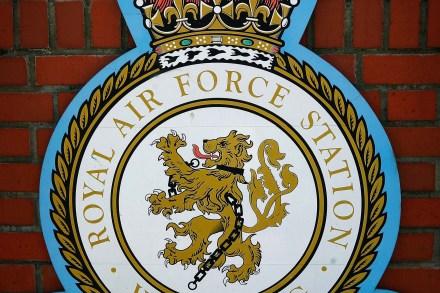
There is something utterly shaming in the RAF uniform story. However isolated the instances of mockery near RAF Wittering, one is too many. Those who put their lives on the line to protect the nation should be feted and honoured by civilians – not urged to wear their uniform with discretion so as not to provoke the public. It says a lot about the hollowing out of patriotism that this is even an issue: we celebrate British sport, pop music and fashion but not, it would seem, the valour of British servicemen. I am reminded of Wilfred Owen’s poem, The Send-Off: Down the close, darkening lanes they sang their way To the siding-shed, And lined the train with faces grimly gay. Their breasts were stuck all white with wreath and spray As men's are, dead.

Who should answer the 3am call?

From our UK edition

As the psephologists continue to argue how many caucus members can dance on the head of a pin, political folklore has already settled around the idea that Hillary was saved by the famous “3am ad”. Like the destruction of Michael Dukakis by the Willie Horton ad in 1988, this aimed squarely at Obama’s most vulnerable flank: his inexperience. “It’s 3 a.m., and your children are safe and asleep,” the announcer says. “But there’s a phone in the White House, and it’s ringing — something’s happening in the world. Your vote will decide who answers that call.” To which the implicit answer is: not some glamour-boy from Illinois who’s been a Senator for five minutes.

Taxing times

From our UK edition

Danny Finkelstein has a must-read column today on the Tory tax row, which has already prompted response over at Conservativehome. Quite apart from his formidable intellect, Danny has something which most of those commenting on the pros and cons of tax cuts don’t, which is scars on his back. As a close adviser to William Hague when he was leader, he saw at first hand how this argument worked in practice rather than theory. He knows of what he speaks. The least persuasive argument for the Tories to embrace radical tax cuts is that previous proposals have been timid or unclear. The fact is that Labour made sure that the public knew in 2001 and 2005 that the Opposition was proposing cuts and the electorate delivered its verdict unambiguously.

Team Brown strengthens

From our UK edition

The Number Ten operation is getting stronger by the day. Downing Street will announce tomorrow the appointment of WPP's David Muir as Director of Political Strategy. Regarded as one of Sir Martin Sorrell's right hand men, he has been CEO since 2005 of WPP's unit The Channel, which brings together the company's media and research skills, and (probably a must-read now for Brown watchers) the co-author of a well-received book called The Business of Brands. He is also on the Advisory Board of the John Smith Memorial Trust. So soon after the arrival of Stephen Carter from Brunswick this marks another top capture for Team Brown, and is further evidence of the gear change I referred to in the Sunday Telegraph at the weekend.

The Norman conquest

From our UK edition

Lord Tebbit’s response to Michael Gove’s Spectator article last week is a remarkable spectacle: an argument between a past colossus of Tory Government and a future one. To the irritation of some of my fellow modernisers, I have a deep respect for Norman and thought it was especially crazy of that faction to try and expel him from the party in 2002. He is not, as some mods claim, the Scargill of the Right: this is a man who took on the unions and won, drove through many of the key Thatcherite reforms and was responsible for some of the party’s most remarkable electoral achievements. He is also a hero of the fight against the IRA, and has made huge personal sacrifices to care for his wife, horribly injured in the Brighton bomb. So a bit of respect please, gentlemen.

Charlie does surf. Meet the new wizard of the web

From our UK edition

Charles Leadbeater tells Matthew d’Ancona about the riches to be mined from online collaboration — and says that the Conservatives have a chance to launch a new form of politics The man who brought you Bridget Jones is, you might think, an unlikely guide to the deeper philosophical and cultural meaning of the web. But, as he sips his tea in the kitchen of his Highbury mews home, Charles Leadbeater makes an extremely convincing magus of the online revolution and the new world of Web 2.0. ‘The thing that interests me is not the technology, but what people try to do with it,’ he says, ‘and why they want to participate — they don’t just want to consume.

Sprinting leaves morality behind

From our UK edition

As a sporadic but enthusiastic follower of British athletics, I find the Dwain Chambers story very dispiriting. There is something utterly compelling about the sprinters – from Jesse Owens, via Jim Hines’s 9.95 seconds in the 1968 Olympic 100m final, to the prodigious Carl Lewis, our own Linford Christie, and beyond. Britain has done well in these explosive events, and particularly so in 4x100 relay: black youngsters have performed with particular magnificence over the years, and acted as superb role models to children in deprived communities. So the selection of Chambers for next month’s World Indoor Championships sends all the wrong signals.

The Archbishop of Cant

From our UK edition

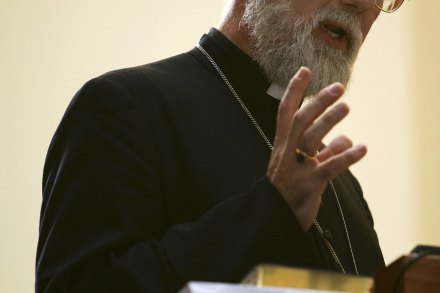
One might have guessed that the Archbishop of Canterbury would find a verbally tortured way of explaining himself. “I must of course take responsibility for any unclarity,” he told the Synod this afternoon. What a curious word to use. In this case, I suppose, “unclarity” begins at home. It has been said by one or two more astute commentators since the row over sharia began last Thursday that Dr Williams’s whispering diffidence conceals an intellectual arrogance that lies at the heart of the problem. He admitted that the matter had been handled “clumsily” and made an allusion to unintended hurt from the Psalms. But, on the whole, I thought this was a pretty unrepentant performance.

A real Westminster scandal

From our UK edition

The most shocking story in today's papers is a Sunday Telegraph scoop by Melissa Kite (also a Spectator columnist). How was an illegal immigrant able to work at the House of Commons using a fake identity pass? Elaine Chaves Aparecida, a Brazilian cleaner, was arrested at the Palace of Westminster ten days ago in possession of someone else's pass. It emerged that she had fled immigration officials at Heathrow four years ago. It is also clear that the Home Office was keen to cover the whole disgraceful episode up. Extraordinary stuff: is anyone actually running the country?

An Arch row

From our UK edition

In the Sunday Telegraph today, I argue that the Archbishop's speech is a sort of liberal book-end to Enoch Powell's infamous 'Rivers of Blood' outburst 40 years ago. Let us call Dr Williams's lecture 'Rivers of Blather'. One comic aspect of an otherwise deadly serious row has been the extent to which it has started to assume all the characteristics of a political controversy. So: the embattled principal (in this case, an Archbishop rather than a Cabinet Minister) makes a speech of huge complexity, but - fatally - previews it in a BBC interview. He says things that cause outrage even before he has begun the lecture itself. By the time he does, the row is already up and running on the 24 hour news channels and in the blogosphere. Merry hell breaks out in the papers the next morning.

Canterbury Tales

From our UK edition

And so, with his job now on the line, the Archbishop's fightback begins. It is, predictably, the Prufrock Defence: that wasn't what I meant at all. On his website, he insists that he was not proposing 'parallel jurisdiction' of sharia and British law. No indeed: the phrase he actually used was 'plural jurisdiction' which is much further-reaching and more radical, implying a smorgasbord of legal traditions from which the modern citizen can pick and mix. Charles Moore is - as ever - a must-read in the Daily Telegraph, as is Matthew Parris in The Times who advances the fascinating thesis that the practical implications of the Archbishop's thesis are not liberal at all but local-communitarian and (potentially) deeply conservative.

In praise of <em>Ashes to Ashes</em>

From our UK edition

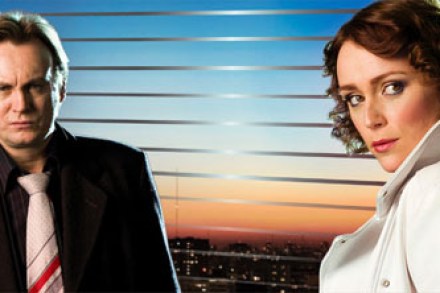
Aside from news programmes, I rarely stay in specifically to watch something on television (as Hugo has written, boxed DVD sets are a very civilised invention). But last night was an exception: as a Life on Mars fanatic, I wanted to see its much-hyped sequel, Ashes to Ashes. No more John Simm as DI Sam Tyler stranded in the Seventies. In this series, we have Keeley Hawes as DI Alex Drake, shot in our own time and sent hurtling back to the (imaginary?) Eighties. All of which, frankly, is a pretext to get back on our screens the one and only DCI Gene Hunt. The makers of Life on Mars could not have known how awesome Philip Glenister’s performance as Hunt would be, and how iconic the politically incorrect copper would become.

A massive clerical error

From our UK edition

For once, the devil does not lie in the detail. The real problem with the sharia row triggered by the Archbishop of Canterbury is not legalistic, but that it should be happening at all. What on earth possessed the most senior Christian churchman in the land to suggest what he did in the first place? Since when is the function of the established Church to recommend an accommodation with the tenets of imported theocracy? The Archbishop's primary role, one assumes, is to care for the souls of his own dwindling flock. Instead, poor Dr Williams gets his surplice in a twist, proposing with the garbled logic of which only a true academic is capable that part of the answer to the dual allegiance felt by British Muslims might be to recognise certain aspects of sharia law.