Matthew Dancona

Gordon’s roof

From our UK edition

Today’s speech by George Osborne attacking Gordon Brown’s record for economic competence is an important development in the rolling out of Tory strategy. The charge that Gordon is not up to the job is not new, of course, but this is the first time it has been put at the heart of the Conservative attack. The notion that the PM failed to “fix the roof while the sun was shining” will be central to the Cameroon assault on Brown’s credibility. How things change. A year ago, the worry among thoughtful Tories was that the election would be a battle between change (Cameron) and competence (Brown): their fear was that, as charismatic as Dave might be, his box-fresh appeal could not trump Gordon’s weathered, Gore-tex dependability.
Mandelson enters the fray

From our UK edition

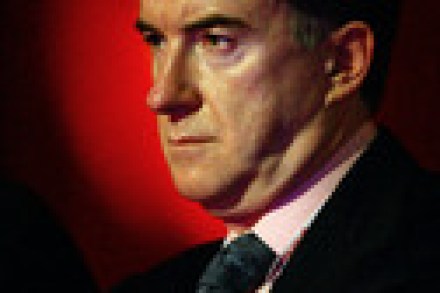
Peter Mandelson's dig at Gordon Brown for his botched, theatrically half-hearted signature of the Lisbon Treaty is more than the latest chapter in the 13-year-old feud between Blairites and Brownites. It is also (yet another) uncanny echo of the John Major era. The Grey One tried his best to plot a middle course on Europe - and ended up pleasing nobody. It is often pointed out that Labour is not split over Europe as the Tories were in the Nineties. That is true. But Mr Brown's backbenchers are divided no less fiercely over a much more toxic issue: how soon the PM should step down. One Labour Privy Councillor told me that if Gordon didn't get his act together by the summer that Jack Straw or Alan Johnson would have to step in. Improbable? Maybe.

Christian virtue: a man in the prime of his second act

From our UK edition

The night before I meet Christian Slater I am lazily channel-surfing and, a little spookily, on comes True Romance, the 1993 Tarantino-scripted love story and gangster movie that cemented the actor’s stardom. There is much to enjoy in the film: Brad Pitt as a stoner, Gary Oldman as a scary white pimp who thinks he is black, and Tarantino’s dialogue at its best, never better than in a scene between Christopher Walken and Dennis Hopper. But it is the performance delivered by Slater himself — a comic-store geek whose love for Patricia Arquette makes him capable of insane heroism — that sticks in the mind. And guess what?

This inquest has gone too far

From our UK edition

The word “disgrace” is used too liberally, not least by journalists. But no other word will do justice to the cross-examination today of Sir Miles Hunt-Davis, the Duke of Edinburgh’s private secretary, at the Diana Inquest. As Martyn Gregory’s admirable despatches in The Spectator have shown, the whole circus is an embarrassment, giving airtime to Mohammed Fayed’s lurid claims about the death of his son, Dodi, and the Princess a decade ago. It is bad enough that Diana’s family and friends have had to wait so long for a procedure that ought to have been no more than a formality, concluded years ago. But the calling of Sir Miles, a distinguished servant of the monarchy, is outrageous.

Led Zeppelin are back

From our UK edition

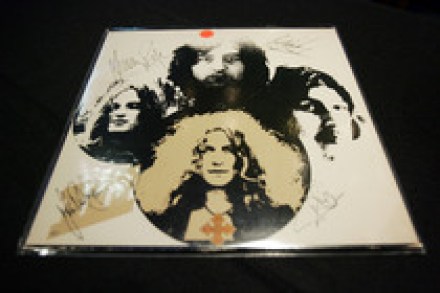
Twenty seven years after it was grounded by sudden death, the Zeppelin flies once more – and none of us can quite believe it. The three surviving members of the ultimate rock group – Robert Plant, Jimmy Page, and John Paul Jones – take to the stage at London’s O2 Centre, joined by Jason Bonham, son of their late drummer John Bonham, and burst without ceremony into “Good Times, Bad Times”.  It is an extraordinary occasion in every way, the most eagerly awaited reunion in the history of rock’n’roll. Each member of the audience, gathered from 50 countries, is conscious that more than a million (some say 20 million) people applied online to be here tonight: we are the Charlie Buckets of rock, winners of the golden tickets.

Why teaching nonsense makes sense

From our UK edition

There is more than enough dumbing down in modern education without seeing it where it doesn’t exist. The new Ofsted report complaining that under-11s are being taught too much Edward Lear, Lewis Carroll and Spike Milligan is especially wrong-headed. For a start, it is impossible for anyone of any age to have too much Milligan: a meaningless phrase. Secondly, the report is leadenly illiterate in its approach to nonsense poetry: as Noel Malcolm explains in his excellent book on English nonsense, there is a rich strand in our nation’s literature that flows from a sense of the absurd and a crazy experimentalism with language.

We need more prisons

From our UK edition

The review on penal policy by Lord Carter of Coles is unbelievably depressing, giving, as it does, further respectability to the idea that sentencing should be driven by the supply of prison places rather than the demand created by the courts and successful prosecutions. This orthodoxy within the criminal justice system has twin roots in the liberal social science which has infected Home Office thinking since Roy Jenkins and Reggie Maudling and the pressure from the Treasury to keep down the costs of the prison system. Governments, on the whole, want to be remembered for building hospitals not prisons. But the simple, bleak but unavoidable truth is that we need more jail capacity in this country – and fast.

Spot the spoiled ones

From our UK edition

Amanda Platell, a must-read columnist as well as a hugely experienced former editor and political adviser, hits the nail on the head today with her piece on New Labour's 'trustafarians'. She applies the term to the privileged younger generation of Government ministers who have never had to struggle in Opposition or fight for the privilege of office. It's spot on: a label that deserves to enter the political lexicon.

The mighty should quake before the Wiki man

From our UK edition

As Robert Lindsay demonstrated unforgettably as Wolfie, leader of the Tooting Popular Front in Citizen Smith, anyone who shouts ‘Power to the People!’ can end up looking a prize idiot. So let me throw caution to the wind and say that this is precisely what the web, new media and mobile technology offer us, if we choose to seize the opportunity: democratisation on a new and unprecedented scale. This, at least, is the conclusion I have drawn making two Radio Four programmes on politics and the internet. First, there is what you might call the direct impact of new media upon political practice: its basic instrumentality. As D-J Collins, one of the rising stars in the Google firmament, told me: ‘We’re at the cusp of very profound change.

Cameron needs to modernise his world view

From our UK edition

As James has noted, there is a yawning gulf of ideas opening up between the Tories and Brown on foreign policy. Read this piece by David Aaronovitch in The Times today for a fascinating exploration of the subject. While I am still not sure that Gordon embraces liberal interventionism with the same ardour as Blair – for all his contempt for the EU, Brown is still a believer in rules-based internationalism – there is no doubt that the PM is closer ideologically on foreign policy to his predecessor than is Cameron, the self-styled “heir to Blair”. As was once pointed out to me by a very senior Cameroon, it is no accident that Dave inherited Douglas Hurd’s seat: he is more of an old-fashioned pragmatist on foreign policy than a 21st Century radical.

The case for 56 days

From our UK edition

Following my Sunday Telegraph column yesterday, I debated the Government’s plans to extend the pre-charge detention period from 28 days with Henry Porter at the end of the Today programme this morning. I was for, Henry was against.  I don’t like any restriction upon liberty, but I do not think this extension is being sought recklessly or for political effect. If anything, it is a terrible political gamble for Gordon Brown, whose Government is proceeding shambolically and is nowhere near achieving a consensus in the Commons. So I disagree fundamentally with Henry’s contention that this is all just a “virility test” for the PM, who is appealing to the “unlettered” part of the electorate or grandstanding to his backbenchers.

The winners of the political year

From our UK edition

This is the text of the remarks that Matthew d’Ancona, editor of The Spectator, delivered at the Spectator Threadneedle Parliamentarian of the Year awards lunch at Claridge’s Hotel. My Lords, ladies and gentlemen, good afternoon and welcome to the 23rd Threadneedle/Spectator Parliamentarian Awards. Yes, once again, this is the big one: the Oscars of Westminster, the Booker Prize of our lawmakers, the Blankety Blank cheque book and pen of the political cosa nostra. First of all: thank you to Mark Malloch-Brown for lending us his study for the ceremony.

An audience with the wise woman of Whitehall

From our UK edition

You may not have heard of Janet Paraskeva, but she is one of the most important people in Whitehall and also one of the most highly regarded. She is private both by temperament and by design, enjoying the freedom this gives her to get on with her job as First Civil Service Commissioner: head of the independent body that reports directly to the Queen to ensure open and fair recruitment to the Civil Service and investigate appeals from officials. This week, however, her term of office was extended to the end of 2010 and, with a Constitution Bill in preparation that will have huge implications for Whitehall, she has decided to make a rare foray into the limelight and grant her first major interview to The Spectator.

Pistols pack a punch

From our UK edition

‘Anyone in the building under 40?’ asks Johnny Rotten. Yes, I am (just): and, by the looks of things, about 20 others among 3,000-odd punters at the Brixton Academy, come to see the Sex Pistols in their middle-aged prime. Punk isn’t dead. It just drives a people-carrier these days. But age cannot wither these amazing 30-year old songs. The set opens with the sonic attack of ‘Pretty Vacant’--the best pop record ever, in my book--as Steve Jones’s ferocious guitar forms the wall of sound upon which Rotten’s words are sprayed like seething graffiti. It is five years since I last saw the Pistols, and it appears that Jones has been eating all the pies since that particular ‘farewell’ concert at Crystal Palace.

The Lord Malloch-Brown story

From our UK edition

Don’t miss a very important piece in tomorrow’s magazine by James and the distinguished US journalist Claudia Rosett on the star of Gordon’s “ministry of all the talents”, Mark Malloch Brown. Although plenty of people expressed concern about Lord Malloch Brown’s appointment to a senior ministerial post at the Foreign Office and his early remarks, myself included, this article is the first major investigation of His Lordship, around whom all sorts of rumours have been swirling in the past few weeks. It reveals some remarkable things.

Unmissable drama

From our UK edition

I was lucky enough to see Shadowlands at the Wyndham’s Theatre this week and, if you haven’t been, you really should.  William Nicholson’s play, originally a TV drama now best known for the movie version starring Anthony Hopkins and Debra Winger, is powerful stuff, a demanding distillation of C.S. Lewis’s personal battle with the problem of theodicy: why does a supposedly loving God allow suffering? Charles Dance and Janie Dee are great as Lewis and Joy Gresham, the American divorcee with whom the ultimate Oxford bachelor found himself hopelessly in love and whom he nursed as she died from cancer. There are also fabulous performances from John Standing as Professor Christopher Riley and Richard Durden as Lewis’s brother, Warnie.

Gove skewers Gordon

From our UK edition

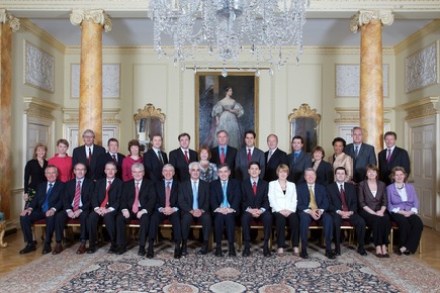
As I predicted yesterday, Michael Gove’s speech to the Bow Group this morning was a belter: as trenchant and subtle an analysis of Gordon Brown’s politics as any Tory politician has yet made. The Gover launched his attack more in sorrow than in anger – and it was all the deadlier for that. Look at his choice of historical precedents for the Prime Minister: David Lloyd George – one of our most historically significant Chancellors whose peacetime premiership descended into an exercise in idealism-free positioning, truckling to establishment media figures and ideological drift.

Who is right on immigration?

From our UK edition

Steve Richards, one of the unmissable voices of the centre-Left, has an interesting column in today’s Indy in which he takes issue with Fraser over immigration. If those on the Right who welcome immigration concede that more and better public services will be required, asks Steve, surely we are conceding the Left’s point that more Government intervention and investment will be needed? His broader point is that the Right is in a muddle over the State (does it want more or less?) and immigration (does it want the labour market or the state to set its limits?) There is a confusion here between pure free market ideology – which has certainly been influential in the Conservative Party since the late Seventies – and the broader tradition of conservatism.

Gove to deliver the Tory verdict on Brown

From our UK edition

Huge excitement at Tory HQ over a speech which Michael Gove will deliver tomorrow on Gordon Brown’s politics. It is meant, I am told, to be seen both as the “definitive” take on Gordon-so-far and as a companion piece to David Cameron’s speech on immigration today – a measure of how (justly) high Gove’s stock is in the Cameroon circle. Apt, as well, that the most brilliant Scot of one generation should be selected to take on the most brilliant of another. The Shadow Schools Secretary was President of the Union when I was at Oxford and, though he has deliberately restrained the rhetorical fireworks as Shadow Schools Secretary – the key is to look like a Cabinet Minister in waiting – he is quite something as a debater when he lets loose.

America’s confessional cinema

From our UK edition

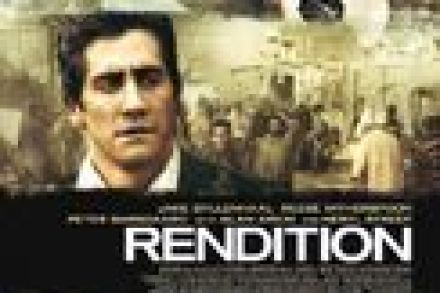
Two big movies on release at the moment – Michael Moore’s Sicko and the thriller Rendition – have in common a deep strand of American self-loathing. Say what you like about Moore: his films are awesomely powerful and well-constructed. And who can doubt that his target this time – the US health system – is a soft one? But his travels to Britain to see the NHS, France, Canada and even Cuba – all to demonstrate the wickedness of America – are spectacularly credulous. In one scene, he interviews a British GP about how terrific his pay is, how brilliant the system is and (wait for it) how little the British Government intervenes. Wow! That is fantastic!