Matthew Dancona

Simon Carter

From our UK edition

Matthew d’Ancona on the late Spectator quiz compiler, Simon Carter I still get letters about the Impossible Quiz which Simon Carter set for our Christmas special issue. An infernally complex blend of merciless logic, M.C. Escher’s art, and very tough questions, the Thirty-Nine Steps quiz that Simon compiled and adjudicated was, in its way, a work of art. It completely foxed me, that’s for sure. Quiz-sharp readers were intrigued and, eight months on, continue to correspond with me about its devilish intricacies. Simon’s sudden death at the age of 48 has been a terrible shock — not least because he was such a welcome new member of the extended Spectator family.

Georgia is only the start

From our UK edition

Philip Bobbitt’s cover piece in this week’s magazine is a very significant intervention in the debate on what is happening in Georgia. I commissioned the article because – in my opinion – Bobbitt is the most important writer in the world on geopolitical issues right now: his impeccable scholarship, work for the National Security Council, the advice he has given presidents, and his capacity to soar over the battlefield of confusion make him unique. Above all, he is intrinsically wary of applying old paradigms of analysis to new landscapes: that is why his book Terror and Consent is such a masterpiece. There is no better guide to the new international order and its discontents (I was delighted to see it on the Tories’ summer reading list).

Another by-election nightmare looms for Brown

From our UK edition

The death of John MacDougall, Labour MP for Glenrothes since 2001, will trigger yet another nightmare for Gordon Brown. No other word will do. Glenrothes in Fife is on the PM’s very doorstep and – after Glasgow East – looks distinctly vulnerable. In the 2005 general election, Mr MacDougall polled 19,395 votes, well ahead of the SNP’s John Beare on 8,731. But Labour’s majority of 10,664 accounted for only 28.5 per cent of the vote. In Glasgow East, Labour’s 2005 majority was larger in absolute terms – 13,507 – but accounted for more than 43 per cent of the turnout. In other words, Glenrothes looks like an even juicier target for the SNP: if Alex Salmond’s party could win in Glasgow East, this should be, frankly, a doddle.

10 years after the US embassy attacks, al Qaeda is winning

From our UK edition

Nothing on God's Earth would persuade me to wish al Qaeda a "Happy Anniversary", ten years to the day since its simultaneous attacks on US Embassies in the East African capital cities of Nairobi and Dar es Salaam, at the cost of more than 200 lives, most of them African civilians. Are they winning? Sadly, I think they are. The operational strength of AQ and its affiliates ebbs and flows - that is in the nature of a global franchise that has moved beyond the old-fashioned IRA cellular structure to something much looser and more organic. But the West has undoubtedly marched into the elephant trap dug by Osama bin Laden.

Why the Brownites would love Milburn to back Miliband

From our UK edition

The Daily Telegraph story about David Miliband offering Number 11 to Alan Milburn rings true for a number of reasons: not least that Milburn has also been in to see Gordon Brown about a possible return to Government. At a time when Labour is desperately in need of combative talent in its front row, the absence of Mr Milburn is – as he would say – “plain daft”. Like Fraser, I admire AM and his restless energy enormously. It is a shame that he has not felt comfortable simply staying in Government or, better still, defecting to the Tories. But the Brownites will be thrilled by this story, for reasons I discuss in tomorrow’s magazine.

Relax, comrades: David Miliband is Blairesque, rather than Blairite

From our UK edition

One Cabinet minister described it to me with dark wit as the ‘Eden Project’: the idea being that, after a summer of reflection, Gordon Brown is gently or not-so-gently persuaded to retire, in the manner of Anthony Eden, on the grounds of ‘ill health’. To which the PM’s entirely predictable response is: have you seen how many press-ups I can do? The revelation that he has hired a personal trainer may have been clunky, but it was a clear signal that he is not going to oblige those who would like him to quit on medical grounds. I would call the first round of the great Miliband–Brown bout a dead heat. The Foreign Secretary achieved what no other Cabinet minister has done before him, which was to force Gordon to call off his attack dogs.

Rarely has politics been so thrillingly unpredictable

From our UK edition

I have spent the past week in Tintagel, overlooking the castle thought by some to be the birthplace of King Arthur and perhaps even the true site of Camelot. It is one of the most astonishing views in England and you feel – because you are – on the edge of the world, looking out into the Atlantic and down through the centuries into a mythic past tantalisingly visible in the Cornish mist. Where better, far from Westminster, to think straight about the decline and fall of King Gordon – a doomed monarch whose plight needs a Mallory or Tennyson to do it full justice. Truth to tell, I have returned to Westminster astonished by the understatement in the press of the depths of the PM’s predicament in the wake of Glasgow East.

Brilliantly Dark

From our UK edition

The Spectator's own Wiki Man, Rory Sutherland, and I spent yesterday evening at the BFI Imax near Waterloo watching a preview of The Dark Knight. Very rarely is it genuinely true to say that a movie is astonishing. But no other word will do justice to this film. To describe The Dark Knight as the latest in the (famously uneven) Batman franchise simply does not explain what this film aspires to be and to do. If the splendid Iron Man was a pitch perfect blend of high camp and high tech - the superhero flick at its best - this is something altogether different. Christopher Nolan uses every technique available to him in the modern cinematic palette to make this a relentless assault on the senses - and one that is overwhelming in the Imax format.

Where it all went wrong for Brown: an uncontested rise to power

From our UK edition

This is the fourth in our series of posts looking at where it all went wrong for Gordon Brown.  The first, second and third are here, here and here, respectively. When did it all go wrong for Gordon? Before he even began, I now think: on the evening of 16 May, 2007, to be precise. It was then that Brown finally secured the backing of 308 Labour MPs – accounts differ as to whether it was Andrew Mackinlay or Tony Wright who pushed him over the finishing line – thus ensuring that he could not be beaten in a leadership contest. Mr Brown was not to become Prime Minister until June 27, but his coronation was ensured that night.

‘If there’s a vote of no confidence on 42 days, we’ll win’

From our UK edition

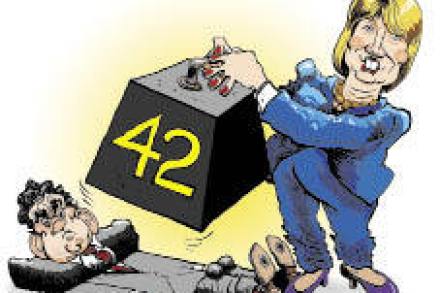
In her only print interview, Jacqui Smith tells Matthew d’Ancona that her proposal for the detention of terror suspects does not undermine Magna Carta, that she is ‘frustrated’ by Lord Goldsmith, and that the ‘West Midlands housewife’ is a better judge of the threat than MPs In a government stuffed with malfunctioning robots, nervous wrecks and preening Fauntleroys, Jacqui Smith shows every sign of being a fully paid-up member of the human race. Which, as it happens, is the first lucky break Gordon Brown has had in months. It is a slight exaggeration to say that the Home Secretary holds her boss’s future in her hands — but only slight.

The new landscape

From our UK edition

As John Prescott is fond of saying, the plates are moving. Two left-of-centre commentators today turn their attention to Labour’s predicament in ways that only emphasise its depth. Steve Richards – always essential reading – sets out the case for electoral reform and freely admits that only parties that are desperate take this issue seriously. Blair, he reveals, once told him that it would be “quixotic” to embrace PR or another variant shortly after winning a landslide by first-past-the-post. I suspect that Steve is right and that a lot of subterranean discussions are going on between Labour and the Lib Dems on this issue.

Spec and the City

From our UK edition

And so I got to thinking….what the Hell am I doing here? As I watched a preview of Sex and the City at the Soho Hotel last night, with Trevor Phillips nodding off beside me, I realised that the reason was nostalgia: pure and simple. Fantastic television (into which category SATC undoubtedly fell) rapidly becomes frozen and institutionalised in memory, and this movie is a straightforward and very slick exercise in heritage culture. I enjoyed it less than the new Indiana Jones, but the reason I went was exactly the same. Ten years after the programme first aired and four years since the series ended, Carrie and the girls are doing – well, pretty much what they used to do, which is to agonise about relationships, sex and babies.

Reports: Osama bin Laden has been ‘located’

From our UK edition

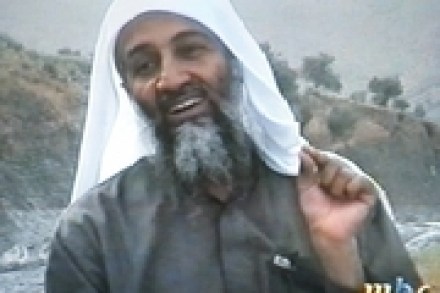
The Dubai-based satellite TV channel Al Arabiya is reporting that Osama Bin Laden has been “located” by US intelligence in the Kararakoram – a mountain range that spans the borders of Pakistan, the Kashmir and China (K2 is one of its peaks). There was a high-level meeting last week in Doha including General Petraeus, the recently-nominated Commander of US Central Command, and it is reasonable to speculate that – if there is truth to the report – it flows from this piece of intelligence. Whether the latest rumours about the tracking down of OBL have foundation will quickly become apparent. If they do have substance, Al Arabiya will have scored a huge world scoop – and have its rival Al Jazeera spitting nails.

A manual for our times

From our UK edition

This book is so important that I hope the publishers have the civic spirit to send a copy to every parliamentarian, decision-maker and opinion-former in the land. For Philip Bobbitt, the legal and constitutional historian best known for The Shield of Achilles, has drawn nothing less than a philosophical route-map for the war on terror and the geopolitical crisis of the early 21st century. The fact that he has done so in the calm, lucid tones of meticulous scholarship, without recourse to ideology or what Martin Amis would call ‘Westernism’, only adds to the book’s appeal. Bobbitt, who holds a chair at Columbia University and has served in the White House and on the National Security Council, is resolute about the scale of the challenge.

Is Brown embracing wiki-politics?

From our UK edition

Well, well. I have just watched Gordon Brown deliver a speech on the global economy and the web at the Google Zeitgeist forum at The Grove hotel. Someone has definitely put something in the PM's tea, because this was a very different Gordon to the testy, embattled figure of the past few weeks. Confident, relaxed and witty, he delivered his speech without notes, pacing the stage and playing the audience at this excellent event. Instead of lecturing them - the cream of the new media world - he praised them for their part in the 'biggest re-structuring of the global economy we have seen in our history.' He urged them, in troubled times, when the popular clamour for protectionist measures will inevitably grow, to be resolute, patient advocates for free trade and globalisation.

It’s not old-fashioned to support fatherhood

From our UK edition

Text for the day is Jackie Ashley's Guardian column. Jackie argues that those who object to aspects of the Human Fertilisation and Embryology Bill are acting from intrinsically "reactionary" motives: she warns that this Commons battle is a dry run for the general election. Modern Labour versus Luddite, anti-progressive Conservatives. Dave and his gang, she warns, are dangerous counter-revolutionaries pretending to be modernisers. The Spectator has expressed deep reservations about this bill, both in its editorial column and John Patten's recent article: we are especially exercised by the clause which would, in effect, abolish fatherhood from the lives of some children. I see the Government's proposal as old-fashioned and our objection as authentically modern.

Breaking up

From our UK edition

Politics is moving at an astonishing pace. Frank Field has upped the ante with his extraordinary remarks on the BBC World Service – that Gordon will not lead Labour into the next election, and that he should ask his loved ones when would be best to leave. Every time the PM raises his head above the parapet he is walloped by another memoir or hit by shrapnel from a backbench rebellion, actual or threatened. It will be hard to top Alan Johnson’s response on the Today programme. Evan Davis asked him about the turmoil and the Health Secretary actually said: “You’re breaking up.” Superb.

Has Brown broken the New Labour pact?

From our UK edition

Frank Field’s piece in the magazine is one of the most interesting analyses of New Labour and its character I have read: Frank’s point is that the Blair Project was not primarily presentational but contractual. The architects of New Labour – Gordon Brown prime among them – agreed to hold true to certain core values in return for the party’s compliance over a radical programme of internal modernisation. The abolition of the 10p tax rate, he continues, violates this contract and marks out a gulf of “clear red water” between Government and PLP. Frank is, of course, no spokesman of the Labour Left but his passionate concern for the poor is lifelong and universally respected at Westminster.

Clarke lashes out (again)

From our UK edition

Charles Clarke, as predicted earlier, has been distributing his article in the new Progress magazine. It is strong stuff: "First, we have to change the conduct of our politics. We should discard the techniques of ‘triangulation’, and ‘dividing lines’ with the Conservatives, which lead to the not entirely unjustified charge that we simply follow proposals from the Conservatives or the right-wing media, to minimise differences and remove lines of attack against us. We should finish with ‘dog whistle’ language, such as ‘British jobs for British workers’, which flatter some of the most chauvinistic and backward-looking parts of British society.