Matthew Dancona

This campaign has diminished John McCain – but he remains a great American

From our UK edition

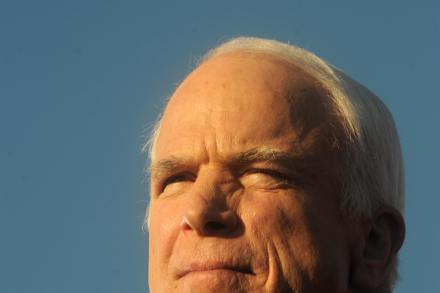
Honey, they shrunk the candidate. It has been a sadness to watch John McCain, a towering figure in US politics, diminished by the campaign trail and by the errors he has made along the way. The nominee who stands before America today is a very different creature to the prospective candidate I interviewed for The Spectator in 2006. McCain’s whole mission then – and one which made him identify with David Cameron – was to stretch a hand out to non-Republican voters, to ditch the Bush-Rove strategy of wooing the “base” above all else. Lest we forget:  McCain was one of the first politicians of the Right to engage sensibly and proactively with the issue of climate change.
Congratulations, Dr Maths

From our UK edition

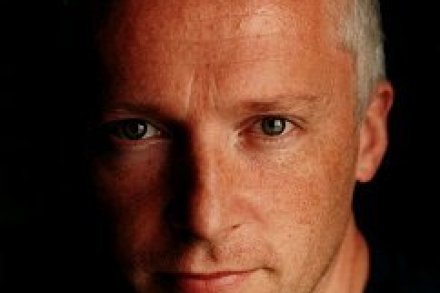
Sometimes Oxford, that much-maligned national institution, so often associated only with Brideshead and the Bullingdon, really gets it right. When I was a young Fellow at All Souls, there was one other member of college – not Isaiah Berlin - who liked the Happy Mondays and New Order, and his name was Marcus du Sautoy. I nicknamed him Dr Maths. He was a young mathematician whose references were almost too good to believe. He dressed like a student, had changeable hair colour, was a great cook, loved music and Arsenal, and spent his evening at theatre workshops. He was also, without a shadow of a doubt, the cleverest person I had ever met. But like all truly brilliant people, he wore his prodigious intellect lightly, almost as if it were separate to his personality.

Tebbit gets Confucian

From our UK edition

Splendidly Confucian intervention by Lord Tebbit in the Osborne saga. “He who lies down with dogs shall catch fleas” should earn an instant place in the handbook of political wisdom – although it helps to deliver it in Norman’s quiet, deadly tones of mordant sorrow. You can rely on the Chingford polecat to come up with the goods in a crisis.

A class apart?

From our UK edition

When David Cameron became leader in December 2005, Labour strategists hoped desperately that class would become an issue once more in British politics. Their hopes were dashed, however, by the public’s apparent decision to buy Dave’s mantra: “It’s not where you come from, it’s where you are going.” The playing of the “toff” card in the Crewe and Nantwich by-election backfired spectacularly, as have Gordon Brown’s intermittent attempts to present Cameron and Osborne as “public school bullies.” But there have always been nuances to this.

“That one”-gate

From our UK edition

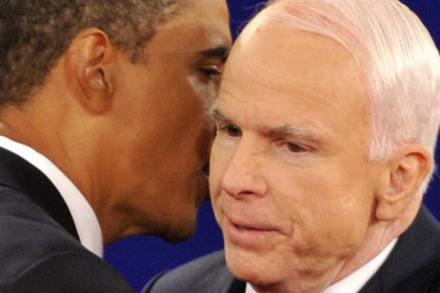
Not great for John McCain to refer to Barack Obama in the second presidential debate as “that one”. And – call me flippant – but I couldn’t help thinking of Andy in Little Britain. The trouble for the Republican candidate is precisely that the American public, like the wheelchair-bound Matt Lucas character, do indeed seem to “want that one”.

Howarth cements the truce

From our UK edition

The declaration by George Howarth, the Labour MP for Knowsley North and Sefton East, that “hostilities are over” may not resonate outside the Westminster village but it is highly significant for Gordon Brown’s chances of survival. A Privy Councillor, former junior minister, and select committee stalwart, Howarth is precisely the sort of middle-ranking parliamentarian, little known outside the Commons, who can light the touchpaper that leads to huge political events. In September he wrote unequivocally in the Independent: "I am a loyal supporter of Labour and our Government, so it may be surprising that I believe we now need to have a leadership contest. I nominated Gordon during last year's leadership process and genuinely wanted him to do well as Prime Minister.

Mandelson asked Blair before accepting Brown’s offer of a job

From our UK edition

Peter Mandelson has confirmed on Sky News my disclosure in today's Sunday Telegraph that he consulted Tony Blair before accepting Gordon Brown's offer of a Cabinet post and that Blair told his old friend that the decision was a "no brainer." It is, of course, revealing that, in spite of his claim in today's Observer interview to be "joined at the hip" with Brown, Peter was not willing to splice himself to Gordon without Tony's approval. He is still a Blair man, first and foremost, seconded as a friendly gesture to the court of Brown. That said, Blair's enthusiasm for this controversial return does not reflect a desire to place of a double agent at Brown's side.

Justin Forsyth’s promotion is a smart move

From our UK edition

If the reports about Justin Forsyth are true, this is a smart move. Forsyth, a man with a background in international development, is one of the cleverest people in Number Ten and also one of the most courteous. I travelled with him on the Brown trip to Camp David and the UN last year as he was busy with the Darfur resolution, and he was the very model of what a Downing Street official should be. It was striking, even then, that the PM trusted him go to the back of the plane to brief the hacks on the deal that was being brokered in New York and – by common consent – Forsyth lived up to that trust by his performance. He would drain much of the poison from the Government’s press operation and give it gravitas and charm.

Mandelson’s astonishing return

From our UK edition

Peter Mandelson’s return to Government is arguably the most astonishing single event of the New Labour era. His 14 year feud with Gordon Brown has led both men to say the most vituperative things about each other in private: their once strong friendship seemed completely beyond repair and the virulence of their hatred for one another was a source of huge instability during the Blair years. It is only two years since Mandelson was openly questioning Brown’s abilities to lead the party at the 2006 Labour conference in Manchester. I would call this a Molotov-Ribbentrop pact, except that the comparison does not do justice to the breathtakingly counter-intuitive character of this new alliance.

The speech of a Prime Minister in waiting

From our UK edition

'No new dawns, no immediate transformations. I'm a man with a plan, not a miracle cure': in that line lay the key message at the heart of this astute speech, by a man who now deserves to be seen as the Prime Minister in waiting. Elected as the 'sunshine' leader in 2005, David Cameron said in the Symphony Hall today that he was 'still optimistic because I have faith in human nature'. But this was the speech of an instinctive realist who knows that, if he becomes Prime Minister in the next year and a half, he will head a Government that will have to take some deeply unpopular decisions, very quickly. He said as much: 'if we win we will inherit a huge deficit and an economy in a mess. We will need to do difficult and unpopular things for the long term good of the country. I know that.

And in other news…

From our UK edition

Amid all the justified clamour about the global financial crisis, let us not forget that (for instance) children will still have to be educated. So do read Michael Gove's fine speech on his plans for a Swedish-style schools revolution, expanding on the themes he discussed in Fraser's interview last week. As one Cameroon put it to me: 'We can't let the end of the world distract us from saving the nation'.

The Tories must show they are up to the task ahead

From our UK edition

Cameron's astute and measured speech has sealed one deal: it has awoken the Conservative Party to the fact that they really will, in all likelihood, and barring an unforeseen catastrophe (plenty of them about these days), be forming the next Government. And this is actually rather daunting. After their 20th Century addiction to power, the Tories went loco for almost a decade and a half, tearing themselves to pieces in the Major years and then for all but a year-and-a-half of the Blair era. Now, detoxified, united and redefined, they have positioned themselves adeptly for their first general election victory since 1992.

This financial Waterloo

From our UK edition

'It's like the battle of Waterloo,' one leading Cameroon said to me at the Spectator's party last night. He meant that nobody knew what the morning would bring, and that once the battle had been joined - in this case a global financial battle between impersonal forces of unimaginable scale - nothing would be the same again. He was right. One has the sense here at the Tory Party conference in Birmingham of being in an ant colony whose residents have just realised how tiny they really are. This is not a reflection upon the Conservatives, who had a good day yesterday and are running a show as smooth as an Innocent smoothie here.

Voters won’t pay attention to Muddled Labour

From our UK edition

The deepest cruelty of politics is its simplicity: pose with a banana and you are bang in trouble. The obverse truth is that a straightforward and positive image can work wonders: David Cameron’s tree- and huskie-hugging photo-ops in the initial months of his leadership were widely mocked, but they worked wonders in cementing the notion that Dave was both new and green. We do indeed live in the first-impressions world brilliantly described by Malcolm Gladwell in his book, Blink. It follows from this that complexity kills. When a Government begins to disaggregate, the problem is not only the intrinsic one of division (this lot are more concerned with fighting each other than helping me) but the related danger of competing voices (which of these idiots should I listen to?

Dr Rowan Williams’s red rag to the capitalist bulls

From our UK edition

The Archbishop of Canterbury’s article in the new issue of the Spectator - featured on this morning's Today programme - is already making waves. Dr Williams has form as a controversialist, of course: his remarks about sharia law caused a storm earlier this year, though he insisted that his argument had been distorted and misunderstood. This time I think he knew exactly what he was doing. To say that Marx was “right” about certain aspects of capitalism is self-evidently a red rag to a bull – as is the Archbishop’s claim that the way in which we talk about the market strays into “what the Jewish and Christian scriptures call idolatry.

A shameless but plucky effort

From our UK edition

Cheesy, vacuous - and occasionally brilliant, this was indeed the speech of Gordon Brown's life. I agree with Fraser and James that this was the product of desperation, its tactics a measure of how bad things have got and how far the PM is willing to go to cling to power. From the appearance of Sarah Brown, Michelle Obama-style, to the implicit dig at Cameron for parading his children, to the eschewing of statistics - 'that's not just a number' - from the driest political statistician of them all, to the hokey soundbite 'one hope at a time', this was pure, shameless, vintage political theatre. Cynical as hell, but splendid, too. He won't go without a fight. He will die with his boots on. Over to you, Labour mutineers.

Gordon 2.0 comes round to the wonders of the Web

From our UK edition

Gordon Brown’s promise to fit broadband in every child’s home is eerily familiar of Tony Blair’s promise many years ago, when still leader of the Opposition, to link up every school in the land with a fibreoptic cable, courtesy of BT. Whatever happened to that cable, I wonder. At the time, The Spectator majestically described the policy as “Newt Labour” – a nod in the direction of Newt Gingrich who, in the wake of the 1994 Republican congressional revolution, was promising radical democratisation via technology. “Let them eat laptops,” was the mocking liberal headline. Whatever else Gordon says today, I am delighted that he is now a convert to the joys of webworld.

An ordinary kind of guy?

From our UK edition

Gordon Brown’s claim on Andrew Marr’s show yesterday to be a “pretty ordinary guy” has occasioned much mirth, not least because of its echo – subconscious or otherwise – of Tony Blair’s famous remark in the midst of the Ecclestone Affair 11 years ago that he was a “pretty straight sort of guy.” As one senior Labour figure put it to me: “The one thing Gordon just is not, is ordinary.” But support for the PM’s description of himself comes in Adam Boulton’s gripping new account of the Blair Administration, Tony’s Ten Years, which I heartily recommend to all CoffeeHousers. As part of a much broader analysis, Boulton compares and contrasts pub anecdotes involving the two men.

How I became a world record holder

From our UK edition

At a Google conference in Rhodes, Matthew d’Ancona finds himself part of a bid to break the world record for Zorba dancing — and to relive one of the greatest scenes in cinema ‘Teach me to dance. Will you?’ Few scenes in cinema have the emotional poignancy and magic of the last moments of Zorba the Greek (1964), as Basil, the young English writer played by Alan Bates, seeks his final lesson in life from Anthony Quinn’s majestic peasant-magus, on the Cretan shore.