Matthew Dancona

The rise of the neo-confs

From our UK edition

The G20 summit and its long build-up - Gordon's world tour - clarified for me what has shifted in the geo-political landscape since the election of Obama. So dazzling is the President's smile and so impressive his oratory that it is easy to lose sight of the content: or, more accurately, the form. But in London it became clear. The age of Obama is shaping up to be an age of multi-lateralism for the sake of it: grand summits and gatherings at which statesmen draw up communiques and statements of intent as if that was what made a difference. In today's Sunday Telegraph, I call the new elite the "neo-confs" - those who have an ideological commitment to conferences, meetings, talks, and talks about talks. As Fraser warned immediately, there is not a cent of new money among the $1.
‘In a global era, we need our roots more than ever’

From our UK edition

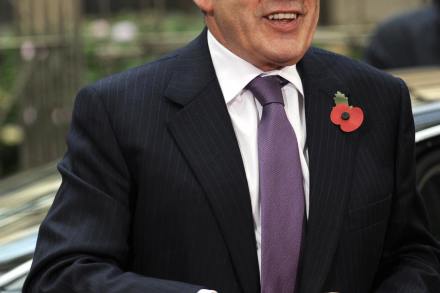
Gordon Brown tells Matthew d’Ancona why he is so preoccupied with national identity. In the modern world, he says, we must be explicit about what being a Briton means ‘The problems will arise if you cannot say to a young person that there’s going to be a job after the training. We’ve got to make sure that we never return to the 1980s, when young people lost hope of ever getting jobs, and you had three-generation unemployment that created a situation where many people did become unemployable.

A son who inspired only goodness and love

From our UK edition

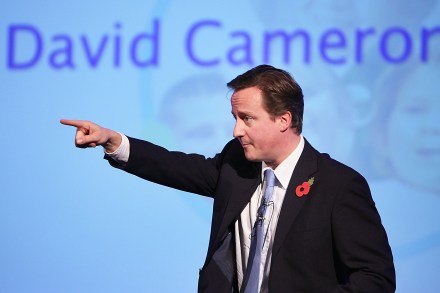
Matthew d’Ancona reflects on the death of Ivan Cameron and the transformative impact this little boy had upon the man who will probably be our next Prime Minister When people ask me about David Cameron’s character, and what sort of man he is, I always cite a very clear memory I have of sitting in the Commons with him in late 2003. He had been tasked by the then Tory leader, Michael Howard, to prepare the opposition’s response to the Hutton Report on the death of Dr David Kelly — a massive forensic undertaking, as well as a thorny political challenge. It was a mark of Howard’s confidence in the young man who was to be his successor that he assigned this task to him, and not to a Commons veteran.

Back in a Blur

From our UK edition

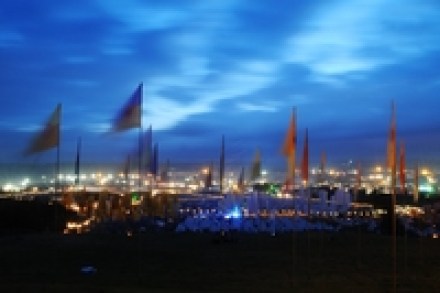
Old rockers don’t die, they just go to Glastonbury. Or, in the case of our own Alex James, write a column for The Spectator. It is nine years since Blur played together and, though their forthcoming reunion tour has been public knowledge for a while, there is a special frisson in today’s disclosure that they will be headlining at the summer’s main festival: the annual riot of mud and noise known as Glastonbury.

A landscape of risk and potential

From our UK edition

The Daily Mail has today picked up a scare story initially given (rather more nuanced) prominence by the Guardian’s ever-more influential Jackie Ashley. Speaking in a debate about social networking sites, Baroness Greenfield, Oxford neuroscientist and director of the Royal Institution, argued that the new digital technologies may actually be changing the brains of a generation as well as the means of communication that they have at their disposal. Web 2.0., in other words, may have neuroscientific consequences of immense importance.

How we got here

From our UK edition

My first journalistic job was at the free speech and human rights magazine, Index on Censorship (which, many years later, I still warmly recommend to Coffee Housers who care about fundamental liberties). My months at its offices on Highbury Fields had a profound effect on me, and stirred in me a sense that something unexpected and of deep cultural significance was happening in the towns and cities of this country. Index had been founded as a bastion of free speech during the Cold War, a vehicle to unite liberals and conservatives in the common fight against totalitarianism. But, by 1991, two years after the fall of the Berlin Wall, it was clear that the threat to free expression was mutating and growing ever more complex.

Labour has lost the next election already 

From our UK edition

Predict in haste, repent at leisure is a sound maxim for all pundits. I have also long thought that there has been a bipolar quality to much writing about Gordon Brown - exaggerated savagery when his fortunes are waning and equally daft euphoria when they pick up (June 2007, September 2008). So I did not draw my conclusions in tomorrow's Sunday Telegraph column lightly: namely that Labour has lost the election and that David Cameron is our next Prime Minister. It is not as if the Tories have been on a particular roll or Cameron more than usually to the fore. And yet the polls this week have been remarkably consistent: they suggest a nation that has, quietly but irrevocably, made its mind up to rid itself of a Government and replace it with another. The readiness is all.

A worthy opponent for Obama

From our UK edition

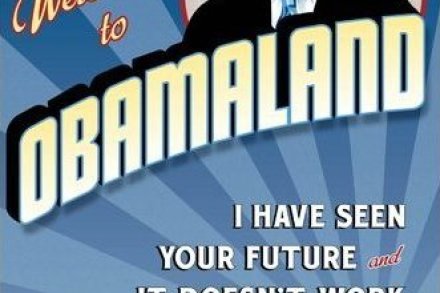
One of the favourite maxims of the Bill Clinton war-room was: “Speed kills.” If so, has there ever been a more politically lethal response to an incoming President than the book that just landed on my desk? Welcome to Obamaland: I have Seen Your Future and It doesn’t Work (Regnery) is by our very own James Delingpole, who unveiled some of the book’s arguments in last week’s magazine cover piece. At the time of posting, that article has already attracted 116 comments, which is some measure of the nerve James has struck in his argument that Obama is (among other things) Blair Redux, a white liberal rather than a black statesman. Behind the saccharine consensus lurks all sorts of division, doubt and anxiety.

See Frost/Nixon for free

From our UK edition

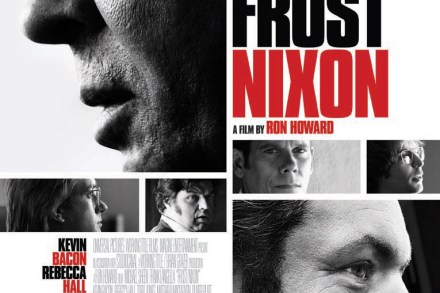
Ron Howard’s movie Frost/Nixon is that rarest of things: a film that not only replicates the brilliance of the stage play that inspired it, but transcends the original. Peter Morgan’s drama about the unforgettable interviews between David Frost and former President Nixon in 1977 gives Howard magnificent source material, to which he adds all the energy and pace of modern film-making. Michael Sheen and Frank Langella as interviewer and interviewee respectively are irreproachably brilliant and even more combative than they were in the theatre, the close-ups of both men bringing much tension and nuance to the cinematic feast.

Apocalypse 2009?

From our UK edition

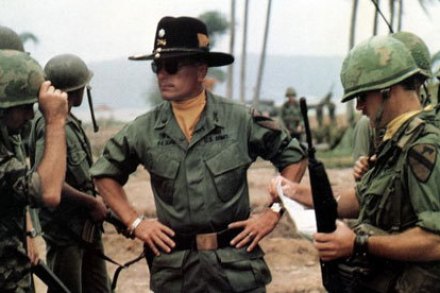
Splendid to see Boris developing the Apocalypse Now theme for 2009 which he road-tested in the Spectator Christmas issue. Here's what the Mayor says in his New Year message: I want to quote Colonel Kilgore in Apocalypse Now when he says 'Some day captain, this war is going to end', and some day, this recession is going to end. We can speed the demise of this recession if we all help the poorest in our community and if we make the vital investment that we need in our mass transit system and in fighting crime, so that London emerges at the end better placed to compete and entrenched in its position as the greatest city on earth. Polymath that he is, the Mayor is as fluent in the idiom of repeat-viewing DVD as he is in quoting Homer.

What maps will guide us through 2009?

From our UK edition

I am struck by the absence of philosophical route-maps out of the current financial crisis: a subject I addressed in my Sunday Telegraph column this weekend. Compare and contrast the Seventies, when the Tories had the inspiration of Hayek and Friedman and the texts that poured out of the CPS and IEA. I recently asked George Osborne what he was reading on this subject and he recommended The Subprime Solution: How Today's Global Financial Crisis Happened, and What to Do About It, the most recent book by the Yale economist Robert Shiller. Fair enough. But what books and other inspirations would CoffeeHousers recommend as navigation guides for 2009?

Best of British: breakfast with Lily Allen

From our UK edition

Matthew d’Ancona talks to the quintessentially English pop star about growing up, her longing to have children, celebrity culture, US politics and her new album I am sitting opposite a demure young Englishwoman, sipping on jasmine tea, who would like nothing more, she says, than to settle down and have children. Young people and their parties interest her less and less. She likes the company of older friends now, and more sophisticated conversation. She shows me her elegant new Smythson notepaper, and discusses US politics, academic life and her plan to take her mother to Jamaica for Christmas. In person, she looks more like a Jane Austen heroine than a party queen. Meet Lily Allen.

The Mumbai Atrocities

From our UK edition

When I was in Mumbai in February I stayed at the Taj and ate the best fish curry I have ever tasted at Leopold's: both targets in tonight's shocking attacks. Even as the angry flames light up the sky of this extraordinary world city, it is clear that this was, at least in part, a strike aimed at Westerners staying in Mumbai and, with an eye to the future, an attempt to spray psychological shrapnel in the direction of those planning to go there. The city has a long and bloody history of religious cantonisation and gang warfare. There have been worse outbursts of violence in the recent past.

A thin offering

From our UK edition

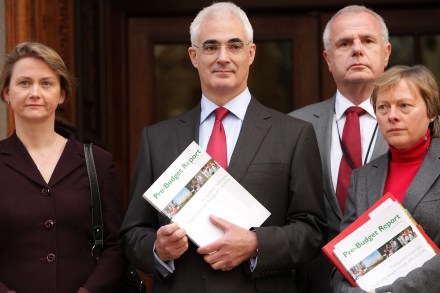
So what's left? Bits have been falling off New Labour like body-parts off a leper. Prudence is long gone. Today, as I blogged earlier, we lost the all-important principle that wealth creation is the basis of enhanced social justice. Which leaves the famous statement of ideological eclecticism that defined Tony Blair's premiership if not his record: What Counts is What Works. And I cannot see how today's package will work. This was an overwhelmingly political PBR, as one would expect of Gordon Brown: its ideological centrepiece was the fiscal stigmatisation of the well-off and the overt declaration by Alistair Darling that, since these voters had supposedly "done best out of the growth of the last decade", they deserved to be walloped.

Imprudent, and proud of it

From our UK edition

The most interesting line in the PM’s press conference was Brown’s argument that, precisely because it is “funded”, the Tories’ latest tax proposal does not represent a fiscal stimulus. Gordon is now positively flaunting his jilting of Prudence, scorning the Tories because they are trying to cling to the fiscal principles – “stability”, “responsibility” etc – which were the hallmarks of his decade in Number Eleven . The basis of the initial Cameroon strategy was to edge the Conservative Party towards the economic orthodoxy of the Blair-Brown years with the caveat that the Tories would “share the proceeds of growth” between tax cuts and public spending.

What are the political risks and rewards of tax cuts?

From our UK edition

As Tory Diary notes over at ConservativeHome, Fraser is making the running on the tax cut issue. His Spectator columns and Coffee House posts have pointed UK political strategists in the direction of Obama's tax-cutting proposals and their centrality to the President-elect's campaign. The FT's story on Saturday made it unambiguously clear that Brown was cooking up a pre-emptive strike - and so it has proved, with details to follow tomorrow. Over at Comment Central, my old friend and associate Danny Finkelstein has been leading the counter-charge, beating up poor Nick Clegg as a proxy for the growing number of Tories arguing for a shift of position. I think the phrase "punk tax cuts" is brilliant and should enter the blogger's lexicon.

History now

From our UK edition

Two films on release show how brilliantly and how badly film can capture recent history. In Obama week, Oliver Stone's W ought to have been the ideal Friday night flick, and, being a fan of his magnificently paranoid series of US political movies, from Salvador via JFK to Nixon, I had high hopes. But his account of George W Bush's rise to the presidency and decision to go to war in Iraq is thin fare - not least because David Hare's play Stuff Happens has already covered this ground with much more authority. Stone takes a clunkingly Oedipal approach to the whole business: Bush Sr or 'Poppy' is the domineering father whom Junior can never truly please. Even Dubya's embrace of born-again Christianity is presented as a transference of affection from one father to another.

The fight for Obama’s friendship

From our UK edition

No man on Earth has more new best friends that a President-elect – especially the first black Commander-in-Chief, a walking charisma machine, swept to victory by a nation longing for change and hope. Nick Robinson’s fisk of some of the remarks made by British politicians in the past twelve hours is unimprovable. Brown sees Obama as a  prospective centre-Left ally in his Plan to Save the World; Cameron salutes the new Novice-in-Chief on his way to the White House as a comrade in the battle for change. Which British party leader will do a better job of claiming to be Barack’s spiritual brother? I have no idea. But it is going to be richly entertaining watching them try.

Cocktails & apprehension

From our UK edition

At the CNN party in Marylebone, Andrew Marr, James Purnell, Dame Sue Tinson, sundry BBC chieftains, Whitehall officials and Labour apparatchiks galore down cocktails, watch the huge screen, and dig in for a long night. The sense among centre-Left guests is one of superstitious apprehension. 'It all looked safe in 2000,' says one Blairite. 'And then it all went wrong the next morning and we ended up with eight years of Bush.' For the McCainites - a small band of brothers huddling in a corner - Palin looks like being the Fall Gal. But that won't quite do. Conservatism in America has conspicuously failed to rise to the challenge of the new economic disorder. How will British Conservatives respond? They will, of course, claim Obama's mantle of 'change' as their own.

Election 2008: The West Wing vs 24

From our UK edition

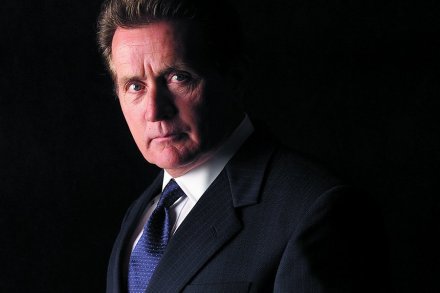
Today, America is one huge television studio, in which the respective spirits of two great drama series are locked in mortal combat: namely, The West Wing and 24. Aaron Sorkin’s seven-season saga of the presidency of Jed Bartlet was a form of televisual therapy for a liberal elite disillusioned by the reality of the Clinton years. It described, in gripping and beautifully-scripted detail, the lives, loves and ideals of a White House staff committed to all that is best and noble in the American Democrat tradition, always trying to do the right thing in the face of necessary compromise. Its patriotism was unashamedly left-of-centre, a sort of leapfrogging of the Kennedy ethos over Watergate and the Reagan years into the Nineties.