Matt Ridley

Matt Ridley is the author of How Innovation Works: And Why It Flourishes in Freedom (2020), and co-author of Viral: The Search for the Origin of Covid-19 (2021)

The universal appeal of the African savanna

My wife and I were lucky to escape for a long-delayed birdwatching holiday in Kenya over Christmas. To have been warm, sunlit and free while so many in Britain were not won’t endear me to most readers, I realise. Nairobi was rife with Covid and Christmas cancellations devastated the tourism industry. So we had the extraordinary Elephant Watch Camp run by Saba Douglas-Hamilton in the Samburu National Reserve almost to ourselves. Baboons and vervet monkeys wandered freely through the camp, and in the night the river flash-flooded after a storm in the hills to the west, but the tents were safe. Elephants were everywhere, feasting on fresh vegetation after a long drought.

Don’t blame the pandemic on deforestation

From our US edition

With a laboratory leak in Wuhan looking more and more likely as the source of the Covid pandemic, the Chinese authorities are not the only ones dismayed. Western environmentalists had been hoping to turn the pandemic into a fable about humankind’s brutal rape of Gaia. Even if “wet” wildlife markets and smuggled pangolins were exonerated in this case, they argued, and the outbreak came from some direct contact with bats, the moral lesson was ecological. Deforestation and climate change had left infected bats stressed and with nowhere to go but towns. Or had driven desperate people into bat-infested caves in search of food or profit. Green grandees were in no doubt of this moral lesson. “Nature is sending us a message.

deforestation lab leak covid

The Covid lab leak theory just got even stronger

Two years in, there is no doubt the Covid pandemic began in the Chinese city of Wuhan. But there is also little doubt that the bat carrying the progenitor of the virus lived somewhere else. Central to the mystery of Covid’s origin is how a virus normally found in horseshoe bats in caves in the far south of China or south-east Asia turned up in a city a thousand miles north. New evidence suggests that part of the answer might lie in Laos. The search for viruses closely related to Sars-CoV-2 took a new turn in September when a team of French and Laotian scientists found one in a horseshoe bat living in a cave in the west Laotian province of Vientiane. Other related viruses had been found in Cambodia, Thailand, Japan and elsewhere in China, but this one, Banal-52, was different.

China is using the climate as a bargaining chip

China’s President Xi Jinping has apparently not yet decided whether to travel to Glasgow next month for the big climate conference known as COP26. That is no doubt partly because he’s heard about the weather in Glasgow in November, and partly because he knows the whole thing will be a waste of his time. After all, the fact that it is the 26th such meeting and none of the previous 25 solved the problem they set out to solve suggests the odds are that the event will be the flop on the Clyde. But another reason he is hesitating was stated pretty explicitly by his Foreign Minister, Wang Yi: ‘Climate cooperation cannot be separated from the general environment of China-US relations.

Dismantling the environmental theory for Covid’s origins

With a laboratory leak in Wuhan looking more and more likely as the source of the pandemic, the Chinese authorities are not the only ones dismayed. Western environmentalists had been hoping to turn the pandemic into a fable about humankind’s brutal rape of Gaia. Even if ‘wet’ wildlife markets and smuggled pangolins were exonerated in this case, they argued, and the outbreak came from some direct contact with bats, the moral lesson was ecological. Deforestation and climate change had left infected bats stressed and with nowhere to go but towns. Or it had driven desperate people into bat-infested caves in search of food or profit. Green grandees were in no doubt of this moral lesson. ‘Nature is sending us a message.

A volte face over what caused the pandemic needs explaining

Sir Jeremy Farrar, the head of the Wellcome Trust, writes that ‘the last year has been an eye-opener for me. I thought, probably like most people, that the world works through official or formal channels, but much of it operates through private phone calls or messaging apps’. Hence his book, written with the journalist Anjana Ahuja, is a gossipy, sometimes angry, fast-paced tale, which quotes frequently from his own messages sent to other important people. No holds are barred or formal channels kept to.

Organic food isn’t better for us – or the environment

It is mystifying to me that organic food is still widely seen as healthier, more sustainable and, most absurdly, safer than non-organic food. Following the publication of part two of Henry Dimbleby’s National Food Strategy last week, the organic movement was quick to suggest that organic food and farming offer a way to achieve the strategy’s vision. ‘The recommendations of the National Food Strategy offer genuine hope that by embracing agroecological and organic farming, and adopting a healthier and more sustainable diet, we can address the climate, nature and health crises,’ said Helen Browning, chief executive of the Soil Association, Britain’s most vocal organic lobbying organisation.

Whodunnit? The lab leak theory is looking increasingly plausible

38 min listen

We’re still none the wiser about the origins of coronavirus, but has the lab leak theory just got more credible (00:55) Also on the podcast: are English tourists welcome in Scotland (15:25)? And is being rude the secret to success?With author Matt Ridley, virologist Dr Dennis Carroll, deputy political editor Katy Balls, hotelier Gordon Campbell Gray, journalists Harry Mount and Rebecca Reid.Presented by William Moore.Produced by Cindy Yu, Max Jeffery and Sam Russell.

The Covid lab leak theory is looking increasingly plausible

In March last year, it was widely agreed by everybody sensible, me included, that talk of the pandemic originating in a laboratory was pseudoscientific nonsense almost on a par with UFOs and the Loch Ness monster. My own reasoning was that Mother Nature is a better genetic engineer than we will ever be, so something as accomplished at infection and spread could not possibly have been put together in a lab. Today, the mood has changed. Even Dr Anthony Fauci, the US President’s chief medical advisor, now says he is ‘not convinced’ the virus emerged naturally.

Britain is in danger of repeating its post-war mistakes

From our US edition

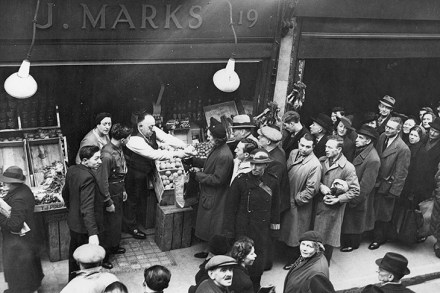
In search of wisdom about how an officious government reluctantly relaxes its grip after an emergency, I stumbled on a 1948 newsreel clip of Harold Wilson when he was president of the Board of Trade. It’s a glimpse of long-forgotten and brain-boggling complexity in the rationing system. ‘We have taken some clothing off the ration altogether,’ he boasts, posing as a munificent liberator. ‘From shoes to bathing costumes, and from oilskins to body belts and children’s raincoats. Then we’ve reduced the points on such things as women’s coats and woollen garments generally and... on men’s suits.’ Does this remind you of anything?

Stresses and strains: the evolution of Covid is not random

In the genetic diaspora of an epidemic, there is ferocious competition between strains of virus to get to the next victim first. That leads to apparently purposeful outcomes, as if the virus had a mind. One of the things people find hardest to grasp about evolution is that it appears purposeful but the mutations on which it feeds are random. How come dolphins evolved to swim if all they had to work with were random changes in genes? Viruses also mutate at random — but most people talk as though the rise and fall of these mutant versions is mainly down to chance or luck. It’s not. Mutations occur all the time in RNA viruses; what matters is which ones find favour in natural selection.

Fraser Nelson, Matt Ridley, Ian Rankin and Cressida Bonas

35 min listen

For the Christmas triple issue, there are four authors in this week's Spectator Out Loud. Fraser Nelson reads the leading article in our Christmas edition; Matt Ridley talks about how mRNA vaccines could revolutionise medicine; Ian Rankin reads his short story; and Cressida Bonas reflects on what it was like to have a lockdown wedding.

The Christmas Special

49 min listen

How will the UK's economy recover from Covid-19, and what has the pandemic revealed about the West? (01:20) Was 2020 the year we dealt a mortal blow to future viruses? (15:05) And finally, what makes Mary Gaitskill a brilliant writer, and why does Elif Shafak work to heavy metal music? (29:25)With The Spectator's political editor James Forsyth, deputy political editor Katy Balls, writer and biologist Matt Ridley, behavioural psychologist Dr Stuart Ritchie, The Spectator's literary editor Sam Leith and writer Elif Shafak.Presented by Lara Prendergast. Produced by Max Jeffery and Sam Russell.

Why mRNA vaccines could revolutionise medicine

Almost 60 years ago, in February 1961, two teams of scientists stumbled on a discovery at the same time. Sydney Brenner in Cambridge and Jim Watson at Harvard independently spotted that genes send short-lived RNA copies of themselves to little machines called ribosomes where they are translated into proteins. ‘Sydney got most of the credit, but I don’t mind,’ Watson sighed last week when I asked him about it. They had solved a puzzle that had held up genetics for almost a decade. The short-lived copies came to be called messenger RNAs — mRNAs – and suddenly they now promise a spectacular revolution in medicine.

Was Covid beginning to peak before the second lockdown?

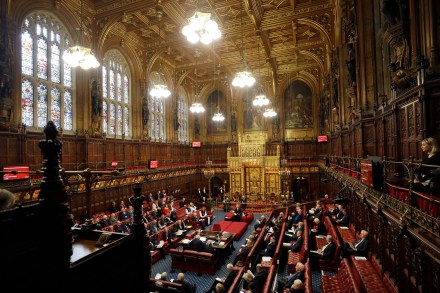
‘I don’t think that word means what you think it means,’ says the Spaniard Inigo Montoya in the film The Princess Bride, when Vizzini keeps saying it is ‘inconceivable’ that the Dread Pirate Roberts is still on their tail. I muttered those words to myself during a parliamentary debate just before the start of the latest lockdown, when the minister twice said that the wave of infections was increasing ‘exponentially’. Far from increasing, let alone exponentially, the data showed that the wave was faltering if not cresting already. The lockdown came in on a Thursday.

Temper your excitement about the Covid vaccine

Ever since Giacomo Pylarini, a physician working in the Ottoman Empire, sent a report to the Royal Society in 1701 that Turkish women believed pus from a smallpox survivor could induce immunity in a healthy person – and was dismissed as a dangerous quack – inoculation has been as much an art as a science. But it has proven to be the greatest life-saver of all time, eliminating smallpox and suppressing many other diseases. In Pylarini’s prescient words, it is 'an operation invented not by persons conversant in philosophy or skilled in physic, but by a vulgar, illiterate people; an operation in the highest degree beneficial to the human race.' It looks like a vaccine is probably going to work against Covid.

Students who catch Covid may be saving lives

It is counterintuitive but the current spread of Covid may on balance be the least worst thing that could happen now. In the absence of a vaccine, and with no real prospect of eradicating the disease, the virus spreading among younger people, mostly without hitting the vulnerable, is creating immunity that will eventually slow the epidemic. The second wave is real, but it is not like the first. It would be a mistake to tackle it with compulsory lockdowns (even if called ‘circuit breakers’), whether national or local. The cure would be worse than the disease. If you cannot extinguish an epidemic at the start, the best strategy is for the healthy to get infected first. Lockdowns ensure that the vulnerable and the healthy both get infected with similar probability.

A question of priorities: should tackling climate change trump all else?

24 min listen

In the last episode of this miniseries on climate change, Bjorn Lomborg argues that climate change is important, but solving it shouldn't come above all else. So what are the trade offs involved with a green agenda, especially when it comes to lifting the poorest in the world out of poverty? Kate Andrews discusses with Bjorn and Matt Ridley and asks - is it really an either/or?Bjorn Lomborg is the President of the Copenhagen Consensus Center and author of False Alarm. Matt Ridley is a Conservative peer, journalist, and author of How Innovation Works. To hear all episodes in this series, click here.

Is innovation the answer to climate change?

20 min listen

Can human innovation stop climate change, or will it simply manage and delay the challenges it poses? In the second of this mini podcast series featuring Bjorn Lomborg and Matt Ridley, host Kate Andrews discusses with Bjorn and Matt whether their optimism is misplaced.