Matt Ridley

Matt Ridley is the author of How Innovation Works: And Why It Flourishes in Freedom (2020), and co-author of Viral: The Search for the Origin of Covid-19 (2021)

The North Sea ship collision is likely to be cock-up rather than conspiracy

This week’s ship collision off the Humber could have been much worse. Just one person is unaccounted for and one other needed hospital treatment. The fire is mostly extinguished, the two ships are disentangled from each other and the damage to the tanker is less than feared. It is early days, but there are reasons to be optimistic that the event will not prove to be the catastrophe that some feared.  First, it’s likely to be cock-up rather than conspiracy. True, it may seem suspicious that a US government jet-fuel cargo is involved: Iran and others would enjoy that.

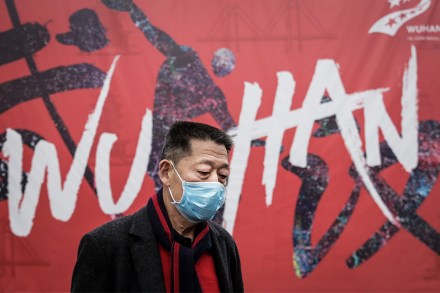
Will ‘The Seeker’ find the truth about the Covid lab leaks?

At the Royal Calcutta Turf Club, where ghosts of British nabobs look out over the racecourse, my neuroscientist wife spoke to an audience of businessmen in support of Robin Sengupta, a pioneering Newcastle neurosurgeon. He has founded a world-leading Institute of Neurosciences in Kolkata where richer patients subsidise poorer ones. After a morning meeting doctors and patients, he showed us the land where an ambitious new medical school will soon emerge from the rice paddies and crayfish farms.

Why has Biden pardoned Anthony Fauci?

Joe Biden left it until the last minute to issue a pre-emptive pardon of Anthony Fauci for any offence committed since 2014 in his work on ‘the White House Coronavirus Task Force or the White House Covid-19 Response Team, or as Chief Medical Advisor to the President.’ Yet surely Covid began in 2019, not 2014? The significance of 2014 is that this was when the Obama administration responded to anxiety among some scientists about a series of experiments that made influenza viruses potentially more dangerous to people – by banning federal funding for any such gain-of-function experiments.

Empire of Trump, the creep of child-free influencers & is fact-checking a fiction?

43 min listen

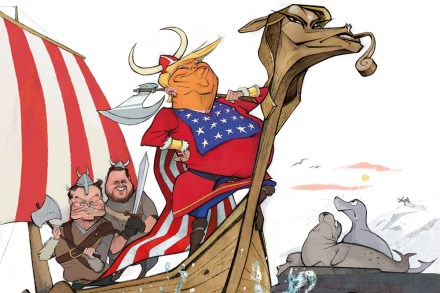
This week: President Trump’s plan to Make America Greater In the cover piece for the magazine, our deputy editor and host of the Americano podcast, Freddy Gray, delves into Trump’s plans. He speaks to insiders, including Steve Bannon, about the President’s ambitions for empire-building. Could he really take over Canada, Greenland and the Panama Canal? And if not, what is he really hoping to achieve? Academic and long-time friend of J.D. Vance, James Orr, also writes in the magazine this week about how the vice president-elect could be an even more effective standard-bearer for the MAGA movement. Freddy and James joined the podcast, just before Freddy heads off to cover Trump’s inauguration.

How I fell foul of YouTube’s fact-checkers

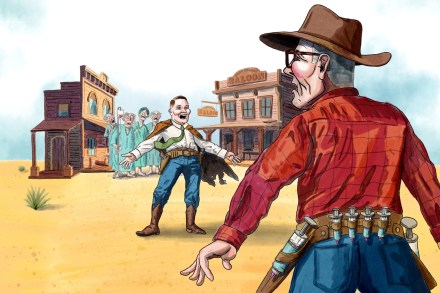
The day after Mark Zuckerberg said fact-checkers ‘have destroyed more trust than they have created’ I experienced why he has a point. I had done an interview with an evolutionary psychology podcaster, Paula Wright, about the origin of Covid. In it I said something that caused the entire interview to be banned from YouTube. Wright’s appeals were rejected. Some ill-informed, possibly underpaid, definitely over-confident youth at YouTube banned my remark What had I said that was so offensive? Was it a lie, a conspiracy theory, a mistake, defamation? No, it was a statement of historical fact that has been confirmed and agreed by mainstream scientific bodies, including the World Health Organisation.

Wuhan wager: the $400 ‘bio bet’ that predicted the pandemic

At the end of this month, one of the world’s most renowned scientists will send $400 to a charity to settle a wager with another of the world’s most renowned scientists. We don’t yet know who will win, but it is likely to be the wrong person, in my view. The money will probably come from Cambridge, England, not Cambridge, Massachusetts. Rees thinks if the tragedy of Covid has an identified ‘villain’ it would aggravate tense US-China relations The two scientists involved are Lord (Martin) Rees, the Astronomer Royal and former president of the Royal Society, of Cambridge University, and Steven Pinker, the Harvard linguist, neuroscientist and author of many bestselling books.

Streeting vs Starmer, medical misinformation & the surprising history of phallic graffiti

43 min listen

This week: Wild Wes. Ahead of next week’s vote on whether to legalise assisted dying, Health Secretary Wes Streeting is causing trouble for Keir Starmer, writes Katy Balls in the magazine this week. Starmer has been clear that he doesn’t want government ministers to be too outspoken on the issue ahead of a free vote in Parliament. But Streeting’s opposition is well-known. How much of a headache is this for Starmer? And does this speak to wider ambitions that Wes might have? Katy joins the podcast to discuss, alongside Labour MP Steve Race. Steve explains why he plans to vote in favour of the change in the law next week (00:57). Then: how concerned should we be about medical misinformation? President-elect Donald Trump has announced vaccine sceptic Robert F. Kennedy Jr.

The ‘experts’ who enabled RFK Jr’s rise

22 min listen

The nomination of Robert F. Kennedy Jr to be secretary of health and human services in the second Trump administration has horrified ‘experts’. A left-wing Democrat who admires the late Venezuelan Marxist dictator Hugo Chavez, hates big business, rails against the ultra-processed food that Donald Trump likes to eat and wants climate sceptics jailed.  But in the magazine this week Matt Ridley explains how the experts who now bash him have contributed in putting him where is, and that official Covid misinformation has contributed to his rise. So what could he do in office? Will he release these Covid files? Matt joins Freddy to discuss.

The ‘experts’ who enabled RFK Jr’s rise

The nomination of husky-voiced, musclebound Robert F. Kennedy Jr – who once dumped a dead bear cub in Central Park – to be secretary of health and human services in the Trump administration has horrified ‘experts’, according to the BBC. A left-wing Democrat who admires the late Venezuelan Marxist dictator Hugo Chavez, hates big business, rails against the ultra-processed food that Donald Trump likes to eat and wants climate sceptics jailed, RFK Jr sounds like a BBC hero and hardly a natural member of the MAGA tribe. But his criticism of Covid vaccines catapulted him into the arms of Trump. The experts who now bash him should reflect on their own role in making him popular.

Dam shame: what really caused Valencia’s floods?

Who is to blame for the devastating floods that hit Valencia on 29 October? The mob that surrounded King Felipe at the weekend and drove Prime Minister Pedro Sanchez out of town with a hail of mud and stones was angry at the failure to forecast the flood and warn people to get out of its way. The BBC would like us to be angry at man-made climate change for causing the storm – putting out a headline the very next day: ‘Scientists say climate change made Spanish floods worse.’ Charts of rainfall in Spain show no trend towards a higher frequency of more extreme downpours Yet Valencia had a similarly terrible flood in 1957, in which 81 people died, long before climate change became the go-to excuse for any bad weather.

How Ed Miliband plans to conjure electricity out of nothing

Electricity is magical stuff. From a couple of tiny holes in a wall comes an apparently endless supply of invisible, weightless, silent ether that turns instantly into light, heat, motion or information at your command. It is a metaphor for the modern economy: we use pure energy to create useful outcomes in the real world. We found out last week that Britain has now for the first time achieved top spot, among 25 nations, in terms of the price we pay for this supernatural ichor, for both domestic and industrial use. This is a disaster. Electricity prices have doubled in Britain since 2019. They are 46 per cent above the International Energy Agency’s median for industrial and 80 per cent above the median for domestic electricity.

Is another pandemic really inevitable?

Future pandemics as bad as Covid are ‘a certainty’, says Sir Chris Whitty. He is right in one sense. So many people gained so much money, power or fame out of the pandemic that they will be all too willing to declare another one soon. The WHO is trying to vastly increase its budget and its powers on the back of Covid. But if he means that we face more outbreaks of new infectious diseases that go global, then no, Whitty is wrong. The chances of another new virus spreading through the human race at a terrifying rate, burning through every barrier we erect – lockdowns, school closures, social distancing, vaccines - as happened in 2020, are small.

Matt Ridley, William Cook, Owen Matthews and Agnes Poirier

28 min listen

On this week’s Spectator Out Loud: Matt Ridley argues that whoever you vote for, the blob wins (1:02); William Cook reads his Euros notebook from Germany (12:35); Owen Matthews reports on President Zelensky’s peace summit (16:21); and, reviewing Michael Peel’s new book ‘What everyone knows about Britain’, Agnes Poirier ponders if only Britain knew how it was viewed abroad (22:28).  Presented by Patrick Gibbons.

Whoever you vote for, the Blob wins

At the age of 66 I feel like a first-time voter. As a member of the House of Lords, I was not allowed to vote in the last three general elections. But I retired from the House in 2021, so democracy here I come. I shall scan the ballot paper with interest: who is standing for head of the Office of Budget Responsibility, or chair of the Climate Change Committee? I would like to read their manifestos, since they seem to be the folk whose ‘models’ tell the country what it must do, brooking no dissent. What’s that you say? It doesn’t work that way? How quaint of me to think that the mighty quangocrats who wield so much power should have meaningful accountability to parliament, let alone the people. Joking aside, I have now seen how government works close up.

William Moore, Sean Thomas, Matt Ridley, Lionel Shriver and Kate Andrews

41 min listen

On this week’s Spectator Out Loud: William Moore questions if the Church of England is about the apologise for Christianity (1:19); Sean Thomas recounts his experience taking ayahuasca in Colombia (8:13); Matt Ridley argues that private landowners make better conservationists (16:40); Lionel Shriver warns against pathological niceness in the debate about immigration (28:37); and, Kate Andrews reviews a play at the Olivier about Nye Bevan (36:57). Presented by Patrick Gibbons.

Private landowners make better conservationists

The Duke of Norfolk is best known for presiding over the coronation as hereditary Earl Marshal, but what really gets him excited is a native farmland bird, the grey partridge. Nearly 20 years ago he was appalled to learn from the veteran ecologist Dick Potts that the species was down to its last three pairs on his estate in Sussex and about to go extinct. He decided to do something about it. Today the Peppering estate has around 300 pairs of partridges, as well as corn buntings, lapwings, rare butterflies, long lost cornfield flowers and other wildlife. Last year the duke brought curlew eggs south from the Pennines and hatched them off to try to re-establish the species on the South Downs.

Blue tits vs willow tits: a lesson in subsidies

I last saw a willow tit on my farm about a year ago. I’m searching for them again this spring, listening for their ‘chair chair’ calls, but I am worried that they may be extinct here. They are dying out everywhere: down by 92 per cent nationwide in the 50 years from 1967. And the reason is not pesticides or climate change or agriculture or habitat loss. It’s blue tits. Willow tits have never taken to visiting bird tables, but blue tits love them. So come the spring, hordes of peanut-fattened blue tits fan out across the countryside looking for nesting holes and – hey presto – they find the little hollows that willow tits have been laboriously excavating in rotten birch trees and, being more aggressive, steal them.

DNA profiling is a great British success story

Hardly a week goes by without a mention of DNA’s contribution to criminal justice. Last week Sandip Patel was convicted of killing a prostitute near Baker Street 30 years ago: DNA belatedly proved that his hairs were caught in her ring. A few days before, a double murderer, Colin Pitchfork, was controversially granted a parole hearing 36 years after being the defendant in ‘the first case of its kind in Britain to use DNA profiling’, as the Times put it. Only that’s wrong. Colin Pitchfork was not the first person in Britain to be convicted with DNA; he was the first person in the world. The story of how DNA profiling was invented and then applied to solving crimes is a truly remarkable, entirely British success story.

Virology poses a far greater threat to the world than AI

Sam Altman, the recently fired (and rehired) chief executive of Open AI, was asked earlier this year by his fellow tech billionaire Patrick Collison what he thought of the risks of synthetic biology. ‘I would like to not have another synthetic pathogen cause a global pandemic. I think we can all agree that wasn’t a great experience,’ he replied. ‘Wasn’t that bad compared to what it could have been, but I’m surprised there has not been more global coordination and I think we should have more of that.’ He is right. There is almost no debate about regulating high-risk virology, whereas the world is in a moral panic about artificial intelligence. The recent global summit at Bletchley Park essentially focused on how to make us safe from Hal the malevolent computer.

The Cenotaph was designed as a symbol of multi-faith (and atheist) unity

Every year I lay a wreath a week early, because Blyth, my nearest town, was a submarine port. Submariners were banned from the first Armistice Day parade in Whitehall by a bossy admiral on the grounds that they were pirates who targeted civilians. In response they adopted skull-and-crossbones badges and arranged their own celebrations on the Embankment in London, and in Blyth and Dundee, a week before the official ones. The tradition survives more than a century later. The Cenotaph deliberately puts the sacrifice of Muslim, Jew, Hindu, Buddhist, atheist and Christian on an equal footing. The veterans who a decade ago would have memories of chasing the Bismarck or bringing a pet reindeer calf back on board a sub from Murmansk have now faded from the scene.