Matt Ridley

Matt Ridley is the author of How Innovation Works: And Why It Flourishes in Freedom (2020), and co-author of Viral: The Search for the Origin of Covid-19 (2021)

Wind turbines are neither clean nor green and they provide zero global energy

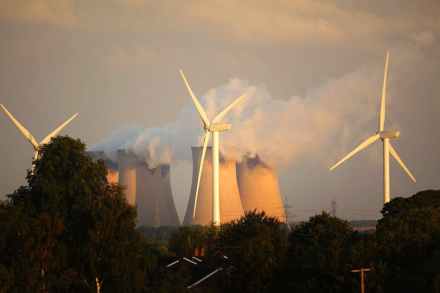
We’re closing 2017 by republishing our twelve most-read articles of the year. Here’s No. 2: Matt Ridley on why wind turbines are not the answer to our energy needs: The Global Wind Energy Council recently released its latest report, excitedly boasting that ‘the proliferation of wind energy into the global power market continues at a furious pace, after it was revealed that more than 54 gigawatts of clean renewable wind power was installed across the global market last year’. You may have got the impression from announcements like that, and from the obligatory pictures of wind turbines in any BBC story or airport advert about energy, that wind power is making a big contribution to world energy today. You would be wrong.

The ‘designer baby’ myth

Christmas Day marks the birthday of one of the most gifted human beings ever born. His brilliance was of a supernoval intensity, but he was, by all accounts, very far from pleasant company. I refer to Isaac Newton. Would you like your next child to have the intelligence of a Newton? It may not be long before this is a consumer choice, according to an ambitious new company founded in America a few months ago. Genomic Prediction initially plans to offer people who use in-vitro fertilisation the chance to identify and avoid embryos that would be likely to develop diabetes, late-life osteoporosis, schizophrenia and dwarfism.

More gas, less wind

The Global Wind Energy Council recently released its latest report, excitedly boasting that ‘the proliferation of wind energy into the global power market continues at a furious pace, after it was revealed that more than 54 gigawatts of clean renewable wind power was installed across the global market last year’. You may have got the impression from announcements like that, and from the obligatory pictures of wind turbines in any BBC story or airport advert about energy, that wind power is making a big contribution to world energy today. You would be wrong. Its contribution is still, after decades — nay centuries — of development, trivial to the point of irrelevance. Here’s a quiz; no conferring.

Diary – 4 May 2017

The Prosperity UK conference over a week ago kicked off with a dinner at Hatfield House that brought together Leavers and Remainers in the spirit of making the best of what happens next. Lord Salisbury (L) couldn’t resist a crack about his ancestor doing to the Pope what Mrs May is doing to Mr Juncker — negotiating a new dispensation, shall we say. Lord Hill (R) mentioned that Martin Luther started the Reformation 500 years ago this year; for England, that all got muddled up with a royal divorce. The next day, Niall Ferguson (R turned L) compared Brexit to negotiating a divorce settlement with 27 ex-wives. My godson came to lunch on his stag weekend after a night out in Newcastle.

Why don’t the EU’s pensioners in the Lords have to declare their interest?

‘A Bill to confer power on the prime minister to notify, under Article 50(2)…’. When it comes to the House of Lords, some of those trying to amend or delay the bill will be paid pensioners of the European Commission. Peers are obliged to declare any interest that ‘might be thought by a reasonable member of the public’ to influence the way they discharge their parliamentary duties — unless it is an EU pension. In 2007, a Lords subcommittee said that because their contracts oblige them to support the EU, an EC pensioner who made ‘intemperate criticism of the commission’ would have contravened their obligations under the Treaty of Rome ‘and therefore could in theory damage his pension’.

A new puritanism explains why some feminists are making common cause with Islam

The bicoastal elite might be more effective in opposing Mr Trump if it weren’t obsessed with the persecution of anybody who says the wrong thing. ‘While you self-involved fools were policing the language at the Kids’ Choice Awards,’ raged the broadcaster Bill Maher last week, ‘a madman talked his way into the White House.’ This new puritanism must explain why some feminists make common cause with Islam. One of the Women’s March organisers was Linda Sarsour, a defender of sharia law, which is misogynism incarnate.

Diary – 2 February 2017

 ‘A Bill to confer power on the prime minister to notify, under Article 50(2)…’. When it comes to the House of Lords, some of those trying to amend or delay the bill will be paid pensioners of the European Commission. Peers are obliged to declare any interest that ‘might be thought by a reasonable member of the public’ to influence the way they discharge their parliamentary duties — unless it is an EU pension. In 2007, a Lords subcommittee said that because their contracts oblige them to support the EU, an EC pensioner who made ‘intemperate criticism of the commission’ would have contravened their obligations under the Treaty of Rome ‘and therefore could in theory damage his pension’.

Climate of ignorance

Global greening is the name given to a gradual, but large, increase in green vegetation on the planet over the past three decades. The climate change lobby is keen to ensure that if you hear about it at all, you hear that it is a minor thing, dwarfed by the dangers of global warming. Actually, it could be the other way round: greening is a bigger effect than warming. It is a story in which I have been both vilified and vindicated. Four years ago, I came across an online video of a lecture given by Ranga Myneni of Boston University in which he presented an ingenious analysis of data from satellites. This proved that much of the vegetated area of the planet was getting greener, and only a little bit was getting browner.

Don’t grouse about grouse

The vast Bubye Valley Conservancy in southern Zimbabwe is slightly larger than County Durham, as well as much hotter and drier. Yet both contain abundant wildlife thanks almost entirely to the hunting of game. In Bubye Valley, it’s lions and buffalo that are the targets; in the Durham dales, it’s grouse. But the effect is the same — a spectacular boost to other wildlife, privately funded. Bubye Valley was a cattle ranch, owned by Unilever, until 1994 when it was turned over to wildlife. A double electric fence was put round the entire 850,000-acre reserve. Gradually the buffalo, giraffe, wildebeest, zebra and antelope numbers grew.

For EU but not for US

So the US Secretary of State, John Kerry, thinks his country has a ‘profound interest… in a very strong United Kingdom staying in a strong EU’, and President Obama is planning to join in campaigning for the Remainders too. They say this not because they think it is good for us, but because it is in their interests that we influence Europe in a free-trading, Atlanticist direction. Well, two can play at that game.

South Georgia Notebook

The terrible news that Henry Worsley had died just 30 miles short of crossing the Antarctic continent unsupported reached me just after I returned from the South Atlantic. We had been in the very stretch of ocean that a relative of his somehow navigated for 800 miles in a tiny boat with Sir Ernest Shackleton and four crew members after their ship was lost in the ice 100 years ago. Unlike them, we were warm and cosy in the Pharos SG, a government vessel that supplies the bases and patrols the well-managed fisheries of South Georgia. We passed the cove where the six men landed and ate baby albatrosses and an elephant seal before Shackleton, Frank Worsley and Tom Crean set out to tramp over the unmapped mountains to get help from Norwegian whalers on the north coast.

The real victims of climate change

[audioplayer src="http://rss.acast.com/viewfrom22/thegreendelusion/media.mp3" title="Matt Ridley and Michael Jacobs debate the point of the Paris climate change conference" startat=31] Listen [/audioplayer]The next generation is watching, Barack Obama told the Paris climate conference: ‘Our grandchildren, when they look back and see what we did in Paris, they can take pride in what we did.’ And that, surely, is the trouble with the entire climate change agenda: putting the interests of rich people’s grandchildren ahead of those of poor people today. Unfair? Not really, when you look at the policies enacted in the name of mitigating climate change.

‘Quitting is suffering’

Few people have heard of Hon Lik, which is a pity because he’s probably saved more lives already than anybody else I have met. Twelve years ago, he invented vaping — the idea of getting nicotine vapour from an electronic device rather than a miniature bonfire between your lips. Vaping is driving smoking out at an extraordinary rate, promising to achieve what decades of public health measures have largely failed to do. And it is doing so without official encouragement, indeed with some official resistance. Via an interpreter, and sucking on an electronic pipe, Mr Hon told me how it happened. And here is the key point, the one that panjandrums of public health still seem to miss. He invented vaping in order to stop smoking, and that’s what it’s used for today.

Diary – 28 May 2015

Martin Williams, former head of the government’s air quality science unit, has declared that the reason we have a problem with air pollution now is that ‘policy has been focused on climate change, and reducing CO2 emissions, to the exclusion of much else, for most of the past two decades. Diesel was seen as a good thing because it produces less CO2, so we gave people incentives to buy diesel cars.’ Yet another example of how the global warming obsession has been bad for the environment — like subsidising biofuels, which encourage cutting down rainforests; or windfarms, which kill eagles and spoil landscapes; or denying coal-fired electricity to Africa, where millions die each year from the effects of cooking over smoky wood fires. Greens are too hard on coal.

What about August 1714? 300 years since the Hanoverian accession

The centenary of the start of the first world war is getting much more attention than the tricentenary of the accession of George I, which also falls this week. As far as I can tell, no new biographies of the first Hanoverian king are imminent, whereas books on the great war are pouring forth. You can see why. The replacement of a plump, if benign, queen by an ‘obstinate and humdrum German martinet with dull brains and coarse tastes’ (Winston Churchill’s words), who presided over a huge financial scandal and died unlamented after a short reign, need hardly detain us. But forget the royals and focus on what we might call the reshuffle among politicians that accompanied the change.

Now remember August 1714

The centenary of the start of the first world war is getting much more attention than the tricentenary of the accession of George I, which also falls this week. As far as I can tell, no new biographies of the first Hanoverian king are imminent, whereas books on the great war are pouring forth. You can see why. The replacement of a plump, if benign, queen by an ‘obstinate and humdrum German martinet with dull brains and coarse tastes’ (Winston Churchill’s words), who presided over a huge financial scandal and died unlamented after a short reign, need hardly detain us. But forget the royals and focus on what we might call the reshuffle among politicians that accompanied the change.

E-cigarettes are making tobacco obsolete. So why ban them?

If somebody invented a pill that could cure a disease that kills five million people a year worldwide, 100,000 of them in this country, the medical powers that be would surely encourage it, pay for it, perhaps even make it compulsory. They certainly would not stand in its way. A relentless stream of data from around the world is showing that e-cigarettes are robbing tobacco companies of today’s customers — and cancer wards of their future patients. In Britain alone two million now use these devices regularly. In study after study, scientists are finding e-cigarettes to be effective at helping people quit, to show no signs of luring non-smokers into tobacco use and to be much safer than their noxious competitors.

We have a new climate change consensus — and it’s good news everyone

[audioplayer src="http://traffic.libsyn.com/spectator/TheViewFrom22_3_April_2014_v4.mp3" title="Matt Ridley and Fraser Nelson discuss the IPCC's latest report" startat=67] Listen [/audioplayer]Nigel Lawson was right after all. Ever since the Centre for Policy Studies lecture in 2006 that launched the former chancellor on his late career as a critic of global warming policy, Lord Lawson has been stressing the need to adapt to climate change, rather than throw public money at futile attempts to prevent it. Until now, the official line has been largely to ignore adaptation and focus instead on ‘mitigation’ — the misleading term for preventing carbon dioxide emissions. That has now changed.

A response to my critics on global warming

My Spectator cover story on the net benefits of climate change sparked a lot of interest. There was an explosion of fury from all the predictable places. Yet not one of my critics managed to disprove my central assertion, that climate change is probably causing net benefits now and is likely to continue doing so for some decades yet. I’ve written responses to some of the critical articles and reproduce them here. 1. Duncan Geere in the New Statesman. Four paragraphs in his piece in turn begin with 'He's right...' so I am glad that Geere confirms that I am right about all my main points. If you read my article you will find that each of Geere's assertions about the eventual harm of climate change are also in my piece.

Why climate change is good for the world

Climate change has done more good than harm so far and is likely to continue doing so for most of this century. This is not some barmy, right-wing fantasy; it is the consensus of expert opinion. Yet almost nobody seems to know this. Whenever I make the point in public, I am told by those who are paid to insult anybody who departs from climate alarm that I have got it embarrassingly wrong, don’t know what I am talking about, must be referring to Britain only, rather than the world as a whole, and so forth. At first, I thought this was just their usual bluster. But then I realised that they are genuinely unaware. Good news is no news, which is why the mainstream media largely ignores all studies showing net benefits of climate change.