Martin Vander Weyer

Martin Vander Weyer

Martin Vander Weyer is business editor of The Spectator. He writes the weekly Any Other Business column.

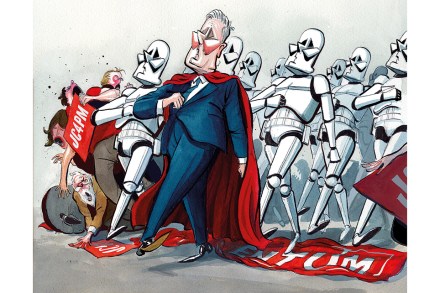
If Chris Packham is anti it, it’s probably a good idea

If the broadcaster and eco-warrior Chris Packham describes something as ‘an act of war against life on Earth’, sensible people might suspect that it’s probably, on balance, a good thing. Such is the case with the Rosebank field – the UK’s largest remaining undeveloped reserve of oil and gas, in deep waters west of Shetland, which was green-lighted by the government last week. Leading this £3 billion project will be the Norwegian energy giant Equinor. Rosebank’s 69,000 barrels of oil per day will be shipped to Norway or elsewhere to be refined and sold into world markets.

HS2 has been a fiasco. It’s time to ditch it for good

In a fantasy world of wise government vision and decision-making, HS2 would have been announced in November 1964, shortly after the Tokyo Olympics. Visitors to those games saw the future in the form of the Tokaido Shinkansen – the first Japanese ‘bullet train’, which raced 320 miles from the capital to Osaka, carrying 1,300 passengers per train and eventually running 360 trains per day, with average delays measured in seconds. But in that era, UK ministers thought only of axeing railways and building motorways. A de novo British high-speed network could not have taken off in the 1970s, when the French were building the first ligne à Grande Vitesse from Paris to Lyon, simply because we were broke.

Bernard Looney shows why every board should be braced for scandal

Bernard Looney, the fallen BP chief, always had a certain swagger about him. I’ve no idea whether he was unsafe in taxis, but he was certainly prone to unguarded remarks. ‘Not every barrel of oil in the world will get produced’ was a bold way, back in 2018, to introduce BP shareholders to the idea that the world’s energy giants will one day have to strand remaining carbon assets if they really intend to achieve net-zero targets. ‘This is literally a cash machine’ was not the best way to describe BP’s profit performance in November 2021, when British households were beginning to feel the pain of soaring energy bills.

How to do business with China

Amid reports of Chinese spies in Westminster, we learn that Huawei – the telecoms manufacturer western governments shun for fear of cyber espionage – has launched a smartphone containing microchips more advanced than anything China was previously thought capable of making. Some analysts say China is now ahead of the US in tech fields ranging from AI to robotics, while, in the auto sector, BMW chief executive Oliver Zipse (announcing plans to make electric Minis at Cowley from 2026) described Chinese electric carmakers with improved battery technology as an ‘imminent threat’ to his industry in Europe.

The economy isn’t as sick as we thought

It would be churlish not to celebrate revisions from the Office for National Statistics that tell us the UK is not, after all, the post-Covid invalid of the G7. Contrary to previous figures suggesting we had struggled to regain pre-pandemic levels of economic output, it turns out that our gross domestic product passed that benchmark in late 2021 and our performance has been in line with France and ahead of Germany. Large sectoral revisions for agriculture and manufacturing tell us that statistical reporting is almost as much of a mug’s game as forecasting. But the brighter overall picture accords with the anecdotal sketch of ‘definite warming’ in consumer spending and confidence that I offered here early last month.

The joy of French motorways

The news that Heineken, the Dutch brewer, has sold its business in Russia to a local buyer for a token $1 – at a loss of €300 million, but with job guarantees for 1,800 Russian workers – raises moral issues about when and how multinationals should withdraw from pariah states. A database compiled by Yale professor and corporate responsibility campaigner Jeffrey Sonnenfeld, tracking 1,586 foreign operators in Russia since the invasion of Ukraine, counts 534 as having made a clean exit versus 219 (including BT and some smaller UK-listed companies, alongside a plethora of Chinese names) ‘digging in’ for business as usual.

The high odds of a Chinese black swan

From our US edition

I have a memory picture of an urban highway in Shenzen, southern China. Recently built, with abundant flowering shrubs planted along its central reservation, it was lined as far as the eye could see by uncountable apartment towers, many of them unfinished. This was 2009 and it was my first glimpse of the debt-fueled property bonanza that had begun to grip the Chinese economy — alongside the export-led manufacturing boom that was also plainly visible, thanks to satellite maps of the vast agglomeration of factories surrounding the new-rich residential areas. It’s easy to be a permanent bear in any market, because history tells us they all come crashing down in the end.

Evergrande

In defence of budget airlines

I have a memory picture of an urban highway in Shenzen, southern China. Recently built, with abundant flowering shrubs planted along its central reservation, it was lined as far as the eye could see by uncountable apartment towers, many of them unfinished. This was 2009 and it was my first glimpse of the debt-fuelled property bonanza that had begun to grip the Chinese economy – alongside the export-led manufacturing boom that was also plainly visible, thanks to satellite maps of the vast agglomeration of factories surrounding the new-rich residential areas. It’s easy to be a permanent bear in any market, because history tells us they all come crashing down in the end.

The forecast Andrew Bailey actually got right

When inflation was at 5.5 per cent and rising in January 2022, the BBC’s Faisal Islam adopted a look of amazement when he asked the governor of the Bank of England, Andrew Bailey: ‘So you’re trying to get inside people’s heads and ask them not to ask for too high pay rises?’ ‘Broadly, yes,’ Bailey stepped into the trap, ‘It’s painful, but we need to see that in order to get through this problem more quickly.’ The governor was slated for insensitivity, critics making much of his own half-million package. That 38-second clip did more to make his out-of-touch reputation than any of his other stumbles. But he wasn’t wrong.

‘Broken France’ feels much healthier than Britain

Some business stories are useful economic signals, some are not. For example, I’m not building any hopes on news that Ferrari sales are up 15 per cent thanks to buyers demanding ‘cashmere and corduroy’ interiors. Indicative of greater realism among the very rich is the statistic that superyacht sales are down by a third following a spectacular two-year boom. And far more worrying are other maritime bulletins, one from the Danish shipping giant AP Moller-Mærsk, the other from the fiefdom of the Hong Kong billionaire Li Ka-shing. Maersk has downgraded its forecast for global container demand this year to a fall of 1 to 4 per cent, on the basis of slowdown in China and lower stock-holding by western companies.

What Andrew Bailey’s eyebrows can tell us about the NatWest scandal

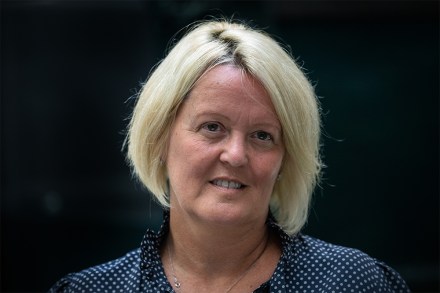
Enough said about the fall of Dame Alison Rose; more than enough about the second coming of Nigel Farage. But one question remains: what happened to the Governor’s eyebrows? In former times, the fate of errant bank chiefs was unequivocally a matter for the Bank of England. Careers were sunk or salvaged by a twitch of the governor’s supercilia. When Bob Diamond of Barclays was under fire in 2012 after the rate-fixing scandal and the Barclays board tried to save him by offering the head of chairman Marcus Agiusinstead, the then governor, Mervyn King, ordered Agius to unresign and fire Diamond – while the chancellor George Osborne denied any part, saying it wasn’t his job to decide who ran Britain’s banks. Not so nowadays.

Dame Alison’s ousting lifts the lid on banking’s wider moral pickle

When Dame Alison Rose was a frontrunner for chief executive of NatWest in 2019, I described her as ‘sensible’ and ‘unspun’ and said I hoped she’d get the job. That view was based partly on personal impression and partly on a prejudice of mine, expressed consistently since the 2008 crisis, that women often make better senior bankers than men, being less prone to macho risk-taking. Rose has now yielded to political pressure and resigned over her role in the false reporting of the decision to ‘exit’ Nigel Farage as a customer of NatWest’s subsidiary, Coutts. But this column has never been in the business of following the baying crowd in hounding corporate chiefs from office.

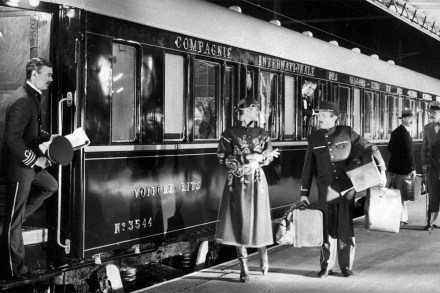
Save our railway ticket offices!

‘Always be cheerful’ – a motto to which I’ll return in the final item – speaks to my natural demeanour. But when asked whether I see grounds for optimism in the UK business scene, I’ve struggled lately to find anything positive in the near-certain advent of a Labour government, the agonisingly slow retreat of inflation and the damage of still-rising interest rates. Nevertheless, let me take a step back. In an ONS survey this month, four times as many respondents (36 per cent) thought their business performance would improve over the next 12 months compared with those who thought it would decline (9 per cent). There were also upticks in expectations for manufacturing output and in consumer confidence.

Would a German takeover of BT be so bad?

To the Mansion House, on an unbearably humid evening, for the Lord Mayor’s annual ‘Financial and Professional Services’ dinner. It’s a big night for the City, with the formal unveiling of reforms designed to channel pension money into unlisted equities, creating by 2030 a £50 billion pool of capital for high-growth UK companies that might otherwise list in New York or sell themselves elsewhere. Simplified London listing rules, favourable to founder-entrepreneurs, will be another part of a wider reform package, much of which has been foreshadowed in this column over recent months. But what a way to put out a major policy announcement.

Let’s flush away the idea of a return to state-owned water

Water, water everywhere in the media this week, as the Thames Water utility – crippled by debt and shamed by Niagaras of raw sewage – reached the brink of collapse. Anticipating government intervention if Thames’s owners cannot inject sufficient new equity, pundits decried the 1989 privatisation of English and Welsh water – which passed from conventional shareholders to private equity and foreign sovereign wealth that combined to extract £72 billion of dividends while loading the industry with £60 billion of debt and allegedly denying it new reservoirs and leak-free pipes. Put like that, the fate of water – a resource so natural that some say it should be immune from all financial alchemy – is indefensible.

Markets will celebrate Putin’s fall – but not yet

As the Wagner convoy rumbled northwards towards Moscow on Saturday, markets braced for turmoil. What would armed uprising in Russia do to the supply and price of oil, gas, wheat or fertiliser? Would it provoke investor flights to gold or bitcoin? But when the episode fizzled out, Monday’s prices saw little more than upticks, with natural gas traders more preoccupied by outages in Norway and FTSE action refocused on dim domestic economic prospects. Sighs of relief all round, then, and a simple conclusion: world markets will hail the demise of Vladimir Putin – so long as he goes slowly, of natural causes, and not before the end of the great inflation. Money matters ‘What should I read to understand inflation?’ asks a friend.

How to avert a mortgage car-crash

How real is the ‘mortgage crisis’ and what, if anything, can be done to relieve it? BBC vox pops of borrowers whose monthly costs have already rocketed or who face imminent rate resets at 6 per cent or worse certainly give a dramatic impression. But in reality this is a slow-motion car-crash – for Rishi Sunak as well as the afflicted – in which some 1.4 million mortgages (out of a UK total of 13.2 million) will move to higher rates sometime this year and another million next year. Forgive my arithmetic, by the way, but that looks like 18 per cent of the mortgage-holding population who constitute 28 per cent of all households, so just one in 20 households overall.

Should crypto be regulated like shares – or more like a casino?

‘Crypto assets are commodities,’ said my neighbour at dinner. No they’re not, I replied, commodities are natural raw materials that have ultimate real-world uses. Crypto is merely a collection of blips in cyberspace to which adherents choose to attribute value. ‘Just like fiat currencies,’ my neighbour shot back. ‘What’s real about them? Aren’t they just an idea in the mind of central bankers?’ And off we went on a ding-dong debate.

If inheritance tax can’t be scrapped let’s change it for the better

I’d happily jump on the Telegraph bandwagon for the abolition of inheritance tax, even in the company of Liz Truss and Nigel Farage. The urge to provide a cushion of capital for children and grandchildren is an honourable one. Recipients of already-taxed cash from deceased relatives are arguably less likely to be burdens on the state in their own later lives, just as the state is unlikely to spend the same money, if confiscated, in efficient ways for the greater good. And to argue against inheritance is to put socialist hostility to wealth ahead of the worthy aim of family betterment. Enough said. The trouble with this campaign, however, is that it’s also a call for a £7 billion tax cut for the better-off, which simply isn’t going to happen.

Whose job is it to keep airport e-gates open?

Do you hate airport e-gates? Me too. The instructions are poor, the facial recognition frequently fails and the ‘Don’t abuse our staff’ posters tell you you’re trapped in a system that’s bound to annoy. Last Saturday it went from bad to worse, when all 270 e-gates at UK entry points stopped working. ‘A technical nationwide border system issue’, the Home Office called it. But I think we should know who’s responsible – and a Hollywood-hacker-style trawl has led me to a 2021 report by David Neal, ‘independent chief inspector of borders and immigration’. Neal reveals that a single-supplier contract for UK e-gates was awarded in 2013, until 2023-24, to a Portuguese firm called Vision-Box.