Martin Vander Weyer

Martin Vander Weyer

Martin Vander Weyer is The Spectator’s business editor

Won’t someone please unleash the challenger banks?

In my Yorkshire town of Helmsley the NatWest branch, originally an outpost of Beckett & Co of Leeds, has closed down — collateral damage of its crippled parent RBS’s continuing struggle for viability. Our branch of the Australian-owned Yorkshire Bank, descendant of the West Riding Penny Savings institution, became an antique shop some time ago. HSBC, formerly Midland, is now a hairdressing salon. When they arrived a century ago, all three were ‘challenger banks’ of their day. But now they have gone, no challengers have ridden in to replace them — unless we count Handelsbanken, the progressively old-fashioned Swedish retail bank that has a thriving franchise down the road at Scarborough.

Watch out: Standard Chartered is even trickier to manage than credit default swaps

One day you’re an elder statesman, chairing top committees and pontificating on Question Time, and the next you’re out in the cold, reading terrible headlines about yourself in the newspapers you’re trying to sleep under on a park bench. Well, perhaps not as bad as that — but as it is for former foreign secretaries, so it is for overseas bankers. Standard Chartered chief executive Peter Sands, I wrote in 2012, was ‘one of the few British bankers whose reputation has actually risen in recent years’; his bank was a ‘dull old dog’, but it was also steadily profitable and sensibly managed. Then came sanctions-busting scandal, unwise expansion, slipping profits and disgruntled shareholders.

How Labour’s 50p tax trick has ended up helping George Osborne

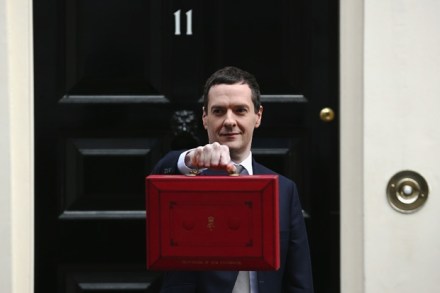
Last week’s public borrowing and tax-receipt figures, headlined ‘Chancellor hails biggest monthly surplus in seven years’, received considerably less attention than the employment and wage-growth numbers a week earlier, underlining my belief that voters care a lot less (or indeed not at all) about the intangible ‘fiscal deficit’ and its implications than they do about their own prospects and spending power. And rightly so. Failure to shrink the deficit at the rate he first promised is nevertheless the one major issue on which George Osborne is seriously open to criticism as Chancellor. But what matters in political terms at this stage is that borrowing this year is 7.

Bet on a swift Grexit | 19 February 2015

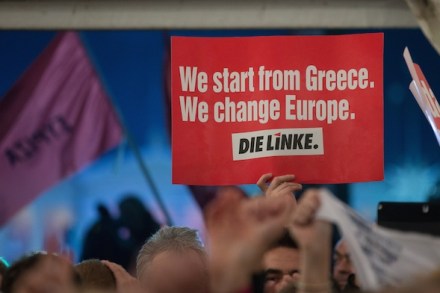
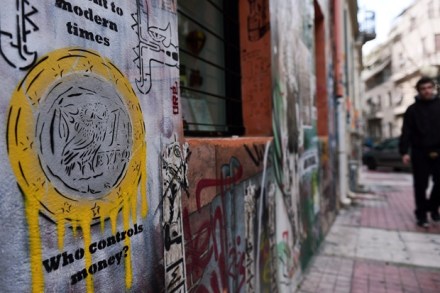
‘Will Greece exit the eurozone in 2015?’ Paddy Power was pricing ‘yes’ at 3-to-1 on Tuesday, with 5-to-2 on another Greek general election within the year and 6-to-4 on the more cautious ‘Greece to adopt an official currency other than the euro by the end of 2017.’ I’m no betting man — as I reminded myself after backing a parade of point-to-point losers on Sunday — and I defer to our in-house speculator Freddy Gray, who will offer a wider guide to political bets worth having in the forthcoming Spectator Money (7 March).

Bet on a swift Grexit

'Will Greece exit the eurozone in 2015?’ Paddy Power was pricing ‘yes’ at 3-to-1 on Tuesday, with 5-to-2 on another Greek general election within the year and 6-to-4 on the more cautious ‘Greece to adopt an official currency other than the euro by the end of 2017.’ I’m no betting man — as I reminded myself after backing a parade of point-to-point losers on Sunday — and I defer to our in-house speculator Freddy Gray, who will offer a wider guide to political bets worth having in the forthcoming Spectator Money (7 March).

Maybe HSBC was too big for even Stephen Green to manage

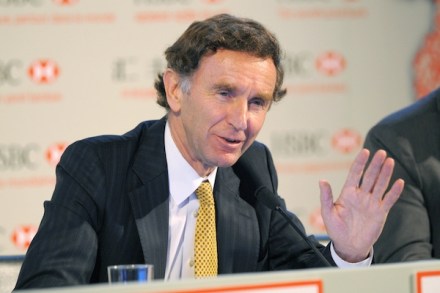
Stephen Green — the former trade minister Lord Green of Hurstpier-point, who became this week’s political punchbag— was always a rather Olympian, out-of-the-ordinary figure at HSBC. This was a bank that traditionally drew its top men from a corps of tough, non-intellectual, front-line overseas bankers typified by the chairmen before Green, Sir John Bond and Sir Willie Purves. As the dominant bank in Hong Kong and a market leader throughout Asia and the Middle East, it was habituated to dealing with customers who took big risks, hoarded cash when they had it, and did not necessarily regard paying tax as a civic duty.

Lord Green must answer for HSBC’s sins – but maybe it was always too big to manage

Stephen Green — the former trade minister Lord Green of Hurstpier-point, who became this week’s political punchbag— was always a rather Olympian, out-of-the-ordinary figure at HSBC. This was a bank that traditionally drew its top men from a corps of tough, non-intellectual, front-line overseas bankers typified by the chairmen before Green, Sir John Bond and Sir Willie Purves. As the dominant bank in Hong Kong and a market leader throughout Asia and the Middle East, it was habituated to dealing with customers who took big risks, hoarded cash when they had it, and did not necessarily regard paying tax as a civic duty.

Why cheap oil could mean a Labour victory

BP’s profits are down, and the oil giant is slashing up to $6 billion out of its investment plan for the year. At Shell, the cut could amount to $15 billion over the next three years. At troubled BG, still waiting for new chief executive Helge Lund to arrive, capital spending will be a third lower than last year. I wrote recently of ‘consequences we really don’t need’ as the oil price continues to plunge: cheering though it is for consumers (and good for short-term growth) to find pump prices at a five-year low, the full impact will not be felt until a decade hence, when projects cancelled now might have come on stream to ease supply in whatever cat’s-cradle of conflict afflicts the world by then.

The low sculduggery of high Victorian finance

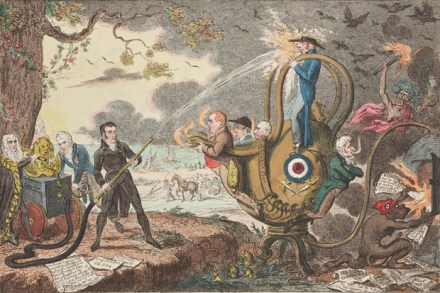
The whole idea of capitalism, according to Enlightenment philosophers, was that it created a positive spiral of moral behaviour. ‘Concern for our own happiness recommends us to the virtue of prudence,’ wrote Adam Smith. ‘The profits of commerce,’ according to David Hume, carry us towards a state in which ‘the tempers of men, as well as their behaviour, refine apace.’ In the first chapter of Forging Capitalism, Ian Klaus encapsulates this theory as an 18th-century artist might have titled an allegorical painting of intertwined figures: ‘Commerce encouraging Virtue, and Virtue harnessing Commerce.’ But that’s not really the way it was, Klaus goes on to argue — and certainly not the way it is today, he implies.

What’s good about austerity (whatever the Greeks think)

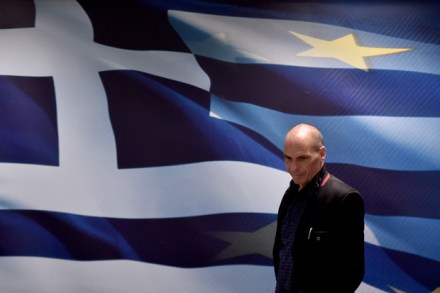
The only question I remember from my Oxford moral philosophy paper was ‘What is integrity and is it a virtue?’ In the margins of all the politicking that follows the victory of Syriza in the Greek election, I hope someone asks: ‘What is austerity, is it a virtue, and why has it worked in the UK and Ireland but failed in Greece?’ My own definition of austerity in the context of financial crisis, when I debated it with former Greek finance minister George Papaconstantinou, was ‘a synonym for frugal, uncorrupt government supported by willing taxpayers of the sort that has been largely absent in southern Europe’, at which George got very emotional and accused me of stereotyping.

Why Switzerland should have listened to Hong Kong on currency pegs

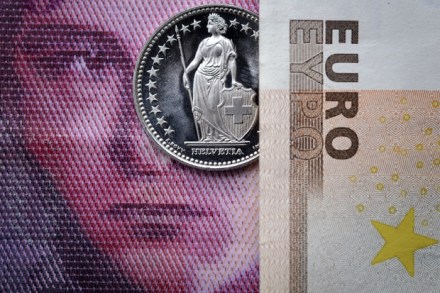
The Swiss National Bank usually ticks away as quietly as one of its nation’s more expensive timepieces, but when the cuckoo does occasionally burst out of the clock, all hell breaks loose. After a policy was introduced in September 2011 to depress the Swiss franc against the euro (as traumatised investors continued to pour money into safe-haven Switzerland), governor Philipp Hildebrand resigned when it came to light that his wife Kashya had sold a huge bundle of francs ahead of her husband’s market intervention, then bought them back at a handsome profit. Now, weeks after Hildebrand’s successor Thomas Jordan called the informal fixing of the franc at €1.

The RMT’s Mick Cash and Tesco’s Dave Lewis win my prizes for media manipulation

Mixed results for the Brits at the Golden Globes, but I’m pleased to announce that my Golden Monkey Wrench for media manipulation goes to Mick Cash and his team at the Rail Maritime & Transport union, for securing wall-to-wall sympathetic coverage of the collapse of courier firm City Link — some 2,300 of whose workers learned on Christmas day that their jobs were doomed. It would be fair to say Mick had not made much impact as general secretary of RMT (give or take some pointless Tube strikes) since the death of his mighty predecessor Bob Crow last March, but he certainly grabbed the City Link story by the throat — and has been busy this week urging MPs to investigate ‘the whole murky business’.

The eurozone is strong enough to kick out Greece if Syriza wins

Ever since European Central Bank president Mario Draghi declared himself ready, in July 2012, ‘to do whatever it takes to preserve the euro’, the likely disintegration of the single currency — as predicted by pundits such as yours truly over the preceding years — has all but disappeared from the comment agenda. The combination of a persuasive ECB leader with reform in some bailed-out eurozone states (notably Ireland and Spain) and an easing of bond market pressures, plus the iron will of Germany to see the euro survive, drove the break-up argument into retreat.

What to expect in business in 2015 (probably not the Triumph of Probity, Honour and Prudence)

You might recall a column I once wrote about a party at the Wallace Collection. It took place in late 2008, the host was the US investment bank Morgan Stanley, and I compared the assembled financiers — who saw the crisis then raging as just one more opportunity to make money out of volatility in markets that were bound to swing round again — to the circle of dancers in Poussin’s ‘Dance to the Music of Time’, which hangs in the Great Gallery there. Far-fetched perhaps, but I have a weakness for allegories. On a pre-Christmas visit to the Wallace, I found the gallery splendidly refurbished and re-hung. The ‘Dance’ — like the banking sector — is in a different place but still emitting the same signals.

How do I ever get speaking gigs? I’m guessing it goes like this…

To Brighton, to address a conference of property investors. Unusually, I find myself programmed alongside both Gerard Lyons, City economist turned Mayor Boris’s adviser, who is notably upbeat in his forecast, and Robert Peston, who is distinctly downbeat in an extended after-dinner lecture with graphs, but gets away with it because his voice mannerisms are so compelling and women in the audience are fascinated by his new haircut.

Cheap oil has finally arrived – and it looks like being a disaster

This oil price slump is turning into a ‘black swan’: one of those economic events that seem to come from nowhere with strange and unforeseen effects. As Brent Crude dips below $70 a barrel and Opec sits on its hands, major banks face losses on financings for US energy companies that must have looked like the safest borrowers in the field in an earlier phase of the shale gas boom. As the rouble plunges and the Russian economy implodes, anyone holding debt paper issued by a Siberian oil giant or a contract to build an oligarch’s superyacht may end up lighting the fire with it. The only thing that has barely flickered is the price of petrol at the pump, so consumers are feeling scant benefit.

Forget corporate social responsibility: just do a proper job

A theme of this autumn has been conversations about corporate reputation and how it is guarded or lost. To name but three, I have kicked this around at a ‘Trust Forum’ sponsored by the lawyers DLA Piper at Oxford’s Said Business School, at a lunch hosted by the wealth managers McInroy & Wood, and in an interview with Lord (Stuart) Rose, former Marks & Spencer chief, at last week’s York Business Conference. The essence is that most big companies feel their reputations are increasingly fragile, and that public trust is now routinely and unfairly denied to them. Non-banks blame banks for letting the side down. All companies blame the media for failing to report good news, and social media for spreading false or subversive rumours.

A miracle: French hotels actually like dogs

The first time I checked in to a French hotel with a golden retriever — his name was Gregory, predecessor of the incumbent Douglas — I left him, clearly unhappy, in the bedroom when I went to dinner. Then I realised that every other party already in the dining room included a dog, in some cases a lapdog enjoying morsels direct from its mistress’s plate. So I fetched Gregory, shoved him under the tablecloth and told him to keep quiet. But each time a tasty dish went past, his big hairy head emerged and sniffed the air. Eventually the maitre d’hotel approached. ‘You’re in trouble now,’ I whispered (to Gregory). ‘Ah, quel beau chien,’ said the maitre d’. ‘Would he like to order anything?

Are the Qataris ready for the curse of Canary Wharf?

I’ve written before of a ‘curse of Qatar’ that might explain misfortunes attending the Gulf state’s UK investments, of which the seven-years-delayed Chelsea Barracks redevelopment is an example. I also claim to have coined ‘curse of Canary Wharf’, a phenomenon afflicting not only financial tenants of the Docklands complex but visitors such as Gordon Brown, who never lived down his speech congratulating Lehman Brothers on ‘the contribution you make to the prosperity of Britain’ at the opening of the doomed bank’s office tower there. So the prospect of a renewed Qatari bid for Songbird, the corporate owner of Canary Wharf, fills me with foreboding.

Why I’m glad there’s no British Las Vegas

I didn’t realise that the Rialto Bridge has a moving walkway and muzak, that the gondolas beneath it float on a clear blue pool, and that the school of Tiepolo had so many apprentices available to paint hotel ceilings. ‘Still in Venice, Martin?’ you’re thinking. ‘Surely that was last month?’ Well no, your intrepid columnist has moved from the old world to the new, and reports this week from the desert frontier where unfettered capitalism meets the lowest human urges: Las Vegas. It’s an overwhelming experience, so forgive me if my grip on what’s happening at home — reactions to David Cameron’s CBI conference speech, for example, and the rejected Qatari bid for Canary Wharf — is a little hazy.