Martin Vander Weyer

Martin Vander Weyer

Martin Vander Weyer is business editor of The Spectator. He writes the weekly Any Other Business column.

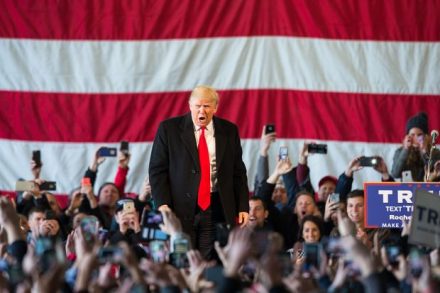
Trump shows 2016 is the year of the clown – which is good news for Ed Balls

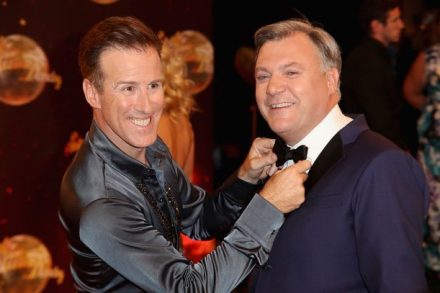
‘I have a horrible feeling he has enough gimmicks to be the wild card… I mean, he could go on to win it.’ We’re just beginning to come to turns with the dangerous tendency of today’s voters to reject the conventional and competent in favour of unqualified, undignified, unlovable candidates who conduct themselves like showmen and clowns. I speak of course of former Labour shadow chancellor Ed Balls on Strictly, and I quote from waspish judge Craig Revel Horwood.

Should I pop a cheque in the post or brave the dangers of online banking?

There’s an electronic device on my desk that looks — through its bubble- wrap — like a cheap miniature calculator. It’s still in the packaging a month after it arrived because I’m irritated by the idea that I have to master a new gadget specifically designed to complicate a familiar action. The thing is a debit-card reader, and I gather I must activate it whenever I want to send money from my bank account via the internet to a new payee.

Don’t panic, Jacob Rees-Mogg will never replace Mark Carney

For Mark Carney to have returned to-Canada after five years as Governor, as he originally planned, rather than serving until 2021, might by now have looked like a win for his critics — so adding an extra year, up to the end of Brexit talks in 2019, is a sidestep worthy of Strictly. Meanwhile, I was delighted to find ‘Might it be worth a flutter on Governor Rees-Mogg?’, the punchline of my last item on this subject (22 October), bouncing around the global media.

It’s time for Hammond to send a ruthless hit squad into RBS

The new series of The Missing is surely the gloomiest television of the year. But it has nothing on the endless saga of RBS, which seems to use the same disturbing time-shift device: whenever there’s a horrible new plot twist, you have to spot whether we’re in 2008, 2011 or today. The crippled bank, still 73 per cent state-owned, has lost £2.5 billion in the first three quarters of this year, having just paid out another £425 million in ‘litigation and conduct’ costs chiefly relating to mortgage-backed securities hanky-panky in the US. Since its bailout eight years ago, it has lost considerably more than the £46 billion of taxpayers’ money that was pumped into it, and has never reported a full-year profit.

The Big Bang did more harm than good

As the 30th anniversary of Big Bang loomed, I found myself back at the scene of my City demise. Ebbgate House — headquarters of BZW, the investment banking arm of Barclays where I worked until one fateful morning in 1992 — fell deservedly to the wrecking ball a decade ago. It was replaced by Riverbank House, and there I was last week, hovering above where my desk used to be, talking about ‘why no one listens to the City any more’ and reliving the P45 moment that released me into the happier world of journalism. Personal echoes apart, this was also a moment to revisit Big Bang, the Thatcherite reforms launched on 27 October 1986 that allowed banks such as Barclays to buy stock-exchange firms, create BZW and its ilk, and compete against Wall Street’s giants.

Despite what Big Bang destroyed, there’s still nowhere quite like the City

As the 30th anniversary of Big Bang loomed, I found myself back at the scene of my City demise. Ebbgate House — headquarters of BZW, the investment banking arm of Barclays where I worked until one fateful morning in 1992 — fell deservedly to the wrecking ball a decade ago. It was replaced by Riverbank House, and there I was last week, hovering above where my desk used to be, talking about ‘why no one listens to the City any more’ and reliving the P45 moment that released me into the happier world of journalism. Personal echoes apart, this was also a moment to revisit Big Bang, the Thatcherite reforms launched on 27 October 1986 that allowed banks such as Barclays to buy stock-exchange firms, create BZW and its ilk, and compete against Wall Street’s giants.

Could Jacob Rees-Mogg replace Mark Carney at the Bank of England?

Will Mark Carney go or stay? On appointment in 2013, he indicated he would leave the Bank of England and return to Canada in 2018 (‘We’ll be back in five,’ his wife tweeted), but he has an option to stay a further three years. Theresa May’s criticism of QE in her conference speech was interpreted as an attack, but she and Philip Hammond have subsequently been described as ‘supportive’. Admirers say continuity would be a good thing through the pre-Brexit period, especially if inflation picks up, while detractors such as Nigel Lawson (‘He’s behaved disgracefully’) long to see the back of him.

The Nissan test: can we really negotiate Brexit sector by sector?

I wrote last month that a key test of Brexit success will be whether Nissan is still making cars here in ten years’ time. A few days later, Nissan chief Carlos Ghosn issued a warning that ‘If I need to make an investment in the next few months and I can’t wait until the end of Brexit, then I have to make a deal with the UK government.’ The investment decision he referred to — expected by Christmas, which means before Brexit talks even begin — is whether to build the next Qashqai model at Sunderland or in France, to avoid tariffs on exports when we leave the single market. And the deal he was fishing for was a promise of compensation if tariffs are imposed. What’s at stake is huge: the wider UK automotive sector supports 800,000 jobs.

Donald Trump isn’t out of the race yet

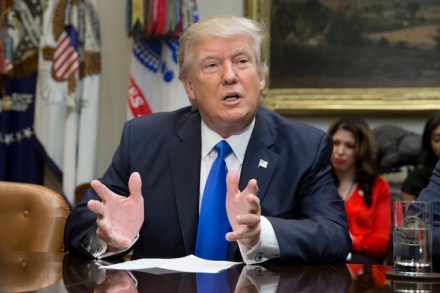
Speaking of which, who will be President Trump’s treasury secretary, and does it matter? After this week’s ‘locker-room’ revelations, the Donald’s odds of winning have clearly lengthened. But he ain’t out of the race yet — and seasoned Republicans of my acquaintance have been agonising for months over the question of whether to accept jobs in his White House team, or indeed whether to push themselves forward in the hope of influencing it towards sanity. Would that effort be worth the potential pain and embarrassment? It’s indicative of the lame-duck nature of Obama’s second term that Jack Lew, the Treasury incumbent and equivalent of our Chancellor, is all but invisible: I had to Google him to see what he looks like.

Hard Brexit, soft sterling and a glimpse of the Night Manager across the water

This column comes from Puerto Pollensa in Majorca, my favourite off-season watering-hole. The hotel is full of elderly Daily Mail readers intent on making their gin-and-tonics last longer as they contemplate the news from home. Brexit is highly likely to mean ‘hard Brexit’ — departure without residual access to the single market or meaningful new trade deals with the EU or anyone else — and HM Treasury thinks that could cost £66 billion a year in tax revenues. The FTSE’s new all-time intra-day high was consoling for those with a portfolio tucked away, but an uptick in bond yields suggests equities are due for a sharp sell-off soon. And petrol prices are about to jump thanks to the weak pound and a belated Opec move to limit production.

Flaming phones

Is that a Samsung Galaxy Note 7 in your pocket, or are your pants on fire? The Korean manufacturer has halted sales of its latest smartphone and advised anyone already an owner to switch off immediately, lest the thing's battery explodes -- as one did on a Southwest Airlines flight in the US, forcing the plane to be evacuated. Meanwhile flights to Seoul are packed with crisis-management PR people -- all carrying Apple iPhone 7s, sales of which are soaring at Samsung's expense, or awaiting delivery of the rival Google Pixel device, due this month. Also set to gain is Huawei, the mysteriously rising giant of Chinese electronics.

Brexit spooks the markets, but the housing crisis will swing more votes

‘I rang and said can I have a council house, I’ve nowhere to go, an’ the bloke said no you can’t, we need them all for t’Romanians,’ was a remark offered by a fellow patient, known to me as Fat Lad, when I was hospitalised three years ago. ‘I’m telling you, I’m the biggest Ukip supporter there is…’ he went on, illuminating how — unnoticed by the comfortable classes — a shortage of social and affordable housing was helping to fuel the national mood that eventually led to the Leave vote. Belatedly, Communities Secretary Sajid Javid has had a Damascene moment: ‘Tackling the housing shortage is not about political expediency,’ he declares. ‘It is a moral duty.

Iceland the shop should be suing Iceland the country, not the other way around

Iceland wants to sue Iceland for misuse of its name. The former is a north Atlantic island whose fishermen-turned-financiers set standards of irresponsibility in the mid-2000s that made Wall Street’s Bear Stearns and Lehman Bros look like small-town building societies, attracting £20 billion of British depositors’ money into their mismanaged banks as they launched their own national economy into a mad caricature of boom and bust. The latter is a British supermarket chain, founded by Malcolm Walker in Oswestry in 1969 and offering a value-for-money -frozen-food range that is well appreciated by budget-conscious family shoppers. I’d say if anyone has a claim for reputational damage, it’s Iceland the retailer that should be suing Iceland the country.

What’s Twitter really worth?

Can Twitter be worth more than Deutsche? On Tuesday, as rumours swirled of possible bidders for the microblogging site, the market was valuing it at $20 billion, compared to $18 billion for the troubled German bank. That might be a reasonable assessment of their relative prospects, or it might be confirmation that social media valuations are always bonkers. You’ll gather from my tone that I’m no Twitter devotee, and am unconvinced by its attractions as a business: it has never made a profit in a decade of existence, has plateaued at around 300 million users (Facebook has 1.7 billion), done little to develop its original offering beyond attracting a global army of trolls, and is threatened by hot competitors such as Snapchat.

If Deutsche Bank goes down without a bailout, I really will eat my hat

'Can anyone seriously imagine the German state and corporate establishment allowing the bank that bears their country’s name to go down?’ I asked in February, adding rather bravely, ‘Of course they won’t.’ And that, I fear, makes my next question, ‘Am I about to eat my hat?’ Shares in Deutsche Bank have plunged to their lowest level since 1992 as the US Department of Justice seeks to impose a $14 billion fine relating to Deutsche’s issuance of mortgage-backed securities before the 2008 crisis, and rumours say Chancellor Angela Merkel has ruled out a state bailout. Deutsche boss John Cryan says the bank hasn’t asked for her help to fight its US battle and is in compliance with all its capital ratios, both of which may be true.

It’s time for Theresa May to answer the airport question

Hinkley Point — for all its flaws and the whiffs of suspicion around its Chinese investors — has finally received Downing Street’s blessing. Meanwhile, ministers hold the party line that High Speed 2 will go ahead according to plan, backed by news that the project has already bought £2 billion worth of land; and investors hunt for shares in the construction sector that might benefit from the multi-billion-pound infrastructure spree widely expected in Chancellor Philip Hammond’s autumn statement. But still no decision on a new airport runway for London — the one piece of digger work, short of tunnelling under the Atlantic, that would signal Britain’s raging post-Brexit appetite for global business.

A free vote on the Heathrow runway? Don’t be so wet, Prime Minister

Hinkley Point — for all its flaws and the whiffs of suspicion around its Chinese investors — has finally received Downing Street’s blessing. Meanwhile, ministers hold the party line that High Speed 2 will go ahead according to plan, backed by news that the project has already bought £2 billion worth of land; and investors hunt for shares in the construction sector that might benefit from the multi-billion-pound infrastructure spree widely expected in Chancellor Philip Hammond’s autumn statement. But still no decision on a new airport runway for London — the one piece of digger work, short of tunnelling under the Atlantic, that would signal Britain’s raging post-Brexit appetite for global business.

It’s looking bad for HS2. Why not build HS3 instead?

What’s happening with HS2? The high-speed rail project has now lost its chief executive, Simon Kirby, headhunted by Rolls-Royce at an unspecified multiple of his £750,000 HS2 salary. Rumour-mongers say the true final cost of the project is now closer to £80 billion than the official figure of £55 billion, and that chairman Sir David Higgins may not renew his contract next year. Today's Sunday Times reveals some £35 million a month has been spent already, buying up houses in places where the line won't open for 17 years. and sending squads of people to monitor bats.

The new world of work is a jungle but don’t call workers ‘animals’

The TUC general secretaryFrances O’Grady doesn’t get a lot of airtime. Compared with predecessors a generation ago, such as Vic Feather and Len Murray, she is all but invisible. But in her Congress speech at Brighton on Monday, she struck a note that must have resonated with many of the public who have no idea who she is when she spoke of ‘greedy businesses that treat workers like animals’. She was referring to zero-hours contracts, below-minimum-wage rates such as those effectively paid at Sports Direct’s Shirebrook warehouse, and rock-bottom fees per delivery offered to self-employed Hermes parcel-van drivers and Deliveroo fast-food couriers. And of course anyone not fundamentally opposed to free markets will take issue with her choice of words.

Mrs May the ‘Student Killer’ should count the cost of her visa crackdown

In the post-Brexit landscape whose shape was barely glimpsed in G20 discussions at Hangzhou, one thing is clear: soon we’ll have to stop waffling about trade deals and start pushing British products the world wants to buy. One such is education, at our universities, independent schools and English-language colleges — an export sector calculated in 2011 by the now defunct Department for Business, Innovation and Skills to be worth £17.5 billion. Not only does this sector attract foreign exchange, plug funding gaps for cash-strapped universities and support thousands of jobs, it also lays the ground for future relationships with students who return home to embark on business careers.