Martin Vander Weyer

Martin Vander Weyer

Martin Vander Weyer is The Spectator’s business editor

How to solve the looming pigs-in-blankets crisis

This is getting serious. Never mind global shortages of microchips, plastics, copper and container ships; now we’re running out of pigs in blankets. The British Meat Processing Association says its members are so understaffed that annual production of 40 million packs of this popular pork item for the Christmas market is under threat. The British public have so far stoically accepted occasional empty supermarket shelves as a pandemic knock-on, to be blamed in part on necessary pinging of key workers and delivery drivers and in part on neighbours’ stockpiling, rather than on systemic government cock-up. But if the succulent sausage-in-bacon delicacy is nowhere to be found, trouble will surely follow.

Rishi’s stamp duty gimmick did little but help greedy builders

The Hundred — some sort of pimped-up cricket tournament, I gather — passed me by entirely, but I’ve been admiring the spin bowling of the Clayton, Dubilier & Rice team in another big contest, namely the bid battle for Morrisons. When CD&R made its initial 230p per share offer in June, there was much talk of the ruthless financial wizardry this New York private equity firm might apply to the supermarket group to extract maximum profit within a short timescale. But there was no more than a passing mention of the role as CD&R’s adviser of the former Tesco chief executive Sir Terry Leahy.

America abandoned this fight before the Afghans did

39 min listen

On this week’s podcast:In the latest issue of The Spectator, we cover the Afghanistan issue extensively, looking at everything from why the West was doomed from the start, to how events in Afghanistan have transformed central Asian politics. On the podcast, journalist Paul Wood and our own deputy editor Freddy Gray, both of whom feature in this week’s issue, join Lara to talk Biden, Boris and the new 'progressive' Taliban. (00:37)'This is not your father's Taliban' - Paul WoodNext up, thousands of women whose menstrual cycles have been affected by the Covid vaccine have now come forward to make their symptoms known, including our host Lara Prendergast, who writes about her experience in this week's Spectator.

Head back to the office – it’s your patriotic duty

Give or take a few leader-writing shifts and editing projects, I’ve been working from home for the past 30 years, so it may seem hypocritical to tell anyone else to return to the office. But it’s time to bring normality back to the world of work. I believe few people are capable of higher productivity in isolation than they are amid the shared energy and competitive pressure of a physical congregation of colleagues. Employers should not be allowed to use WFH as cover for cutting office space and certainly not for cutting wages. So on this issue I’m unusually but firmly at one with Goldman Sachs boss David Solomon, who said earlier this year that remote working is ‘not a new normal, it’s an aberration’.

Why I swapped my country pile for a tiny London pad

‘Londoners searching for more space during Covid are buying up English country manors,’ said a Wall Street Journal headline in January — and that was certainly the trend reported by eager out-of-town estate agents. The middle classes,spurred by a temporary stamp-duty cut, were deserting the city in search of green pastures, home offices and the safety of low rural infection rates. Except for me, that is. I was going the other way, swapping my ‘country manor’ for a flat that’s as compact as it is uncompromisingly urban in the historic enclave of Seven Dials. Why?

Why filling Father Christmas’s sack will cost more this year

Bank of England governor Andrew Bailey looks increasingly uncomfortable as inflation notches upwards from ‘nothing to worry about’ towards the Bank’s latest prediction of a decade-high 4 per cent peak later this year and a possible ‘Oops, we’re back to the 1970s’ if spiralling wage and price pressures confound the forecasters. I wrote last week about the UK’s lack of lorry drivers, but that’s just one of many bottlenecks that need unblocking, as Bailey says, to bring ‘a wave of supply back on to the market’ and quell the blip. More significant globally, and much more difficult to resolve, is the logjam of shipping.

Is it time for a Dad’s Army of lorry drivers?

Here’s a patriotic proposal: let’s form a Dad’s Army of lorry drivers, of which the Road Haulage Association reckons there’s currently a 100,000 shortage. Daily headlines tell us this is causing supply disruptions that have led to reduced factory output and half-empty supermarket shelves, slowing recovery and contributing to the blip in inflation. We need Walmington-on-Sea’s trusty platoon at the wheel to compensate for the million-plus exodus of foreign-born workers that has afflicted the economy from hospitality (see this week’s last item) to fruit farms, slaughterhouses and construction sites — compounded in haulage by delays to thousands of HGV tests for new applicants last year.

Is the airline ‘booking surge’ a load of hot air?

Be glad you’re not in Dr Mike Lynch’s shoes. A London judge has ruled that the founder of the Cambridge-based software venture Autonomy can be extradited to the US to face multiple fraud charges in relation to the takeover of Autonomy in 2011 by Hewlett-Packard of California. This was, undoubtedly, a disastrous purchase: HP paid a huge premium over Autonomy’s market value, swiftly found all was not as expected, wrote off most of the $11 billion price and accused Lynch of having artificially inflated the company’s numbers. His fate now hangs in the legal balance. The Serious Fraud Office looked at the file but dropped it on grounds of insufficient evidence; meanwhile, judgment in a £3.8 billion civil action against Lynch is not due until September.

The clever radical who led the City’s transformation

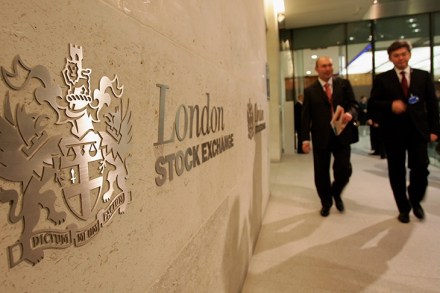
It’s a vivid example of unintended consequences that the swimming-pool builders of southern England should owe so much to Sir Nicholas Goodison, the former chairman of the London Stock Exchange who has died aged 87 and whose obituaries suggested little inclination to frivolity, poolside or otherwise. Head-and-shoulders the most cerebral of the Exchange’s leading members at the turn of the 1980s, he was also one of its most far-sighted and probably, as a noted connoisseur of 18th-century clocks, its most cultured. A traditionalist majority of his peers were content with the City’s clubbable old ways.

Could hydrogen power turn air travel green?

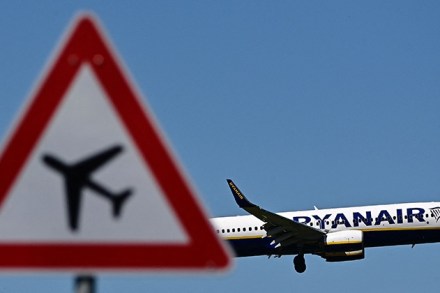
Have you been scanning airline websites for exotic destinations to which your double-jabbed status might allow you to slip away in August? I certainly have, but I’ve ruled out the parts of Canada and the United States that are stricken by record-breaking heatwaves and forest fires — and I’m wondering what impact such extreme climate events will have on the aviation industry as it struggles back to life after the pandemic. Having survived a year of near-total shutdown, I suspect it will now face an onslaught of green rhetoric to which governments — positioning for November’s COP26 climate conference in Glasgow — will be forced to respond.

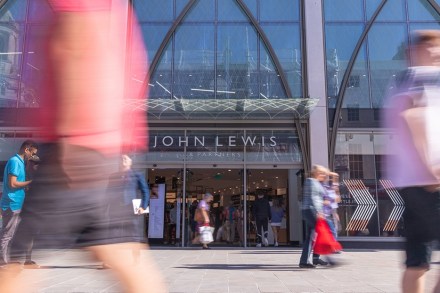
Will a John Lewis home be up Boris and Carrie’s street?

The Financial Times carried a curious story at the weekend about ‘the secretive process to elect the Lord Mayor of London’ being ‘thrown into disarray’ by ‘objections from some City leaders’ to the candidacy, for 2022, of Nick Lyons — who has just been elected as one of the City’s two sheriffs but who happens to be an Irish citizen. Lyons’s unnamed opposers say City rules have always required the Lord Mayor to be a British citizen. The City Corporation, the Square Mile’s local authority, says it has legal advice to the effect that Lyons is not disqualified, EU citizens being permitted to stand in UK local elections.

The Nicola Sturgeon effect on house prices

Nicola Sturgeon depresses me and seems to be having the same effect on Scottish house prices. In a housing market described by departing Bank of England economist Andy Haldane as ‘on fire’, the flames have been rising higher the further away from London — but more or less extinguishing themselves at Hadrian’s Wall. Why buyers are scarcer in Nicola’s domain is a question I’ll leave to our political writers, but the broader picture of soaring home prices across the rest of the UK is an unforeseen pandemic effect that may have painful consequences. Nationwide’s June data shows an annual price-rise bar chart increasing steadily from 7.

Why private equity sharks are shopping at Morrisons

The late Sir Ken Morrison — founder of the eponymous supermarket chain that’s the latest UK target for US private equity — had the blunt manner of the Yorkshire cattle farmer he became in reluctant retirement after he was ousted by his own board. Criticising his successors from the floor at one of his last AGM attendances, he roared: ‘I have 1,000 bullocks… but you’ve got a lot more bullshit than me.’ So I’m sorry he’s not around to accost the suits from the New York firm of Clayton, Dubilier & Rice (and their adviser, former Tesco chief Sir Terry Leahy) on the intentions behind the takeover bid that sent Morrisons’ shares soaring on Monday.

Foreign opportunists are turning Britain into a corporate car-boot sale

The snatching of a 12 per cent stake in BT by French entrepreneur Patrick Drahi, last seen here when he bagged Sotheby’s for $3.7 billion two years ago, could be a good thing if it injects dynamism into the telecoms giant’s late-running plans to install high-speed broadband across the UK. But it’s also part of a wave of fast--moving foreign money hunting undervalued UK assets — which is positive if it fuels capital investment for growth, negative if it makes nothing but fast bucks for private investors. The logic is simple. The private equity fraternity is laden with cash and global in outlook; what it sees in London is an appetising menu of companies trading on average earnings multiples of around 14 times, compared with roughly 23 times in the US.

Suddenly used cars are hot property

Companies should willingly pay tax wherever they generate profits — this column has long argued — because it’s fair they should contribute to the cost of the public services on which all business ultimately relies, and because the reputation of capitalism as a whole is tainted when corporate tax bills are reduced to absurdly low levels by the use of offshore domiciles and spurious royalty payments that most governments lack the willpower to challenge. So I welcome at least one half of the G7 finance ministers’ agreement last weekend on a new global corporate tax regime. The half I’m ready to praise is the proposal that all countries should have the right to tax some of the locally generated profits of the world’s largest multinationals.

Will the new breed of retail investors cash in – or crash out?

‘Feed the ducks when they’re quacking’ sounds like advice from a foie gras farmer — but let’s leave gastronomy till last and focus first on stock market activity. The saying actually comes from Wall Street and means that if investor demand is strong, it’s best satisfied with ample supplies of new stock. What’s wrong with that? Nothing, if the investors understand risk and the offerings are sound. But is that what’s happening in the current retail investment craze on both sides of the Atlantic? Probably not. From its low in March last year, the FTSE 100 index has risen 40 per cent.

Who cares who runs the railways? We just want them to run on time

The long-awaited review of the railways by former British Airways executive Keith Williams chugged past the platform of public debate without creating much stir. Politicos noted that it had become ‘the Williams-Shapps Plan’, indicating an urge on the part of Transport Secretary Grant Shapps, in Tony Blair’s words, to be personally associated with eye-catching initiatives — in this case, especially those that have nothing to do with the issue of whether British holidaymakers will be allowed to fly abroad this summer. But the review’s core proposal — a new public body called Great British Railways that will control tracks, timetables and fares, and contract with private operators to run trains — provoked little controversy.

Is Farrow & Ball’s business model flaking?

The happiest thing that happens in May is the coming into leaf of my long beech hedge. The shift from brown to green symbolises, for me, an annual economic revival — of openings, reopenings and entrepreneurial optimism. This year, after April’s frosts on the end of a dismal winter, it was especially welcome. And as revival collides with new fears of ‘the Indian variant’, I’m clinging to optimism while watching for new-season winners and losers. In that spirit, I’ll make this column a collage of consumer themes. First — though I’m not sure what this symbolises — a friend tells me he celebrated relative freedom by driving to Bicester Village to buy ten pairs of Y-fronts.

The pandemic’s transatlantic divide in executive salaries

‘Consider a temporary cut in executive salaries’ was the Confederation of British Industry’s advice to members at the start of the pandemic. Back then I was gripped by fears of a backlash against capitalism: top pay cuts would indeed be wise, I wrote, not least because ‘sacrifice now is sensible insurance’. Looking at last week’s election results, I needn’t have been concerned about a second coming of socialism. But I’m one of many advocates for responsible capitalism who have long worried about growing disparities between executive and average pay — the key multiple having risen from 50 to 120 over the past two decades — that rarely reflect underlying performance.

waive

To waive or not to waive

From our US edition

Biden’s new-found support for a temporary waiver of COVID vaccine patents raises another fascinating set of questions. World Health Organization chief Tedros Adhanom Ghebreyesus makes the case for a waiver in terms of overwhelming priorities and the inequitable distribution of doses to date — 80 percent to the richest countries. Economic pragmatists add that the faster the whole world is vaccinated, the sooner global trade, including demand for exports from the rich West, will also recover.