Martin Vander Weyer

Martin Vander Weyer

Martin Vander Weyer is The Spectator’s business editor

Bring back apprentices, Chancellor!

The only photo I could find of the invited audience at the Manufacturing Technology Centre in Coventry for John Healey’s first speech as Chancellor was from above and behind, so it wasn’t easy to pick out the apprentices with whom he ‘looked forward to spending time later’. Were they the four youngsters in work gear at the front? Or might they have included several balding blokes in suits, representing older trainees? Whichever, their small number, combined with Healey’s staging in front of a pair of robots, offered a metaphor of the state of UK industrial employment in a week when Jaguar Land Rover (JLR) at nearby Solihull confirmed 4,000 job cuts.

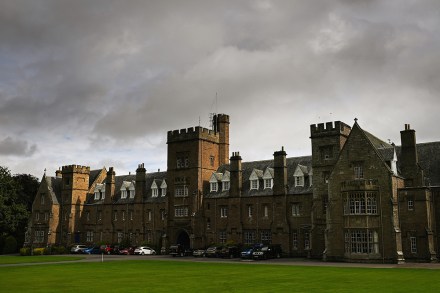
How Glenalmond made me

Early in 1968, when I was just 13, my father came home one evening with a letter in his hand and an uncomfortable look on his face. ‘You’ve won a big scholarship…’ Long pause. ‘…to Glenalmond.’ ‘But you promised I was going to St Edward’s,’ I protested. St Edward’s was the principal school in the scholarship scheme in which I was indeed a big winner. We had been to see its red-brick campus in Oxford and I was braced for my first boarding experience there. But Glenalmond? Where was it anyway? We had to find it in a road atlas, 300 miles away in rural Perthshire.

How to save Middlesbrough

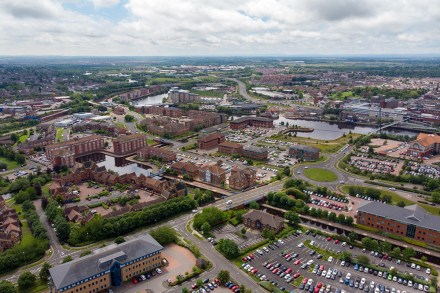
When I wrote here 30 years ago that ‘Middlesbrough, once renowned for building bridges for Sydney Harbour and the White Nile, is now better known as the north-east capital of motorised crime’, I earned a rebuke from the town’s evening paper under the headline ‘Slur in toffs’ magazine’. But I wasn’t wrong – there was an outbreak of ‘ram-raiding’ at the time – and it was Rod Liddle, writing about his teenage years there in the 1970s, who compared the place with Mogadishu. My point is that the current lawlessness in Middlesbrough is nothing new. It’s endemic, it goes back decades, and it gives rise to two potent questions.

The stock market crash is coming

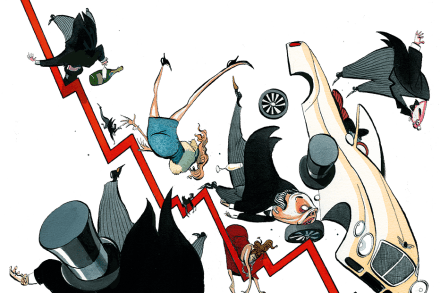
Margaret Thatcher famously told the Commons in 1988 that ‘there is no way in which one can buck the market’. She meant that it would have been pointless to deploy policy tools to try to quell the pound’s then strength against the deutschmark, but she has never been proved wrong in a broader sense. One cannot even tell the market what to think, someone might have added for the benefit of US Treasury Secretary Scott Bessent, before he said that yields on American government bonds ‘don’t reflect the underlying fundamentals’. What yields reflect is what markets collectively think about fundamentals – and what traders do next impacts every aspect of economic life.

Mike Ashley is the hero of the British high street

Adura, a new name to most of us, turns out to be a joint venture between Shell and the Norwegian state energy giant Equinor. It stands ready to develop the Jackdaw gas field east of Aberdeen and the Rosebank field west of Shetland – if, that is, Andy Burnham and his Energy Secretary, Miatta Fahnbulleh, find the political courage to give the two projects the green light. Jackdaw really is a no-brainer. Its peak output, piped through existing infrastructure into the UK gas system, could heat 1.4 million homes.

Farming today: field fires and food price hikes ahead

I report from FTSE boardrooms and City bars, but I also spend time – mostly in Yorkshire, currently in France – among farmers who often feel ignored by the rest of the business media. This week, with three-quarters of England officially in drought and produce imports afflicted by fierce heat across Europe, agriculture is for once top of the agenda. So what has this freakish summer really done to our fields? My northern arable correspondent has never seen an earlier harvest, with ‘barley less than average, oilseed rape excellent, wheat OK on heavy clay but very poor on lighter soils. Slight rises in crop prices won’t compensate for yield reductions, we’ve lost the safety net of direct acreage subsidies – and a single spark from a combine or baler can set whole fields alight.

The fall of AI’s shooting star

Situational Awareness is a hedge fund that has just taken a spectacular dive. Its name was adopted from the title of an essay by the fund’s 24-year-old German founder, Leopold Aschenbrenner, exploring the promises and perils of AI ‘superintelligence’. Many people who thought Aschenbrenner himself was super-intelligent gave him money to invest and, for a brief while, he outperformed their wildest expectations, his novice fund clocking up a 439 per cent return in the first half of this year. But in July it plunged from $45 billion to $10 billion as AI-related stocks tumbled and its entire holding of listed shares had to be sold to raise liquid funds. Now market-watchers are asking whether he’s the harbinger of a wider crash or just an overhyped shooting star.

How to be a truly patriotic millionaire

Patriotic Millionaires UK, led by the former City trader Gary Stevenson and endorsed by Gary Lineker, has ‘100-plus’ members but claims to speak for ‘the majority of UK millionaires’ – doubtful, given that 150,000 homeowners in the south-east of England notionally fall into the seven-digit category. Under the slogan ‘Tax us, we’re proud to pay and here to stay’, the two Garys have offered Andy Burnham a ten-point plan to raise ‘over £50 billion in a single year’.

The cinema is back

The hottest car I ever owned was a 1982 Volkswagen Scirocco GTI in metallic dark green. I once drove it overnight from London to Tuscany with a blind date who never spoke to me again, but that’s another story. My point is that VW built my generation’s chariots of fire and some of us feel more sadness than schadenfreude at what the Telegraph calls ‘the downfall of a German giant’, as the flagship of its nation’s industrial armada contends with multiple impacts of geopolitical and technological change. But I’d say the image of VW ‘speeding towards a precipice as the Chinese move in’ is more than a touch overhyped. It’s a narrative of our era that the West collectively must always challenge.

Count Binface has shown Burnham how to make a manifesto

Count Binface’s manifesto, made for Makerfield and tweaked for Clacton, is a rare point of light in today’s Stygian political landscape. Could there be a more concise satirical takedown than ‘I will cut your taxes and raise everyone else’s’ or a sharper transport policy than ‘Wifi on trains that works; also trains that work’? This weekend offers a last chance for mischief-makers to suggest a matching agenda for Andy Burnham, before the real ragbag of inner-Labour compromise is unveiled over the coming weeks. Here’s my four-point contribution. First, don’t nationalise anything, not even Thames Water.

For true Brits, air con is as foreign as a bidet

A quartet of news stories all point in the same troubling direction. First, easyJet is about to become the latest notable name to leave the London Stock Exchange, following last month’s takeover of Tate & Lyle by a US buyer. The FTSE 250-listed low-cost airline is keen to accept a £5.5 billion offer from Castlelake, a private equity firm that’s also – you’ve guessed it – from the US. Inherent volatility in the aviation business combined with the presence of founder Stelios Haji-Ioannou as a minority shareholder has made easyJet a turbulent long-haul flight for investors. The shares have rocketed since Castlelake came into the picture, so cashing out looks rational – but the predation of our public market by foreign bargain-hunters goes on and on.

The case against al fresco dining

Late in 2020, under semi-lockdown conditions, I viewed an empty flat in the Seven Dials enclave of Covent Garden, a stone’s throw east of Soho. There was no life in the chilly cobbled street. But something told me instantly I had found my next home. ‘This is it,’ I said to the estate agent. ‘How much do I need to offer?’ He raised his eyebrows above his Covid mask. ‘Slow down. You’d spend more time than that buying a new pair of shoes.’  But my mind was made up and I never for a moment regretted the decision.

Storm warnings for Burnham from the weathermen of Basel

Reading the annual economic report of the Bank for International Settlements while lying beside a pool with an Aperol spritz in hand is a challenge I accepted on your behalf. Based in Basel as a hub for the world’s central banks, BIS is always careful in its prose for fear of setting cats among global pigeons. But this year’s bulletin is a serious storm warning, based on four factors that in a worst-case combination could trigger market mayhem. First, inflation driven by Middle East conflict has left oil market imbalances that will take ‘several quarters to purge’, with the risk of further volatility; BIS doesn’t actually say ‘If Trump goes batshit crazier’, but that’s the subtext.

Alan Greenspan and the slow death of independent central banking

The passing, aged 100, of the former US Federal Reserve chairman Alan Greenspan, prompts thoughts about shifting tensions between politicians and central bankers. Greenspan’s 18-year Fed tenure spanned those of presidents Reagan, Bush senior, Clinton and Bush junior. All had reason to thank him for his mastery of markets, even though history now regards him as a key architect of the 2008 crisis, which came shortly after his retirement and was certainly fuelled by his era of easy money and light regulation. And though Democrats occasionally took potshots at him for being a free-market right-winger at heart, few seriously accused him of Republican partisanship and no one challenged the abiding value of his institution’s independence.

Brexit was a huge opportunity shamefully mishandled

The Damascene moment in my personal Brexit journey came not when my pen hovered over the referendum ballot on 23 June 2016, but a month earlier. In Amsterdam for a British commercial property jamboree, I was about to speak on a panel with the pro-Remain pundit Steve Richards and the ultra-federalist Belgian MEP Guy Verhofstadt. ‘What you need here is a tub-thumping pro-Leave rant,’ I told the organiser. So that’s what I attempted, including some low jibes at the glowering Belgian, who for comic effect I claimed was my cousin. Then I called for an out-or-in show of hands and lost it (this was an audience reliant on European investors) by roughly 500 to five. Afterwards I thought: did I really offer a blueprint for freedom and prosperity or was that just undergraduate knockabout?

No, minister: investing in tech ventures isn’t your job

To the London Stock Exchange (LSE) for a ‘scale-up capital’ circus in which 18 ambitious tech ventures had ten minutes each to pitch to potential investors: everything from hydrogen fuel-cell cars to affordable advertising design, ‘dark pool’ forex trading and AI-driven geopolitical forecasting. The sponsor was the Worshipful Company of Entrepreneurs, which ranks 112th in City livery precedence behind all manner of defunct medieval trades but, on this evidence, punches above its weight in promoting its modern cause. A dearth of risk capital for British innovators has driven far too many in recent years into the hands of foreign buyers.

Can we trust Palantir?

Best not to say too much about Albert Manifold, who was ousted as chairman of BP last week after only eight months in post over ‘governance oversight and conduct issues’. Manifold called the board’s allegations against him ‘lies’ and writs may be expected to fly. But the broader question is why a 117-year-old company built on long-term collegiate strategy-making has become incapable of holding a stable leadership team together from one year to the next. Bernard Looney was chief executive from 2020 until he resigned in 2023 after allegations that he misled BP’s board over relationships with colleagues. His successor, Murray Auchincloss, lasted less than two years before being replaced by Meg O’Neill, headhunted from Woodside Energy in Australia.

The Spectator’s caught in the EU crosshairs

Is the flotation of Elon Musk’s SpaceX venture on the US Nasdaq exchange a beacon for the future of earthly capital markets and interplanetary relations, or just bonkers? The answer is it’s both, as well as being a stratospheric ego trip for Musk himself, who according to the prospectus will not only retain 85 per cent of the company’s voting rights but will also be awarded an extra billion shares if it succeeds in establishing ‘a permanent human colony on Mars’. In every sense, like Star Trek’s USS Enterprise, this spaceship is heading where no man has gone before. On the positive side, SpaceX’s Starlink satellite internet constellation, with ten million subscribers, is already profitable.

Manchester won’t raise a statue to Andy Burnham

Already heard enough of ‘Is Manchesterism a thing and did Andy Burnham invent it?’ I’m afraid you’ll hear a great deal more between now and the Makerfield by-election – and long afterwards if Burnham wins the seat and the subsequent Labour leadership contest. So here’s a reminder that he defined Manchesterism in an interview last year as ‘consensual, business-friendly socialism that seeks to retake public control of all essential services’ – though in nine years as Greater Manchester’s mayor he achieved that latter objective only to the extent of imposing integrated fares and timetables on privately run buses. My own definition of Manchesterism, in response to his, was ‘manoeuvring shamelessly for power on the strength of other people’s achievements’.

How private equity changed the world

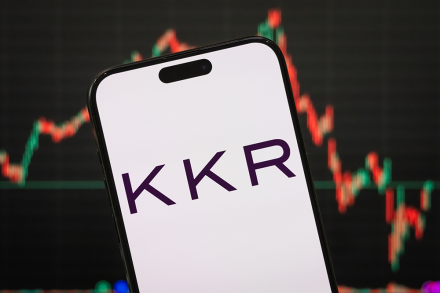
The 50th birthday of New York private-equity giant Kohlberg Kravis Roberts – founded with $120,000 by the cousins George Roberts and Henry Kravis and now holding $758 billion of assets under management – is a moment to ask whether the modus operandi the firm pioneered has been good or bad for the world. Private-equity buyouts of underperforming public companies have certainly been a catalyst for sharper corporate performance across every western economy. But with what impact on society? Some buyouts also provide cover for ‘sin’ businesses that harm the planet or deny workers’ rights. KKR itself will never live down the book title Barbarians at the Gate, referring to its ruthless 1988 takeover of RJR Nabisco.