

Adura, a new name to most of us, turns out to be a joint venture between Shell and the Norwegian state energy giant Equinor. It stands ready to develop the Jackdaw gas field east of Aberdeen and the Rosebank field west of Shetland – if, that is, Andy Burnham and his Energy Secretary, Miatta Fahnbulleh, find the political courage to give the two projects the green light.
Jackdaw really is a no-brainer. Its peak output, piped through existing infrastructure into the UK gas system, could heat 1.4 million homes. Without it, assuming renewables can’t replace gas for many years ahead, we’ll buy more Norwegian gas from adjacent fields – or import LNG from the Gulf that will emit significantly more carbon over its lifetime, even including the end-use combustion which a Scottish court ruled last year had been omitted from a previous bid to open the two fields.

Rosebank’s objectors call it a greater offence to the planet because its reserves include oil that would be sold internationally rather than contributing to UK energy security; in fact, its 69,000 barrels-per-day output would be de minimis in global terms. But these fields would together contribute billions in tax revenue and support thousands of good jobs. Not to approve either, or the weasel compromise of Yes to Jackdaw but No to Rosebank, would be to set aside economics, science and common sense in favour of a cowardly wave to Labour’s Miliband tendency. To justify a refusal on the climate implications of an unusually hot summer would be an insult to the public’s intelligence. Come on, Prime Minister, show us you’re capable of serious decision-making.
Our high-street hero
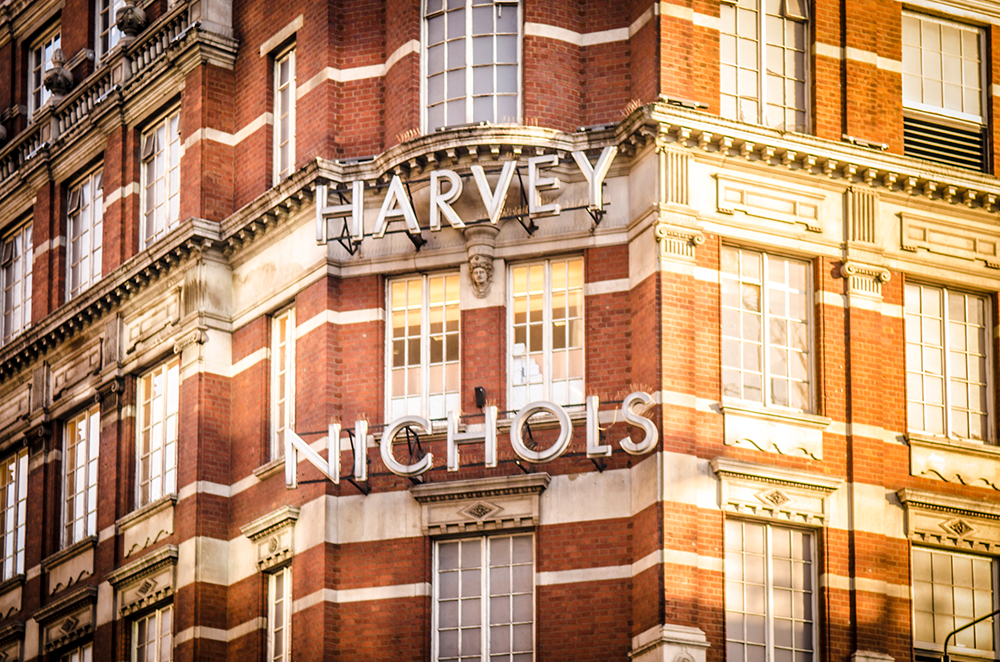
This column has long been a cheerleader for the Sports Direct tycoon Mike Ashley as a hero of the embattled British high street. So I’m pleased to see his master company, Frasers Group, stepping in to rescue the failing Harvey Nichols store chain out of administration and adding it to a portfolio that already extends from Evans Cycles to Gieves & Hawkes.
Founded in Knightsbridge in 1831, Harvey Nichols was last sold in 1991, by Burton, to the Hong Kong luxury retailer Dickson Poon. Its expansion into glossy malls in Leeds and later Birmingham, Bristol, Edinburgh and Manchester made it a beacon of the pre-Covid consumer economy. But its cumulative losses for the past six years, at £190 million, exceeded its entire revenues for the year to March 2025, at £185 million. The 2021 abolition of VAT-free shopping for foreign tourists was a particularly hard blow.
Frasers was at first frozen out of the search for a new owner, amid concerns expressed by some of the snootier luxury brands sold in the stores. But Ashley’s crew emerged as the only viable bidder with a deal valuing the chain at a knockdown £40 million – and job losses are highly likely to follow, attracting the usual flak for the burly billionaire who has never tried to make friends in the media. In the current climate, Harvey Nichols’s best hope of survival must be a downshift in style towards what domestic shoppers can afford.
Long ago I advised Ashley to shift his own image upmarket with ‘a trip to Savile Row and a bid to buy Harrods from the Qataris’. My suggestion for changed times is that he fills the display windows of his new Knightsbridge flagship with dummies of himself in a range of polyester tracksuits, raising two fingers to the Fayed-haunted Middle Eastern emporium down the road.
A bet on Reddit?
US markets are far more entertaining than the candlelit chapel of rest which is the London stock exchange. The latest name to be inducted into the S&P 500 index of leading US shares is Reddit, the social media platform that hosts chat forums on every subject under the sun, including share tips, and is visited by 130 million users per day. Founded by college roommates in 2005 and listed in 2024 with a market value of $9.5 billion, the business made its first annual profit last year, mostly from advertising revenues. But because its content is created by real people (give or take an army of Russian bots) its shares have stumbled during the AI boom – while advocates hasten to point out that AI developers pay to use its chat streams to train their models to think human.
Good for a long-term bet? However much brainwork is overtaken by AI, the mass of humanity surely won’t lose the appetite it has recently acquired for swapping opinion, rumour and insult online, any more than we’ll stop watching violent screen drama. And by the way, $1,000 invested in Net-flix on the day it joined the S&P 500 in 2010 would be worth $30,500 today.
Truffle trouble
French local newspapers know their readers’ priorities. La Dépêche du Midi went large this week on the prospect of a disastrous truffle harvest after the third dry summer in a row, made worse by scant rain this May when the mycelium fibres of the aromatic tuber melanosporum most needed moisture to start growing. Many truffle orchards may never recover from a disruption of the delicate link between nascent fungi and the green oaks’ roots among which they thrive –and at €800-€1,500 per kilo in a billion-euro annual trade, that’s not (as it were) an outcome to be sniffed at.
It’s too early to tell if there’s a worthwhile haul awaiting the truffle hounds this autumn. But according to Jean-Jacques Fourès, president of a local trufficulteurs’ association, so far ‘on ne voit rien du tout’. Inferior Chinese tuber indicum (once regarded as pig food) will continue to be passed off in some French wholesale markets as the great delicacy from Périgord. But the climate-change silver lining in this story is that the real thing can now be cultivated in Monmouthshire and on the Isle of Bute. If you find a truffle-scented product on your holidays, take it home and start retraining your labrador.



Comments