Mark Solomons

Mark Solomons is a former industrial correspondent at the Sun.

In praise of Michael Parkinson

Different generations will have different memories of Sir Michael Parkinson, who has died aged 88. If you’re a little older, you’ll remember that Parkinson led a golden age of chat shows when they were about the guests rather than the host. He was a master of the art and, though famous, never came across as a celebrity interviewing other celebrities. And never for the sake of a pre-prepared one-liner to get a cheap laugh. He would ask a question then sit back and let the interviewee answer, at length if need be He would ask a question then sit back and let the interviewee answer, at length if need be.

In praise of Boris’s nemesis: the great crested newt

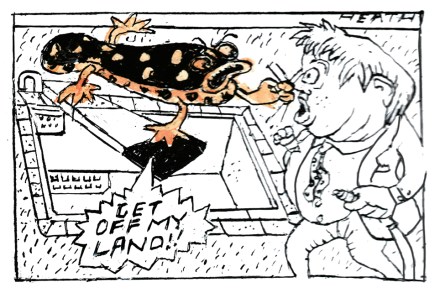
Britain is not blessed with an abundance of amphibians. There are just seven native varieties. The loss of ponds – whether in gardens, farmland or in areas earmarked for development – has seen a dramatic decline in habitat for one of the seven in particular, the great crested newt (or GCN for short). Its rarity means it is protected by law, making it an offence to kill, injure or capture one, or damage its habitat. That is why for construction firms, road builders and, most recently, Boris Johnson, no newts is good news. The discovery of GCNs at Johnson’s Oxfordshire pile meant planning permission for a swimming pool was refused.

Move over, Lineker: quiz shows need a professional

Your starter for ten: who on earth thought it a good idea to hire Ross Kemp to present a quiz show? Or Gary Lineker? Or Lucy Worsley? And don’t get me started on Amol Rajan. Back in the mists of time, the general rule was to hire either specialist  – Nicholas Parsons and Robert Robinson for instance, who had cut their teeth on similar roles before moving to TV – or popular stand-up comics such as Bob Monkhouse and Bruce Forsyth who knew how to ad lib. Now the television commissioners seem intent on ramming square pegs into round holes.

Why can’t football pundits be more like cricket commentators?

For the armchair sports fan, there is some reassurance as the sun sets on another fabulous Ashes contest: the football Premier League season will soon begin. But while the football is certain to be a match for the breakneck cricket we've enjoyed over recent weeks, the commentary that runs alongside it won't be. Cricket fans enjoy analysis from the erudite, intelligent and calmly explained voices of test match commentators. Football supporters must put up with the frenetic, confrontational and frankly banal screeching of the sport's equivalent. The change from Bazball to football on our screens is most noticeable not for what goes on pitchside but how it is described in the commentary box and the studio.

Should Oppenheimer have been played by a Jewish actor?

Cillian Murphy is a blue-eyed Irishman with cheekbones you could slice salt beef on but, sorry David Baddiel, as far as I’m concerned he makes a great Oppenheimer. Baddiel has once again opened the argument over ‘Jewface’ – non-Jewish actors playing Jewish characters – as Christopher Nolan’s epic takes cinemas by storm. He questions whether the film might have been more powerful had the many Jewish physicists working on the Manhattan Project to create the atom bomb, including Oppenheimer himself, been played by Jewish actors. 'Another day, another film/TV show/play in which a famous Jew is played by a non-Jew,' Baddiel writes in the Jewish Chronicle.

Why don’t more tourists visit Ethiopia?

Standing on a cliff edge looking at where the Blue Nile is just a trickle, watched by a gelada baboon on a distant rock and staring over miles upon miles of some of the most beautiful countryside I’d ever seen, one thought struck me: why is there hardly anyone else here? Ethiopia is stunning to look at, once you get out of the capital, Addis Ababa. It offers history, culture, architecture, religion and everything in between. Yet when you tell anyone you’re going there the most common response is: ‘Really? Why?

Readers of Ulysses have a right to be smug

Happy Bloomsday everybody. Today, 16 June, is the day on which the events of James Joyce’s epic novel, Ulysses, is set and the anniversary is celebrated every year by fans, scholars and people who simply want to look clever. Millions of people either cite the tome as the greatest piece of literature ever written, or as the biggest load of pretentious drivel: so complicated that you can’t get past page 46 before giving up. Hardcore devotees to the 1922 work based on Homer’s Odyssey, will even follow the route taken by its central character, Leopold Bloom, through Dublin from a Martello Tower on the coast via a funeral and a selection of pubs and bars and the red light district of this fair city.

West Ham’s rivals should applaud their Europa Conference League victory

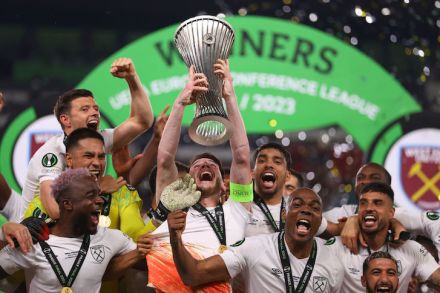
Only the most churlish football fan – and there is a lot of them around these days – would deny West Ham supporters their moment in the sun after last night’s impressive triumph in the bizarrely named Europa Conference League, their first trophy for 43 years. As a Spurs fan growing up in in the West Ham stronghold of Ilford, and having attended the same secondary school as Trevor Brooking, former Hammers manager John Lyall and the infant school that later produced Paul Ince, it was hard to avoid the Claret and Blue hordes. For a while in the 60s, when both clubs were at their peak, Bobby Moore lived nearby, in the same road as Terry Venables as it happens. As kids, we would bump into him in Gants Hill.

The legacy of Chaim Topol

In 1969, for my seventh birthday, I was taken – dragged, probably – ‘up west’ to the theatre to see a musical. As I recall, it didn’t fill me with joy to be going, but it turned out to be fantastic. The songs, the acting, the dancing: it was great fun. Then we went for pasta in Soho, which was also a special event in those days. More importantly, though, I think it was the first time I became truly aware of a vital part of my identity: that I was here because decades earlier my great-grandfather had arrived on these shores, driven out of his native Russia by a pogrom, the ethnic cleansing of Jews across that vast country.

The joy of non-league football

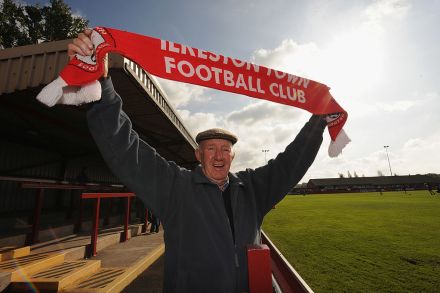
On a cold Tuesday night, as the wind whipped in from the North Sea, I joined 220 hardy souls to watch a game of football. Less than a mile away from the Sizewell nuclear plant on the Suffolk coast but light years away from the lurid lights of the Premiership, Leiston FC were playing Ilkeston Town in the Pitching In Southern League – Premier Division Central. As the old joke goes, the attendance was so small it would have been easier to name the crowd changes than the team changes. Welcome to non-league football – in this case the seventh tier of the game’s pyramid system of promotion and relegation.

The horror of gastropubs

Last week saw the publication of the 14th annual Estrella Damm Top 50 Gastropubs of Great Britain, a list consumed by middle-class foodies as eagerly as a £27 fish finger sandwich served on a piece of slate, washed down by a non-alcoholic cocktail in a jam jar. Couples scroll through former drinking holes transformed into Michelin-starred restaurants with ‘wacky’ names such as the Unruly Pig and the Scran and Scallie, noting the ones they have been to and others to put on a gastronomic bucket list – the bucket probably being what their sweet potato fries are served in. It’s a far cry from George Orwell’s 1946 essay ‘The Moon Under Water’.

The unstoppable march of the celebrity author

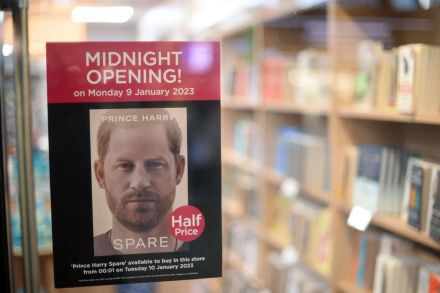
The anticipation surrounding the release of a certain memoir today obscures a bigger question about the changing face of our publishing industry. Why does every Tom, Dick and Prince Harry think they can write a book these days? Figures last week showed the number of independent bookshops in Britain reached a ten-year high in 2022, thanks to a reading frenzy fuelled by pandemic lockdowns, the mushrooming of book groups and, perhaps most of all, the incessant, unstoppable march of the celebrity (not to mention royal) author. It is good news that there are now more than 1,000 independent bookshops in Britain and Ireland, the culmination of six years of growth at a time when other retail sectors have taken a battering.

The problem with Jeremys

Why is Jeremy Clarkson in trouble so often? Is it because he often appears arrogant, entitled or untouchable? Or is it for a much simpler reason: he’s called Jeremy? This week, in a column for the Sun, he suggested a rather unsavoury Game of Thrones-style punishment for the Duchess of Sussex. The article prompted 20,000 complaints to Ipso – more than the press regulator received in the whole of last year – and led to 64 MPs signing a letter of complaint to the paper’s editor. Clarkson has made a grudging non-apology and persuaded the paper to remove the article from its website, but unsurprisingly this is unlikely to satisfy the lynch mob already digging out those pitchforks ready to march on his well-publicised farm.

Operation Turtle Dove: can these birds be saved?

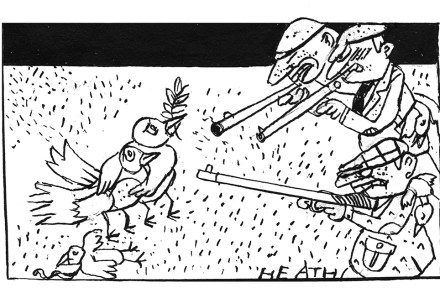
With the exception of turkeys and geese, turtle doves are perhaps the birds most associated with this time of year. They are, of course, the second gift in The 12 Days of Christmas and they also feature in the nativity story – in the Gospel of Luke, a pair of turtle doves are sacrificed at the temple at Jesus’s circumcision. From Roman mythology through to Vaughan Williams, turtle doves have long been symbols of love and devotion in western culture. According to Shakespeare, ‘a pair of loving turtle doves… could not live asunder day or night’. Yet sadly the chances of seeing a pair today are dwindling. Since 1966, Britain’s turtle dove population has dropped from 140,000 pairs to just 2,100.

For my 60th birthday, I’m taking up smoking

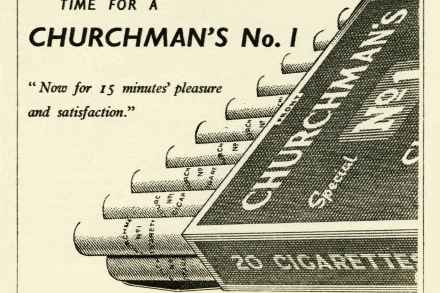
Next month I will be 60. It’s an unwelcome landmark birthday as far as I’m concerned but they say that taking up a new hobby or pastime is a good way to combat the advances of old age. So I’ve decided to take up smoking. It was either that or something physical such as cycling or jogging or walking football but, to quote Ronnie Barker in Porridge: ‘What, with these feet?’ Besides, older cyclists look ridiculous, serious runners tend to look ten years older than they really are and as for walking football… what’s the point? No, smoking is easier, more pleasurable, more relaxing and even allows me to multi-task. I can enjoy a Camel Blue while birdwatching, walking the dog or listening to Northern Soul – all of which I also plan to do more of in my sixties.

Hornets aren’t the villains they’re made out to be

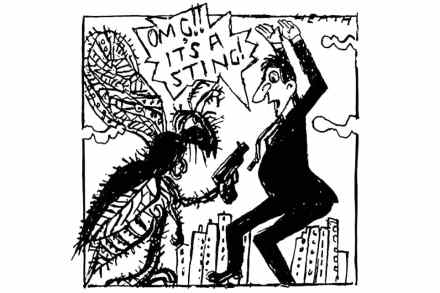
There’s surely not a more despised creature in Britain than the hornet. They have long been viewed as yellow jacketed killers: wasps on steroids with Hannibal Lecter tendencies. Unlike bees, a member of the same insect family, you’d be hard pushed to find a friendly portrayal of a hornet (with the exception, perhaps, of Watford FC’s mascot). Yet hornets are misunderstood villains. Like bees, they are important pollinators. What’s more, the fact that hornets are carnivores (bees are not) means they feed on many of the species of caterpillars and flies that destroy plants and crops. One of their main food sources is the nectar from ivy.

The secret of Mick Lynch’s success

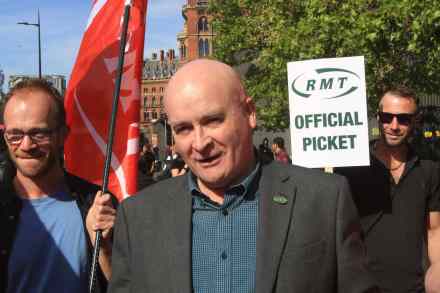
There are plenty of losers from this week’s railway strikes, not least the legions of commuters who found themselves stuck. But one clear winner is emerging: RMT boss Mick Lynch. Lynch has been feted for his straight-talking media appearances and composure under fire. He’s clever, witty and funny. It also helps that he has made fools out of some of those media darlings some British viewers love to hate. It’s surely only a matter of time before he pops up on Have I Got News For You. But perhaps his greatest asset isn’t what he offers but who he isn’t. What sets him apart is how different he is from Bob Crow, the firebrand former general secretary of the RMT. Crow was, famously, the combative last but one leader of the RMT.

In praise of Mick Lynch

The RMT union boss Mick Lynch is currently dominating TV screens and social media, making mincemeat out of politicians and broadcast interviewers alike. Hapless Tory MPs that attempted to recite pre-rehearsed cliches and dodgy statistics have been gunned down by the mature, considered and, yes, gruffly charming manner of Lynch. In a previous life, I had the unenviable job of being the Sun’s industrial correspondent, when such jobs existed. It was the late 1980s and early 1990s when unions were important red-top fodder for the very simple reason that, no matter how militant the organisation, their members read the tabloids even if they disagreed with the politics.

The trouble with being teetotal

I’m 58 years old and have spent 40 of those years as a journalist and yet there is something that shames me, that makes me inferior to so many of my colleagues and, indeed, many of my friends and family outside the world of journalism. I'm rubbish at drinking.  Instead of being wasted on booze, booze is often wasted on me. I've never had a Lost Weekend, never woken up tied to a lamp-post with a traffic cone on my head, never got a tattoo while under the influence. I've been to Magaluf with the lads and Las Vegas on a press trip. I've been to stag dos and TUC conferences and away days with both Spurs and England football fans. And, embarrassingly, I can remember every moment of every one of them.  It's not that I can't get drunk.

Will Sizewell C see off the avocet?

There are many reasons why birds disappear — and why they return. The avocet, however, is probably the only one that owes its resurgence to the Nazis. After a 100-year hiatus in Britain, this elegant black and white wader reappeared after the second world war. Four pairs were found in Minsmere nature reserve and another four in Havergate Island, both along the Suffolk coast. These areas had been flooded to prevent a German invasion, making them ideal nesting grounds. The avocet had taken flight from parts of Holland damaged by the Nazis, travelling 100 miles or so here across the North Sea. Amid headlines about the Cold War and the H-bomb, the news of returning avocets was greeted with much fanfare.