Mark Nayler

Can David Lammy solve the Gibraltar dispute?

From our UK edition

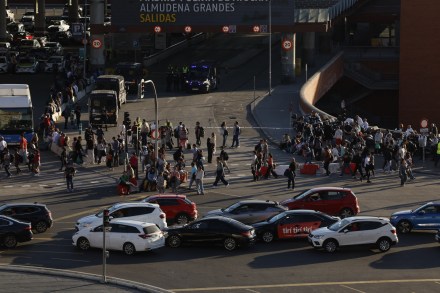
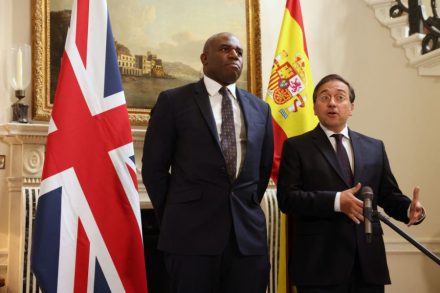
The British government is preparing to lodge a formal complaint with Spain over Gibraltar. Spanish military aircraft have twice flown over the Rock in the past ten days: once on 27 September, reportedly while a commercial British Airways flight was taxiing on the local airport’s runway, and then again on 30 September. These flyovers (thought to have been by Spanish Air Force cargo aircraft) might seem harmless – but the British government disagrees. The timing of the flyovers couldn’t be worse. They come shortly after the latest round of talks in Brussels between Spain, Gibraltar, the UK and EU about the Rock’s post-Brexit status.

If Spain doesn’t impress you, what will?

From our UK edition

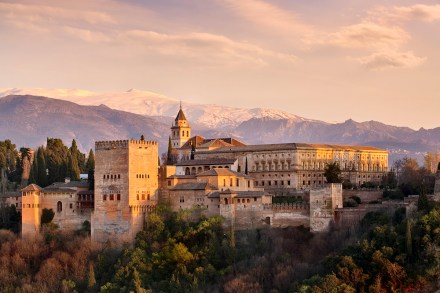
As a Brit who has lived in Spain for almost a decade, I must take issue with Zoe Strimpel’s recent article arguing that it’s the ‘worst country […] in western Europe’, at least as a holiday destination. My four years in Granada and almost five in Malaga have shown me that it’s the best place in western Europe to live – but not because of anything to do with ‘progressive’ politics or a Gen-Z dating trend. I find it hard to imagine what city would appear beautiful and romantic to someone who’s unmoved by Granada, Cordoba, or Seville The ‘buzzing terraces’ that Strimpel praises for distracting customers from horrible tapas aren’t just for tourists – they’re an integral part of the Spanish lifestyle.

There’s nothing wrong with a Japanese flamenco dancer

From our UK edition

Japanese dancer Junko Hagiwara has become the first non-Spaniard to win one of Spain’s most prestigious flamenco competitions. Yet when Hagiwara went on stage to collect her prize, in La Union in the southeastern region of Murcia, not everyone welcomed her victory. As well as applause, there were whistles and boos from the audience. The Telegraph reported that some of her fellow (Spanish) competitors thought the jury’s decision was a ‘fix’, designed to boost the Cante de las Minas festival’s international reputation. Francisco Paredes, chairman of the jury, has dismissed the claim as ‘ridiculous’ and ‘completely false’.

Catalonia can’t escape the curse of independence 

From our UK edition

In a low-key ceremony in the Catalan parliament on Saturday, Spain’s former health minister Salvador Illa was sworn in as the new president of Catalonia. Despite coming first in the regional elections on 12 May, Illa’s Socialists failed to secure a majority and have spent the last three months in cross-party negotiations. They finally struck a deal with the pro-independence ERC, which came third in the May election after losing 13 of its 33 seats.  Illa is the first unionist politician to become president of Catalonia since 2010, so there has been a lot of talk in Spanish media of a ‘nueva etapa’, or new era – a chance for Catalans to move on from the independence-related upheavals of recent years.

The problem with pintxo

From our UK edition

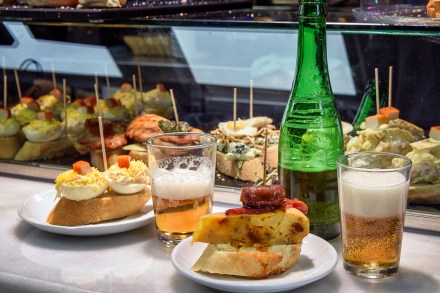
Visiting San Sebastián last month, I was reminded of the joys and hazards of grazing. The speciality in this chic city, and throughout Spain’s northern Basque region, are pintxos – miniature open sandwiches topped with everything from chorizo and padrón peppers to anchovies and baby eels. Pintxoing, as I’ll call it, becomes almost like a game in San Sebastián’s labyrinthine Old Town, in which the regional delicacies are colourfully displayed in bar-top glass cabinets. The goal is to eat enough pintxos to keep hunger at bay, but not so many that you don’t have room for one more. You’re never starving, but the flipside is that you’re never entirely satisfied, either.

Meet the pianist who actually makes recitals fun

From our UK edition

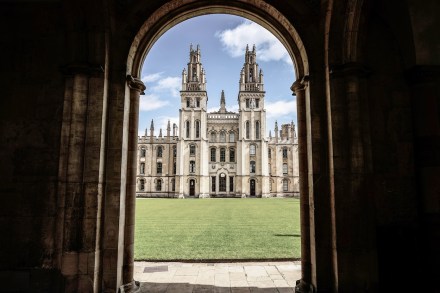
No matter how much you love music, going to a piano recital can be an uncomfortable experience. A sombre-faced pianist plays in an atmosphere of hushed reverence, perhaps swaying and grimacing to simulate profundity. If a sonata is performed, outbreaks of guilty coughing will occur throughout the audience between movements. It’s an unwritten rule that clapping’s only permissible at the end. When the concert’s over, the pianist walks off stage after a couple of stiff bows, without ever having said a word, and everyone can finally breathe again.   The annual series of summer piano recitals performed in Oxford by British pianist Jack Gibbons is nothing like that.

The thrill of the Pamplona bull run

From our UK edition

The first time my friend Rob and I experienced Pamplona’s San Fermin festival was in 2017. Held every year from 6-14 July in the northern Spanish city, it’s most famous for its bull runs, or encierros: at 8 a.m., on eight consecutive mornings, the six bulls destined for that evening’s bullfight, as well as six docile oxen to guide them, run for almost a kilometre through Pamplona’s oldest quarters, accompanied by thousands of thrill-seeking human participants known as mozos.  Rob and I have now run with the bulls of Pamplona four times – once that first year, once in 2018 and twice at last year’s festival (it was cancelled in 2020 and 2021 because of Covid). Next week we’ll be meeting in Pamplona again, to run our fifth and sixth encierros.

The future looks bright for Spanish bullfighting

From our UK edition

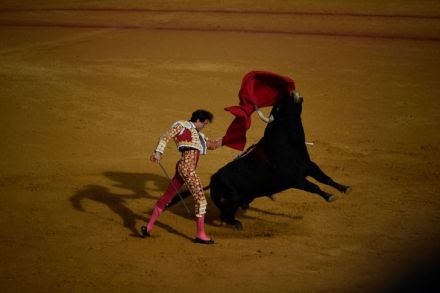
In one of my local bars, in the Andalucian town of Antequera, there's a poster on the door advertising bullfighting classes for kids. Aged between about ten and fifteen, I see these students practicing every week in the bullring, taking turns to play the bull by pushing around a pair of wooden horns attached to a single wheel – a specially-made device that looks like a weaponised unicycle. A young bullfighter was awarded one of the animal’s ears for a good performance Some of these kids, no doubt, dream of bullfighting glory, of becoming one of a very small number of bullfighters, or toreros, who are paid tens of thousands of euros per bullfight. Others, perhaps, are not so keen, and are pushed into the lessons by family members who once dreamt of becoming toreros themselves.

Luis Rubiales deserves his day in court

From our UK edition

Luis Rubiales, the former president of the Spanish football federation, is going to court for ‘The Kiss’. It was confirmed this week that Rubiales will stand trial in February 2025 for kissing Jenni Hermoso on the lips during the medal ceremony after Spain won the women’s football World Cup last August. Hermoso maintains the kiss was non-consensual.  Rubiales is now routinely described in articles as ‘disgraced’ Prosecutors are requesting that Rubiales pay Hermoso 50,000 euros (£42,000) in compensation and go to prison for two-and-a-half years: one year for the kiss – which, if not consensual, counts as sexual assault under Spanish law – and another 18 months for allegedly coercing Hermoso afterwards to say that it had been consensual.

The establishment triumphed in Spain’s elections

From our UK edition

Spain’s Conservative Popular party (PP) came first in Sunday’s EU elections, upping its share of seats in the European parliament from 13 to 22 – with 34 per cent of the vote. The Socialists (PSOE), represented by energy minister Teresa Ribera, avoided the drubbing many had predicted, coming second with 20 seats.   Between them, the PP and PSOE have won enough seats to dominate smaller parties for the duration of this EU parliament A large gap separates these two frontrunners from smaller left- and right-wing groups, Catalan separatists and a curious new addition to Spain’s political scene. These parties secured between two and six seats in the new EU legislature. The real victor on Sunday, then, was the Spanish establishment.

Can Begona Gomez get a fair trial in Spain?

From our UK edition

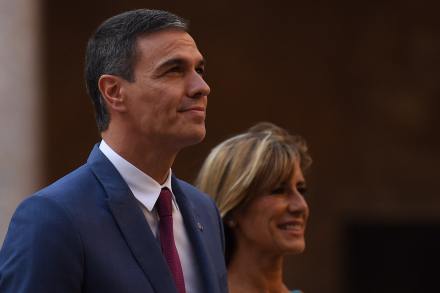
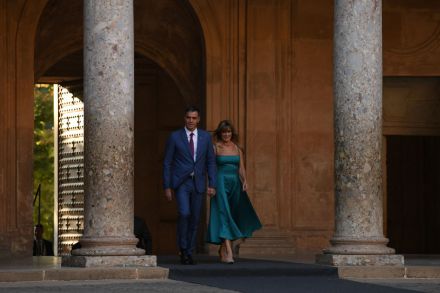
Begona Gomez, the wife of Spain’s Socialist prime minister Pedro Sanchez, has received a court summons for 5 July, in connection with a corruption probe into her business activities. The summons follows the launch of a preliminary investigation into Gomez back in April, and relates to ‘the alleged offences of corruption in the private sector and influence peddling’, according to the court. Sanchez took several days off when the inquiry was launched at the end of April, apparently to consider resigning – a stunt that disappointingly resulted in him deciding to stay on.

Catalans appear to be growing tired of independence

From our UK edition

Spain’s Socialist party (PSOE) won crucial elections in Catalonia over the weekend, beating a pro-independence bloc whose support has been declining steadily over the last few years. The Socialists were led by Salvador Illa, who served as Spain’s health minister during the pandemic. The party will now have the first shot at forming the region’s next government, despite being 26 seats short of a majority. The negotiations are likely to last for weeks, and may have an impact on the national administration led by Pedro Sanchez, which itself is heavily reliant on the support of Catalan separatists. Sunday’s election was a de facto vote on Catalan secession, which has been the most divisive issue in Spanish politics for over a decade.

Why hasn’t Pedro Sanchez resigned as Spain’s prime minister?

From our UK edition

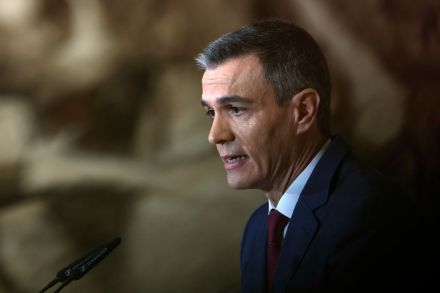
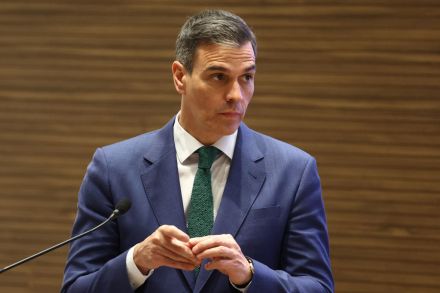
Pedro Sanchez has decided to stay on as Spain’s Socialist prime minister, despite announcing last week that he was considering resigning. Sanchez suspended his official duties for a few days to make the decision, following the launch of a judicial investigation into his wife, Begoña Gomez, for corruption and influence-peddling. (Sanchez has said the allegations are ‘as scandalous in appearance as they are non-existent.

What’s going on with Spain’s Golden Visas?

From our UK edition

Pedro Sanchez, Spain’s Socialist prime minister, wants to abolish the country’s ‘Golden Visa’ scheme, according to which non-EU citizens automatically receive residency for three years if they purchase property worth at least €500,000 (£429,000). Sanchez hopes that doing so will help tackle the cost-of-living crisis and soaring rental prices in the country’s biggest cities. It’s unlikely to do either. It might, however, have unintended positive effects in other areas.  Golden Visas were introduced by Spain’s then-Conservative government in 2013, as a way of stimulating foreign investment after the economic crisis. They can also be acquired by non-EU citizens who invest at least a million euros (£855,000) in Spanish shares or two million euros (£1.

Why Spaniards celebrate April Fool’s Day in December

From our UK edition

On 28 December 1993, after getting off a flight from Barcelona at Madrid’s Barajas airport, 23 year-old actress Maribel Verdu was suddenly surrounded by journalists and photographers. The reason for their frantic curiosity became apparent to Verdu when she was handed that day’s copy of a Spanish newspaper, in which a full-page feature claimed she was ‘implicated’ in the separation of Princess Diana-Prince Charles. As a stunned and incredulous Verdu sat in the press room, cameras flashing in her face, the assembled hacks demanded details about her rumoured affair with the English royal, who had announced his split from Diana the year before.

Could corruption bring down Spain’s government again?

From our UK edition

Just four months into its second term, Spain’s Socialist-led government is already mired in corruption allegations. The latest scandal emerged this week and focuses on the wife of prime minister Pedro Sanchez, Begoña Gómez.  Gomez is alleged to have had secret meetings with the management of Air Europa, Spain’s third largest airline, in late 2020, just before it was bailed out with a €475 million aid package by her husband’s leftist government.   The Conservative Popular party (PP) has wasted no time in capitalising on this.

Spanish soldiers have exposed the flaw in gender self-ID

From our UK edition

Dozens of male Spanish soldiers have legally changed their gender, allegedly to claim benefits intended for women. In doing so, the soldiers have exposed the vacuity of Spain’s so-called ‘trans law’, passed last year by its Socialist-led government. Under Spain’s self-ID law, approved in February 2023 despite objections from the conservative opposition, feminist groups and elements of Spain’s ruling leftist coalition, anyone over the age of 16 can change their legal gender without psychiatric or medical evaluation. According to the Daily Telegraph, which reported the story, soldiers in Spain’s north African enclave of Ceuta are already taking advantage of its loopholes: 41 men have switched their legal gender to female, and four of have also changed their names.

What Pedro Sanchez should really be apologising for

From our UK edition

Spain has approved a pointless amendment to its constitution, replacing the word ‘handicapped’ with the phrase ‘persons with a disability’. Not only did Socialist prime minister Pedro Sanchez, who never says sorry for genuine oversights, apologise for the delay in making this happen, but he also announced that he regards himself as having thereby paid a ‘moral debt’ to the country. The notion that this semantic tweak represents major constitutional change, let alone some kind of moral progress, is risible. Is this what is really wrong with Spain at the moment? Is this – finally! – the apology from Sanchez that’s been so long coming?

The unlikely new kingmakers in Spanish politics

From our UK edition

Depending on how you look at the result of yesterday’s general election in Spain, either everyone won or no one won. It had been called five months early by outgoing Socialist prime minister Pedro Sanchez, who hoped to block a resurgent Spanish right after its emphatic victories in regional elections on 28 May. The vote drew 70.4 per cent of the population to the polls, 4.2 per cent more than in 2019. This was a surprisingly high turnout for the middle of summer, when a lot of Spaniards are either on holiday or sheltering from the intense heat.   Prolonged political freezes, sleep-walking governments and prop-up arrangements have become the norm The Conservative Popular party (PP) came first, winning 33.

How to survive summer in Andalusia

From our UK edition

Early on in his biography of the novelist Kingsley Amis, Zachary Leader quotes a hilariously misanthropic letter Amis wrote to the poet Philip Larkin, one of his closest friends. Amis, at the time in his early thirties, was complaining about a three-month stint he and his family – including his son Martin, then five years old - spent abroad, as required by the terms of the Somerset Maugham Prize, which he won in 1955 for his first novel, Lucky Jim (Martin would also win it in 1973 for his debut, The Rachel Papers).