Mark Nayler

Real Madrid and Barcelona go to war over their links to Franco

From our UK edition

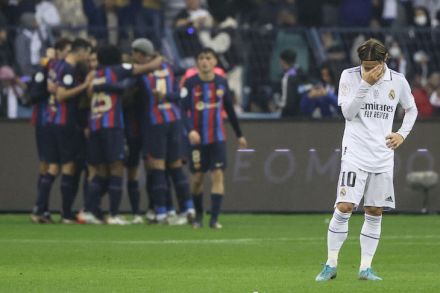
A match-fixing scandal centred on Barcelona FC has spilled over into politics, showing that decades-old divisions die hard in Spain. Triggered by the so-called 'Negreira Case', which concerns payments of 6.7 million euros (about £5.9 million) allegedly made by Barca to a company linked to a Spanish refereeing official between 2001-18, Real Madrid and their greatest rival are accusing each other of links to Francisco Franco, the fascist dictator who ruled the country from 1936 to his death in 1975. The row started last week, when Barca’s president Joan Laporta claimed that if any Spanish club should be subject to suspicions of referee favouritism, it’s Los Blancos, which he provocatively described as the 'team of the regime'.

The misleading politicisation of Spanish bullfighting

From our UK edition

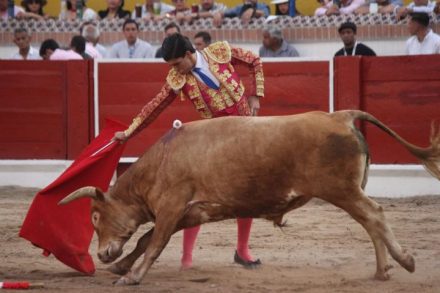
Bullfighting is once again in the spotlight in Spain. This time, it’s the focus of a clash between the country’s Socialist-led government and the Fundación del Toro de Lidia (FTL), a non-profit organisation that defends and promotes the practice.  The row kicked off last year because bullfighting – known as the 'corrida de toros', or ‘running of bulls’ – was not included in a youth culture voucher (bono cultural joven) introduced by Spanish PM Pedro Sanchez. Angered by this decision, the FTL went to the Supreme Court: last Tuesday the judges ruled in its favour, citing 2013 legislation which made the bullfight part of Spanish ‘cultural heritage’.

Why we need a biography of philosopher Bryan Magee

From our UK edition

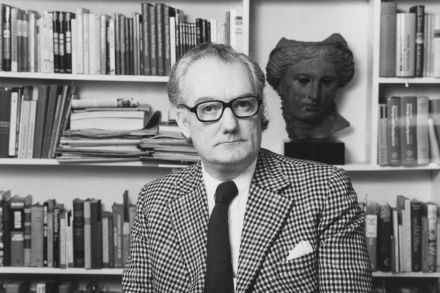
When I was a philosophy student at King’s College London in my early twenties, I came across a book called Confessions of a Philosopher by Bryan Magee. A history of western philosophy told through the story of the author’s relationship with it, it opens with a three- or four-year old Magee trying to catch himself falling asleep every night. Try as he might, he can never experience himself crossing the threshold from wakefulness into unconsciousness, a conundrum that keeps him in a state of ‘active mystification’. Magee spent the rest of his life like this, wrestling with the mysteries inherent in everyday experience. Far from being a fusty academic discipline with no relevance to the ‘real’ world, philosophy was, for him, an existential matter of immediate importance.

Has the Indyref ruling complicated Catalonian separatism?

From our UK edition

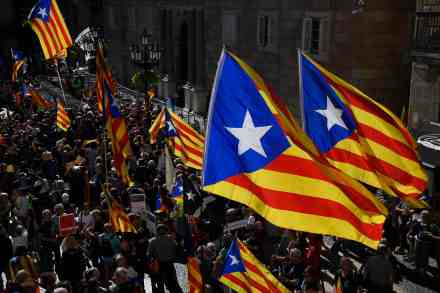
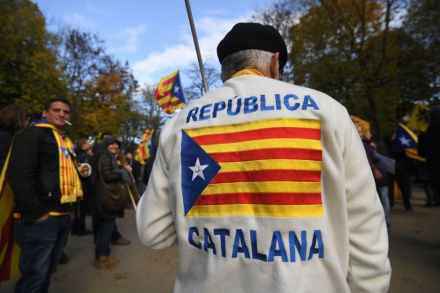
Last week’s Supreme Court ruling on Scottish independence will offer scant encouragement to separatists in Catalonia. The crux of the judgment – that Holyrood’s devolved powers do not stretch as far as being able to hold an independence referendum without consent from Westminster – also highlights the problem for Catalan secessionists, who have yet to secure Madrid’s approval for a vote on divorcing Spain. Nicola Sturgeon has said she will respect the judgment. Similar prohibitions, though, haven’t stopped Catalonia’s separatists, who are in many ways more rebellious than their Scottish counterparts. In 2017, Spain’s Constitutional Court ruled that an independence referendum planned by Catalonia’s then-president, Carles Puigdemont, would be illegal.

Will Catalonia ever achieve independence from Spain?

From our UK edition

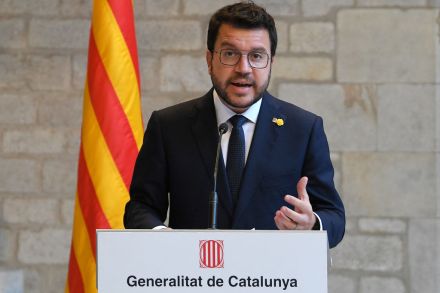
Catalonia’s pro-independence government almost imploded last week. A major disagreement between its two governing parties occurred after one half of the coalition – hardline secessionist party Junts per Catalunya (Together for Catalonia) – proposed a no-confidence vote against president Pere Aragones for not pushing the secessionist cause hard enough. Aragones, a member of the more moderate Republican Left of Catalonia (ERC), promptly fired his deputy president Jordi Puignero. He said this was ‘absolutely necessary to strengthen the government’. Although an understandable reaction, it’s also just as likely to have the opposite effect.

The Queen’s funeral and the row over Spain’s exiled former king

From our UK edition

Juan Carlos, Spain’s exiled former king, will be present at Queen Elizabeth II’s funeral in London on Monday – and the Spanish government is furious. Socialist prime minister Pedro Sanchez has reportedly tried to stop the ex-monarch from attending and a spokesperson for Podemos, the coalition’s junior partner, has described him as a ‘criminal on the run’. But the 84 year-old emeritus king, who abdicated in 2014 and fled Spain in 2020 under suspicion of fraud, is attending anyway, along with his wife, former Queen Sofia. He is right to do so. Juan Carlos’s attendance at Monday’s state funeral isn’t just a personal affair, separate from the controversy surrounding his alleged misdemeanors – it’s a family matter.

Europe still hasn’t learned from its lockdown debacles

From our UK edition

In his fascinating interview in the current issue of The Spectator, Rishi Sunak revealed the black hole at the centre of the British government’s 2020 lockdown policies. The former Chancellor claims that two crucial things were lacking at the time of the lockdowns – political candour and a ‘grown up conversation’ between Boris Johnson’s government and the quarantined population. Two and a half years later, though, there’s been no such conversation, especially in the European countries where the legality of lockdowns has already been questioned. France was one of the first countries to challenge hastily-enacted measures that criminalised normal behaviour.

Catalonia’s leader’s plan to follow the SNP’s playbook

From our UK edition

Catalonia's president Pere Aragones has wanted to win independence from Madrid ever since since joining the Republican Left of Catalonia (ERC) as a teenager. Despite the obstacles standing in his way, he now seeks inspiration from two votes held in the UK: the Scottish independence referendum and Brexit. Aragones resumed negotiations with Spain’s socialist prime minister Pedro Sanchez last month, almost five years after an illegal referendum on Catalan secession triggered a constitutional crisis. But despite Madrid's willingness to talk, he faces a Spanish establishment that is as pro-union now as it was in 2017.

Spain’s bizarre mask policies

From our UK edition

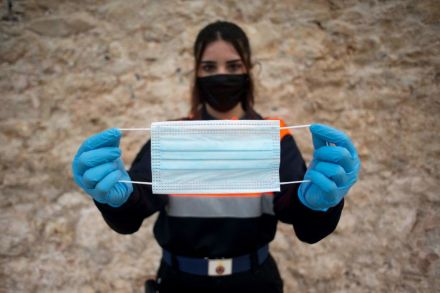
Spain has a reputation for having some of the strictest policies on masks in Europe, with the public even encouraged to wear face-coverings outside. Yet today, Spain’s Health Ministry announced that the number of coronavirus cases has continued to rise, with 9,848 cases counted over the past two days – prompting those who live in Spain to question, yet again, the efficacy of mask-wearing regulations. These uncomfortable, claustrophobic pieces of cloth are often described as being compulsory in public in Spain, which perhaps implies that they have to be worn from the moment you leave your house to the moment you return, whatever the purpose of your excursion.

The deserved winners and big losers of Spain’s general election

From our UK edition

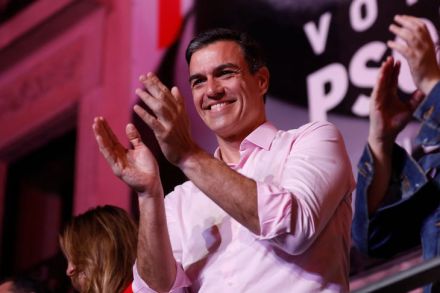
Spain’s general election yesterday – the third in four years – revealed a deserved winner and a big loser, as well as signalling the start of a lengthy coalition-forming process. The country’s five main political parties performed more or less exactly as the polls had suggested they would. Pedro Sánchez’s centre-left Socialist party (the PSOE) is still the largest group in congress and secured 28.7 per cent of the vote (although it’s still short of a majority). Trailing in a distant second place was the conservative Popular Party (PP), with 16.7 per cent – its worst ever result. Third place went to the centre-right Ciudadanos (15.9 per cent), fourth to leftist Podemos (14.3 per cent) and fifth to far-right newcomer Vox (10.3 per cent).

How Spain’s socialist leader is winning over reluctant voters

From our UK edition

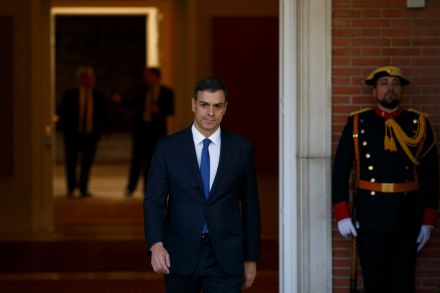
Spaniards didn’t ask for their new prime minister, but it seems that they’re starting to like him. The most recent polls reveal that Pedro Sánchez’s Socialists, who now make up Spain’s minority government, are the most popular party in the country. Less than a month ago, the PSOE slumbered in third place, behind the then-ruling Conservative Popular Party (PP) and centrist Ciudadanos. The Socialists have leapt two places up the rankings, even though their seizure of power was seen as illegitimate by many Spaniards. What’s gone so right for Spain's Socialists?

‘We demand our right to vote’: what Spaniards really think of their new socialist PM

From our UK edition

Spain has a new prime minister, but Spaniards are not happy about it. A WhatsApp message is circulating across the country at the moment, saying: “We Spaniards demand our right to vote. We demand the right to decide who is the president of Spain. ‘No’ means ‘no’ to Pedro Sánchez. If you’re in agreement, pass this message on until elections are called” The message refers to the leader of the Spanish Socialists (PSOE), Pedro Sánchez, who sneaked in as the country’s leader last Friday after his predecessor, Mariano Rajoy, lost a no-confidence vote. While that vote had disastrous consequences for Rajoy, for Sánchez – who tabled it in the first place – it has propelled him into Spain’s top job.

The Catalan secessionists are back

From our UK edition

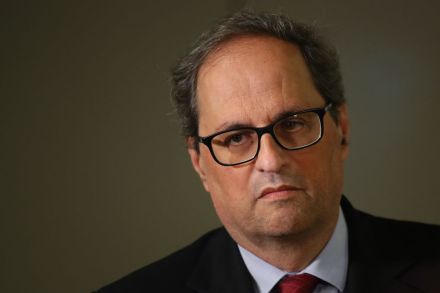
After almost five months without a government, Catalonia finally has a new leader. Quim Torra won a second-round investiture vote this week to take the helm of the region's separatist government. Unfortunately for Spanish prime minister, Mariano Rajoy, Torra’s pledge is the same as his exiled predecessor’s: to pursue an independent Catalonia. The Catalan secessionists are back.     Yet Torra's appointment also raises problems for the pro-independence movement. He nurses an apparently visceral hatred for Spain, which sullies a cause that likes to describe itself as “progressive”. The man now leading the secessionist charge has described Spaniards as “scavengers, vipers and hyenas”.

Carles Puigdemont’s arrest flares tensions in Catalonia

From our UK edition

Remember the Catalonia issue? Up until a couple of days ago, you would have been forgiven for supposing it had all just magically been cleared up. But on Sunday, former pro-independence Catalan president Carles Puigdemont was detained by German police while on his way back from Finland to Belgium, where he has been in voluntary exile since last October. German courts now have a couple of months to decide whether to return the secessionists’ poster-boy to his home country; if they do, he faces charges of rebellion and misuse of public funds in connection with the Catalan independence referendum he organised last October – a vote that was declared illegal by Spain’s highest court. The charge of rebellion carries a potential prison sentence of thirty years.

Mariano Rajoy must go

From our UK edition

Spaniards want a new prime minister. That’s the conclusion to be drawn from the latest opinion poll carried out by Metroscopia for the Spanish daily El Pais, which revealed that 85 per cent of the electorate think someone else should have a go at leading the conservative Popular Party. Long-time supporters of the PP are deserting it too, with 62 per cent of respondents who have previously voted for the party saying Mariano Rajoy should go. Clearly the days when the Conservatives enjoyed a virtually-unchallenged hegemony in the national parliament are gone. Benefiting from Rajoy’s demise is the country’s new centre-right, in the form of Albert Rivera’s party Ciudadanos ('Citizens').

The stage is set for the Spanish government’s worst nightmare

From our UK edition

It’ll be a tense Christmas in the Spanish’s PM’s household this year. Yesterday, in an election called by Mariano Rajoy last month, Catalan pro-independence parties gained a slim majority in the region’s parliament: Together for Catalonia, the Republican Left of Catalonia (ERC) and the Popular Unity Party (CUP) look set to have jointly won 70 seats in the 135-seat congress. Rajoy’s conservative Popular Party, meanwhile, posted its worst result ever, losing eight of its previously-held eleven seats. The stage is set for the Spanish government’s worst nightmare: another attempt by Catalan secessionists to divorce Spain. Rajoy had been hoping for a return to normality in Catalonia after a tumultuous few months.

Catalonia braces itself for another independence fight

From our UK edition

Two months on, the outcome of the messy sequence of events triggered by Catalonia’s independence referendum remains unclear: neither side has secured its desired result and, in their own ways, both have behaved badly. How did Spain arrive at this bitter impasse, and what will happen next in the Catalonia saga? If the optimism of Mariano Rajoy, the Spanish PM, is to be believed, there could be an end in sight very soon. Rajoy, who dissolved the Catalan parliament and called regional elections for December 21, says he is hoping for a restoration of 'peace and social harmony' in Catalonia. Rajoy’s statement, made in a TV interview this week, was a barely-disguised plea to Catalans to put an end to the secessionists' latest attempt to divorce Spain.

Catalonia’s president refuses to back down after referendum violence

From our UK edition

The violence which marred Catalonia's independence referendum has dominated the coverage, but the region's president is confident about what the result means: Catalonia has won the 'right to an independent state in the form of a Republic,' he said last night. The outcome of the vote certainly seems convincing at first glance: 90 per cent of Catalans voted to split from Spain on a 42 per cent turnout. But Puigdemont’s many opponents say that the chaotic nature of yesterday’s voting renders the overall result meaningless. According to Catalan authorities, 319 of around 2,300 polling stations across Catalonia were closed by police.

The Catalonian independence battle is one of rising hostility

From our UK edition

As the Catalonian independence battle continues to escalate ahead of the proposed October 1st referendum, Mariano Rajoy’s government is going all-out to thwart the secessionist efforts of Catalan president Carles Puigdemont. As he does so, it is becoming harder to see when or how this increasingly unpleasant conflict will be resolved. Following the orders of a judge on Wednesday morning, national police raided 42 premises in Barcelona – including several governmental offices - in search of referendum-related materials such as ballot papers and pro-independence pamphlets. They arrested 14 people, amongst them the Economy Secretary General Josep Maria Jové and an advertising professional whose firm is believed to be in possession of material relating to the referendum.

Catalonia’s fight for independence is turning nasty

From our UK edition

As if the issue of Catalonian secession wasn’t fraught enough, some of its most committed advocates are now arguing that the terrorist attacks in Barcelona and Cambrils last week demonstrate the region’s readiness for independence. Spanish prime minister Mariano Rajoy, for his part, has suggested that the vehicle attacks that left 15 dead require regional differences to be cast aside in the battle against jihadism. The debate about Catalonian independence has always been a heated, complex one in Spain. Now that the tragic events of last week are being introduced into the discussion, it will become even more so.