Mark Galeotti

Mark Galeotti

Mark Galeotti heads the consultancy Mayak Intelligence and is honorary professor at the UCL School of Slavonic and East European Studies and the author of some 30 books on Russia. His latest, Forged in War: a military history of Russia from its beginnings to today, is out now.

Will Starmer go after more of Putin’s shadow oil tankers?

From our UK edition

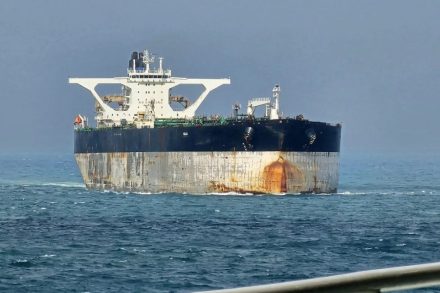
It seems to be criminal cosplay season for Donald Trump, as he successively takes on the roles first of kidnapper, then pirate. There is a case, albeit disputed, to be made under the laws of the sea for the legality of the seizure of the tanker Marinera. There is none under international law for the seizure of the admittedly odious Nicolás Maduro. But none of that matters in Trumpworld, where might makes right and American laws and interests override all else. Now, suddenly, commentators have woken up to the presence of more tankers from the 'shadow fleet' – which is both an inaccurate label and also an inadvertently cool way to describe a collection of superannuated rust buckets – in the seas off Britain. Calls for more seizures are the inevitable breast-beating result.

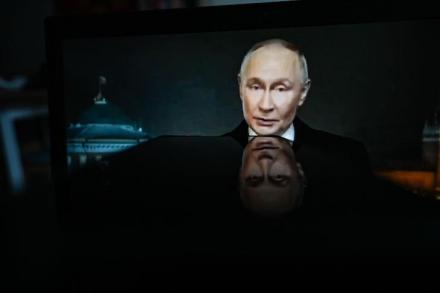
Do Putin’s New Year platitudes suggest he is tiring of ruling Russia?

From our UK edition

Russia is still known for a great deal of innovative programming, but one area where there is concern it is falling behind is in AI. Judging by Vladimir Putin’s New Year’s Eve address, there are no grounds to worry, as this year’s was of a such blandness that it could have been generated by a large language model. Everything felt much more low-energy in Putin's address than previous years, from rhetoric to delivery In his 1999 New Year’s speech, former president Boris Yeltsin made the shock announcement that he was standing down, and his recently-appointed prime minister, the relatively unknown Vladimir Putin, would become acting head of state.

Macron is right: Europe should talk to Putin

From our UK edition

'Macron is right' is not one of those statements I honestly expected to find myself writing, but when the French president said, 'I think it will become useful again to talk to Vladimir Putin,' after the cup-half-full negotiations in Brussels over continued financial aid to Ukraine, he was spot on. 'I believe that it's in our interest as Europeans and Ukrainians to find the right framework to re-engage this discussion' with Moscow, he said, and that this should be done 'in coming weeks'. Of course, there are some who equate talking to Putin as somehow legitimising him, or meaning the same thing as negotiations. EU foreign policy chief Kaja Kallas has, for example, boasted that she has in the past been able to browbeat countries into not talking to the Russians.

Are we really preparing for war with Russia?

From our UK edition

Are we really on the cusp of a real, shooting war with Russia? If you believe some of the rhetoric, it would seem so – but does anyone really think it? The war drums are certainly beating. Last night, Air Chief Marshal Sir Richard Knighton, the Chief of the Defence Staff, called for 'our defence and resilience [to be] a higher national priority for all of us. An "all-in" mentality' because 'the situation is more dangerous than I have known during my career'. Armed Forces minister Al Carns warned more picturesquely that 'the shadow of war is knocking on Europe’s door once more'.

How Russia’s National Guard may stymie the latest Ukraine plan

From our UK edition

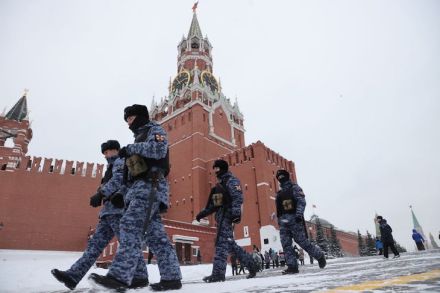
One of the crucial obstacles to a Ukraine peace deal appears to be Vladimir Putin’s demand for the remaining fifth of Donetsk region not in Russian hands. Kyiv not only resents the idea of surrendering hard-defended land, it also fears this could be use it as a springboard for future attacks deeper into Ukraine. One potential workaround under debate is apparently allowing Moscow to claim it, but also making it a demilitarised zone (DMZ) to ensure Russian troops stay out. But it’s not so cut and dried.

Is a Ukraine peace deal inching closer?

From our UK edition

13 min listen

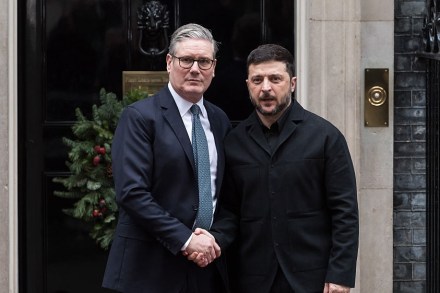
This week Keir Starmer hosted the French President and the German Chancellor in Downing Street as the E3 moved closer to a landmark agreement: seizing around €100 billion in frozen Russian assets to fund Ukraine’s war effort. It’s a dramatic shift that has soothed some fears in Kyiv – but it has also reopened long-running arguments in Europe about property rights, sanctions and how far the West is willing to go. What does this bold move mean for the conflict, for Ukraine’s future and for Europe’s relationship with Washington? Meanwhile, as US–Russia shuttle diplomacy intensifies, Donald Trump’s oscillating positions continue to unsettle allies. Are we inching closer to a peace deal – or stuck in yet another cycle of drafts, red lines and diplomatic back-tracking?

Inside the mind of Putin’s real hatchet man

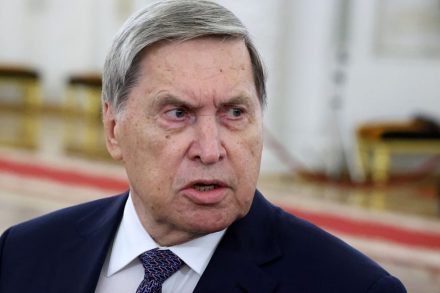
As Moscow and Washington prepare for talks on the latest version of Donald Trump’s peace plan next week, leaked recordings of a conversation with US envoy Steve Witkoff have thrown a spotlight on to senior diplomat Yuri Ushakov. It seems he, not Foreign Minister Sergei Lavrov, is the prime mover behind Russia’s negotiating position. The stature of Lavrov, once a legend in the diplomatic community, has steadily diminished since 2014, when he wasn’t even consulted before Vladimir Putin decided to annex Crimea. Every year since then, the now-75-year-old minister has petitioned Putin to be allowed to retire; every year this is denied. Instead, Lavrov remains confined to a role of repeating threadbare talking points to audiences who frequently and openly disbelieve him.

Russia is willing to keep on fighting in Ukraine

At a time when Western commentators are tying themselves in knots trying to parse the ongoing Ukraine peace discussions, the Russian media is suddenly strikingly united in its coverage. There is a common misperception that, like their Soviet forebears, the Russian press simply reproduces some standard party line, day in, day out. In fact, there is often surprising pluralism, with different newspapers having their own interests and angles. However, the Kremlin does impose its will when it comes to especially important or sensitive matters, with editors receiving tyomniki, informal but authoritative guidance from the presidential administration on lines to take and topics to avoid. When the press is speaking in one voice, that voice is Putin’s.

Why is Putin obsessed with nuclear ‘wonder weapons’?

From our UK edition

I don’t think it’s accurate or helpful to think of Vladimir Putin as some Bond villain figure – but he certainly does make it harder to hold this line sometimes. In particular, his enthusiasm for ‘wonder weapons’ – often of questionable strategic value – does suggest a certain grandiose vanity. Some have genuine military utility, but others seem more useful in psychological than actual warfare. Last week, the Russians announced a successful test of the 9M730 Burevestnik (‘Storm Petrel’), a nuclear-armed and -powered cruise missile. Its reactor allows it to travel further than any regular cruise missile, manoeuvring at altitudes as low as 50 metres.

Have we gone to war with Russia without realising?

From our UK edition

Has the world turned upside-down? Russia's former president Dmitry Medvedev, generally known for his toxic social media posts packed with threat and vitriol, is turning down the volume, while various Western public figures are determinedly turning it up. Yesterday, German chancellor Friedrich Merz, in what he called 'a sentence that may be a little shocking at first glance,' stated that 'we are not at war, but we are no longer at peace either.' Actually, this was relatively mild. Meanwhile, Polish prime minister Donald Tusk was describing the current confrontation between Europe and Russia as a 'new type of war' at the opening of the Warsaw Security Forum.

Why Putin’s military drills are good news for the West

From our UK edition

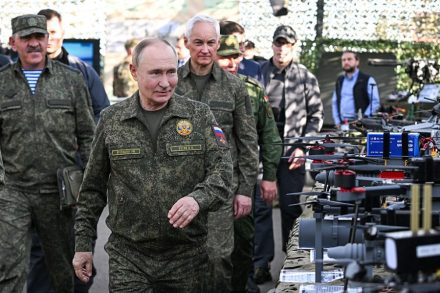
Another Russian military exercise is over, and some Western commentators would have us believe that we ought to be heaving a collective sigh of relief that Putin's legions didn’t use this as an excuse for another invasion. Of course, that was very overblown hype. Instead, what we saw was a Russian military still clinging to outmoded ways of war, as if its armoured columns had not been blocked and burnt when they rolled into Ukraine in 2022. The Zapad-2025 (West-2025) exercises, which concluded on Tuesday, involved perhaps 30,000 Russian and Belarusian soldiers in a wargame stretching from the Arctic Circle to Belarus. This was the latest iteration of a biennial series of exercises, although it was skipped in 2023.

Putin doesn’t want to live forever

From our UK edition

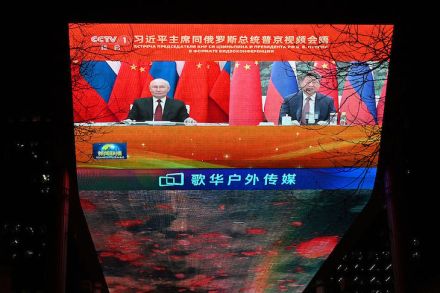
‘Rejuvenation is unstoppable, we will prevail,’ blared the editorial in the Chinese newspaper Global Times. The subject was China's resurgence, but it looked oddly apposite in light of an inadvertently overheard conversation between Vladimir Putin and Xi Jinping. Some Western journalists have mistaken this as evidence of Putin's hubris and his personality cult 'Biotechnology is continuously developing,' commented Putin as the two men walked towards the podium in Beijing's Tiananmen Square during the military parade to mark 80 years since Japan's surrender in World War Two. 'In the past, it used to be rare for someone to be older than 70 and these days they say that at 70 one's still a child,' the 72-year-old Xi replied to his similarly-aged counterpart.

Why is Putin so happy in China?

From our UK edition

The often dour Vladimir Putin is looking very cheery in China, which has just hosted the summit of the Shanghai Cooperation Organisation (SCO) in Tianjin to the north, and is preparing for a grand parade to commemorate the 80th anniversary of the end of the Second World War in Beijing tomorrow. Xi Jinping is clearly the man of the hour, Vladimir Putin seems to be having a good trip, too While Xi Jinping is clearly the man of the hour, Vladimir Putin seems to be having a good trip, too. Even as his Alaska summit saw him getting the literal red carpet treatment from Donald Trump, this is a chance to underline the degree to which Western efforts to isolate him really just mean that most European leaders are giving him hard stares.

Why has Putin gone after the British Council in Kyiv?

From our UK edition

Is Moscow targeting European institutions in Kyiv in the hope of ‘sabotaging peace’ as Keir Starmer has claimed? Putin probably thinks he’s actually doing the opposite. Last night saw another massive attack on Ukraine: 31 missiles and 629 drones, of which five and 66 got through the country’s air defences, respectively. Many hit Kyiv, where 15 civilians were reportedly killed, including four children. However, particular diplomatic furore has been generated by the two missiles which, at 5:40 a.m., hit a block on Zhylyanska Street, south-west of the centre. This block, stretching across the adjacent Korolenkivska Street, houses both the British Council offices and also the European Union delegation offices.

Why Putin wants Donetsk

From our UK edition

Will Ukraine’s fate depend on Sloviansk and Kramatorsk, Druzhkivka and Kostiantynivka? These may not be household names, but they are the four key ‘fortress cities’ in the remaining portions of Donetsk region that Vladimir Putin is reportedly demanding as the price for peace. Although the details are still unclear, it seems that the framework for a peace deal agreed in outline between Putin and Trump would see the Russians agreeing to freeze the current front line. They could maybe even hand back some small sections of the Sumy and Kharkiv regions they have conquered in return for Kyiv surrendering the much larger portion of Donetsk region it still holds.

How Russia is preparing for Putin’s meeting with Trump

From our UK edition

Amidst contradictory leaks and rumours coming from the US administration, no one is quite sure what to expect when Donald Trump and Vladimir Putin meet in Alaska on Friday – not even the Russian press. Nonetheless, they seem rather less convinced that Trump is about to stitch up the Ukrainians than the Western media. On every side there are cautions not to expect miracles Of course, there is satisfaction at the prospect of Putin’s first visit to the US since 2015.

Why Putin’s elites keep dying

From our UK edition

Although I suspect few readers’ hearts will bleed for them, it’s been a bad week for Russian elites. There has been a spate of real or apparent suicides and the arrest of a gold magnate as he prepared to leave the country. On Friday, Andrei Badalov, vice president of Transneft, Russia’s largest state-controlled pipeline transport company, fatally fell from the window of his apartment in Moscow. This makes him the eighth senior Russian figure to die in this way since 2022. Although the police say he left a suicide note, by now the suggestion that foul play is at work has become something of a tasteless meme.

Will Putin really rein in Russia’s defence spending?

From our UK edition

At the very time when those warmongering Nato nations are pledging to raise their defence spending substantially, that doveish peacenik Vladimir Putin is promising to reduce his. It’s hard to know which of these two commitments is less plausible, but those anticipating the cranking down of the Russian war economy any time soon are going to have to wait rather longer. At the recent St Petersburg International Economic Forum (SPIEF), Putin said that: We are planning to reduce defence spending.

Putin spies an opportunity in Trump’s attack on Iran

From our UK edition

Is Donald Trump's decision to join attacks on Iran's nuclear facilities an embarrassment, a provocation or an opportunity for Russia? The honest answer is that it is all three, but likely more of an opportunity than anything else, if Moscow is willing to play it cool. Iranian Foreign Minister Abbas Araghchi is in Moscow today to meet with Vladimir Putin, and before he set out, he was trying to sound bullish, asserting that 'Russia is a friend of Iran', and that he expected concrete measures in support. Yet one can question how far the two countries were ever truly allies, so much as frenemies who shared a series of common problems and antagonists.

No, Nato: Brits had not ‘better learn to speak Russian’

From our UK edition

It seems conventional wisdom by now that the public can only be convinced by hyperbole. As Nato Secretary-General Mark Rutte implies that Britain faces a choice between the NHS and Russian conquest, it is worth asking how much this actually damages democracy – and helps Vladimir Putin? The real threat Russia poses is less of direct military action but through its ‘hybrid war’ instruments of subversion and division Rutte is on tour in a bid to sell the new orthodoxy that Nato member states – many of whom barely, if at all, hit the previous target of spending 2 per cent of GDP on defence – must commit to spending 3.5 per cent directly on defence and 1.5 per cent on defence-related spending (such as resilience, R&D and support for Ukraine).