Mark Galeotti

Mark Galeotti

Mark Galeotti heads the consultancy Mayak Intelligence and is honorary professor at the UCL School of Slavonic and East European Studies and the author of some 30 books on Russia. His latest, Forged in War: a military history of Russia from its beginnings to today, is out now.

Where have Russia’s Zs gone?

From our UK edition

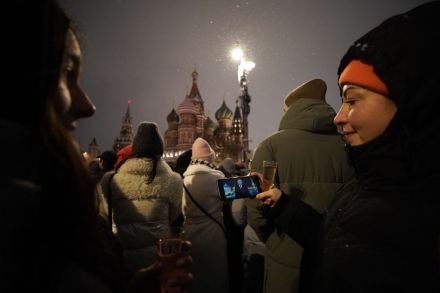
A social media post on 30 December: photographs of admittedly-splendid new year decorations in Moscow, archly captioned ‘back to 2021.’ The poster is alluding to the fact that obscene and extravagant references to Putin’s war in Ukraine – notably the letter Z, which has come to symbolise it – were notably absent from city decorations this new year. Moscow’s mayor, Sergei Sobyanin, has never seemed especially enthused about the war. He has done what the Kremlin required – diverted resources to help raise ‘volunteer regiments’; wallpapered the city with recruitment adverts; renamed Europe Square Eurasia Square – but he has avoiding too close an identification with the war, unlike so many of his less-secure counterparts across the country.

Russians are feeling the pinch as Putin’s war rumbles on

From our UK edition

The Russian Orthodox Church or state calendar doesn't recognise 25 December as a special day: their Christmas is 7 January by their old calendar and, in any case, it is New Year's Eve that is the real blow out. As households prepare the usual staples of Salad Olivier, Herring under a Fur Coat (smothered in mayonnaise), tangerines and champagne, it will be impossible for them to ignore a basic fact: everything is getting more expensive. Indeed, while the headline inflation rate is just under 10 per cent, the price of many basic foods have increased dramatically more. One Russian newspaper estimated that the price of a typical New Year's Eve dinner has riven by almost 30 per cent, year on year.

Vladimir Putin’s four-and-a-half-hour troll

From our UK edition

Every year, Vladimir Putin gives a marathon town hall event that lasts for hours. Every year, I feel compelled to watch. Every year, I wonder if it will be the last time I do, as these have become increasingly formulaic, but there is always something in them that rewards watching. (Or so I tell myself.) It was briefly tempting to write this ahead of time, because by now the format and content has become thoroughly predictable Originally, there were two such events a year: a mammoth end-of-year press conference and then ‘Direct Line,’ a kind of online town hall at which Putin addresses a selection of questions (more than two million this year) posed by ordinary Russians.

Why Ukraine killed Igor Kirillov

From our UK edition

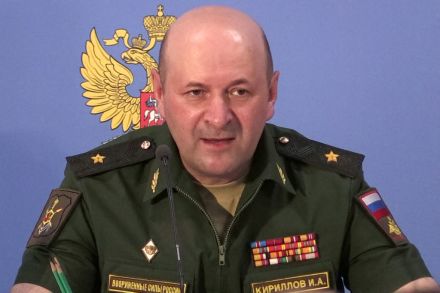
Another one down. This morning, Lt. Gen. Igor Kirillov, head of RKhBZ, Russia’s Radiological, Chemical and Biological Defence Troops, was heading out of his block of flats in Moscow’s Ryazansky Avenue, accompanied by his aide, when a bomb placed inside an electric scooter exploded. Both men were killed in the latest Ukrainian assassination operation targeting Russian officers accused of war crimes. The timing was hardly coincidental. The 54-year-old Kirillov has been under British sanctions since 2017, both because of RKhBZ’s activities (including supporting the Syrian use of chemical weapons) and also his role as a propagandist, spreading such falsehoods as the claim that Ukraine hosted secret western biological warfare laboratories.

How Putin will make Assad pay for his exile

From our UK edition

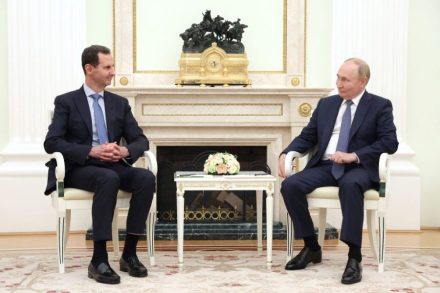
‘Brave Assad fled to Putin. Where will Putin flee?’ asked Ukrainian president Volodymyr Zelensky after the Syrian dictator escaped embattled Damascus for Moscow at the weekend. Assad was granted asylum in the Russia capital on the ‘humanitarian grounds’ he had denied his own subjects for so long. But what kind of life is Putin offering him? On the face of it, the answer is a rather opulent one, even if in practice it means becoming part of one of the most rarified zoos of all: Putin’s collection of ex-dictators. West of Moscow, a little way beyond the city’s MKAD orbital motorway along the A-106 Rublyovo-Uspenskoye Shosse, lies the village of Barvikha.

Kate Andrews, Mark Galeotti, Adrian Pascu-Tulbure, Michael Hann and Olivia Potts

From our UK edition

31 min listen

On this week’s Spectator Out Loud: Kate Andrews examines the appointment of Scott Bessent as US Treasury Secretary (1:20); Mark Galeotti highlights Putin’s shadow campaign across Europe (7:10); Adrian Pascu-Tulbure reports on the surprising rise of Romania’s Calin Georgescu (15:45); Michael Hann reviews Irish bands Kneecap and Fontaines D.C. (22:54); and Olivia Potts provides her notes on London’s Smithfield Market, following the news it may close (27:28).  Produced and presented by Patrick Gibbons.

Russia’s sabotage campaign against the West

From our UK edition

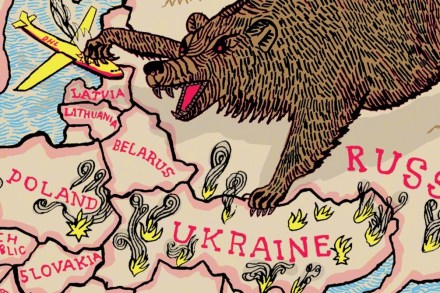
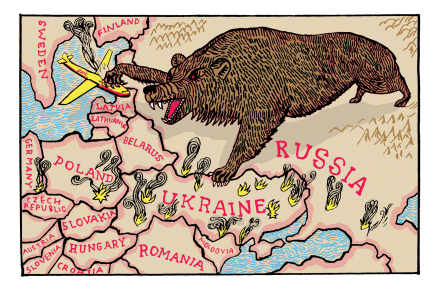
When a DHL cargo plane crashed while approaching Vilnius airport on Monday, killing one of the crew, it looked like technical failure, but given that Russia was believed to be behind a series of incendiary devices which ignited on DHL flights and in warehouses this summer, inevitably many feared Moscow’s hand. The suspicion is likely to be the point. In the past year, the Russians have stepped up their disruptive activities in Europe, from cyber-attacks to assassinations, with the apparent aim of generating chaos and a climate of fear as much as anything else.

How will Putin respond to Ukraine’s Storm Shadow attack?

From our UK edition

The air raid sirens sounded yesterday, the American embassy in Kyiv closed, as did the Italian and Greek. The British and French embassy warned nationals to take care and encouraged staff to work remotely. The Ukrainian air force warned residents of the city to seek shelter from an incoming massive air attack. And then nothing happened. It’s not clear which is more embarrassing. That the Russians seem to have been able to perpetrate a nerve-jangling hoax, not least by circulating messages on social media and messaging apps seeming to come from HUR, Ukrainian military intelligence. These claimed that a ‘particularly massive’ airstrike was on the way involving more than 300 drones and also an equally imposing salvo of missiles launched simultaneously from land, air and sea.

Could Trump save Ukraine?

From our UK edition

One thousand days into Vladimir Putin’s full-scale invasion of Ukraine, three facts seem to be evident. First, Russia is losing. It is using its soldiers like human ammunition, burning through its economic reserves and mortgaging its future to Beijing. Second, Ukraine is losing faster than Russia. Ukraine’s forces are beleaguered along a too-long front and increasingly reliant on what looks like press-ganging for recruits. The country’s energy infrastructure is 80 per cent damaged or destroyed. The third fact: Donald Trump's election is throwing all the old assumptions about the war into doubt. It is a sign of the odd times in which we live...

Can Russia really ban smoking?

From our UK edition

The UK isn’t the only place which has been toying with the idea of introducing a ‘generational’ tobacco ban. Rishi Sunak’s bill that would ban sales to anyone born after 1 January 2009 was taken over by Labour following the election, but now it is Russia that is debating a similar measure. The Ministry of Health is reportedly close to proposing a ban on the sale of tobacco and other nicotine-containing products to everyone born after 31 December 2009. A draft bill has already been circulated and has been adopted by the New People party, one of the government’s tame pseudo-opposition factions, although it has not yet been reviewed by the executive.

Zelensky’s ‘victory plan’ is unlikely to impress Europe

From our UK edition

After confidentially briefing it around various Western capitals, President Zelelsnky has unveiled – to a degree – his much-trailed ‘victory plan’ to the Verkhovna Rada, Ukraine’s parliament. His statement on the plan came ahead of today’s meeting with the European Council. Along with three additional secret codicils shared only with certain partners, the plan has five main points. In and of themselves, none of them are implausible, and all would certainly strengthen Ukraine’s security. However, they also embody certain assumptions that likely make them unworkable, simply because they are asking from Nato, the EU and the West in general a great deal more than they seem willing to offer.

The Novichok inquiry raises some big questions for MI5

From our UK edition

The inquiry into the death of Dawn Sturgess as an innocent victim of the attempt to murder Russian double-agent Sergei Skripal in 2018 has begun, a mere six years after the event. The question is, what can it tell us that we don’t already know? Britain’s love affair with lengthy, expensive and tardy inquiries continues with, in this case, a brief to ‘ascertain… who the deceased was; how; when and where she came by her death', to identify ‘where responsibility for the death lies’ and to ‘make such recommendations as may seem appropriate'. On one level, all the inquiry can offer is a snapshot of what happened in what seems like another world While no doubt of great comfort to the Sturgess family, on one level this seems a rather pointless exercise.

Why MI5 is so worried about Russia’s GRU

From our UK edition

Ken McCallum, head of the Security Service (MI5), has warned of the serious threat to Britain posed by the Russian and Iranian intelligence agencies. McCallum said in a speech yesterday that the Russian GRU was on a mission to generate 'sustained mayhem on British and European streets', deploying 'arson, sabotage and more dangerous actions conducted with increasing recklessness'. That the GRU is being highlighted demonstrates both how the threat to the UK is evolving, but also the changes underway in Russia’s intelligence agencies. Officially, since 2010 the GRU has been known as the 'GU', but everyone from Putin down still uses the old name. The GU, or Main Directorate of the General Staff, is Russia's military intelligence service.

Vladimir Putin’s 72nd may have been his unhappiest birthday yet

From our UK edition

Happy birthday, Mr President? With Vladimir Putin turning 72 on Monday, this has become an opportunity for the Kremlin’s spin doctors to present their ideal notion of the septuagenarian sovereign. Ambitious courtiers have been competitively performing their sycophancy, as if in an over-the-top production of King Lear. Posters were anonymously pasted up in Kyiv, vowing that ‘Putin will come and restore order’ The ponderous official paper of record, Rossiiskaya Gazeta, offered up a portrait of the diligent chief executive: 'Russian President Vladimir Putin will celebrate his birthday in a working environment.

Moscow wants to ruin your weekend

From our UK edition

When is slower internet better than none at all? When are travel delays more serious a political challenge than threats of nuclear war? These questions acquired particular significance with the news that Stockholm's Arlanda airport was temporarily closed this week when several drones intruded into its airspace. Investigations are still in progress, but the police are suggesting this was deliberate sabotage and suspicion is already falling on Moscow. It has highlighted what is likely to be a central element of Russia's emerging political warfare against the West: a strategy of inconveniences. What is the strategic value in such seemingly petty and spiteful acts?

Why is Putin expelling more British diplomats?

From our UK edition

Another six bite the dust. The British Embassy in Moscow, already pared to the bone, is being reduced by another six diplomats. Their accreditation has been withdrawn because they were ‘threatening the security of the Russian Federation’ by ‘conducting intelligence and subversive work.’ It is bad news for international stability as diplomatic links become more and more attenuated, but perhaps something of a tribute to Britain.

Moscow is blaming Britain for the Kursk attack

From our UK edition

Is the sinking of the super-yacht Bayesian and likely death of Mike Lynch a bigger story than Ukraine’s Kursk incursion? The Russian mid-market tabloid Moskovsky Komsomolets certainly thinks so, reflecting a clear unwillingness on the part of the Kremlin and the state-controlled or state-dominated media to get to grips with the current crisis in Kursk. Likewise, the stodgy government newspaper of record, Rossiiskaya Gazeta, recently stuck with a piece about plucky locals ready for whatever happens, under the headline, ‘A city with a special history and a spirit that cannot be broken. How Kursk lives today.

Power play: Zelensky’s plan for his Russian conquests

From our UK edition

40 min listen

This week: Power play. The Spectator’s Svitlana Morenets writes the cover article in this week’s magazine exploring Zelensky’s plan for his Russian conquests. What’s his aim? And how could Putin respond? Svitlana joins the podcast alongside historian and author Mark Galeotti (02:10).Next: Will and Gus discuss their favourite pieces from the magazine, including Richard Madeley’s diary and Lara Prendergast’s argument that bankers are hot again.Then: how concerned should we be about falling fertility rates? In the magazine this week Jesus Fernandez-Villaverde argues that the problem is already far more grave, and far more global, than we realise. Why should we worry about this, and what can be done to stem this?

Will Ukraine’s Kursk offensive pay off?

From our UK edition

For the first time since the Second World War, foreign forces have invaded Russia. As Ukrainian troops push over the border into the Kursk region, Vladimir Putin, with breathtaking lack of irony, denounces this as ‘terrorism’ and a ‘provocation’. But what is Kyiv’s goal? Previous incursions, largely into the Belgorod region, have been carried out by small units of pro-Kyiv Russia troops, so although they are in practice controlled by HUR, Ukrainian military intelligence, this could be spun as ‘liberation’ by anti-Putin forces. However, these have also been little more than PR exercises: a dash across the border to take some half-defended villages, some selfies, and a hurried withdrawal.

The Soviet Union’s gerontocracy should serve as a warning to the US

From our UK edition

One waspish – but not entirely inaccurate – Russian media assessment of the first US presidential debate was that it was 'a reality show about the lives of pensioners.' They ought to know, as Russia's own history has highlighted the dangers of gerontocracy. When the Bolshevik revolutionaries who had just seized power formed their ruling Politburo in 1917, the only member who was more than 40 years old was their leader, Lenin, at 47. By 1981, the average age was 69. As for the actual leaders, General Secretary Leonid Brezhnev died at the age of 75 in 1982. His successor, Yuri Andropov, was a relative stripling, dying in 1984 at 69, to be followed by Konstantin Chernenko, who died in 1985 at 73.