
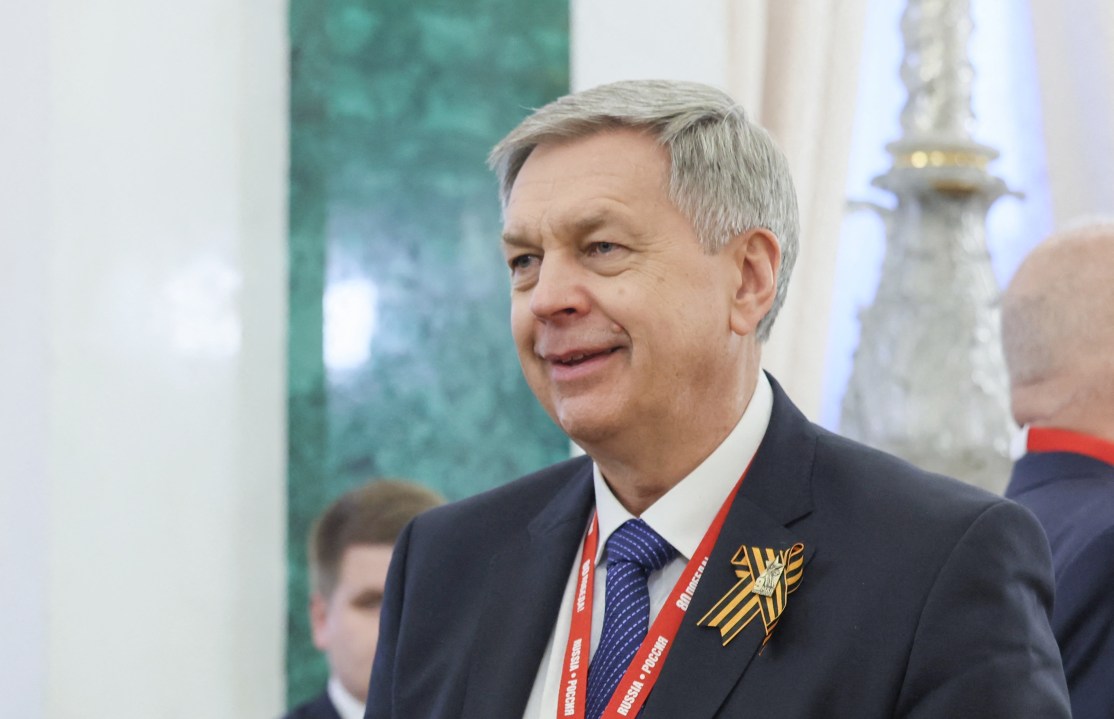
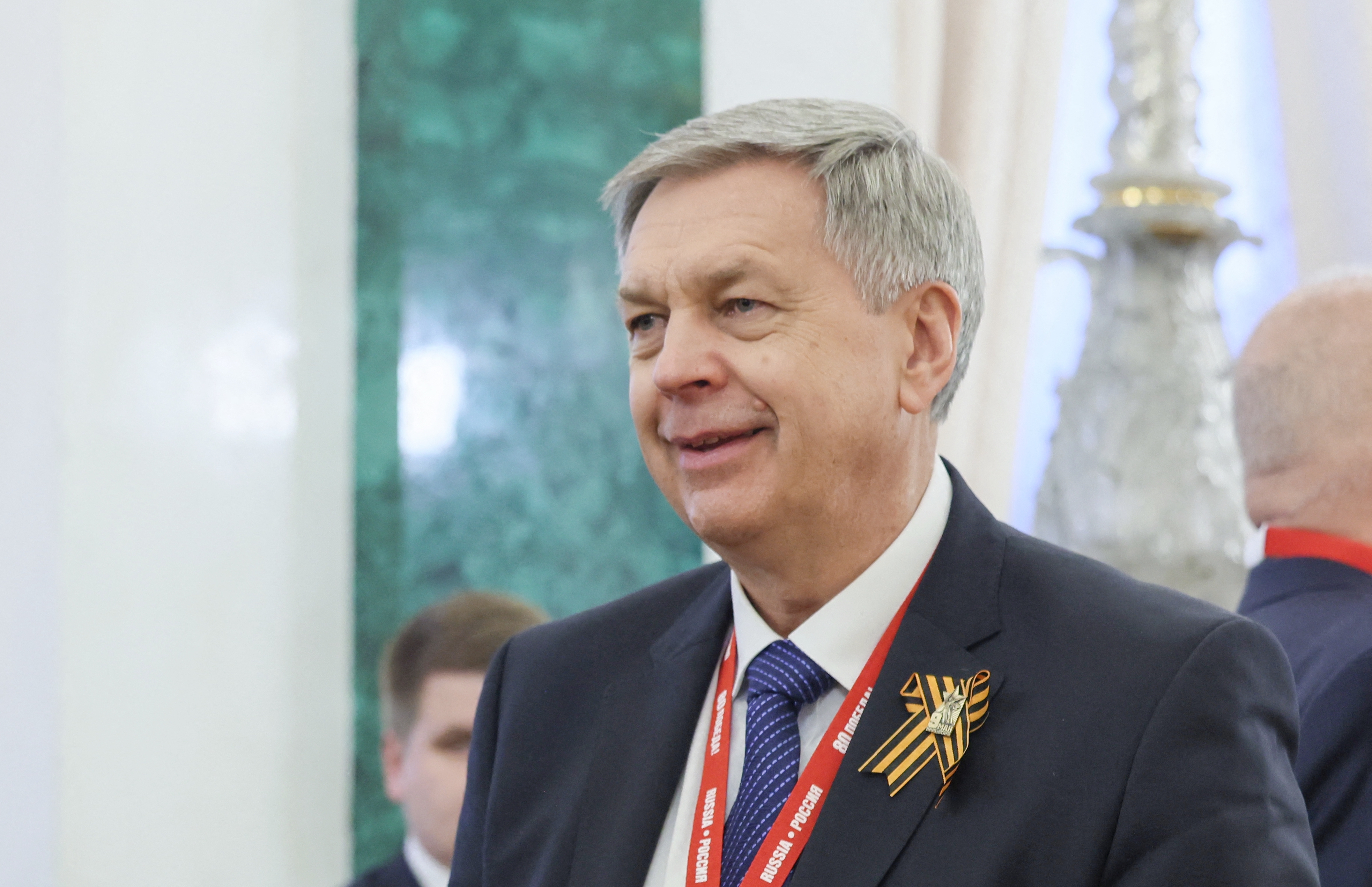
At the trilateral talks being held in Abu Dhabi, both Kyiv and Moscow are being led by military intelligence officers. These are the newly appointed presidential chief of staff, Kyrylo Budanov, formerly the head of HUR – Ukrainian military intelligence, and Admiral Igor Kostyukov, head of Russia’s GU – the Main Directorate of the General Staff.
On one level, this should not be a surprise. Quiet negotiations between HUR and GU (still widely known by its old acronym, GRU) have been behind a number of practical agreements throughout the conflict, such as the swaps of prisoners and the bodies of the fallen. Just as in the past Mossad was behind covert negotiations with Arab states before there were diplomatic relations, and the CIA maintained back-channel contacts with North Korea’s reconnaissance general bureau, spooks can still sometimes be useful diplomats.
Budanov, an outspoken champion of Ukraine’s cause, already has a larger-than-life profile, not least as many western journalists lapped up his macho legend and the exciting minutiae of his previous existence. This ranged from the (necessary) cloak-and-dagger security precautions for making it into his bunker to the captured trophy of a latest-model Russian AK-12 rifle propped nonchalantly in the corner of his office.
Kostyukov was sanctioned by the UK after the attempt to poison Sergei Skripal in 2018
For all that, Budanov is also emerging as a relatively pragmatic voice on Ukraine’s prospects. Although officially denied, he reportedly warned last year that unless the country could end the war with Russia soon, its very existence was imperilled.
So much less is known about his Russian counterpart. The 64-year-old Kostyukov may hold a naval rank, but he is essentially a career intelligence officer. After joining the navy out of education, he was soon tapped to study at the Military Diplomatic Academy in Moscow. This largely produces future generations of military attachés and GRU/GU officers. These are two categories that frequently overlap, and certainly did for Kostyukov. He served as an intelligence officer abroad, alternating spells in embassies (most recently in Greece in 2004) with time in the ‘Aquarium’, the service’s HQ building on Grizodubovoy Street in north-west Moscow.
The GU is riven by divisions between the so-called agentura (‘office’) – the intelligence-gathering side of the service; the analysts who try to make sense of what the spies uncover – and the Spetsnaz special forces, who may find themselves acting on that. The agentura are often derided as ‘suits’ or ‘parquet officers’ because many of their human intelligence case officers work as defence attachés in comfortable embassies abroad, while they in turn look down on the sapogi (‘boots’) in the Spetsnaz.
General Igor Sergun, who headed the GU between 2011 and 2016 and is widely considered one of the savvier chiefs of recent times, was a former Spetsnaz who later served within the agentura. His successor, General Igor Korobov, was a career analyst who had headed up the GU’s strategic intelligence directorate. Kostyukov, by contrast, had a career straddling the analysts and agentura, having been a human intelligence case officer abroad, an agent runner and then an analytical department manager in Moscow.
As Russia’s relationship with the west soured, especially after the 2014 annexation of Crimea, Kostyukov was by then a deputy head of the GU and played a significant role in increasingly aggressive operations abroad. He was sanctioned by the US for the GU’s role meddling in US elections in 2016 and by the UK after the attempt to poison Sergei Skripal in 2018.
By then, though, his star was clearly in the ascendant – indeed, by then, for an intelligence officer in Putin’s Russia, western condemnations were something of a status symbol. Kostyukov was awarded the gold star of a Hero of the Russian Federation in 2017 for the role he played in Syria, including a number of trips to Damascus, and when Korobov fell ill in 2018, it was Vice-Admiral Kostykov who stood in for him. Later that year he was anointed as his successor and ex officio deputy chief of the General Staff – the first naval officer to hold the position in post-Soviet times. The next year, he was promoted to the rank of full admiral.
During the Ukraine war, Kostyukov has overseen the GU as it plays multiple roles: stepping up disruptive operations in Europe (and almost certainly being behind the execution of defecting helicopter pilot Maxim Kuzminov in Spain in 2024), adapting to the expulsion of so many diplomatic agents by stepping up the use of proxies and remote intelligence-gathering by satellite and cyber, conducting sabotage and assassination inside Ukraine, and also maintaining back-channel connections with HUR.
This helps explain Moscow’s decision to appoint him to lead their delegation to the UAE. Kostyukov is an obvious counterpart to Budanov, and while it is unclear whether the two men have ever met, they do have a relationship of sorts. By appointing Kostyukov, rather than a diplomat like foreign policy adviser Yuri Ushakov or a businessman like Kirill Dmitriev, Putin is also signalling that as far as he is concerned, his demand for the remaining stretches of the Donetsk region is the main issue to discuss.
Yet it also reflects Kostyukov’s own reputation. A European official who interacted with him several times found him ‘tough but sophisticated’. He can see the world as it really is’. A Russian source found him ‘in the tradition of scholar-generals’, who will carry out their orders but interpret them ‘with some subtlety’. Considering that Putin still seems to be demanding territorial concessions that most Ukrainians will consider a humiliation, it will take all of these characteristics to break the current diplomatic stalemate.



Comments