Luke McShane

Luke McShane is chess columnist for The Spectator.

No. 778

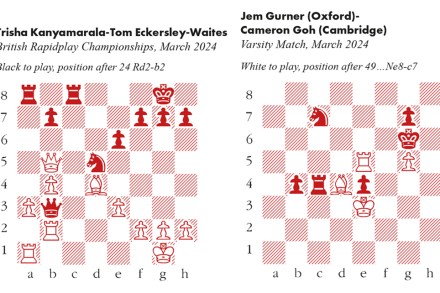
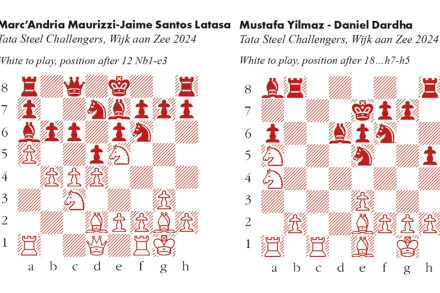
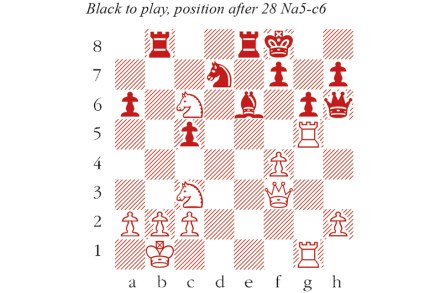
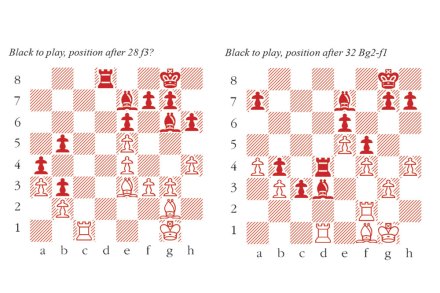
White to play. Jansa-Wengholm, World Senior Championship 65+, 2023. With his next move, the Czech grandmaster Jansa struck a decisive blow on the kingside. What did he play? Answers should be emailed to chess@spectator.co.uk by Monday 21 November. There is a prize of £20 for the first correct answer out of a hat. Please include a postal address and allow six weeks for prize delivery. Last week’s solution 1…Rd1! 2 Qxd1 b2 and wins, or 2 Qxb3 Rd3+ or 2 Qb7 Rd2 with…b3 to follow.

Double gold in Palermo

English grandmasters Michael Adams and John Nunn both won gold medals at the World Senior Championships in Palermo, which ended earlier this month. Adams was the top seed in the over-50 section, while Nunn was the top seed in the over-65s, and the reigning champion. With one round to go, both were half a point off the lead, so the double victory looked like a long shot. Both won, both finished on 8.5/11, and both finished in first place on tiebreak! Adams won his final round game in style against a Slovakian grandmaster.

No. 777

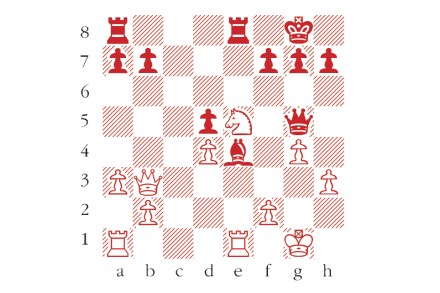
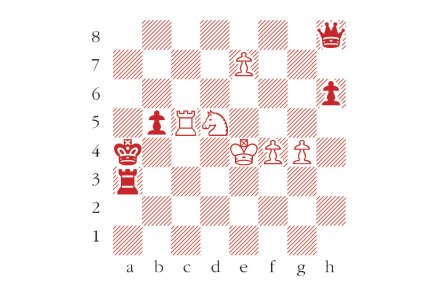
Black to play. Donchenko-Mishra, Fide Grand Swiss 2023. Abhimanyu Mishra, 14, was one of the youngest players in the field. Which move allowed him to capitalise on his passed b-pawn? Email answers to chess@spectator.co.uk by Monday 13 November 2023. There is a prize of £20 for the first correct answer out of a hat. Please include a postal address and allow six weeks for prize delivery. Last week’s solution 1 Qe5! For example, 1...Bxe5 2 Ra5# or 1...Bb6 2 Qb8# or 1...Bd6 2 Qa1#.

Grand Swiss Gambit

Large chess tournaments are usually played according to the ‘Swiss’ pairing system. In each round, players are grouped according to their total points amassed so far, and match-ups for the next round take place between players in the same score-group. Even in a large field of diverse abilities, the potential winners tend to encounter their toughest competitors, and the lower seeded players are not forever overwhelmed by the strength of their opposition. The ‘Swiss Gambit’, an obscure piece of chess lingo, refers to the idea that a savvy competitor might ‘gambit’ a draw or loss in an early round, so as to face easier games in the middle of the tournament and recover lost ground just in time for a high final placing.

Puzzle no. 776

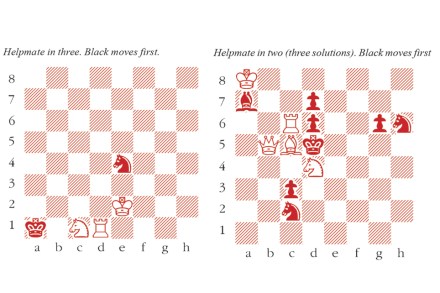
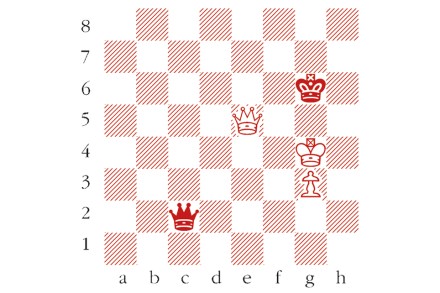
White to play and mate in two moves. Composed by Lionel Penrose, Chess Life 1956. Email answers to chess@spectator.co.uk by Monday 6 November. There is a prize of £20 for the first correct answer out of a hat. Please include a postal address and allow six weeks for prize delivery. Last week’s solution 1…Ba5! threatens Rc6xc8 since the b7 pawn is pinned. White has no good response, as 2 Bxd4 exd4 does not improve the situation.

A young contender

Bodhana Sivanandan won the gold medal in the World Girls U8 Championship in Sharm El Sheikh earlier this month, making her the first English world youth champion since 1998, when Nicholas Pert won the U18 event and Ruth Sheldon won the Girls U18. I witnessed Sivanandan’s enormous talent when we played a casual game of speed chess at ChessFest in Trafalgar Square in July. I knew of her accomplishments, which included tying for second place in the UK women’s blitz championship at the age of seven last year. But naively, I chose an offbeat, slightly risky opening. It soon transpired that she knew it at least as well as I did. A few moves later I was, for a brief moment, utterly lost. I won the game in the end, but was left in no doubt about her prospects.

Puzzle no. 775

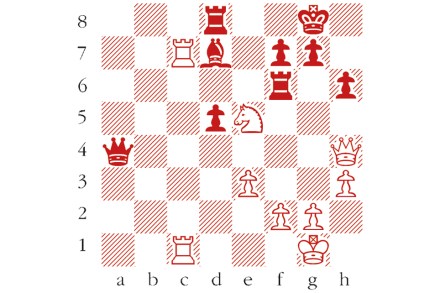
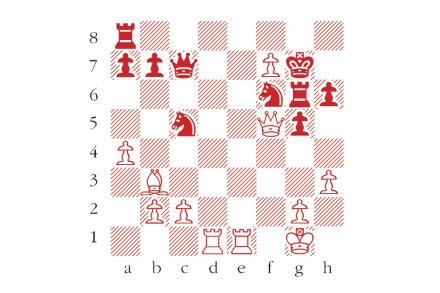
Black to play. Bertholdt-J. Penrose, Olympiad Final, Munich 1958. White has just played Bh3-c8, so that the Rc8 is imprisoned in case of the obvious capture on c3. Penrose found a much stronger response. What was it? Email answers to chess@spectator.co.uk by Monday 30 October. There is a prize of £20 for the first correct answer out of a hat. Please include a postal address. Last week’s solution 1…Rc4! Then if 2 Rxc4 Rd1+ 3 Bf1 Bh3 with mate to follow. Or 2 Ra1 Bxb7 3 Rxb7 Rxc5 wins a piece.

Remembering Jonathan Penrose

The Jonathan Penrose Memorial Chess Challenge, held at Colchester Town Hall on 7 October, was a felicitous tribute to the ten-time British champion, who died in 2021, and would have turned 90 on that very day. Before it was razed by Boudicca, Colchester was one of the earliest Roman settlements on these isles. More recently, it was awarded city status as part of the Queen’s Platinum Jubilee celebrations, and 2023 has been deemed a ‘Year of Celebration’ for the city, with a series of cultural events. Penrose, who was born in Colchester, was honoured with a simultaneous display given by eight-time British champion Michael Adams.

No. 774

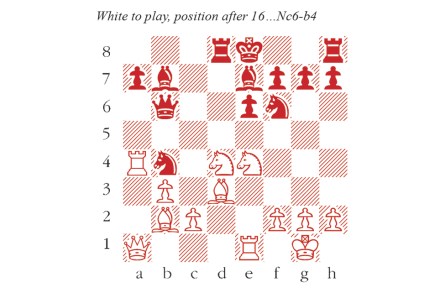
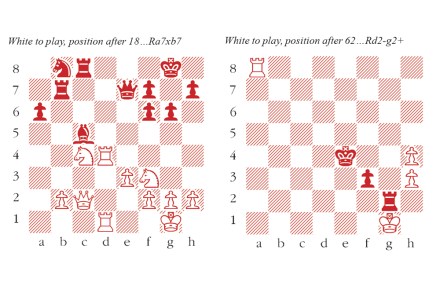
Black to play. Dubov-Anand, Levitov Chess 2023. Dubov has just grabbed a pawn on b7. Which response gave Anand a decisive advantage? Email answers to chess@spectator.co.uk by Monday 23 October. There is a prize of £20 for the first correct answer out of a hat. Please include a postal address and allow six weeks for prize delivery. Last week’s solution 1…Re3!, as 2 fxe3 Qxg3+ 3 Kh1 Nxe3 threatens Qg2# and Nxc2. In the game 2 Rfe1 Rae8! renewed the threat of Rxf3+, Qh2+ etc and White resigned soon after.

Upset

Magnus Carlsen was, as he said, ‘completely crushed’ in the second round of the Qatar Masters earlier this month. His opponent, 23-year-old Alisher Suleymenov from Kazakhstan, is a grandmaster, but on paper nowhere near to the level of the world elite. He played the game of his life, but his achievement was undermined by Carlsen’s intemperate comment (on X) that ‘as soon as I saw my opponent was wearing a watch early in the game, I lost my ability to concentrate’. Predictably, this began a frenzy of gossip, though the world no. 1 soon clarified that he was not accusing his opponent of cheating. The sad truth is that a miasma of mistrust is encroaching year by year.

No. 773

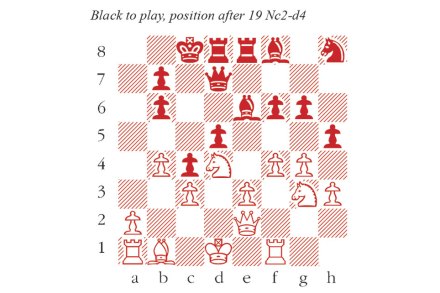
Black to play. Dardha-Mamedyarov, European Club Cup, 2023. A knight down, which move enabled Black to break the kingside defence? Email answers to chess@spectator.co.uk by Monday 16 October. There is a prize of £20 for the first correct answer out of a hat. Please include a postal address and allow six weeks for prize delivery. Last week’s solution 1 Nh1! threatens 2 Rxh2#. Then 1… Kxh1 2 Ng3#, or 1…Rf1 2 Qxh2#, or 1…Rxh1 2 Rg3#.

The long plan

‘Chess, an ancient game of strategy…’ – that’s what they write on the packaging in department stores. But in real life, playing a game of chess feels more like fighting fires, half of which you kindled yourself. Whatever grand ambitions you have, right now your queen is under attack and the next priority is your shaky kingside. But, first let’s go and attack that bishop! A game of chess is just one damned thing after another. Even for the world’s best players, any planning is mostly implicit, since they recognise the contours of the game at a glance. In such and such position, the bishop belongs here and the knight belongs there, and this is the pawn break you aim for.

No. 772

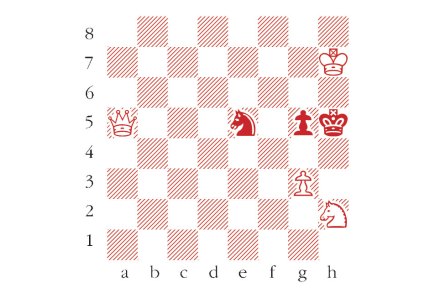
White to play and mate in two moves. Composed by Andrii Sergiienko, Fide Youth Composing Championship 2023. Answers should be emailed to chess@spectator.co.uk by Monday 9 October. There is a prize of £20 for the first correct answer out of a hat. Please include a postal address and allow six weeks for prize delivery. Last week’s solution 1 Bf6! gxf6 2 exf6 Rg8 3 Rd8!

A matter of technique

A queen and king can force mate against a lone king – that is as fundamental as it gets. Almost all regular players know that to be true, and they also know how to execute it. But players are regularly confronted by the distinction between ‘knowing that’, and ‘knowing how’. Many know that king, bishop and knight can force mate against a lone king. But I would bet with confidence that only a minority of those who know that fact could actually demonstrate it. The technique is somewhat abstruse and, since the endgame arises so rarely, it is easily forgotten. Imagine – you spent an hour practising this endgame… but that was five years ago. Now you’ve actually got it on the board, but it is, so to speak, a cold, rainy night in Stoke.

No. 771

Silman-McFarland, Reno 1991. White is clearly in control. Which move did he play to decide the game? Answers should be emailed to chess@spectator.co.uk by Monday 30 September. There is a prize of £20 for the first correct answer out of a hat. Please include a postal address and allow six weeks for prize delivery. Last week’s solution 1 Qg6! e.g.

Harry Potter’s game of chess

Novice chess players can seem spellbound by the power of their own queen, zigzagging hither and thither in desperate search of bounty. You soon learn that on the chessboard strength is weakness and weakness is strength; the queen must flee from any attack while a pawn is, well, only a pawn in your game. Experienced players acquire a more mercantile approach – every piece has its price. In fact, being ready to dispense with an ostensibly valuable piece in service of a higher goal is the mark of a skilful player. Making great play of this is the chess game from Harry Potter and the Philosopher’s Stone, presumably one of the most widely viewed chess scenes in cinema history.

No. 770

White to play and mate in two moves. Composed by C.G.S. Narayanan, K. Seetharaman, 2017. Answers should be emailed to chess@spectator.co.uk by Monday 25 September. There is a prize of £20 for the first correct answer out of a hat. Please include a postal address and allow six weeks for prize delivery. Last week’s solution 1 Nc2!

India’s rising stars

The former world champion Vishy Anand has described the current crop of young Indian talents as a golden generation. At last month’s Fide World Cup, four of the quarter-finalists were Indian. Most eminent was 17-year-old Gukesh, who recently entered the world top ten, narrowly overtaking Anand himself. Praggnanandhaa, 18 years old, went as far as the final, where he was beaten by Magnus Carlsen. The others were Erigaisi, who turned 20 earlier this month, and Vidit, almost a veteran at age 28!    All four players were back at the board at the Tata Steel India Rapid and Blitz, held in Kolkata earlier this month. Impressive as they are, it was reassuring to see that the teenagers have not entirely eclipsed the older generation.

No. 769

White to play and mate in two moves. Composed by Philip Hamilton Williams, 1894. Email answers to chess@spectator.co.uk by Monday 18 September. There is a prize of £20 for the first correct answer out of a hat. Please include a postal address and allow six weeks for prize delivery. Last week’s solution 1…Qd7! deflects the queen from the defence of e1. White resigned, as 2 Qc3 Rxe1+ 3 Qxe1 Qxc6 wins. But not 1…Qd5? 2 Qxd5 check!

Show of Hans

Hans Niemann is back. The American grandmaster drew worldwide attention last year when he was alleged to have cheated by Magnus Carlsen. Niemann responded with a $100 million defamation lawsuit against various parties. That was dismissed by a federal judge in June, though Niemann could still have pursued some of his claims in a state court. But in late August, the website Chess.com (one of the defendants) released a joint statement with Hans Niemann and Magnus Carlsen to move on from the issue. What a delicate compromise it was! Chess.com reinstated Niemann to their platform, but stood by their October 2022 report, which set out the case that Niemann had cheated extensively online.