Lucy Vickery

Shipping lines

From our UK edition

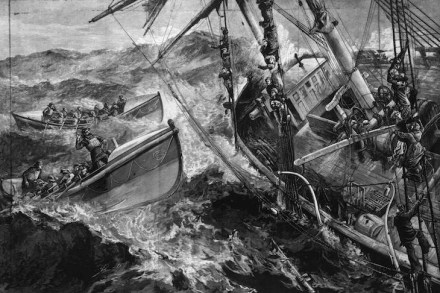
In Competition No. 3027 you were invited to submit a poem inspired by the Shipping Forecast.   Life-saver, lullaby, poetic reminder of our maritime heritage, the Shipping Forecast celebrated its 150th anniversary this year. Charlotte Green has described it as the nearest she ever came to reading poetry on air; Carol Ann Duffy ended her poem ‘Prayer’ with the lines ‘Darkness outside. Inside, the radio’s prayer —/ Rockall. Malin. Dogger. Finisterre’; and Seamus Heaney wrote a beautiful sonnet ‘The Shipping Forecast’.   Its incantatory magic inspired a entry that was funny, poignant and varied, in both content — cricket, adultery, the choppy waters of Brexit — and form (haiku, sonnet, villanelle…).

Spectator competition winners: Foggily-froggily/ Michel B. Barnier…: topical double dactyls

From our UK edition

The latest competition, a wildly popular one, invited you to compose topical double dactyls. The double dactyl was dreamed up in 1951 by the poet Anthony Hecht and the classical scholar Paul Pascal. My well-thumbed copy of Jiggery-Pokery, a wonderful 1967 compendium of the form edited by Hecht and the poet John Hollander, reveals with pride that Auden (to whom the book is dedicated) used the form ‘thrice’ for the choruses in his Aesopian playlets Moralities.

Double dactylic

From our UK edition

In Competition No. 3026 you were invited to submit topical double dactyls.   The double dactyl was dreamed up in 1951 by the poet Anthony Hecht and the classical scholar Paul Pascal. My well-thumbed copy of Jiggery-Pokery, a wonderful 1967 compendium of the form edited by Hecht and the poet John Hollander, reveals with pride that Auden (to whom the book is dedicated) used the form ‘thrice’ for the choruses in his Aesopian playlets Moralities.   Double dactyls always go down well, and this comp elicited an entertaining parade of double dactylic notables — and pursuits egomaniacal, unoligarchical, prosecutorial, heterosexual, philoprogenitive…   The winners earn £15 each. Foggily-froggily Michel B.

Spectator competition winners: Our Dawkins, who art in Oxford: Lord’s Prayers for the 21st century

From our UK edition

The latest competition, to submit a Lord’s Prayer for the 21st century, drew a smallish but pleasingly varied entry. One of my favourites, among the many parodies of the Lord’s Prayer already out there, is Ian Dury’s ‘Bus Driver’s Prayer’: ‘Our father,/ who art in Hendon/ Harrow Road be Thy name./ Thy Kingston come; thy Wimbledon…’. Bill Greenwell’s ‘The Refugees’ Prayer’ started promisingly — ‘Half-hearted, we chant/ in haven, harrowed by the numb;/ deny kin can come,/ deny well, be dumb…’ — but I found bits of it puzzling. A.H. Harker, Alan Millard, Paul Carpenter, David Silverman and Meg Muldowney were also strong contenders.

Let us pray

From our UK edition

In Competition No. 3025 you were invited to submit a Lord’s Prayer for the 21st century.   One of my favourites, among the many parodies of the Lord’s Prayer already out there, is Ian Dury’s ‘Bus Driver’s Prayer’: ‘Our father,/ who art in Hendon/ Harrow Road be Thy name./ Thy Kingston come; thy Wimbledon…’.   The challenge drew a smallish but pleasingly varied entry. Bill Greenwell’s ‘The Refugees’ Prayer’ started strongly — ‘Half-hearted, we chant/ in haven, harrowed by the numb;/ deny kin can come,/ deny well, be dumb…’ — but then puzzled in parts. A.H. Harker, Alan Millard, Paul Carpenter, David Silverman and Meg Muldowney were also strong contenders.

Spectator competition winners: the inspired awfulness of Dan Brown

From our UK edition

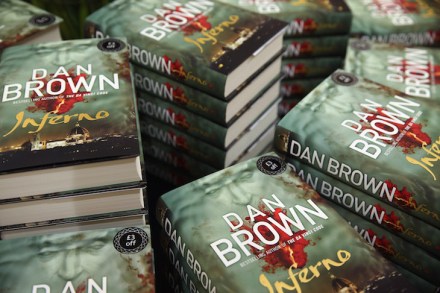
The latest comp was a nod to the curiously enjoyable awfulness of the wildly rich, bestselling author Dan Brown’s much-mocked prose. You were invited to submit a short story in the style of the master. Geoffrey K. Pullum, professor of general linguistics at the University of Edinburgh, nails it when he describes Brown’s style as ‘not just bad; it is staggeringly, clumsily, thoughtlessly, almost ingeniously bad’. Here, for the uninitiated, is an oft-cited example of one of the most deliciously toe-curling sentences from Deception Point: ‘Overhanging her precarious body was a jaundiced face whose skin resembled a sheet of parchment paper punctured by two emotionless eyes.’ It was a nicely calibrated entry, in general, and fun to judge.

Brown studies

From our UK edition

In Competition No. 3024 you were invited to submit a short story in the style of Dan Brown. This comp, a nod to the glorious awfulness of the wildly rich, bestselling author Dan Brown’s much-mocked prose, drew a nicely calibrated entry. In the interests of allowing space for six winners (who are rewarded with £25 apiece), I’ll step aside without further ado. Over to you. Langdon stared steadily with his questing blue eyes at the poem the balding gigolo penned. What was it about the scansion? His heart pounded like a lineman’s hammer. A sonnet! An old form, invented by Giacomo da Lentini. 1230. ‘The Magna Curia!’ said Langdon out loud. A voice came from the night-coloured darkness, interrupting his thought with a curdling scream. ‘Mind the volta!

Spectator competition winners: unnatural combinations

From our UK edition

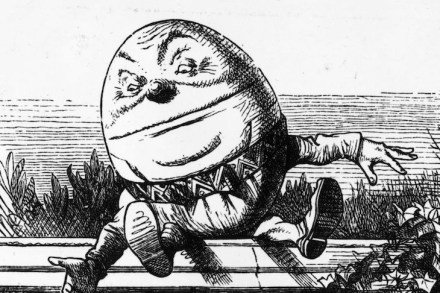
The latest competition invited you to submit cringeworthy portmanteau words. The word portmanteau was first used in this sense by Lewis Carroll in Through the Looking Glass when Humpty Dumpty is explaining ‘Jabberwocky’ to Alice: ‘Well, “slithy” means “lithe and slimy”… You see it’s like a portmanteau — there are two meanings packed up into one word.’ There’s nothing wrong with new words, of course. As Thomas Jefferson wrote in a letter of 1820 to John Adams: ‘I am a friend to neology. It is the only way to give to a language copiousness and euphony.’ The best, most enduring portmanteaus are witty, pithy and fill a gap (‘brunch’, ‘metrosexual’, ‘workaholic’).

Mixing it | 9 November 2017

From our UK edition

In Competition No. 3023 you were invited to submit cringeworthy portmanteau words. The word portmanteau was first used in this sense by Lewis Carroll in Through the Looking Glass when Humpty Dumpty is explaining ‘Jabberwocky’ to Alice: ‘Well, “slithy” means “lithe and slimy”… You see it’s like a portmanteau — there are two meanings packed up into one word.’ There’s nothing wrong with new words, of course. As Thomas Jefferson wrote in a letter of 1820 to John Adams: ‘I am a friend to neology. It is the only way to give to a language copiousness and euphony.’ The best, most enduring portmanteaus are witty, pithy and fill a gap (‘brunch’, ‘metrosexual’, ‘workaholic’).

Spectator competition winners: a poem for Boris

From our UK edition

The latest competition called for a safe poem that Boris Johnson could have on hand to quote from when out in the field. The kerfuffle caused by the Foreign Secretary’s murmured quotation of a few lines from Kipling’s poem ‘Mandalay’ during a recent visit to Shwedagon Pagoda in Myanmar led me to wonder whether it might be wise, given an ever-increasing number of no-go areas subject matter-wise, to challenge you to fashion an all-purpose poem unlikely to offend. Barbara Jones’s Blakean-flavoured entry — ‘And did my feet in foreign clime/ Trample on sensitivities?’ — caught my attention, as did Tim Raikes’s patter song. But they were outflanked by the winners below who take £25 each. The extra fiver is D.A. Prince’s.

A poem for Boris

From our UK edition

In Competition No. 3022 you were invited to compose a safe poem that Boris Johnson could have on hand to quote from when out in the field. The recent kerfuffle caused by the Foreign Secretary’s murmured quotation of a few lines of Kipling’s poem ‘Mandalay’ during a visit to Shwedagon Pagoda in Myanmar led me to wonder whether it might be wise, given the ever-increasing number of no-go areas when it comes to subject matter, to challenge you to fashion an all-purpose poem unlikely to offend. Barbara Jones’s Blakean-flavoured entry — ‘And did my feet in foreign clime/ Trample on sensitivities?’ — caught my attention, as did Tim Raikes’s patter song. But they were outstripped by the winners below, who take £25 each.

Northern frights

From our UK edition

In Competition No. 3021 you were invited to compose terrifying lullabies. Lorca wondered why ‘Spain reserved the most potent songs of blood to lull its children to sleep, those least suited to their delicate sensibilities’, but the Scandinavians set the bar pretty high too: the unsoothing--sounding ‘Krakevisa’, from Norway, tells of gruesome uses for the carcase of a crow: ‘… from the entrails he made twelve pair of rope/ and the claws he used for dirt-forks.

Spectator competition winners: Lady Macbeth’s recipe for wedded bliss

From our UK edition

In what proved to be a popular comp, you were invited to submit the formula for a successful marriage courtesy of a well-known husband or wife in literature. Some time ago, I challenged you to do the same on behalf of well-known poets, and if you like your advice brief and to the point, there’s always Ogden Nash’s ‘A Word to Husbands’: To keep your marriage brimming With love in the loving cup, Whenever you’re wrong, admit it; Whenever you’re right, shut up. Your prescriptions were less pithy, but no less impressive for that. The winners take £30, and a fine display of Mr Polly’s ‘innate sense of epithet’ earns Alan Millard £35.

Marriage guidance

From our UK edition

In Competition No. 3020 you were invited to submit the formula for a successful marriage courtesy of a well-known husband or wife in literature.   Some time ago, I challenged you to do the same on behalf of well-known poets, and if you like your advice brief and to the point, there’s always Ogden Nash’s ‘A Word to Husbands’:   To keep your marriage brimming With love in the loving cup, Whenever you’re wrong, admit it; Whenever you’re right, shut up.   Your prescriptions were less pithy, but no less impressive for that. The winners take £30, and a fine display of Mr Polly’s ‘innate sense of epithet’ earns Alan Millard £35.

Spectator competition winners: record-breaking limericks

From our UK edition

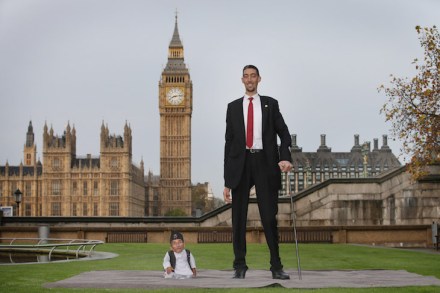
The latest competition called for limericks describing a feat worthy of inclusion in Guinness World Records. This assignment was a nod to my nine-year-old son, who is a big fan of astonishing facts. Every year, when he gets his mitts on the latest Guinness World Records, he follows me around the house bombarding me with them. To the records I’ve recently expressed amazement at — most people in a camper van; most basketball slam dunks in a minute by a rabbit; tallest ever domestic cat — you added the feats below, winningly celebrated in limerick form. Each one printed earns its author £9. Honourable mentions go to Clare Sandy, Jeffrey Aronson, Mike Morrison and Martin Parker.

Officially amazing

From our UK edition

In Competition No. 3019 you were invited to submit a limerick describing a feat worthy of inclusion in Guinness World Records.   This assignment is a nod to my nine-year-old son, who is a big fan of astonishing facts. Every year, when he gets his mitts on the latest Guinness World Records, he follows me around the house bombarding me with them. To the records I’ve recently expressed amazement at — most people in a camper van; most basketball slam dunks in a minute by a rabbit; tallest ever domestic cat — you added the feats below, winningly celebrated in limerick form.   Each one printed earns its author £9. Honourable mentions go to Clare Sandy, Jeffrey Aronson, Mike Morrison and Martin Parker.

Spectator competition winners: The Little Books of Flogge, Brygge, Chugge and Slugge

From our UK edition

The latest competition invited you to take your lead from Meik Wiking — CEO at the Happiness Research Institute and author of The Little Book of Hygge and The Little Book of Lykke — and provide an extract from your own Little Book of.... When I set this challenge, I had in mind the words of the Austrian psychiatrist and neurologist Viktor Frankl (he was speaking of American culture): ‘…again and again, one is commanded and ordered to “be happy.” But happiness cannot be pursued; it must ensue.’ You probably don’t need to tell that to Svend Brinkmann, whose book Stand Firm: Resisting the Self-Improvement Craze is a robust response to our relentless, self-help-manual-fuelled quest to create a better, happier self.

Get a life | 5 October 2017

From our UK edition

In Competition No. 3018 you were invited to take your lead from Meik Wiking — CEO at the Happiness Research Institute and author of The Little Book of Hygge and The Little Book of Lykke — and provide an extract from your own Little Book of…. When I set this challenge, I had in mind the words of the Austrian psychiatrist and neurologist Viktor Frankl (he was speaking of American culture): ‘…again and again, one is commanded and ordered to “be happy”. But happiness cannot be pursued; it must ensue.’ You probably don’t need to tell that to Svend Brinkmann, whose book Stand Firm: Resisting the Self-Improvement Craze is a robust response to our relentless, self-help-manual-propelled quest to create a better, happier self.

Spectator competition winners: Sonnets containing household tips

From our UK edition

The latest challenge, to compose sonnets containing household tips, saw you on sparkling form and there were plenty of stylish, inventive entries to choose from. I was riveted by your recommendations and hope to put some of them to the test, though I might just take John Whitworth’s word for it: (‘Prick sausages and they will never burst./ A pint of piss will slake a raging thirst.’) Commendations go to David Silverman, Joseph Conlon, Jennifer Moore, Fiona Pitt-Kethley and A.H. Harker. The winners earn £20 each. Basil Ransome-Davies trousers £25. Basil Ransome-Davies A healthy dose of vinegar will clean Your windows and wipe porn smears off your       screen. A saucer makes a handy weapon if You need to finish a domestic tiff.

On the house

From our UK edition

In Competition No. 3017 you were invited to submit a sonnet containing household tips.   You were on sparkling form this week and there were plenty of stylish, inventive entries to choose from. I was riveted by your recommendations and hope to put them to the test, though I might just take John Whitworth’s word for it: (‘Prick sausages and they will never burst./ A pint of piss will slake a raging thirst.’) Commendations go to David Silverman, Joseph Conlon, Jennifer Moore, Fiona Pitt-Kethley and A.H. Harker. The winners earn £20 each. Basil Ransome-Davies trousers £25.   A healthy dose of vinegar will clean Your windows and wipe porn smears off your screen. A saucer makes a handy weapon if You need to finish a domestic tiff.