Lucy Vickery

Laughing matter

From our UK edition

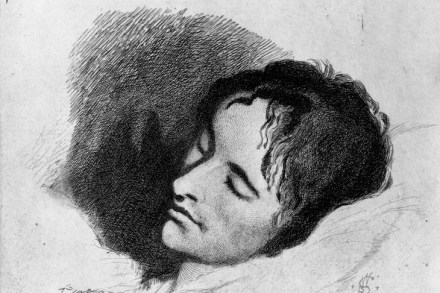
In Competition No. 3006 you were invited to submit a sonnet that takes as its opening line Keats’s ‘Why did I laugh tonight? No voice will tell:’ (This was a sonnet Keats chose not to publish but transcribed into a long letter he wrote over a period in early 1819 to George and Georgiana Keats, his brother and sister-in-law.)   The challenge drew a pleasingly large, inventive and witty entry which saw you deploy a range of sonnet patterns (there are some 30 variations of the form in The Oxford Book of English Verse).   In an especially closely contested week, Julia Munrow, J. Garth Taylor, Chris O’Carroll, Susan McLean, Virginia Price Evans, Paul Freeman, Alanna Blake, Roger Rengold and Mike Morrison earn a special mention.

Spectator competition winners: The Book of Nicola Sturgeon

From our UK edition

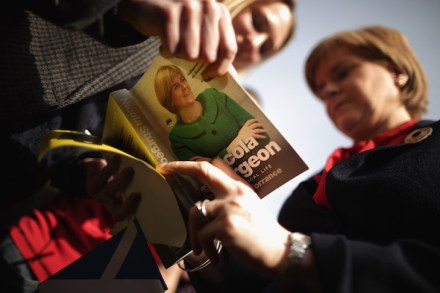
Inspiration for the latest competition came from Anthony Lane’s terrific ‘The Book of Jeremy Corbyn’, an account of the general election that ran recently in the New Yorker and was shared widely on social media: ‘And there came from the same country a prophet, whose name was Jeremy. His beard was as the pelt of beasts, and his raiments were not of the finest. And he cried aloud in the wilderness and said, Behold, I bring you hope.’ You were asked to flesh out the story with a version of either ‘The Book of Boris’, ‘The Book of Theresa’, ‘The Book of Tim’ or ‘The Book of Nicola’.

Brought to book

From our UK edition

In Competition No. 3005 you were invited to take your inspiration from Anthony Lane’s terrific ‘The Book of Jeremy Corbyn’, an account of the general election that ran recently in the New Yorker and was shared widely on social media: ‘And there came from the same country a prophet, whose name was Jeremy. His beard was as the pelt of beasts, and his raiments were not of the finest. And he cried aloud in the wilderness and said, Behold, I bring you hope.’ You were asked to flesh out the story with a version of either ‘The Book of Boris’, ‘The Book of Theresa’, ‘The Book of Tim’ or ‘The Book of Nicola’.   Cod-biblical can be tricky to pull off but you appeared to relish the challenge.

Spectator competition winners: Alice in Trumpland

From our UK edition

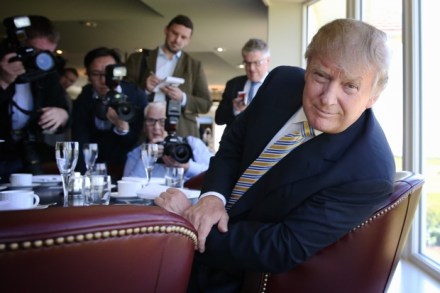
Kellyanne Conway’s alternative-facts interview earlier this year brought to mind Humpty Dumpty’s words from Lewis Carroll’s Through the Looking-Glass (‘When I use a word,’ Humpty Dumpty said, in rather a scornful tone, ‘it means just what I choose it to mean — neither more nor less’), and it struck me that Donald Trump’s America might be a good candidate for the Carrollian treatment. A call for extracts from Alice in Trumpland produced a modest but accomplished entry. As I was reading through the submissions, it occurred to me what a shining example Alice sets, with her calm and clear-headed response to a disconcerting barrage of alternative systems of logic; the antithesis of today’s keyboard warriors.

What Alice did next

From our UK edition

In Competition No. 3004 you were invited to submit an extract from Lewis Carroll’s Alice in Trumpland. As I was listening to Kellyanne Conway’s alternative-facts interview earlier this year, Humpty Dumpty’s words from Through the Looking-Glass floated into my mind (‘When I use a word,’ Humpty Dumpty said, in rather a scornful tone, ‘it means just what I choose it to mean — neither more nor less’) and it struck me that Donald Trump’s America might be a good candidate for the Carollian treatment.   In what was another closely fought contest, Chris O’Carroll and D.A. Prince were unlucky losers. The winners take £30 each and the bonus fiver is Brian Murdoch’s.

Spectator competition winners: ‘Alex Salmond/has been grilled, gutted and gammoned…’: clerihews about contemporary politicians

From our UK edition

Everyone loves a clerihew, its seems. The request for ones about contemporary politicians drew an enormous and excellent entry — from veterans and newbies alike — and even included a couple of limericks for good measure. For the avoidance of doubt, the clerihew is a comic four-line (AABB) poem characterised by metrical irregularity and awkward rhyme. Here’s an example from — who better? — the form’s inventor, E.C. Bentley: Sir Humphry Davy Abominated gravy. He lived in the odium Of having discovered sodium. Popular rhymes included ‘charmer’ and ‘Starmer’; ‘Boris’ and ‘Horace’; ‘Sturgeon’ and ‘burgeon’; ‘Corbyn’ and ‘absorbing’.

Political clerihew

From our UK edition

In Competition No. 3003 you were invited to supply clerihews about contemporary politicians. In an enormous and excellent entry, popular rhymes included ‘charmer’ and ‘Starmer’; ‘Boris’ and ‘Horace’; ‘Sturgeon’ and ‘burgeon’; ‘Corbyn’ and ‘absorbing’. Putin likes to ‘put the boot in’, apparently, and that David Davis is, by common consent, a ‘rara avis’.   There was much to admire and it was tricky to sift the best from the merely good. Those that made the cut are printed below and earn their authors £8 each. Commiserations to the rest.

Spectator competition winners: a song for Europe

From our UK edition

This week you were invited to fill a gap by providing lyrics for the European anthem. The powers that be behind the anthem, which has as its melody the final movement of Beethoven’s Symphony No. 9, chose to dispense with Friedrich von Schiller’s words. ‘There are no words to the anthem; it consists of music only,’ says the EU website, in bold type. My request for suitable words elicited an absorbing, inventive postbag. I wondered if anyone might revisit Schiller’s 1785 ‘Ode to Joy’ and repurpose the following lines: ‘Yea, if any hold in keeping/ Only one heart all his own/ Let him join us, or else weeping/ Steal from out our midst, unknown.’ No one did, though there were frequent nods to other parts of the ode.

Song for Europe

From our UK edition

In Competition No. 3002 you were invited to provide lyrics to the European anthem.   The anthem has as its melody the final movement of Beethoven’s Symphony No. 9 but dispenses with Schiller’s words. I wondered if anyone might go back to his 1785 ‘Ode to Joy’ and repurpose the following lines: ‘Yea, if any hold in keeping/ Only one heart all his own/ Let him join us, or else weeping/ Steal from out our midst, unknown.’ No one did, though there were frequent nods in the entry to other parts of the ode.   Over to the winners, who pocket £25 each. John Whitworth was an unlucky loser and W.J. Webster takes the extra fiver.

Spectator competition winners: P.G. Wodehouse’s Guide to Manly Health and Training

From our UK edition

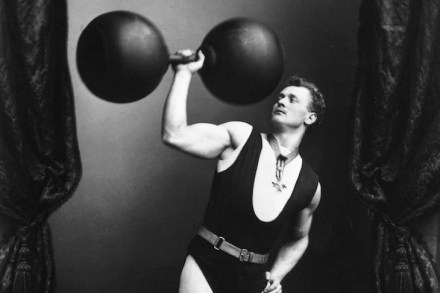
For the latest competition you were invited to take inspiration from the recently published Walt Whitman’s Guide to Manly Health and Training and supply an extract from a similar guide penned by another well-known writer. While Whitman extols the benefits of stale bread and fresh air and cautions against eating between meals, Fiona Pitt-Kethley’s John Wilmot, Earl of Rochester advocates a rather less ascetic approach: ‘Swiving’s the only manly exercise/ To tone the glutes and work the inner thighs/ No bench presses, go press a wench instead./ Roll up your yoga mat and go to bed.’ In a small but distinguished entry Mike Morrison takes £30; his fellow winners are rewarded with £25 each.

Health matters

From our UK edition

In Competition No. 3001 you were invited to take inspiration from the recently published Walt Whitman’s Guide to Manly Health and Training and supply an extract from a similar guide penned by another well-known writer. While Whitman extols the benefits of stale bread and fresh air and cautions against eating between meals, Fiona Pitt-Kethley’s John Wilmot, Earl of Rochester advocates a rather less ascetic approach: ‘Swiving’s the only manly exercise/ To tone the glutes and work the inner thighs/ No bench presses, go press a wench instead./ Roll up your yoga mat and go to bed.’ In a small but distinguished entry Mike Morrison takes £30; his fellow winners are rewarded with £25 each. A man must live on the grand scale.

Spectator competition winners: ‘To be or not to be’: an answer to this and other famous literary questions

From our UK edition

‘Do androids dream of electric sheep?’; ‘What porridge had John Keats?’; ‘And is there honey still for tea?’ Your answers to these, and a host of other literary questions, were skilful and ingenious, so congratulations all round. Two admirably pithy responses to Hamlet’s famous dilemma came courtesy of Carolyn Beckingham: ‘To be, or not to be: that is the question.’ ‘If you’re not certain, wait,’ is my suggestion. The choice to live can be reversed at will; You can’t say that about the choice to kill. And Dr Bob Turvey: When Hamlet first posed his old question, Suicide was not worth a suggestion. Because, at the time, ’Twas considered a crime; Dignitas now allows its selection.

Question time | 1 June 2017

From our UK edition

In Competition No. 3000 you were invited to provide an answer, in verse or prose, to a famous literary question of your choosing. Two admirably pithy responses to Hamlet’s dilemma came courtesy of Carolyn Beckingham:   ‘To be, or not to be: that is the question.’ ‘If you’re not certain, wait,’ is my suggestion. The choice to live can be reversed at will; You can’t say that about the choice to kill.   And Dr Bob Turvey:   When Hamlet first posed his old question, Suicide was not worth a suggestion. Because, at the time, ’Twas considered a crime; Dignitas now allows its selection.   And there was much to enjoy elsewhere in a large, lively and varied entry. Bill Greenwell takes the bonus fiver; the rest earn £25.

Spectator competition winners: ‘A PM’s lot is not a happy one’

From our UK edition

The latest challenge was to supply a poem that takes as its first line W.S. Gilbert’s ‘A policeman’s lot is not a happy one’ but replaces ‘policeman’ with another trade or profession. Although this line doesn’t come until line eight in Gilbert & Sullivan’s ‘Policeman’s Song’, it was the opening I prescribed and so it was with a heavy heart that I had to disqualify some excellent entries that veered off piste (Judith McClure; Hilary Cooper; Charles Clive-Ponsonby-Fane; Carolyn Beckingham; Bill Greenwell). A competition-setter’s lot is not a happy one, then, but it does have its consolations and I was entertained — and informed — by your parade of teachers, lawyers, coroners, morticians and hitmen.

A bad lot

From our UK edition

In Competition No. 2999 you were invited to supply a poem which takes as its first line W.S. Gilbert’s ‘A policeman’s lot is not a happy one’ but replaces ‘policeman’ with another trade or profession. Although this line doesn’t come until line eight in Gilbert & Sullivan’s ‘Policeman’s Song’, it was the opening I prescribed and so it was with a heavy heart that I had to disqualify some excellent entries that veered off piste. A competition-setter’s lot is not a happy one, then, but it does have its consolations and I was entertained — and informed — by your parade of teachers, lawyers, coroners, morticians and hitmen. The bonus fiver belongs to David Silverman; the rest earn £25.

Spectator competition winners: The joy of bad translations (‘For tiptop consummation, finger choice dish and place on kinky table…’)

From our UK edition

The request for a set of instructions for an everyday device that have been badly translated into English was prompted by the appearance in my Twitter feed of some oft retweeted instructions for a PVC mobile phone case. It was, the buyer was told, a device of ‘easy schleping and more function’ which ‘can be hunged up at the waist, hunged up at the cervix and free holding’ There are easy laughs to be had at the expense of poorly translated holiday menus, etc (albeit tinged with a guilty awareness of one’s own linguistic shortcomings), but the challenge here was to amuse while staying the right side of intelligible. This you managed with varying degrees of success. On the whole, though, your entries were well judged: funny, charming, poignant even.

Lost in translation | 18 May 2017

From our UK edition

In Competition No. 2998 you were invited to submit a set of instructions for an everyday device that have been badly translated into English.   Poorly translated menus are more or less guaranteed to raise a holiday snigger (albeit tinged with a guilty awareness of one’s own linguistic shortcomings), but the challenge here was to amuse while staying the right side of intelligible. This you managed with varying degrees of success.   On the whole, though, your entries were well-judged: funny, charming, poignant even. Commendations go to Max Ross and Brian Murdoch. And to P.C.

Spectator competition winners: Donald Trump’s obituary for Planet Earth

From our UK edition

The invitation to submit an obituary for planet Earth drew a smallish but varied and heartfelt entry. The usual culprits were in the frame — asteroids, global warming, hubris, Trump, Brexit… But Basil Ransome-Davies reckons the Martians have got it in for us, which struck me as altogether plausible given how Elon Musk and co. already have their beady eyes firmly fixed on the red planet. He earns an honourable mention as do C.J. Gleed, D.A. Prince and Duncan Forbes. John Whitworth snaffles the bonus fiver and his fellow winners are rewarded with £25 apiece. John Whitworth In an obituary There’s no room for bitchery, So let’s say the earth Had some things of worth.

Global mourning

From our UK edition

In Competition No. 2997 you were invited to submit an obituary for planet Earth.   It was a smallish but varied and heartfelt entry. John Whitworth earns the bonus fiver and his fellow winners are rewarded with £25 apiece. Honourable mentions go to C.J. Gleed, D.A. Prince and Duncan Forbes.   In an obituary There’s no room for bitchery, So let’s say the earth Had some things of worth.   Angels and fairies, Cats and canaries, Camels and kiddyoes, Attenborough videos,   Woodlands for walking in, Teashops for talking in, Kitchens for cooking in, Mirrors for looking in.   Pity you blew it, But how did you do it? God alone knows, And that’s me I suppose. John Whitworth   We are sorry to learn that Earth has passed away.

Spectator competition winners: acrostic sonnets on The Spectator

From our UK edition

The latest competition asked for an acrostic sonnet in which the first letters of each line spell AT THE SPECTATOR. You weren’t obliged to make the theme of your poem this magazine and its contributors but many of you did, to great effect. The tone was mainly affectionate, along the lines of Paul Carpenter’s opening: Across this social media driven land There stands a bastion of common sense, That often takes a fearless lonely stand Heroic, unafraid to give offence. But there were a few dissenting voices, Chris O’Carroll for one: Addison and Steele are not amused. Their lofty mix, ‘morality with wit’, These days finds its proud name sadly misused. High Life and Low Life both play hell with it.