Lucy Vickery

That lovin’ feeling

From our UK edition

In Competition No. 3035 you were invited to provide a poem entitled ‘The Love Song of [insert name of a well-known figure]’. There was no obligation to write in the style of Eliot, but a few brave souls did so. David Shields’s ‘Love Song of Kim Kardashian’ (‘I have measured out my life in selfie sticks…’) made me smile. Max Gutmann’s ‘Love Song of Larry Nassar’(‘In this room the gymnasts come and go/ Saying, “My injury’s not near my — oh!”’) made me wince.   High fives to Ralph Rochester, Nicholas Stone, Mike Morrison and Mike Greenhough. The winners take £25 each. The Love Song of F.

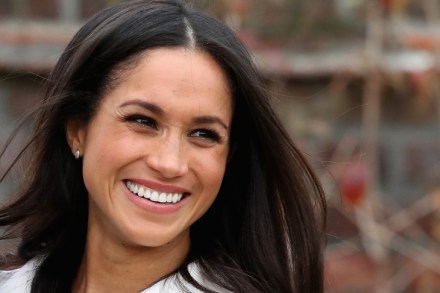
Spectator competition winners: Laureates past on the engagement of Prince Harry and Meghan Markle

From our UK edition

The latest challenge asked for a poem written by a poet laureate present or past on the engagement of Prince Harry and Meghan Markle. The role of laureate is not for everyone. Craig Raine once said to Ted Hughes, during a discussion of the then-vacant post, ‘Of course, no one in their right mind would really want it.’ (‘You’d get some terrific fishing,’ Hughes responded.) And Andrew Motion — who was in the hot seat for ten years and was much mocked for the rap he wrote to mark Prince William’s 21st birthday — was candid about its pitfalls: ‘How was I to steer an appropriate course between familiarity (which would seem presumptuous) and sycophancy (which would seem absurd)?

Occasional verse | 8 February 2018

From our UK edition

In Competition No. 3034 you were invited to provide a poem written by a poet laureate present or past on the engagement of Prince Harry and Meghan Markle.   There are those who view the role of laureate as a poisoned chalice. Craig Raine has described how he said to Ted Hughes, during a discussion of the then-vacant post, ‘Of course, no one in their right mind would really want it.’ (‘You’d get some terrific fishing,’ Hughes responded.) And Andrew Motion was candid about its pitfalls: ‘How was I to steer an appropriate course between familiarity (which would seem presumptuous) and sycophancy (which would seem absurd)?’   You strode into the minefield with gusto, and there was much to admire in a largish and vigorous entry.

Spectator competition winners: When Donald Trump met W.S. Gilbert (‘I am the very model of a Very Stable Genius’)

From our UK edition

The latest competition was a nod to Donald Trump's first year in office, and what better as a springboard than the US President's own words. Taking inspiration from @huntthesnark on Twitter, I invited you to compose a presidential patter song, taking as your first line ‘I am the very model of a Very Stable Genius’. https://twitter.com/huntthesnark/status/949640355615473666 John Beaton's first two stanzas caught my eye: I am the very model of a Very Stable Genius and though my tiny hands can't grab the bigness of my penius- and, by the way, its bigness is so big it is obscenious- they're fine for grabbing babes who've kept their bodies beauty       queenious. I sniff a lot and slur a bit. That's coz I'm so spontaneous.

Presidential patter

From our UK edition

In Competition No. 3033 you were invited to take as your first line ‘I am the very model of a Very Stable Genius’ and continue for up to a further 15.   It seemed about time for a challenge to mark Trump’s first year in office, and what better as a springboard than the Donald’s own words. Long lines mean fewer entries, which is a shame because the standard was terrific. Honourable mentions go to Carolyn Beckingham, John Beaton, Brian Murdoch and Ann Alexander. The winners take £25. I am the very model of a Very Stable Genius. To castigate my temperament is nasty, fake and hee-nius. There’s Lincoln and there’s Washington and other famous presidents Whom I would say I’m smarter than without a moment’s hesitance.

Spectator competition winners: ‘I met a traveller from an antique land’ – poems about passports

From our UK edition

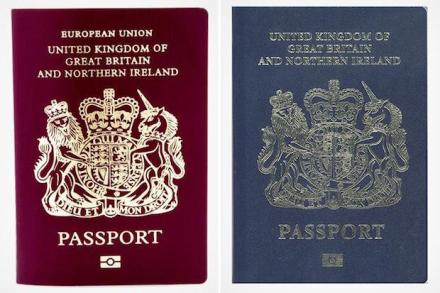
The latest challenge was to provide a poem about passports. While the news that British passports issued after October of next year will be navy blue rather than burgundy was heartily cheered in some quarters, others — like Nicola Sturgeon, who denounced it as ‘insular nonsense’ — weren’t so delighted. And others still wondered what all the fuss was about. The full spectrum of opinion was reflected in a small but punchy entry, and in the winning line-up. Commendations go to David Silverman’s ‘Jerusalem’-inspired verse, and to Frank Upton, Sylvia Fairley and Fiona Pitt-Kethley, who also shone. The winners printed below are rewarded with £25. Basil Ransome-Davies pockets the extra fiver.

Documentary

From our UK edition

In Competition No. 3032 you were invited to provide a poem about passports.   While the news that British passports issued after October of next year would be navy blue rather than burgundy was heartily cheered in some quarters, others — like Nicola Sturgeon, who denounced it as ‘insular nonsense’ — weren’t so delighted. And others still wondered what all the fuss was about.   The full spectrum of opinion was reflected in a small but punchy entry, and in the winning line-up. Commendations go to David Silverman’s ‘Jerusalem’-inspired verse, and to Frank Upton, Sylvia Fairley and Fiona Pitt-Kethley. The winners net £25. Basil Ransome-Davies takes £30.

Spectator competition winners: rude food

From our UK edition

The latest challenge was to provide a review by a restaurant critic that is tediously loaded with sexual language. I have had this comp up my sleeve since reading a piece by Steven Poole in the Observer in which he laid into the relentless sexualisation of food in our culture: ‘Everyone revels in the “filthiness” of what they are naughtily pleased to call “gastroporn…”’, he writes. And Jamie Oliver ‘describes pretty much everything he is about to cook as “sexy”, as though not quite sure whether he would like to shag it or eat it …’ With the recent return to our screens of the queen of innuendo, Nigella Lawson, now seemed like a good time to set it.

Rude food

From our UK edition

In Competition No. 3031 you were invited to provide a review by a restaurant critic that is tediously loaded with sexual language.   I have had this comp up my sleeve since reading a piece by Steven Poole in the Observer in which he laid into the relentless sexualisation of food in our culture: ‘Everyone revels in the “filthiness” of what they are naughtily pleased to call “gastroporn…”’, he writes. And Jamie Oliver ‘describes pretty much everything he is about to cook as “sexy”, as though not quite sure whether he would like to shag it or eat it …’   With the recent return to our screens of the queen of innuendo, Nigella Lawson, now seemed like a good time to set it.

Spectator competition winners: ‘Of January wary be!’ (plus: a presidential patter song)

From our UK edition

In the brief for the latest challenge — to submit poems entitled ‘January’ — I mentioned William Carlos Williams, R.S. Thomas and Dante Gabriel Rossetti, as all of them wrote poems with ‘January’ as their title. But that most maligned of months also lands a starring role in the opening stanza of George Barker’s charming ‘January Jumps About’: ‘January jumps about/ in the frying pan/ trying to heat/ his frozen feet/ like a Canadian…’ Freezing temperatures were very much on your minds, too, and for Jayne Osborn they are a cause for celebration: ‘Being constantly hot is tremendous fun – not!

First thoughts

From our UK edition

In Competition No. 3030 you were invited to provide a poem entitled ‘January’.   I mentioned William Carlos Williams, R.S. Thomas and Dante Gabriel Rossetti in the brief for this challenge, all of whom wrote poems with ‘January’ as their title. But that most maligned of months also lands a starring role in the opening stanza of George Barker’s charming poem ‘January Jumps About’: ‘January jumps about/ in the frying pan/ trying to heat/ his frozen feet/ like a Canadian…’   Freezing temperatures were very much on your minds, too, and for hot-flush-ridden Jayne Osborn they are a cause for celebration. The winners printed below are rewarded with £25. Chris O’Carroll is overall champ and earns £30.

Spectator competition winners: New Year’s resolutions in verse

From our UK edition

The first challenge of 2018 was to provide a New Year’s resolution (or more than one) in verse. Woody Guthrie’s 1943 ‘new years rulin’s’ have considerable charm: ‘Dont get lonesome; stay glad; dream good; shine shoes; wash teeth if any…’ But perhaps it was Friedrich Nietzsche who inspired Basil Ransome-Davies’s entry. In 1882, he resolved to become a yes-man: ‘I do not want to wage war with the ugly. I do not want to accuse, I do not want even to accuse the accusers… I wish to be at any time hereafter only a yea-sayer!’ David Silverman’s spin on Thomas Hood’s ‘No!’ was nice. Alanna Blake, George Simmers and Nicholas Stone also impressed in a strong field.

Best foot forward

From our UK edition

In Competition No. 3029 you were invited to provide a new year’s resolution (or more than one) in verse.   Woody Guthrie’s 1943 ‘new years rulin’s’ have considerable charm: ‘Dont get lonesome; stay glad; dream good; shine shoes; wash teeth if any…’ But perhaps it was Nietzsche who inspired Basil Ransome-Davies’s entry. In 1882, he resolved to become a yes-man: ‘I do not want to wage war with the ugly. I do not want to accuse, I do not want even to accuse the accusers… I wish to be at any time hereafter only a yea-sayer!’   David Silverman’s spin on Thomas Hood’s ‘No!’ was nice. Alanna Blake, George Simmers and Nicholas Stone also impressed in a strong field.

Spectator competition winners: ‘May all my enemies go to hell,/ Noel, Noel, Noel, Noel’ – or poets’ Christmas cards

From our UK edition

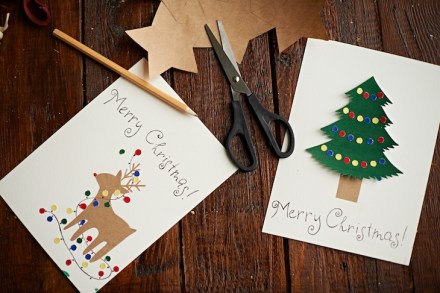
This year’s festive challenge, inspired by Hillaire Belloc’s epigrammatic stinger ‘May all my enemies go to hell,/ Noel, Noel, Noel, Noel’, was to compose lines for a Christmas card courtesy of well-known poets. Poets moved to write Yule-inspired verse include that old killjoy William Topaz McGonagall: ‘The way to respect Christmas time/ Is not by drinking whisky or wine’. And, of course, John Betjeman: ‘And girls in slacks remember Dad,/ And oafish louts remember Mum,/ And sleepless children’s hearts are glad./ And Christmas morning bells say “Come!”…’ JB cropped up a fair amount in the entry, but nobody, alas, chose U.A. Fanthorpe, a poet notable for having sent verses to friends as Christmas cards over many years.

Season’s greetings | 13 December 2017

From our UK edition

In Competition No. 3028 you were invited to submit lines for a Christmas card courtesy of well-known poets. Poets moved to write Yule-inspired verse include that old killjoy William Topaz Mc-Gonagall: ‘The way to respect Christmas time/ Is not by drinking whisky or wine’. And, of course, John Betjeman: ‘And girls in slacks remember Dad,/ And oafish louts remember Mum,/ And sleepless children’s hearts are glad./ And Christmas morning bells say “Come!”…’ JB cropped up a fair amount in the entry, but nobody, alas, chose U.A. Fanthorpe, who sent verses to friends as Christmas cards over many years. Thank you all, old-timers and newcomers alike, for your terrific entries over the year.

Spectator competition winners: poems inspired by the Shipping Forecast

From our UK edition

The call for poems inspired by the Shipping Forecast drew an entry that was funny, poignant and varied, in both content — cricket, adultery, the choppy waters of Brexit — and form (haiku, sonnet, villanelle…). Life-saver, lullaby, poetic reminder of our maritime heritage, the Shipping Forecast celebrated its 150th anniversary this year. Charlotte Green has described it as the nearest she ever came to reading poetry on air; Carol Ann Duffy ended her poem ‘Prayer’ with the lines ‘Darkness outside. Inside, the radio’s prayer —/ Rockall. Malin. Dogger. Finisterre’; and Seamus Heaney wrote a beautiful sonnet, ‘The Shipping Forecast’.

Shipping lines

From our UK edition

In Competition No. 3027 you were invited to submit a poem inspired by the Shipping Forecast.   Life-saver, lullaby, poetic reminder of our maritime heritage, the Shipping Forecast celebrated its 150th anniversary this year. Charlotte Green has described it as the nearest she ever came to reading poetry on air; Carol Ann Duffy ended her poem ‘Prayer’ with the lines ‘Darkness outside. Inside, the radio’s prayer —/ Rockall. Malin. Dogger. Finisterre’; and Seamus Heaney wrote a beautiful sonnet ‘The Shipping Forecast’.   Its incantatory magic inspired a entry that was funny, poignant and varied, in both content — cricket, adultery, the choppy waters of Brexit — and form (haiku, sonnet, villanelle…).

Spectator competition winners: Foggily-froggily/ Michel B. Barnier…: topical double dactyls

From our UK edition

The latest competition, a wildly popular one, invited you to compose topical double dactyls. The double dactyl was dreamed up in 1951 by the poet Anthony Hecht and the classical scholar Paul Pascal. My well-thumbed copy of Jiggery-Pokery, a wonderful 1967 compendium of the form edited by Hecht and the poet John Hollander, reveals with pride that Auden (to whom the book is dedicated) used the form ‘thrice’ for the choruses in his Aesopian playlets Moralities.

Double dactylic

From our UK edition

In Competition No. 3026 you were invited to submit topical double dactyls.   The double dactyl was dreamed up in 1951 by the poet Anthony Hecht and the classical scholar Paul Pascal. My well-thumbed copy of Jiggery-Pokery, a wonderful 1967 compendium of the form edited by Hecht and the poet John Hollander, reveals with pride that Auden (to whom the book is dedicated) used the form ‘thrice’ for the choruses in his Aesopian playlets Moralities.   Double dactyls always go down well, and this comp elicited an entertaining parade of double dactylic notables — and pursuits egomaniacal, unoligarchical, prosecutorial, heterosexual, philoprogenitive…   The winners earn £15 each. Foggily-froggily Michel B.

Spectator competition winners: Our Dawkins, who art in Oxford: Lord’s Prayers for the 21st century

From our UK edition

The latest competition, to submit a Lord’s Prayer for the 21st century, drew a smallish but pleasingly varied entry. One of my favourites, among the many parodies of the Lord’s Prayer already out there, is Ian Dury’s ‘Bus Driver’s Prayer’: ‘Our father,/ who art in Hendon/ Harrow Road be Thy name./ Thy Kingston come; thy Wimbledon…’. Bill Greenwell’s ‘The Refugees’ Prayer’ started promisingly — ‘Half-hearted, we chant/ in haven, harrowed by the numb;/ deny kin can come,/ deny well, be dumb…’ — but I found bits of it puzzling. A.H. Harker, Alan Millard, Paul Carpenter, David Silverman and Meg Muldowney were also strong contenders.