Lucy Vickery

From me to you

From our UK edition

In Competition No. 3014 you were invited to submit a love poem written by one contemporary politician to another.   Virginia Price Evans, writing on behalf of Jeremy Corbyn, channelled Betjeman in a bid to woo the PM: ‘Theresa M May, Theresa M May, I sigh and I die for our special day…’. Frank Upton’s Jeremy Hunt clearly thought that a spot of Eliot might melt the heart of Baroness Primarolo: ‘In the room the women come and go/ Talking of “Dawn Primarolo”…’. And W.J. Webster imagined Nicola Sturgeon making eyes across the Channel at M. Macron:   The Auld Alliance, sealed long since, Served both our nations well: As two made one again, my prince, We’d give the English hell.

Spectator competition winners: is August the cruellest month?

From our UK edition

The latest competition invited poems in praise or dispraise of August. There was a whiff of collusion about the entry this week, so many references were there to rubbish television, rubbish weather, fractious kiddies, tired gardens, traffic jams; as Katie Mallett puts it: ‘A turgid time of torpor and delay.’ But there were some sparkling, inventive turns too. David Silverman was on pithy form: Oh, thou cruellest month! If August comes, then winter Can’t be far behind. And hats off to A.H. Harker’s well-made nod to Eliot, to Paul Freeman and to W.J. Webster, a rare but eloquent fan of August. The winners take £30 and John Whitworth pockets £35. John Whitworth August, August, it’s the tops. August tastes like lollipops.

Flavour of the month

From our UK edition

In Competition No. 3013 you were invited to submit a poem in praise or dispraise of August.   There was a whiff of collusion about the entry this week, so many references were there to rubbish television, rubbish weather, fractious kiddies, tired gardens, traffic jams; as Katie Mallett puts it: ‘A turgid time of torpor and delay.’   But there were some sparkling, inventive turns. David Silverman was on pithy form:   Oh, thou cruellest month! If August comes, then winter Can’t be far behind.   Honourable mentions also go to A.H. Harker’s well-turned nod to Eliot, to Paul Freeman and to W.J. Webster, a rare but eloquent fan of August. The winners take £30 and John Whitworth pockets £35.   August, August, it’s the tops.

Spectator competition winners: Donald Trump’s ‘The Book of Moron’

From our UK edition

The idea for the latest competition came courtesy of Steven Joseph, who suggested that I invite competitors to change a letter in the title of a well-known play and submit a programme note for the new production. David Silverman’s Rosencrantz and Guildenstern are Deaf started well but ran out of steam rather halfway through. Other promising titles that didn’t quite deliver included The Cheery Orchard, A Waste of Honey and The Wind in the Pillows. And no one, regrettably, did justice to The Bugger’s Opera. I admired A.H.

Reprogramming

From our UK edition

In Competition No. 3012 you were invited to change a letter in the title of a well-known play and submit a programme note for the new production.   Thanks to Steven Joseph, who suggested this excellent competition topic. David Silverman’s Rosencrantz and Guildenstern are Deaf started well but ran out of steam halfway through. Other promising titles that didn’t quite deliver included The Cheery Orchard, A Waste of Honey and The Wind in the Pillows. And no one, regrettably, did justice to The Bugger’s Opera.   I admired A.H.

Spectator competition winners: in praise of Jean-Claude Juncker, Donald Trump and Jacob Rees-Mogg

From our UK edition

The invitation to submit a disgustingly flattering poem in heroic couplets in praise of a contemporary person of power saw you at your bootlicking best: Donald Trump, Anthony Scaramucci, Xi Jinping, Emmanuel Macron and Vladimir Putin were all on the receiving end of some serious sucking-up. Bill Greenwell’s tribute to Justin Trudeau caught my eye: ‘When all around you, everyone’s a pseudo,/ How gracefully you rise, dear Justin Trudeau...’. As did David Silverman’s love letter to Kim Jong-Un: ‘How do you solve a problem like Korea?/ Ask Kim Jong-un, he’s sure to make it clear.’ Closer to home, Alan Millard and John Whitworth lavished praise on little old me: ‘Our brows adorned with true poetic sweat.

Bowing and scraping

From our UK edition

In Competition No. 3011 you were invited to submit a disgustingly flattering poem in heroic couplets in praise of a contemporary person of power. You were at your bootlicking best this week: Donald Trump, Anthony Scaramucci, Xi Jinping, Emmanuel Macron and Vladimir Putin were all on the receiving end of some serious sucking-up. Bill Greenwell’s tribute to Justin Trudeau caught my eye: ‘When all around you, everyone’s a pseudo,/ How gracefully you rise, dear Justin Trudeau…’. As did David Silverman’s love letter to Kim Jong-un: ‘How do you solve a problem like Korea?/ Ask Kim Jong-un, he’s sure to make it clear.

Spectator competition winners: reader, I ate him: literary classics/horror mash-ups

From our UK edition

The latest comp, which called for extracts from a mash-up of a literary classic of your choice and horror fiction, was a nod to the recently deceased George Romero but also owes a debt to Seth Grahame-Smith’s 2009 Pride and Prejudice and Zombies, which weaves scenes of ‘ultraviolent zombie mayhem’ into Jane Austen’s original text. Most chose prose classics, but there were a few distinguished exceptions. Here’s what happens when, courtesy of Matt Quinn, the undead get their chops round Shakespeare’s Sonnet 18: Shall I compare thee to a stroganoff? Oh how we zombies joke! I want your heart, but not for lunch – for love! My sweet, don’t scoff, I’ve followed you all night.

Monster mash-up

From our UK edition

In Competition No. 3010, a nod to the late, great George Romero, you were invited to provide an extract from a mash-up of a literary classic of your choice and horror fiction.   Nathan Weston’s Werewolf Hall, Brian Murdoch’s The Gruffalo in Transylvania, Bill Greenwell’s Three Men and a Zombie and Nicholas MacKinnon’s The Nightmare of Casterbridge were all in with a shout for a place on the winners’ podium. But in a hotly contested week they were squeezed out by the entries below, whose authors earn £25 each. Adrian Fry nabs the extra fiver.   Mr Septimus Harding, warden of Hiram’s hospital, plunged his crucifix into the burning flesh of the ghoul, reflecting upon John Bold’s contention that this role was excessively remunerative.

Spectator competition winners: Ode on a potato peeler

From our UK edition

The idea for the latest challenge, to submit a poem about a domestic object, came to me when reading about an exhibition at the University of Hull (until 1 October) of Philip Larkin’s personal possessions. Alongside books, records, a pair of knickers and a figurine of Hitler is the lawnmower that inspired the poem ‘The Mower’, which he wrote in the summer of 1979 after inadvertently killing a hedgehog while cutting the grass. According to Betty Mackereth, Larkin’s secretary and one-time lover, he told her about the incident ‘...in his office the following morning with tears streaming down his face’. Your poems made me smile rather than cry: this was another popular comp that drew an entry packed with wit and inventiveness.

Quotidian

From our UK edition

In Competition No. 3009 you were invited to submit a poem about a domestic object.   I set this challenge with Philip Larkin’s ‘The Mower’ in mind, which he wrote in the summer of 1979 after inadvertently killing a hedgehog while cutting the grass. According to Betty Mackereth, Larkin’s secretary and onetime lover, he told her about the incident ‘…in his office the following morning with tears streaming down his face’.   Your poems made me smile rather than cry: this was another popular comp that drew an entry packed with wit and inventiveness. Alanna Blake, Nathan Weston and Mae Scanlan stood out, and the winners, below, take £25 each. O simple implement, no shrewd machine, No moving parts — just handle wed to bowl.

Spectator competition winners: starting over with Hemingway, Joyce, Hardy – and Dan Brown

From our UK edition

The latest challenge was to take the last line of a well-known novel and make it the first line of a short story written in the style of the author in question. The pitfalls are many as an author approaches the finishing line. In Aspects of the Novel, E.M. Forster wrote that because of the need to round things off, ‘nearly all novels are feeble at the end’. He has a point, but some get it just right. Here’s what Robert McCrum has to say about F. Scott Fitzgerald’s anything-but-feeble conclusion to The Great Gatsby (‘So we beat on, boats against the current, borne back ceaselessly into the past.

New beginnings

From our UK edition

In Competition No. 3008 you were invited to take the last line of a well-known novel and make it the first line of a short story written in the style of the author in question.   There’s room only for me to lament the lack of space for more winners; the judging process was especially painful and protracted this time around. Those that made the final cut appear below and earn £25 each.   A way a lone a last a loved a long the bookmaster Jimjoist rolled a virgil sheet from the toplady of a freshly complete queer of peeper into his tripewriter thinking.

Spectator competition winners: The world according to Larry, the Downing Street cat

From our UK edition

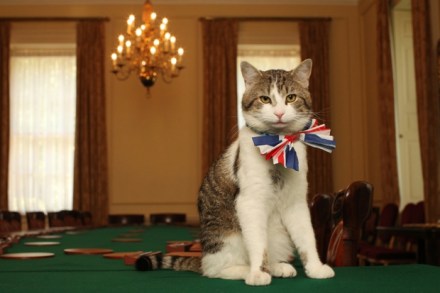
The invitation to submit a poem about Larry, the Downing Street cat, went down well, attracting a hefty postbag. Larry, who came to No. 10 in 2011 from Battersea Dogs & Cats Home during David Cameron’s premiership, was left behind when the family moved on (though Mr Cameron denied that this was because he hated cats). The ten-year-old tabby’s patchy record as Chief Mouser — apparently he spends more time kipping than hunting down rodents — hasn’t dented his popularity; as well as having an impressive 136,000 followers on Twitter, he has inspired a book, a cartoon strip – and now a competition.

Cat call (no. 3007)

From our UK edition

In Competition No. 3007 you were invited to submit a poem about Larry, the Downing Street cat. Larry came to No. 10 in 2011 from Battersea Dogs & Cats Home during David Cameron’s premiership. He was left behind when the family moved on, though Mr Cameron denied that this was because he hated cats. Although he has been less than impressive in his role as Chief Mouser — apparently spending more time kipping than hunting down rodents — the ten-year-old tabby has inspired a book, a cartoon strip and has accrued 136,000 followers on Twitter. Honourable mentions go to Sylvia Fairley, Frank Upton, Basil Ransome-Davies, Paul Carpenter, Frank Osen and John O’Byrne’s Emily Dickinson-inspired entry.

Spectator competition winners: Twists on Keats

From our UK edition

The latest challenge asked for a sonnet that takes as its opening line Keats’s ‘Why did I laugh tonight? No voice will tell:’ (This was a sonnet Keats chose not to publish but transcribed into a long letter he wrote over a period in early 1819 to George and Georgiana Keats, his brother and sister-in-law.) The invitation drew a pleasingly large, inventive and witty entry which saw you deploy a range of sonnet patterns (there are some 30 variations of the form in The Oxford Book of English Verse). In an especially closely contested week, Julia Munrow, J. Garth Taylor, Chris O’Carroll, Susan McLean, Virginia Price Evans, Paul Freeman, Alanna Blake, Roger Rengold and Mike Morrison earn a special mention. And it was with regret that I disqualified W.J.

Laughing matter

From our UK edition

In Competition No. 3006 you were invited to submit a sonnet that takes as its opening line Keats’s ‘Why did I laugh tonight? No voice will tell:’ (This was a sonnet Keats chose not to publish but transcribed into a long letter he wrote over a period in early 1819 to George and Georgiana Keats, his brother and sister-in-law.)   The challenge drew a pleasingly large, inventive and witty entry which saw you deploy a range of sonnet patterns (there are some 30 variations of the form in The Oxford Book of English Verse).   In an especially closely contested week, Julia Munrow, J. Garth Taylor, Chris O’Carroll, Susan McLean, Virginia Price Evans, Paul Freeman, Alanna Blake, Roger Rengold and Mike Morrison earn a special mention.

Spectator competition winners: The Book of Nicola Sturgeon

From our UK edition

Inspiration for the latest competition came from Anthony Lane’s terrific ‘The Book of Jeremy Corbyn’, an account of the general election that ran recently in the New Yorker and was shared widely on social media: ‘And there came from the same country a prophet, whose name was Jeremy. His beard was as the pelt of beasts, and his raiments were not of the finest. And he cried aloud in the wilderness and said, Behold, I bring you hope.’ You were asked to flesh out the story with a version of either ‘The Book of Boris’, ‘The Book of Theresa’, ‘The Book of Tim’ or ‘The Book of Nicola’.

Brought to book

From our UK edition

In Competition No. 3005 you were invited to take your inspiration from Anthony Lane’s terrific ‘The Book of Jeremy Corbyn’, an account of the general election that ran recently in the New Yorker and was shared widely on social media: ‘And there came from the same country a prophet, whose name was Jeremy. His beard was as the pelt of beasts, and his raiments were not of the finest. And he cried aloud in the wilderness and said, Behold, I bring you hope.’ You were asked to flesh out the story with a version of either ‘The Book of Boris’, ‘The Book of Theresa’, ‘The Book of Tim’ or ‘The Book of Nicola’.   Cod-biblical can be tricky to pull off but you appeared to relish the challenge.

Spectator competition winners: Alice in Trumpland

From our UK edition

Kellyanne Conway’s alternative-facts interview earlier this year brought to mind Humpty Dumpty’s words from Lewis Carroll’s Through the Looking-Glass (‘When I use a word,’ Humpty Dumpty said, in rather a scornful tone, ‘it means just what I choose it to mean — neither more nor less’), and it struck me that Donald Trump’s America might be a good candidate for the Carrollian treatment. A call for extracts from Alice in Trumpland produced a modest but accomplished entry. As I was reading through the submissions, it occurred to me what a shining example Alice sets, with her calm and clear-headed response to a disconcerting barrage of alternative systems of logic; the antithesis of today’s keyboard warriors.