Lucy Vickery

Between the lines | 10 May 2018

From our UK edition

In Competition No. 3047 you were invited to supply an imaginary testimonial for a high-profile figure that is superficially positive but contains hidden warnings to a potential employer.   This was an exercise in the artful deployment of ambiguity, as displayed in Robert J. Thornton’s L.I.A.R. The Lexicon of Intentionally Ambiguous Recommendations, a handbook for those who, whether out of kindness or fear of litigation, wish the precise meaning of their ‘recommendations’ to remain opaque.

Spectator competition winners: poems back to front, and gutted

From our UK edition

The latest challenge asked you to compose a poem beginning with the last line of any well-known poem and ending with its first line, the new poem being on a different subject from the original. This was a wildly popular comp, which elicited a witty and wide-ranging entry. The effort of extracting six winners from such a palmary bunch meant that I felt more than usually sorry for those who narrowly missed out. Step forward and take a bow, Paul Freeman, Jan Snook, Joseph Conlon, D.A. Prince and James Bench-Capon, who used both ends of the Divine Comedy for a poem about the hell of traffic jams. The winners below, chosen only after much humming and hawing, earn £30 each.

First and last

From our UK edition

In Competition No. 3046 you were invited to supply a poem beginning with the last line of any well-known poem and ending with its first line, the new poem being on a different subject all together.   This was a wildly popular comp, which elicited a witty and wide-ranging entry that was both pleasurable and painful to judge. The winners below, chosen only after much humming and hawing, earn £30 each.     I am the captain of my soul: Scant comfort when I’m six feet under Inside a crude and loamy hole. Has someone slipped up here, I wonder?   I thought that I would hob and nob With angels, all their wings aquiver, But I lie, stripped of pulse and throb, Inside some plywood, doomed to shiver.

Spectator competition winners: euphemistically speaking

From our UK edition

The latest challenge asked for poems about euphemisms. You avoided politics and sex (mostly), preferring, like Monty Python’s Dead Parrot sketch, to focus on the language of dying and the words and expressions we call on to avoid the D-word. And there are plenty of them — David Crystal has written that there are more than 1,000 words for death categorised in the Historical Thesaurus. I much admired Alanna Blake’s twist on Keats’s sonnet (‘Much have I dabbled in linguistic lore/ And many inexactitudes have used…’) and Max Ross’s neat acrostic. Hamish Wilson, Max Gutmann, Ann Drysdale and David Silverman also deserve a special mention. The prizewinners printed below earn £30 each. The extra fiver belongs to Bill Greenwell.

Mind your language | 26 April 2018

From our UK edition

In Competition No. 3045 you were invited to provide a poem about euphemisms.   You avoided politics and sex (mostly), preferring instead to focus on the language of dying and the words and expressions that enable us to sidestep the D-word (according to David Crystal, there are more than 1,000 words for death categorised in the Historical Thesaurus). I much admired Alanna Blake’s twist on Keats’s sonnet (‘Much have I dabbled in linguistic lore/ And many inexactitudes have used…’) and Max Ross’s neat acrostic. Hamish Wilson, Max Gutmann, Ann Drysdale and David Silverman also deserve a special mention. The prizewinners printed below earn £30 each. The extra fiver belongs to Bill Greenwell.

Spectator competition winners: the facts of life according to Dumbledore

From our UK edition

The call for lessons in the facts of life courtesy of a well-known character in fiction sent many of you running to children’s stories for inspiration. While Jayne Osborn recruited Dr Seuss — ‘Doing sex is good fun, and it’s easy to do./ Let me demonstrate, using Thing One and Thing Two…’ — Ted Harrison imagined know-all Owl’s attempt to enlighten his fellow inhabitants of Hundred Acre Wood: “‘The procrastination of the species is achieved through sectional hypocaust between contenting members….” Pooh’s attention began to wander. He started to think of lunch, and then tea and of honey sandwiches at bed-time and began dreaming of being sticky and happy.

Let’s talk about sex | 19 April 2018

From our UK edition

In Competition No. 3044 you were invited to provide a lesson in the facts of life courtesy of a well-known character in fiction.   There is space only for me to commend Jayne Osborn, who recruited Dr Seuss: ‘Doing sex is good fun, and it’s easy to do./ Let me demonstrate, using Thing One and Thing Two…’ and salute the prizewinners below, who each receive £25. As any fule kno, gurls are utterly wet and weedy and no boy in his rite mind wish to speke or pla with them. This is why they are kept in there own skools with names lik gingham hall, where they will not hav to witness the savige antiks of boys and we will not be driven madd by there silvery giggles.

Spectator competition winners: the spying game

From our UK edition

The latest competition asked for a short story inspired by the Salisbury poisonings. Ian McEwan, a writer who is fascinated by spying, was asked recently on the Today programme how he would begin a novel inspired by the current confrontation with Russia. The image that comes to mind, he said, was of a lion hunting a pack of deer-like creatures in a herd. ‘There’s one that’s trailing behind – too old, too young, perhaps, or has just left the EU…’ We find ourselves, McEwan said, back in that strange Cold War world of brazen lies. Many of you clearly agreed with him, judging by the regular appearances of George Smiley in the entry. John O’Byrne, Terence Horrocks, Roger Phillips, Bill Greenwell and Joe Houlihan all put in strong performances.

Poison pen

From our UK edition

In Competition No. 3043 you were invited to provide a short story inspired by the Salisbury poisonings.   Ian McEwan, a writer who is fascinated by spying, was asked recently on the Today programme how he would begin a novel inspired by the current confrontation with Russia. The image that comes to mind, he said, was of a lion hunting a pack of deer-like creatures in a herd. ‘There’s one that’s trailing behind — too old, too young, perhaps, or has just left the EU…’ We find ourselves, McEwan said, back in that strange Cold War world of brazen lies. Many of you clearly agreed with him, judging by the regular appearances of George Smiley in the entry.

Spectator competition winners: Hollywood ‘Jabberwocky’ (‘Twas Downey, and the Harrelsons/ Did Cruise and Walken in the Pitt…’)

From our UK edition

For the latest challenge, inspired by the American parodist Frank Jacobs's 1975 version of 'Jabberwocky', 'As If Lewis Carroll Were a Hollywood Press Agent in the Thirties', you were asked to come up with a Holly-wood-themed 'Jabberwocky' for our times. Jacobs begins: ''Twas Bogart and the Franchot Tones/ Did Greer and Garson in the Wayne;/ All Muni were the Lewis Stones,/And Rooneyed with Fontaine…'. Most (though not all) of you closely followed that tem-plate - to dazzling effect. Except Clive Norris, who veered off-piste with his Brexit-inspired 'Junckerwocky' ('Twas Brexit, and the fishy Goves/ Did twist and tumble 'neath the waves…'), which I enjoyed but disqualified on the grounds that it wasn't what I asked for.

Carroll in La La Land

From our UK edition

In Competition No. 3042, a challenge inspired by the American parodist Frank Jacobs’s 1975 version of ‘Jabberwocky’, ‘As If Lewis Carroll Were a Hollywood Press Agent in the Thirties’, you were invited to provide a Hollywood--themed ‘Jabberwocky’ for our times. Jacobs begins: ‘’Twas Bogart and the Franchot Tones/ Did Greer and Garson in the Wayne;/ All Muni were the Lewis Stones,/And Rooneyed with Fontaine…’, and most (though not all) of you closely followed that template — to dazzling effect. Honourable mentions go to Rob Johnston and Joe Houlihan. Those printed below pocket £25 each.   ’Twas Downey, and the Harrelsons Did Cruise and Walken in the Pitt.

Spectator competition winners: The ballad of Mar-a-Lago

From our UK edition

This week's challenge marks the centenary this year of the birth of Muriel Spark. 'I still take a poetic view of life as I see it through the novel,' Spark once said, explaining that she viewed her novels as long prose poems. So a verse assignment seemed just the thing: you were asked to come up with poems with the title 'The Ballad of [insert place name here]'. The entry that most closely referenced Spark's glorious The Ballad of Peckham Rye was Max Gutmann's but there were deft Sparkian touches elsewhere. I especially admired David Silverman's crisp, caustic, comic 'Ballad of Westgate Shopping Centre', and Paul Carpenter's timely 'Ballad of Knotty Ash') was good too. The prizes, though, go to those printed below, who take £25 each.

Creative spark

From our UK edition

In Competition No. 3041, to mark the centenary of the birth of Muriel Spark, you were invited to submit a poem with the title ‘The Ballad of [insert place name here].   I admired Paul Carpenter’s nod to Ken Dodd (‘The Ballad of Knotty Ash’) and David Silverman’s caustic, comic ‘Ballad of Westgate Shopping Centre’, but the prizes go to those printed below, who take £25 each. The Ballad of Mar-a-Lago In the gold of the Florida sunshine, Where gunplay enlivens the air, The rich pay to hang with the richer At the President’s opulent lair.   With its beach-blanket, surfer-dude moniker And its six-figure membership fees, This joint is the acme of classy, Like those White House Seals marking the tees.

Spectator competition winners: averse to verse

From our UK edition

For the latest challenge you were asked to come up with poems against poets or poetry. Plato started it, of course, but over the ages poetry has been accused of many sins: elitism, aestheticising horror, inadequacy as an agency of political change — to name a few. In what was a wide-ranging and spirited entry there were references to Shelley (‘poets are the unacknowledged legislators of the world’), and to Auden (‘poetry makes nothing happen’), and to much else besides. Commendations go to Nicholas Stone, Mae Scanlan, Brian Allgar and Nigel Stuart. The winners take £30, except Basil Ransome-Davies who snaffles £35. Basil Ransome-Davies There’s Chaucer the gofer, there’s ode-machine Hood, There’s Herbert the God-bothered parson.

Averse to verse

From our UK edition

In Competition No. 3040 you were invited to submit a poem against poets or poetry.   Plato started it, but over the ages poetry has been accused of many sins: elitism, aestheticising horror, inadequacy as an agency of political change. In what was a wide-ranging and spirited entry there were references to Shelley (‘poets are the unacknowledged legislators of the world’), and to Auden (‘-poetry makes nothing happen’), and to much else besides. Commendations go to Nicholas Stone, Mae Scanlan, Brian Allgar and Nigel Stuart. The winners take £30, except Basil Ransome-Davies who pockets £35.   There ’s Chaucer the gofer, there’s ode-machineHood, There’s Herbert the God-bothered parson. There’s Shakespeare the aspirant.

Spectator competition winners: a life in three words

From our UK edition

The latest challenge was inspired by Elizabeth Gilbert’s phenomenally successful memoir Eat, Pray, Love. Competitors were invited to choose a well-known figure, past or present, invent a three-verb title they felt would be appropriate for the memoir, and provide an extract from it. Some promising-sounding titles — Sleep, Dream, Fleece by Sigmund Freud, Wait, Hang Around, Kick One’s Heels by HRH Prince Charles, Elise Christie’s Skate, Fall, Cry and Bill Clinton’s Fornicate, Ejaculate, Prevaricate — didn’t quite deliver but commendations all the same to Paul Carpenter, Richard Corcoran, David Silverman and Douglas G. Brown.

Doing words

From our UK edition

In Competition No. 3039, which was inspired by Elizabeth Gilbert’s phenomenally successful memoir Eat, Pray, Love, you were invited to choose a well-known figure, past or present, invent a three-verb title you felt would be appropriate for their memoir, and provide an extract from it. Some promising-sounding titles — Sleep, Dream, Fleece by Sigmund Freud, Wait, Hang Around, Kick One’s Heels by HRH Prince Charles, Elise Christie’s Skate, Fall, Cry and Bill Clinton’s Fornicate, Ejaculate, Prevaricate — didn’t quite deliver but commendations all the same to Paul Carpenter, Richard Corcoran, David Silverman and Douglas G. Brown.

Spectator competition winners: sequels to a six-word story

From our UK edition

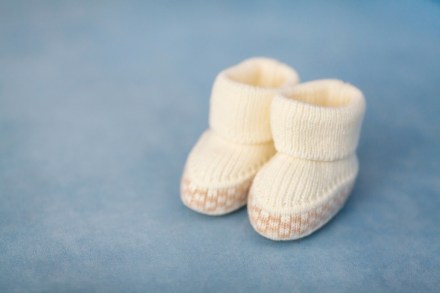
The latest assignment was to provide a (longer) sequel to the six-word story ‘For sale: baby shoes, never worn’. Long before Twitter, so urban legend has it, Ernest Hemingway crafted this mini-masterpiece in response to a bet that he couldn’t write a novel in half a dozen words. This turned out to be a load of old cobblers — at least according to Frederick A. Wright who, in a 2012 essay, concluded that there was no evidence that Papa was responsible for the story. In fact, versions of it had been in circulation from 1906 (when Hemingway was seven years old). Regardless of who wrote it, the challenge seemed to capture your imagination inspiring sequels that ranged far and wide, from Scandi noir to Conan Doyle.

Six plus

From our UK edition

In Competition No. 3038 you were invited to provide a (longer) sequel to the six-word story ‘For sale: baby shoes, never worn’.   Long before Twitter, so legend has it, Ernest Hemingway crafted this mini masterpiece in response to a bet that he couldn’t write a novel in half a dozen words. This turns out to be a load of old cobblers — at least according to Frederick A. Wright who, in a 2012 essay, concluded that there was no evidence that Papa was responsible for the story. In fact, versions of it had been in circulation from 1906 (when Hemingway was seven years old).   Regardless of who wrote it, the six-word story seemed to capture your imagination inspiring sequels that ranged far and wide, from Scandi noir to Conan Doyle.

Spectator competition winners: Sonnets as the Beatles (or Abba) might have written them

From our UK edition

The invitation to take a song by Abba or the Beatles and rewrite the lyrics as a sonnet went down a storm and drew a large, clever and funny entry. John Lennon once said, in an interview with Rolling Stone magazine: ‘…that’s been my hang-up, you know— continually trying to be Shakespeare…’. So perhaps it’s not surprising that the overwhelming majority of you plumped for Beatles tunes as your starting point. Having said that, Paul McCartney’s raucous ‘Why Don’t We Do It In The Road?’ — in which he pretty much repeats the same line (the title) over and over again — wasn’t the most obvious choice, so props to Edward Graham, who managed to tease a creditable sonnet out of it. We needn’t be ashamed.