Lucy Vickery

Net effect | 19 July 2018

From our UK edition

In Competition No. 3057 you were invited to submit a short story entitled ‘The day the internet died’.   Phyllis Reinhard’s Don McLean-inspired entry stretched the definition of short story rather but was entertaining nonetheless: ‘Bye, bye Mister Trump’s tweeting lies/ Instagram’s nude shots of Kimmy and her plastic backside…’ John O’Byrne was good too but was just outflanked by the winners below who pocket £25 each.   Today we have comforting concepts such as finite-loop learning classifier systems, but in 2019 one could pretty much set up an artificial neural network and let it spread all over the electronic world like Japanese knotweed. With hindsight, the result was inevitable.

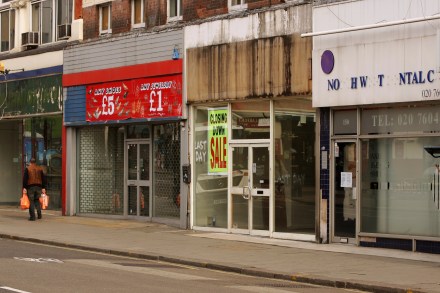
Spectator competition winners: elegy on the death of the High Street

From our UK edition

The call for elegies on the death of the High Street brought in a large entry that was poignant and clever, and transported me back to teenage Saturdays under the spell of Dolcis, Lilly & Skinner and Freeman, Hardy & Willis. John Morrison’s lines ‘Oh Amazon how swift you rise!/ Swamping all before your eyes…’ spoke for many, though J.R. Johnson thinks that the roots of destruction run deeper, to Buchanan’s 1963 Traffic in Town: ‘Blaming online, high rents, might just be wrong/ It was Buchanan perhaps all along’. The winners earn £25 each. Bill Greenwell pockets £30. Bill Greenwell Hear their doors and cash-tills close, Play their dirges, sing their blues, Dolcis Shoes and Bargain Booze, Ottakar’s and Rumbelows.

Closed shop

From our UK edition

In Competition No. 3056 you were invited to submit an elegy on the death of the High Street.   Your entries were poignant and clever, and transported me back to teenage Saturdays frittered away in the likes of Dolcis, Lilly & Skinner and Freeman, Hardy & Willis. John Morrison’s lines ‘Oh Amazon how swift you rise!/ Swamping all before your eyes…’ spoke for many, though J.R. Johnson thinks that the roots of destruction go deeper, pre-dating the advent of the net.   The winners earn £25 each. Bill Greenwell pockets £30. Hear their doors and cash-tills close, Play their dirges, sing their blues, Dolcis Shoes and Bargain Booze, Ottakar’s and Rumbelows.

Spectator competition winners: Winston Churchill and Donald Trump take on the role of agony uncle

From our UK edition

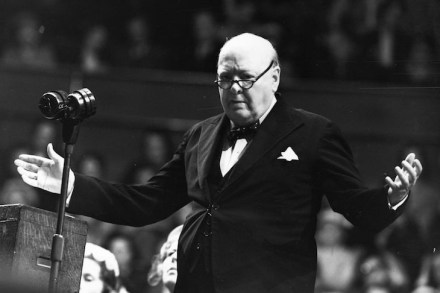
The latest challenge was to cast a well-known figure on the world stage, living or dead, in the role of agony aunt/uncle, submitting a problem of your invention and their solution. Adrian Fry, channelling Emperor Nero, had these nuggets of wisdom for Worried of Dorking, who is concerned about his grandson’s pyromania: ‘I agree that you must act now, preferably in a fully costumed production of The Sack of Troy. I was a tremendous success in just such a production, which entirely eclipsed in impact what I am told was a local conflagration not dissimilar to those your grandson has sought to bring about…’ Other strong performers were Paul Carpenter, Sylvia Fairley and Brian Allgar. The winners below take £25 each. Bill Greenwell gets £30.

Question time | 5 July 2018

From our UK edition

In Competition No. 3055 you were invited to take a well-known figure on the world stage, living or dead, and cast them in the role of agony aunt/uncle, submitting a problem of your invention and their solution. There is space only to high-five the winners below, who take £25 each. Bill Greenwell gets £30.   My boyfriend says I should ‘give in’ to his advances. What’s your advice?   Some boyfriend; some cheek. I would observe that many of his ilk have tried to break down such defences, but few have succeeded, at least not honourably. Upon resistance rests your future. Upon the strength of your redoubt rests the probity of your family, future as past.

Spectator competition winners: Hackety, rackety Donald and Vladimir – double dactyls about double acts

From our UK edition

The latest challenge was to compose double dactyls about double acts. I didn’t include the rules about double dactyls this time round as they are rather long-winded and I’ve done it before — and in any case they are easily Googled. Most of you seemed thoroughly at home with the form, and in a large, lively and accomplished entry double dactylic duos from time present (Trump and Melania, Declan and Anthony) and time past (Boney and Josephine) rubbed shoulders with the literary (Regan and Goneril), the musical (Gilbert and Sullivan, Simon and Garfunkel) and the comical (Stanley and Oliver). George Simmers and Mae Scanlan are highly commended. The winners, printed below, earn £15 each. Brian Allgar Hackety, rackety, Donald and Vladimir Sneer at collusion.

Double vision | 28 June 2018

From our UK edition

In Competition No. 3054 you were invited to compose double dactyls about double acts. I didn’t include the rules about double dactyls as it takes up space and I’ve done it before — and in any case they are easily Googled. Most of you seemed thoroughly at home with the form, and in a large, lively and accomplished entry double dactylic duos from time present (Trump and Melania, Declan and Anthony) and time past (Boney and Josephine) rubbed shoulders with the literary (Regan and Goneril), the musical (Gilbert and Sullivan, Simon and Garfunkel) and the comical (Stanley and Oliver). George Simmers and Mae Scanlan are highly commended. The winners, printed below, earn £15 each.   Hackety, rackety, Donald and Vladimir Sneer at collusion. ‘It’s Fake News!

Spectator competition winners: #MeToo lit

From our UK edition

Anthony Horowitz’s reflections on creating female characters for his latest Bond novel prompted me to invite you to provide an extract from a well-known work that might be considered sexist by today’s standards and rework it for the #MeToo age. Highlights in a thoroughly enjoyable entry included Brian Allgar’s Constance Chatterley instructing Mellors in the importance of foreplay, Paul Freeman’s recasting of Orwell’s antihero as Weinstein Smith and Hugh King addressing the gender stereotyping in The Tale of Peter Rabbit. The worthy winners, printed below, earn £20 each. Sylvia Smith/Sonnet 18 ‘Shall I compare thee to a summer’s day?’; Well, frankly, Will, I’d rather you did NOT.

#MeToo lit

From our UK edition

In Competition No. 3053, an assignment prompted by Anthony Horowitz’s reflections on creating female characters for his latest Bond novel, you were invited to provide an extract from a well-known work that might be considered sexist by today’s standards and rework it for the #MeToo age. Highlights in a thoroughly enjoyable entry included Brian Allgar’s Constance Chatterley instructing Mellors in the importance of foreplay, Paul Freeman’s recasting of Orwell’s antihero as Weinstein Smith and Hugh King addressing the gender stereo-typing in The Tale of Peter Rabbit. The worthy winners, printed below, earn £20 each.   ‘Shall I compare thee to a summer’s day?’; Well, frankly, Will, I’d rather you did NOT.

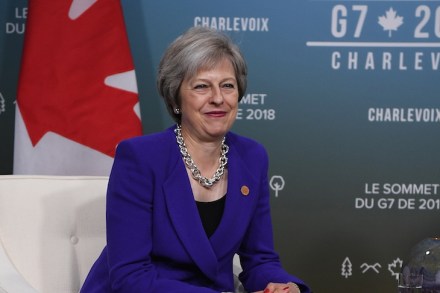
Spectator competition winners: a sonnet on Theresa May’s rictus

From our UK edition

The request for sonnets inspired by a well-known contemporary figure’s characteristic feature went down a storm. Entries ranged far and wide, from Victoria Beckham’s pout via Gorbachev’s birthmark to the rise – and fall – of Anthony Weiner’s penis. But both John O’Byrne and Barrie Godwin used Sonnet 18 to hymn hairstyles – Donald Trump’s and Boris Johnson’s respectively (Shall I compare thee to a bale of hay?/ Thou art more windblown and intemperate…’) There was a spot of preposition-related confusion this week – my fault entirely – and sonnets either ‘to’ or ‘on’ were acceptable. Honourable mentions go to Mike Morrison, Jonathan Pettman, Douglas G.

A sonnet on it

From our UK edition

In Competition No. 3052 you were invited to supply a sonnet inspired by a well-known contemporary figure’s characteristic feature. There was a spot of preposition-related confusion this week — my fault entirely — and sonnets either ‘to’ or ‘on’ were acceptable.   Entries ranged far and wide, from Victoria Beckham’s pout via Gorbachev’s birthmark to the rise — and fall — of Anthony Weiner’s penis. But both John O’Byrne and Barrie Godwin used Sonnet 18 to hymn hairstyles — Donald Trump’s and Boris Johnson’s respectively (Shall I compare thee to a bale of hay?/ Thou art more windblown and intemperate…’).   Honourable mentions go to Mike Morrison, Jonathan Pettman, Douglas G.

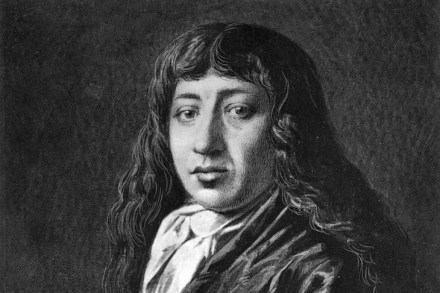
Spectator competition winners: a Pepys’-eye view on the royal wedding

From our UK edition

The latest challenge, to supply an entry by a well-known diarist describing the wedding day of Prince Harry and Meghan Markle, saw you at your waspish best. Here’s Noël Coward’s verdict on the groom: ‘Massively butch but far too hairy, when he wasn’t even in the Navy. Are beards de rigueur these days?…’ And Alan Clark on Meghan Markle (though he spares us a reference to her ‘juggling globes’): ‘Harry initially appeared to have done equally well with the succulent Miss Markle, but a glance at this morning’s Telegraph informed me not only that she is of below-stairs stock but a bloody yank…’ Honourable mentions go to Basil Ransome-Davies and Rob Stuart for those contributions. Sylvia O.

Royal treatment | 7 June 2018

From our UK edition

In Competition No. 3051 you were invited to supply an entry by a well-known diarist describing the wedding day of Prince Harry and Meghan Markle.   There was a bracingly waspish streak running through your contributions. Here’s Noël Coward’s verdict on the groom: ‘Massively butch but far too hairy, when he wasn’t even in the Navy. Are beards de rigueur these days?

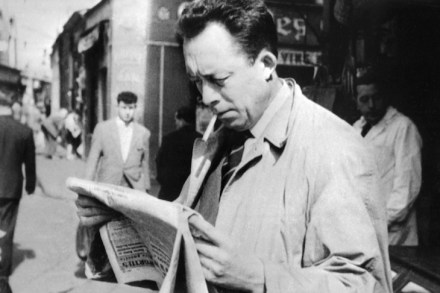
Spectator competition winners: Camus on Camus

From our UK edition

The germ of the latest challenge, to submit a school essay written by a well-known author about one of their works, was the revelation that the novelist Ian McEwan helped his son to write an A-level essay about one of his books (Enduring Love), only to be awarded a less than stellar ‘C+’. Strong performers among the runners-up included Douglas G. Brown’s Mario Puzo, who clearly thinks that only fools pursue a good grade by bothering to engage with the text: ‘I expect an “A” on this report,’ he writes. ‘We wouldn’t want a fire here in St. Vitus’ School, would we?’ Commendations also go to John Morrison and Frank Upton but the winners, below, shoot straight to the top of the class, scooping £25 each.

Self appraisal

From our UK edition

In Competition No. 3050 you were invited to submit a school essay written by a well-known author, living or dead, about one of their works. The germ of this challenge was the revelation that the novelist Ian McEwan helped his son to write an A-level essay about one of his books (Enduring Love), only to be awarded a less than stellar ‘C+’. The winners below did rather better, and shoot straight to the top of the class, scooping £25 each. Teacher’s pet Alison Zucker gets a well-done sticker and the bonus fiver.   I read The Outsider today. Or maybe it was yesterday, I can’t remember. I don’t think very much happened in it, though there may have been a murder at some point. Or not. I don’t care either way. I struggle to understand why M.

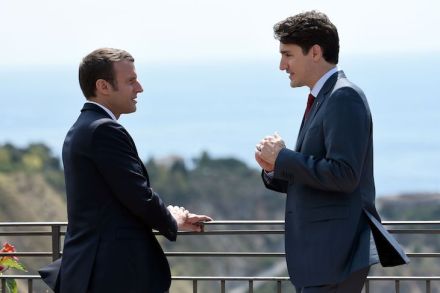
Spectator competition winners: playing Cluedo with Trudeau, getting it on with Macron…

From our UK edition

This time round, competitors were asked to provide poems about a bromance. Pairings including Friedrich and Karl, Laurel and Hardy, Nigel and Donald lit up an entry that was witty, touching and generally pleasingly varied. I liked Chris O’Carroll’s ‘Boris and Donnie’, a twist on Jimmie Rodgers’s ‘Frankie and Johnny’. And Bill Greenwell had the same idea, only with David and Jonathan from the Book of Samuel as the loved-up duo. Commendations also go to Shirley Curran, Jonathan Pettman, A.C. Smith and John Morrison. Basil Ransome-Davies’s entry transported me back to the 1970s, when real men wore chunky cream-and-brown hand-knit cardigans. He and his fellow winners, printed below, are rewarded with £25 each.

A fine bromance

From our UK edition

In Competition No. 3049 you were invited to submit a poem about a bromance.   Pairings including Friedrich and Karl, Laurel and Hardy, Nigel and Donald lit up an entry that was witty, touching and generally pleasingly varied. I liked Chris O’Carroll’s ‘Boris and Donnie’, a twist on Jimmie Rodgers’s ‘Frankie and Johnny’. And Bill Greenwell had the same idea, only with David and Jonathan from the Book of Samuel as the loved-up duo. Commendations also go to Shirley Curran, Jonathan Pettman, A.C. Smith and John Morrison.   Basil Ransome-Davies’s entry transported me back to the 1970s, when real men wore chunky cream-and-brown hand-knit cardigans. He and his fellow winners, printed below, are rewarded with £25 each.

Spectator competition winners: Brectitude, huwbris, posteritoys – new ways with old words

From our UK edition

Inspiration for the latest challenge came from across the pond, courtesy of the Washington Post’s Style Invitational column, whose regular neologism-themed contests are always a blast. You were asked to take an existing word and alter it by a) adding a letter, b) changing a letter, and c) deleting a letter — and to supply definitions for all three new words. Though many entries were partially successful, few competitors managed to score a bull’s-eye in all three sections of the challenge. A fiver per definition goes to those below who hit the spot with just one or two.

New word order | 17 May 2018

From our UK edition

In Competition No. 3048 you were invited to take an existing word and alter it by a) adding a letter, b) changing a letter, and c) deleting a letter — and to supply definitions for all three new words.   Inspiration for this challenge came from across the pond, courtesy of the Washington Post’s Style Invitational column, whose regular neologism-themed contests are always a blast.   Though many entries were partially successful, few competitors managed to score a bull’s-eye in all three sections of the challenge. A fiver per definition goes to those printed below who hit the spot with just one or two.

Spectator competition winners: would you give Oliver Cromwell a job?

From our UK edition

The latest challenge asked competitors to supply an imaginary testimonial for a high-profile figure that is superficially positive but contains hidden warnings to a potential employer. This was an exercise in the artful deployment of ambiguity, as displayed in Robert J. Thornton’s L.I.A.R. The Lexicon of Intentionally Ambiguous Recommendations, a handbook for those who, whether out of kindness or fear of litigation, wish the precise meaning of their ‘recommendations’ to remain opaque.