Lloyd Evans

Lloyd Evans

Lloyd Evans is The Spectator's sketch-writer and theatre critic

Adrian Lester is one of the great Othellos; Glory Dazed

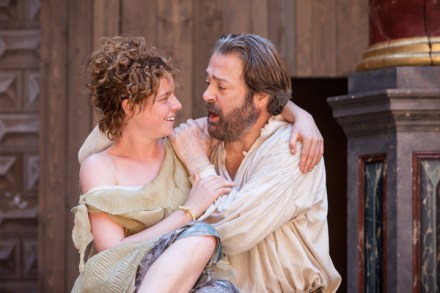
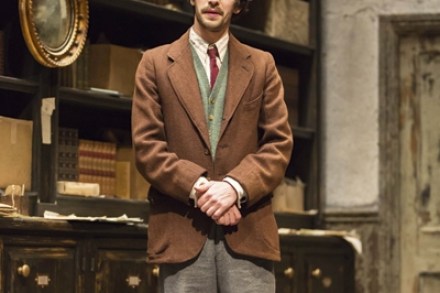
Amazing news at the National. Nicholas Hytner has invented a time machine that can bring Shakespeare to bumpkins who’ve never bothered to read him. His up-to-date Othello begins with Venice’s powerful élite dressed in two-piece suits, like Manchester Utd on tour, and striding around a war-room plotting military action against ‘the Turk’. In Act II, Othello and his task force are choppered out to Cyprus where a heavily fortified compound is ready and waiting for them. Crikey. Looks as though they conquered the enemy and built Camp Bastion in 24 hours flat. Fast work, chaps. Othello’s squadron boasts two strange new recruits.

Theatre: Children of the Sun; The Arrest of Ai Wei Wei

They’re back. Howard Davies and his translator Andrew Upton had a well-deserved hit in 2007 with Gorky’s Philistines at the Lyttelton. Children of the Sun, which Gorky wrote in jail in 1905, is a prophetic allegory that foretells the destruction of Russia’s weak, idle and pretentious upper classes. We’re in a country mansion where a mad professor, stuck in his laboratory, conducts daft experiments while rhapsodising about the redeeming power of science. He stands for the tsar, I think. Around him clusters a gang of artists and drifters who settle into a quadrangle of doomed eroticism. This one loves this one but that one loves this one who loves someone else, and so on. Each is too self-involved to respond to a romantic overture.

PMQs sketch: Miliband’s NHS torment

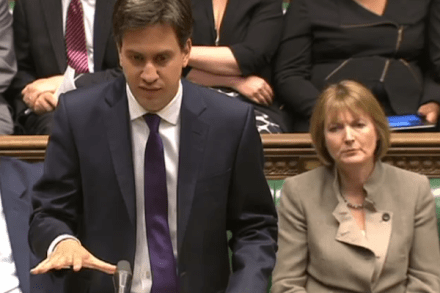
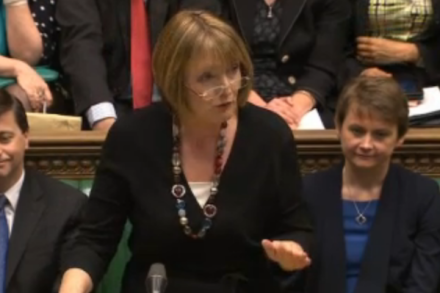
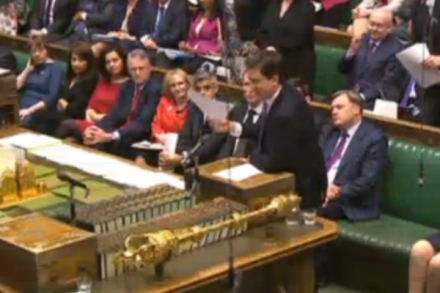
Back to business at PMQs. Our ailing NHS, and its many-headed crises, were today’s key battle-ground. We hear of sick people being parked in ever tinier and more humiliating confinements: corridors, trolleys, airing cupboards, pill depositories, laundry baskets, spare gaps between drinks’ machines. All these locations, and worse, are currently sheltering patients awaiting the healing touch of some NHS miracle-worker. Today Miliband told us of a pop-up ward which has been raised, like a Punch and Judy tent, in the grounds of some calamity-hit hospital. Plenty of ammo there to chuck at the PM. But Miliband couldn’t bring any colour or vitality to his arguments. He used percentages and numbers instead. Rather unwise.

Upstairs, downstairs

Never a dull moment at the Jermyn Street Theatre. It’s a titchy venue, the size of a gents’ loo, nestling beneath a cavernous flight of stairs in the nameless hinterland between druggy Soho and tarty Mayfair. The current proprietors, aiming for an air of scholastic amateurism, are on the hunt for ‘unknown and forgotten classics’. The theatre boasts a Resident Academic and an eccentric register of patrons including ‘Victoria Biggs, Euan Borland and the Duchess of Cambridge (pub)’. Currently it’s sifting the 1920s for treasure. Others have prospected here before. Ben Travers’s bourgeois farces no longer entertain us because middle-class morality has changed too much in the past 90 years. Frederick Lonsdale may stand a better chance.

Theatre review: The Low Road and Quasimodo

A lap of honour at the Royal Court. Bruce Norris has been one of the big discoveries of artistic director Dominic Cooke, who takes his bow by directing The Low Road. Norris’s greatest hit, Clybourne Park, was a savage and illuminating satire about racism. His next trick is to examine the burning issue of the day, unfettered greed. A great start. But he can’t decide whether he’s for or against the profit motive. And he has no idea where to mount his attack. He time-travels to 18th-century America and imagines an unscrupulous spiv, a bit like Barry Lyndon, who climbs from destitution to wealth and whose life touches American history at various crucial moments.

Nicholas Hytner’s National Theatre: Ten years and a million cheap tickets

‘The house that Ho Chi Minh built.’ That’s how Nicholas Hytner refers to his ample north London home. In 1989, at the age of 34, he was hired by Cameron Mackintosh to direct the musical Miss Saigon. ‘It just felt like a huge lark,’ he said at the time. The show ran for ten years in the West End and on Broadway and the royalties enabled him ‘to do what I wanted to do thereafter. It was a massive stroke of good fortune.’ Artistic freedom has been the hallmark of his ten-year stewardship of the National Theatre. Hytner grew up in a prosperous south Manchester family and his fascination with music and drama asserted itself in early boyhood. Aged nine, he had a season ticket to the local concert hall.

Peter and Alice

Inspired writer, John Logan. His 2009 play, Red, delved brilliantly into the gloom-ridden, suicidal mind of the misanthropic modernist painter Mark Rothko. The play’s unflinching and sordid honesty earned the author, and his director Michael Grandage, a bagful of gongs on either side of the Atlantic. The pair have reunited for Logan’s new play, Peter and Alice, which opens with a meeting between Alice Liddell (of Wonderland fame) and Peter Llewellyn Davies, who inspired J.M. Barrie’s Peter Pan. Alice and Peter, now grown up, compare notes about the books they featured in, about the writers who used them as models, about childhood, about adulthood, about this, about that. The writers themselves wander on stage and add to the floaty mood of inconsequential nostaglia.

The Book of Mormon is toothless, jokeless, plotless and pointless

Impossible, surely. The Book of Mormon could never live up to the accolades lavished on it by America’s critics. ‘Blissfully original, outspoken, irreverent and hilarious,’ was a typical review. The three authors are formidably gifted. Trey Parker and Matt Stone gave us South Park, while Robert Lopez is the co-writer of Avenue Q. As a fan of both shows, I was fearful that Mormon would turn out to be as much fun as underwater paintballing. So, up goes the curtain. A posse of geeky Yanks in crisp white shirts are being dispatched to Mormon missions around the world. We focus on two characters, a big handsome jock and a fat needy blob. Their destination is revealed: Uganda. Everyone is shocked and sad.

‘In the beginning was breath’

Declan Donnellan is riding high. His acclaimed production of the burlesque classic Ubu Roi has confirmed his membership of the elite group of British directors who enjoy renown across Continental Europe and beyond. The critics cheered his French-language production of Alfred Jarry’s anarchic satire when it reached Paris earlier this month. The show, created by Donnellan’s company Cheek by Jowl, is currently bunny-hopping between venues on either side of the Channel. It arrives at the Barbican on 10 April where it forms part of the Dancing around Duchamp season. I meet Donellan in a Hampstead café. ‘My local,’ he says as two cappuccinos are clattered down in front us.

Juvenile delinquency

Study the greats. That’s the advice to all budding playwrights. And there are few contemporary dramatists more worthy of appreciative scrutiny than Bruce Norris, whose savage and hilarious comedy, Clybourne Park, bagged the Pulitzer Prize in America before transferring to the West End where it stunned audiences with its macabre revelations about bourgeois attitudes to racism. But an apprentice writer analysing such an accomplished work will probably be overawed by its self-confidence and polish. Far more interesting to study Norris in an earlier phase of his development. Purple Heart, from 2003, was the first of his plays to be performed outside the United States. The date is 1972. The setting is a crummy house in the Midwest occupied by a trio of trailer-park losers.

Mr Speaker: The Office and the Individuals since 1945, by Matthew Laban – review

The sheer workload. That’s the first big surprise in Matthew Laban’s absorbing history of the Speakership since 1945. Typically, the Speaker rises at dawn and holds several hours of preparatory meetings before parliamentary business starts after lunch. Though helped by two deputies, the Speaker must remain on duty into the small hours. Loneliness and overwork have created casualties. Horace King (1965-1971) liked an early-evening stiffener consisting of half a pint of sherry enlivened with four fingers of Armagnac. As he staggered towards his ceremonial perch one night, he was heckled by Labour’s chief whip, Bob Mellish. ‘Horace, I’ll have you out of that chair within three months.

PMQs sketch: Everyone talks about nothing, while no-one listens

Let’s have a breather. It seemed like a truce had been tacitly declared between the party leaders at today’s PMQs. Instead of going on the offensive, Cameron and Miliband turned their solemn and unified gaze towards the sorrows of the eastern Mediterranean. Miliband asked about Syria. Cameron used the opportunity to take a pot-shot at the EU, still agonising over the arms embargo. Their sluggish and dithersome talks, he said, reminded him of the hesitation that caused needless bloodshed in Bosnia. Cameron wants the rebels to get tooled up pronto and to finish off the appalling Assad regime. He called it ‘hateful’ three times, just be sure. Next the EU bank-raid in Cyprus. The immediate question of liquid cash produced this strange announcement.

The Audience review: Helen Mirren leads a Mike Yarwood show with Oscar-level talent

Peter Morgan has extracted more cash from the royal ‘brand’ than the Buckingham Palace giftshop. He’s at it again with The Audience, a fictional dramatisation of the weekly conversations between the Queen and her first ministers. This is a smart idea carried off with intelligence and plenty of style. Morgan dispenses with a linear parade of PMs and leaps to and fro across the decades. A youthful Harold Wilson bustles in full of self-confidence and jokes. The Queen takes to him immediately. Barely ten years later, the Yorkshireman has dwindled into a broken figure and his legendary memory is fading fast. But as he shrinks, the bond of affection between himself and the monarch grows. It’s one of the play’s few attempts at emotional depth.

PMQs sketch: Nothing changes, yet everything is different

There comes a moment in a PM’s journey when he crests the ridge and starts on the downhill leg. David Cameron made that unhappy transition today. PMQs began with a gag from a Labour backbencher. Tom Blenkinsop: ‘The prime minister may believe there’s no alternative to the double dip. But some in the cabinet believe there is an alternative. To him!’ Cameron replied by listing his usual trinity of attainments. Lower deficit, more jobs, interest rates at record lows. Then Ed Miliband had a go. Instead of raising an issue, he went for Cameron’s reputation. ‘Given the government’s U-turn on alcohol,’ he said, ‘is there anything the prime minister could organise in a brewery?’ Cameron improvised.

Aversion therapy

It’s been a while, I have to say, but last week I saw a show that thrilled me to the core. Trelawny of the Wells, the Donmar’s latest offering, is a tribute to the theatre written by actor-turned-writer Arthur Wing Pinero. A simple set-up. Gorgeous young luvvie, Rose Trelawny, has forsaken the greasepaint to marry a greaseball called Arthur Gower. He’s loaded. Rosie’s actor chums treat her to a farewell bash complete with antique gags, tuneless ditties, snatches from half-remembered dramas and long-winded orations consisting entirely of in-jokes. (You’ll have spotted that this is not the show that thrilled me to the core.

PMQs sketch: Miliband packs a punch, and Cameron punches back

Whooo that was nasty. Today’s was the most vicious PMQs of the last twelve months. Easily. Ed Miliband started by quoting the case of a Londoner called ‘John’ who was concerned about living standards. ‘John’, however, wasn’t a disabled pensioner but a City fat cat concerned that next year’s bonus might be capped at two million pounds. ‘What’s the prime minister going to do to help him?’ Nifty tactics from Miliband’s team. Cameron might have floundered here but his reply matched the full force of Miliband’s attack. His government, he declared, had cut bonuses to a quarter of what they’d been under Labour. ‘And we aren’t going to listen to the croupiers who were in the casino when it all went bust.

Losing the plot | 28 February 2013

Who got the most out of the credit crunch? Security guards, repossession firms, bailed-out banks and, of course, playwrights. Anders Lustgarten is the latest to cash in on five years of global misery with If You Don’t Let Us Dream, We Won’t Let You Sleep. The play, like the title, is effortful, disjointed and cumbersome. In the first half, a gang of fatcat bankers sets up a new financial instrument, Unity Bonds, which will generate profits from socially useful behaviour. This intriguing idea is sidelined in the second half. The action moves to a squatter camp where the banking system is about to be put on trial. Lustgarten assumes, no doubt correctly, that the audience is more in sympathy with anti-capitalists than with high finance.

PMQs sketch: Miliband has ‘one of those days’

What a strange PMQs. The house seemed half empty. The tug of elsewhere dominated proceedings. Richard Drax asked the prime minister if ‘prospective members of parliament’ should ever speak in support of terrorism.  David Cameron took this cue to rebuke John O’Farrell. Labour’s candidate at Eastleigh has admitted to feeling ‘a surge of excitement’ when he learned that the IRA had nearly assassinated Mrs Thatcher in the Brighton bomb. Cameron asked Ed Miliband to condemn his candidate. Miliband refused. ‘If he wants me to answer questions I’ll swap places any time.’ Miliband’s aim today was to turn the triple-A downgrade into a government-breaking issue. It didn’t work.

Sheer torture

Ever been to a ‘promenade performance’? Barmy, really. The audience is conducted through a makeshift theatre space — often a disused ironworks — where the show is performed in disjointed snatches amid atmospheric clutter. Invariably hopeless as drama, promenade shows can be revealing as social anthropology. They lay bare a secret that lies at the heart of theatrical life: actors loathe play-goers. Without a paying audience, all theatre is simply am-dram. And actors have a morbid fear of slipping into the underclass of voluntary performance. So they covertly resent ticket-buying audiences who alone have the power to convert an unpaid show-off into a self-regarding thesp, with his agent and his Spotlight listing and his drink problem.

15 February 2003: What Do They Want? Victory for Saddam

Ten years ago today, Lloyd Evans joined the anti-Iraq war march in London. Evans had an open mind about the war, until he joined the peace movement and met Bianca Jagger. Here is the piece in full from our archive. I'm bursting with excitement. I can hardly get the words down fast enough. There was an amazing occurrence in Hackney last week at a meeting of the Stop the War coalition. I swear this happened. A protester said something perceptive. You don't believe me? No, really, I was there. He was an old guy with white hair and a lovely crinkly face. 'The bigger the march,' he said ruefully. 'The bigger the insult when they ignore us.' I almost fell off my chair in astonishment. Nobody at the meeting disagreed. No one suggested a change of tactics. And none of that surprised me at all.