Lloyd Evans

Lloyd Evans

Lloyd Evans is The Spectator's sketch-writer and theatre critic

PMQs sketch: David Cameron lashes out at Labour

From our UK edition

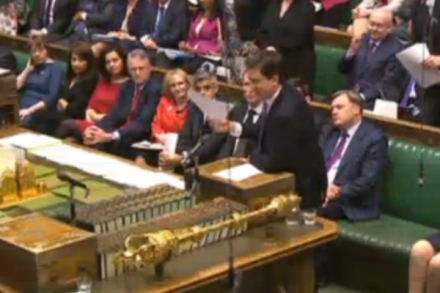
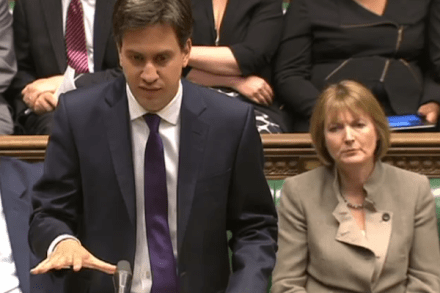
Oh dear. Another lousy day at the races for Ed Miliband. It began as soon as he stood up at PMQs. The mournful angularities of his face settled into a frosty grimace as the Tories greeted him with ironic whoops and cheers. And on they went, yelling and braying. Miliband seems to believe that adopting a look of injured decency will bring the house to order. But the more he glowered at the Tories the more they crowed back at him. It was awful to behold. He stood there, immobile, like a man returning from a difficult hour at the dentist only to find his house is on fire. His woes today were compounded by a set of economic indicators which seem to be inching in the coalition’s direction. With little else to complain about, he accused the PM of overseeing a fall in living standards.
Theatre review: Below par Mamet is still more fun than a personal-best performance from a second-rater

From our UK edition

Mamet is back. His 2009 play Race is an offbeat courtroom drama set entirely in a lawyers’ office before the trial begins. Jack and Henry are two hotshot attorneys, one white, one black, who must decide whether to accept the case of a prosperous banker, Charles, accused of raping a black woman in a hotel. Jack and Henry have a young black trainee, Susan, whose ethnicity and gender may help them sway the jury. The case against Charles turns on sequins. The victim swears that her dress was torn off during the attack but a hotel cleaner found no sequins on the floor. Sequinned attire is naturally deciduous, or, as Jack puts it, ‘a sequined dress, you look at it wrong, they start to fall off’.

Interview: Theatre director Marianne Elliott on really, really good and bad plays

From our UK edition

Ah! Here comes the girl from the temping agency. That’s my first reaction when I meet Marianne Elliott, director of the global hit War Horse, and winner of this year’s Olivier for her work on The Curious Incident of the Dog in the Night-time. She’s a trim, attractive fortysomething with a neat blonde bob and she wears a shrill turquoise blouse of the kind favoured by Romford copy typists in the 1980s. Her blue eyes are amazing — huge, screen-goddess orbs, which shine with an exceptional brilliance and clarity. She’s two weeks into the rehearsal period for her next play, Sweet Bird of Youth, at the Old Vic, which stars Kim Cattrall. ‘And how are the actors? Complaining like mad?

Strictly Ann, by Ann Widdecombe – review

From our UK edition

An oddball. And proud to be one. Ann Widdecombe has sailed through life with the same brisk, no-nonsense style that she brings to this highly readable memoir. She attended a school where God was taught ‘as a fact not a belief’. Her parents encouraged her to choose friends on the basis of ‘fun and kindness’ and nothing else. When she entered parliament in 1987 she suspected that her personal eccentricities would disbar her from high office while guaranteeing the loyal affection of the country at large. She embraced this fate cheerfully. Her ‘Doris Karloff’ tag was originated by the Labour MP Paul Flynn and she instantly adopted it as a personal signature.

PMQs sketch: moaning and groaning from Ed Miliband

From our UK edition

Thwack! That was the sound of Ed Miliband being knocked for six at PMQs. He didn’t stand a chance. Even before he could get to his feet, David Cameron had put a question to him. Against the rules. But so what? Cameron wanted to know if the Labour leader would withdraw his constant attacks on Tory plans to remove child benefit from high earners? Miliband stood up midst a barrage of Tory jeers, (and a few supplementary squawks from LibDems too). The humiliation of Labour’s U-turn showed on his face. He looked like an elevator-boy with his conk caught in the closing doors. The chamber was in full cry and the decibel levels were rising. And he still hadn’t spoken a word!

Theatre review: Relatively Speaking, Disgraced

From our UK edition

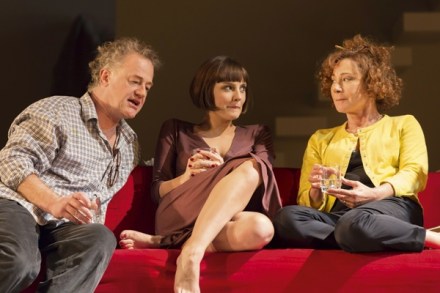
Here are your instructions. Relatively Speaking by Alan Ayckbourn is a comedy classic so you’d better enjoy it or else. The play dates from 1967 when Ayckbourn was working as a sketch writer for Ronnie Barker. It was his first hit. Notes in the programme testify to the play’s excellence. A telegram sent to Ayckbourn by Noël Coward is quoted twice.  ‘Congratulations on a beautifully constructed and very, very funny play.’ Take the Master’s kindness with a pinch of salt. The script is ingeniously strung out from a rather threadbare premise. Two couples, both with infidelity problems, meet and talk at cross-purposes for an afternoon.

It’s madness to slash the British Museum’s budget

From our UK edition

The best argument in favour of state funding of the arts was made in the middle of the 18th century. In 1753 an Act of Parliament established the personal collection of Sir Hans Sloane as a national resource, ‘to be preserved and maintained not only for the Inspection and Entertainment of the learned and the curious, but for the general Use and Benefit of the Public’. But a dark cloud looms over the British Museum today. Rumour suggests (and ministers won’t deny) that the Chancellor is keen to lop a few million quid from its budget in the 2015/16 spending review which is due to be published this month. Culture Minister Ed Vaizey is being encouraged to fight like a weapon dog in defence of this invaluable cultural asset.

Are theatre critics on drugs? Fallen in Love and Pastoral reviewed

From our UK edition

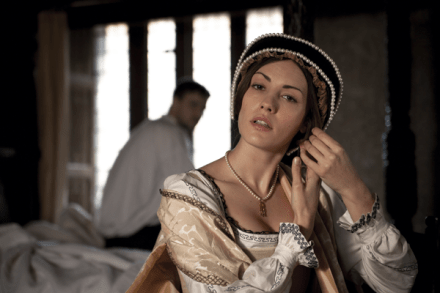
A marvellous novelty at the Tower of London. The Banqueting Suite of the New Armouries has been converted into a pop-up theatre and the Tower authorities have welcomed a new play following the rise and fall (into two pieces) of Anne Boleyn. Joanna Carrick, who directs her own script, has chosen a tricky format. Two characters, Anne and her brother George, tell the story of Anne’s fatal marriage to Henry VIII. Even Aeschylus found this ancient format rather constricting and introduced a third character. Perhaps Carrick knows better. Anne and George are evidently attracted to each other and they romp around a four-poster bed exchanging gossip in fits of giggles. At first the characterisation is a little thin. Then it gets thinner.

Passion Play; The Match Box

From our UK edition

How fashions change. Peter Nichols’s adultery drama, Passion Play, will seem tame and rather conventional to modern audiences. It was written in 1981 at a time when the rites and idioms of therapy hadn’t penetrated every level of our culture. Back then the candid scrutiny of one’s emotions, supervised by a ruminating analyst, was a thrilling and sophisticated novelty available only to high-earning fashion junkies. Today’s self-elevators choose different proofs of social altitude. They drink Bhutanese champagne, they purchase dachas in Moldova, or they holiday on the Great Barrier Reef in the family bathyscaphe.

5 Days in May, by Andrew Adonis – review

From our UK edition

Andrew Adonis enjoyed a week of glory in 2010. The former Lib Dem activist was asked to join Labour’s negotiating team as they tried to forge a coalition with Nick Clegg in the aftermath of 6 May general election. Adonis admits that his account of those five days is ‘vivid, partisan and angry’. And it seems strange that, as a Lib Dem defector himself, he should accuse the Lib Dems of ‘perfidy’ in their dealings with Labour. The politician in him can’t resist the opportunity to attack his former colleagues. He shoves the knife into David Laws for admiring George Osborne and for advocating ‘faster and deeper’ cuts to the deficit.

PMQs sketch: ‘What a penetrating insight into the affairs of state’

From our UK edition

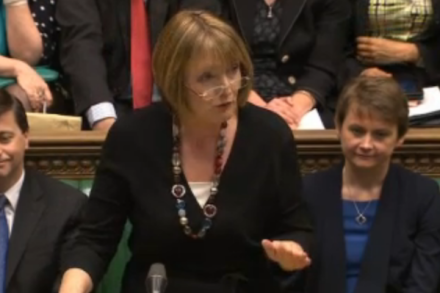
A mood of giggles and mischief descended on PMQs today. David Cameron is in America – attempting to cure insomniacs by explaining Tory Euro-scepticism to them – and his role was taken by Nick Clegg. Harriet Harman, a notoriously sluggish debater, stood in for Ed Miliband. It’s said that when Harman trained as a solicitor she conceived such a high regard for the law that she went into politics instead. Today she seemed as effervescent as last week’s Prosecco. She droned through a series of pre-scripted gags and less-than-sparkling jibes. This was one of her feeblest ever performances on the front bench. She started by mocking David Cameron for posing in a London bus while in New York. ‘That’s something he hasn’t done here.

Josie Rourke has a hit at last with The Weir, The Tempest: a karaoke version of all

From our UK edition

The Weir is the ultimate hit-from-nowhere. It was written in 1997 by the 26-year-old Conor McPherson. It opened at the Royal Court Upstairs and glided over to Broadway and then toured America. The script defies every rule of theatrical physics. It’s wordy and static, it’s entirely devoid of action or spectacle, and the atmosphere is mired in gloom. Four morose drinkers, stuck in a pub in the west of Ireland, try to impress a pretty incomer from Dublin by telling her ghost stories. Nothing else happens. The faint stirring of a romance between the Dublin girl and the handsome deadbeat behind the bar provides a tiny note of optimism at the end. And yet McPherson is a miracle-worker.

Adrian Lester is one of the great Othellos; Glory Dazed

From our UK edition

Amazing news at the National. Nicholas Hytner has invented a time machine that can bring Shakespeare to bumpkins who’ve never bothered to read him. His up-to-date Othello begins with Venice’s powerful élite dressed in two-piece suits, like Manchester Utd on tour, and striding around a war-room plotting military action against ‘the Turk’. In Act II, Othello and his task force are choppered out to Cyprus where a heavily fortified compound is ready and waiting for them. Crikey. Looks as though they conquered the enemy and built Camp Bastion in 24 hours flat. Fast work, chaps. Othello’s squadron boasts two strange new recruits.

Theatre: Children of the Sun; The Arrest of Ai Wei Wei

From our UK edition

They’re back. Howard Davies and his translator Andrew Upton had a well-deserved hit in 2007 with Gorky’s Philistines at the Lyttelton. Children of the Sun, which Gorky wrote in jail in 1905, is a prophetic allegory that foretells the destruction of Russia’s weak, idle and pretentious upper classes. We’re in a country mansion where a mad professor, stuck in his laboratory, conducts daft experiments while rhapsodising about the redeeming power of science. He stands for the tsar, I think. Around him clusters a gang of artists and drifters who settle into a quadrangle of doomed eroticism. This one loves this one but that one loves this one who loves someone else, and so on. Each is too self-involved to respond to a romantic overture.

PMQs sketch: Miliband’s NHS torment

From our UK edition

Back to business at PMQs. Our ailing NHS, and its many-headed crises, were today’s key battle-ground. We hear of sick people being parked in ever tinier and more humiliating confinements: corridors, trolleys, airing cupboards, pill depositories, laundry baskets, spare gaps between drinks’ machines. All these locations, and worse, are currently sheltering patients awaiting the healing touch of some NHS miracle-worker. Today Miliband told us of a pop-up ward which has been raised, like a Punch and Judy tent, in the grounds of some calamity-hit hospital. Plenty of ammo there to chuck at the PM. But Miliband couldn’t bring any colour or vitality to his arguments. He used percentages and numbers instead. Rather unwise.

Upstairs, downstairs

From our UK edition

Never a dull moment at the Jermyn Street Theatre. It’s a titchy venue, the size of a gents’ loo, nestling beneath a cavernous flight of stairs in the nameless hinterland between druggy Soho and tarty Mayfair. The current proprietors, aiming for an air of scholastic amateurism, are on the hunt for ‘unknown and forgotten classics’. The theatre boasts a Resident Academic and an eccentric register of patrons including ‘Victoria Biggs, Euan Borland and the Duchess of Cambridge (pub)’. Currently it’s sifting the 1920s for treasure. Others have prospected here before. Ben Travers’s bourgeois farces no longer entertain us because middle-class morality has changed too much in the past 90 years. Frederick Lonsdale may stand a better chance.

Theatre review: The Low Road and Quasimodo

From our UK edition

A lap of honour at the Royal Court. Bruce Norris has been one of the big discoveries of artistic director Dominic Cooke, who takes his bow by directing The Low Road. Norris’s greatest hit, Clybourne Park, was a savage and illuminating satire about racism. His next trick is to examine the burning issue of the day, unfettered greed. A great start. But he can’t decide whether he’s for or against the profit motive. And he has no idea where to mount his attack. He time-travels to 18th-century America and imagines an unscrupulous spiv, a bit like Barry Lyndon, who climbs from destitution to wealth and whose life touches American history at various crucial moments.

Nicholas Hytner’s National Theatre: Ten years and a million cheap tickets

From our UK edition

‘The house that Ho Chi Minh built.’ That’s how Nicholas Hytner refers to his ample north London home. In 1989, at the age of 34, he was hired by Cameron Mackintosh to direct the musical Miss Saigon. ‘It just felt like a huge lark,’ he said at the time. The show ran for ten years in the West End and on Broadway and the royalties enabled him ‘to do what I wanted to do thereafter. It was a massive stroke of good fortune.’ Artistic freedom has been the hallmark of his ten-year stewardship of the National Theatre. Hytner grew up in a prosperous south Manchester family and his fascination with music and drama asserted itself in early boyhood. Aged nine, he had a season ticket to the local concert hall.

Peter and Alice

From our UK edition

Inspired writer, John Logan. His 2009 play, Red, delved brilliantly into the gloom-ridden, suicidal mind of the misanthropic modernist painter Mark Rothko. The play’s unflinching and sordid honesty earned the author, and his director Michael Grandage, a bagful of gongs on either side of the Atlantic. The pair have reunited for Logan’s new play, Peter and Alice, which opens with a meeting between Alice Liddell (of Wonderland fame) and Peter Llewellyn Davies, who inspired J.M. Barrie’s Peter Pan. Alice and Peter, now grown up, compare notes about the books they featured in, about the writers who used them as models, about childhood, about adulthood, about this, about that. The writers themselves wander on stage and add to the floaty mood of inconsequential nostaglia.

The Book of Mormon is toothless, jokeless, plotless and pointless

From our UK edition

Impossible, surely. The Book of Mormon could never live up to the accolades lavished on it by America’s critics. ‘Blissfully original, outspoken, irreverent and hilarious,’ was a typical review. The three authors are formidably gifted. Trey Parker and Matt Stone gave us South Park, while Robert Lopez is the co-writer of Avenue Q. As a fan of both shows, I was fearful that Mormon would turn out to be as much fun as underwater paintballing. So, up goes the curtain. A posse of geeky Yanks in crisp white shirts are being dispatched to Mormon missions around the world. We focus on two characters, a big handsome jock and a fat needy blob. Their destination is revealed: Uganda. Everyone is shocked and sad.