Lloyd Evans

Lloyd Evans

Lloyd Evans is The Spectator's sketch-writer and theatre critic

Foote fault

Samuel Foote (1720–77) was a star of the 18th-century stage who avoided the censors by extemporising his performances. Today we’d call him a stand-up comedian specialising in improv. He served tea to play-goers and claimed that the show was a free accompaniment to the beverages. Dogged by homosexual scandals, he was hounded out of England at least once despite the patronage of George III. A riding accident left him with a compound leg fracture (bone piercing flesh), which required amputation to prevent gangrene. The limb was hacked off in 20 minutes. Foote hobbled back to fame and fortune playing Sir Luke Limp in The Lame Lover. At his burial the preserved limb was reunited with its owner.

Sketch: Corbyn’s speech proved he is as cunning as Blair

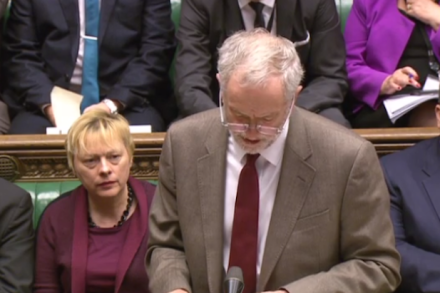
He looked bored. He looked dishevelled. His half-knotted crimson tie sagged disconsolately beneath his bearded throat. The drab jacket seemed as beige as ever. Corbyn spoke to the Labour conference looking like an embarrassed scout-master thanking his colleagues for a surprise party he didn’t want. ‘Any chance we could start the speech?’ he asked as the crowed clapped and cheered him. He began in ever-so-humble mode by saying how grateful he was ‘to be invited’ to address the conference. And he warmly thanked the three rival candidates he had trounced in the leadership election. He sounded as if they’d trounced him. The hesitant, informal style is so effective it looks almost calculated. Maybe it is.

The big chill

Michael Grandage’s latest show is about an old snap. Geneticists regard the X-ray of the hydrated ‘B’ form of DNA as one of the loveliest images ever captured. To laymen it looks like some woodlice drowning in yesterday’s porridge. The pic was taken in 1951 by the British biochemist Dr Rosalind Franklin but she failed to realise its significance. When James Watson passed through her lab he took one glimpse and instantly twigged that it revealed the helical structure of DNA. With his pal Francis Crick he built the famous double-helix model which bagged them the Nobel Prize. Dr Franklin (played by Nicole Kidman) won nothing. We know all this in advance, of course, so the play lacks any suspense.

Double tragedy | 17 September 2015

To examine an ancient text requires an understanding of the ancient imagination. The Oresteia is set in a primitive world where people believed that every animal, tree, stone, river, mountain, star, cloud and clap of thunder was inspired by a spirit controlled by the gods. Heaven signalled its wishes through dreams, oracles or chance events which were interpreted by prophets. What we understand by ‘faith’, i.e. a volitional fealty to a particular religious code, didn’t exist. There was no free will either. Mortals chose between one divine instruction or another. The genius of Aeschylus was to commit his characters to a cycle of moral conflicts where every act of obedience was also an act of betrayal.

PMQs sketch: Jeremy Corbyn’s master plan

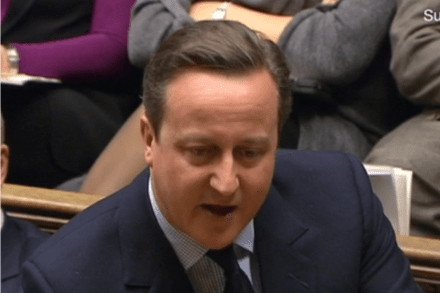
Jezza! What a genius. The master plan is clear at last. You spend four days plumbing new depths of political incompetence with bungled cabinet appointments, surly refusals to talk to reporters, tedious waffly platform-speeches and grumpy scowls during a service at St Pauls. And then, when your reputation can dwindle no lower, you spring forth and dazzle everyone with a political revolution. Cameron was grinning sheepishly before the Labour leader rose to the despatch box. He smirked sideways at his new opponent, through half-closed eyes, like a shy girl about to enter a forced marriage. Corbs looked relaxed and far sprucer than before. He might have been a civics teacher arriving for Day One at the new comp. Shiny grey tunic, off-white striped shirt, green splotchy tie.

Sketch: Welcome to Snorin’ Corbyn

Great gag from the TUC. They played ‘Hey Big Spender’ as Jeremy Corbyn arrived to address their conference in Brighton. This was Stormin’ Corbyn’s first chance to reach beyond the Labour party and to address the nation. But he mentioned Britain only in the loosest terms. ‘The whole vision of those who founded the unions and founded our political parties was about doing things differently: that brilliant generation, those brilliant people who brought us the right to vote and brought women the right to vote.’ He meant the late Victorian campaigners who initiated trade unionism and gave birth to the Labour party. But he created the impression that he sees the UK only through the lens of left-wing activism.

Nice work

[audioplayer src="http://rss.acast.com/viewfrom22/merkelstragicmistake/media.mp3" title="Kate Maltby and Igor Toronyi-Lalic discuss Benedict Cumberbatch's Hamlet" startat=1642] Listen [/audioplayer]You can’t play the part of Hamlet, only parts of Hamlet. And the bits Benedict Cumberbatch offers us are of the highest calibre. He delivers the soliloquies with a meticulous and absorbing clarity like a lawyer in the robing room mastering a brief before his summing-up. And though he’s a decade too old to play the prince (the grave scene sets his age at about 28), he cavorts about the stage like a ballet dancer delighting in his own athleticism. But he’s also much too nice. The darkest shades of melancholy and the raw emotional ugliness are missing.

PMQs sketch: Yet more people are executed by the work and pensions secretary

Time’s up for Hattie. Her performance at PMQs had a whiff of embalming fluid about it. This was probably her last performance as Labour’s stand-in boss and she declared it ‘an honour and a privilege to lead this great party'. Mentally everyone corrected that to ‘this once-great party'. Labour is on the verge of sundering into two factions: the Labour party in opposition (i.e. Jeremy Corbyn) and the Labour party in exile (i.e. the rest of them). Magnanimous Cameron hailed Hattie’s three decades on the front bench. He praised her support for women’s rights and said she’d served her constituents ‘with distinction’. Which is half-true.

Press night

Sam Mendes once said there is no such thing as the history of British theatre, only the history of British press nights. That observation takes us closer to understanding the taboo that constrains journalists from reviewing the opening performance of a West End play. A dozen or so previews take place before the critics are invited in for a star-studded gala, or ‘press night’, which is fixed by the producer to make the show appear in its most seductive light. Newspapers are usually wary of censorship in any form, so their assent to this convention must be considered a great anomaly. The vanity of the lead actor is a significant element. A first night is usually full of hazards and mishaps as the cast acquaint themselves with the props, costumes, door-handles and so on.

Art by committee

Australia, 1788. A transport ship arrives in Port Jackson (later Sydney harbour) carrying hundreds of convicts and a detachment of English officers under orders to guard the prisoners and to implant the roots of a well-ordered colony. These facts form the basis of Our Country’s Good, which was created in 1988 by Timberlake Wertenbaker in collaboration with Max Stafford-Clark’s Joint Stock company. Stafford-Clark’s method is to prepare a script using committees of actors under the supervision of a writer and the invariable result is a show that prizes the concerns of players over those of play-goers. The director Nadia Fall has revived this script with lavish efficiency. We begin with the ship disgorging its contents on to the Australian shore.

Edinburgh on Thames

Showstopper! The Improvised Musical offers a brand new song-and-dance spectacular at every performance. It opens with a brilliantly chaotic piece of comedy. A theatre producer on stage telephones Cameron Mackintosh and pitches him a new musical. Mackintosh answers and the producer invites ideas from the audience. ‘What’s the setting?’ Someone yelled ‘Late-night sauna’ at the performance I saw. The producer, without missing a beat, told Mackintosh that the show would be called, Sweat, Sweat, Sweat. If that was improvised it was world-class. The show develops along the lines suggested by the crowd and a number of hit musicals are parodied. The audience, I suspect, enjoyed this more than me.

Northern lights | 20 August 2015

In the clammy shadows of Cowgate I was leafleted by a chubby beauty wearing all-leather fetish gear. ‘Hi! Want to spend an hour with a prostitute for nothing?’ Yes, please. Her show The Coin-Operated Girl (Liquid Room Annexe, until 30 August), part of the free fringe, deals with the seven years she spent servicing sex-starved men in swish London hotels. One of the commonest fantasies was ‘GFE’, which has nothing to do with threesomes or gimp-masks. ‘The Girlfriend Experience’ means sex, kissing, cuddling, chatting, bickering and everything involved in a normal relationship.

Edinburgh round-up

Propaganda is said to work best when based upon a grain of truth. Ukip! The Musical assumes that most electors are suspicious of the movement and its leaders. And in Edinburgh that may well be the case. The show portrays Nigel Farage as a bewildered twerp with no charisma and little talent for oratory. His first speech at an Essex shopping centre begins, ‘I am not a pretty nationalist, sorry, a petty nationalist.’ He then falls under the influence of a manipulative racist named Godfrey Bloom. I should point out that ‘Bloom’ in this piece refers to the character in the show, not to the retired politician. Bloom is first seen in a Westminster club, Gay Banana, dressed in a grass-skirt and singing the praises of Bongo-Bongo Land.

Chekhov by numbers

Chekhov so dominates 19th-century Russian drama that Turgenev doesn’t get much of a look-in. His best known play, A Month in the Country, was written before Chekhov was born but Patrick Marber’s adaptation, with its new nickname, feels like Chekhov scripted by a Chekhov app. Turgenev’s characters, his atmosphere and his scenarios feel entirely familiar but they lack the tragicomic gestures that give Chekhov his unique appeal. There are no fluffed murders or dodged duelling challenges. No one tries and fails to blow his brains out. We’re on a rural estate where a group of crumbling, damaged sophisticates pootle around falling in love with each other. Every affair is doomed.

Look at my Fringe

Like everyone performing at the Edinburgh Fringe I’m about to make a lot of mistakes. I’m about to lose a lot of money too. But after ten years covering the festival as a reviewer I’m at least able to predict which errors I can’t avoid blundering into. First, the campaign to attract a crowd will be pointless. This stands to reason. Five or six thousand hopefuls swarm up to Edinburgh each year and they all use the same marketing strategy. Attention-seeking stunts on the Royal Mile. Tiresome afternoons forcing leaflets on unimpressed Americans. Fly-posting after dark, on tiptoe, by torchlight. Desperate texts to friends of friends promising five-for-one discounts.

Family matters

God, what a title. The Gathered Leaves. It sounds like a tremulous weepie about grief and endurance with a closing scene featuring three anvil-faced spinsters staring through the rectory window at an autumn bonfire. It’s not quite like that. The play opens with some clumsy exposition revealing the political chronology. It’s Easter, 1997, and Labour’s shiny-fanged messiah is about to evict the Brixton mule from Downing Street. We meet the Pennington family, a high Tory clan nestling in a frondy corner of the Thames Valley, who are eager to heal an ancient rift. Their estranged daughter and her mixed-race sprog have been skulking in France for the past 17 years. They’re coming back. But when they return to the bosom of the family they get the bazooka.

Has-Bean

Richard Bean, the country’s most bankable playwright, knocks out a new script every four months. Thanks to the success of One Man, Two Guvnors, he’s not short of houses ready to stage his work. And the hunt for treasure in his back-catalogue continues. The Mentalists, from 2002, stars Stephen Merchant (co-writer of The Office) and Steffan Rhodri as two needy chums pursuing a whimsical dream in a cheap hotel room. Chum One is a hairdresser who makes porn films on the side. Chum Two is a salesman who dreams of founding a rebel colony overseas. Chum One films Chum Two delivering a sermon that will kick-start the revolution. That, ladies and gentlemen, is about it.

Night at the circus

Easy playwright to get on with, Ben Jonson. His world is simple, his tastes endearing. He likes golden-hearted swindlers and unscrupulous servants who outwit their bungling masters. Volpone, the ‘sly fox’ played by Henry Goodman, is a rich Venice merchant without a family who persuades three wealthy rivals that they stand a chance of inheriting his estate. He feigns mortal illness and accepts their tributes, or bribes, from his sickbed while secretly lampooning their folly. This is hardly the most sophisticated hoax but it’s fun to watch the slick, spruce millionaires queuing up to be despoiled of their loot. Trevor Nunn’s up-to-date version skilfully harmonises the Jacobean and the modern.

PMQs Sketch: Cameron’s lurches to the left

‘Put that on your leaflets,’ snarled Cameron at PMQs. Inwardly he was gloating. Labour voted against Tory welfare reforms last night so the PM was able to boast that Labour is fighting the new living wage. Some say Cameron is lurching to the left with his Five Year Plans and his state-controlled pay rises. The same applies to law and order. He’s getting a pinkish tinge. Philip Davies asked him to review the regulations governing early release for serious offenders. Cameron said he’d give it a go. It’s not good enough, he seemed to imply, having murderers murdering people shortly after gaining their freedom by promising to become pillars of the community. But he didn’t seem too bothered by it. Then he made some astonishing disclosures about open prisons.

Home and away | 9 July 2015

Refugee crisis in the Mediterranean! Fear not. Anders Lustgarten and his trusty rescue ship are here to save mankind. Lampedusa consists of two monologues, one Italian, one English, which tackle the problem at home and abroad. We meet Stephano, a cartoon fisherman with a Zorba beard and a chunky woollen sweater who lives on Italy’s southernmost salient about 70 miles off the African coast. He follows an improbable path from xenophobia to enlightened altruism. At first he mistrusts the runaways whose corpses choke his native shore. He asks survivors why they don’t ‘speak the language’. ‘We do,’ they reply, in English. ‘This is Europe’s language.