Lloyd Evans

Lloyd Evans

Lloyd Evans is The Spectator's sketch-writer and theatre critic

Out – and not proud

‘Many people are mourning,’ said Sam West on a BBC panel show discussing the response of the arts world to Brexit. According to West’s figures, ‘96 per cent of those polled were for Remain. Collaboration and connection are our bread and butter.’ The atmosphere of bitterness and anger was palpable at the Edinburgh Festival. I spent four days immersed in comedy shows and I heard only one pro-Brexit gag. The excellent Geoff Norcott said he was puzzled to meet Remainers who told him the result had been swung by ‘thick’ Leave voters. ‘Thick?’ he said. ‘The Remain campaign waited until after 23 June to stage their street protest.

Words of wisdom

Dominic Frisby is an actor best known for voicing the booking.com adverts (‘Booking dot com, booking dot yeah’). Voiceover specialists can earn large fees for a morning’s work and they have endless time in which to ponder where their money ends up. Frisby is irked by the UK tax regime, whose code-book is four times longer than Chilcot. He argues persuasively that our sprawling system should be replaced with a land value tax. Set at the right level this would ensure the abolition of all other duties, and those of us who don’t own property would pay no council tax, no income tax, no VAT, and no duty on fuel, alcohol or inheritance. Ever again. An attractive scheme laid out in a funny, absorbing show full of historical insights.

Northern exposure | 11 August 2016

As the festival grows, the good acts are harder to find and the prices keep rising to meet the throngs of showbiz refugees who surge north in the belief that the glory, this year, will be theirs. Arriving at my one-star hovel (no breakfast, no towels, shared bathroom), I was given a security key and a disc of see-through soap that I could have hidden beneath a tea-bag. The bill, payable in advance, was a third higher than last year. Glory in this city belongs to the landlord. Marcel Lucont’s Whine List is performed by a suave, self-adoring Frenchman who starts by asking if anyone in the crowd is new to his act. ‘Lucky bastards. What I would give to see myself for the first time.

Losing the plot | 4 August 2016

Consider it commercially. So powerful is the pull of the Potter franchise that the characters could simply re-enact the plot of ‘Incy-Wincy Spider’ and the fans would swoon with joy. The stage show has been written by a two-man committee, Jack Thorne and John Tiffany, with the help of billionaire equality campaigner J.K. Rowling. Harry is now 37 and working as a Whitehall clodhopper at the Ministry of Magic. He’s troubled by his stompy bed-wetter of a son, Albus, whose tantrums cause the middle-aged miracle-worker to suffer agonies of weepy self-doubt. Together they visit Hogwarts and the multifarious plotlines start to punch each other in the face.

Flawed genius

An inspired decision to stage Jesus Christ Superstar in a summer theatre in Regent’s Park. The action takes place outdoors, in balmy climes, so the atmosphere is ideal for Rice and Lloyd Webber’s finest show. The songbook bursts with melodic inventiveness, and the score blithely rips apart the conventions of musical theatre and remakes them afresh. Lloyd Webber finds two contemporary registers and switches between them constantly: first the eerie, unhinged menace of late-1960s heavy rock, and secondly the sweet, escapist loveliness of 1970s pop. The transitions from blunt savagery to pure sugar sometimes occur with gunshot abruptness, on a single note.

Power failure | 21 July 2016

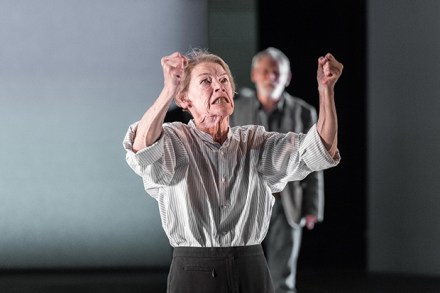
Fracking is a British tradition. Since 1969 more than 200 sites have used hydraulic fracturing ‘without environmental catastrophes’ according to Dick Selley, an emeritus professor of geology, writing in the programme notes to Fracked! by Alistair Beaton. The satire takes the opposite view and regards fracking as a wicked novelty inflicted on rustic innocents by Big Oil, which hopes to steep the country’s aquifers with radioactive water and massacre all its customers at the same time. That’s the business plan, apparently. We meet a pootling granny (Anne Reid), who reluctantly leads a campaign to stop Deerland Energy from plastering southern England with horrible drilling platforms.

PMQs sketch: Theresa May’s hard head and soft heart is terrifying for Labour

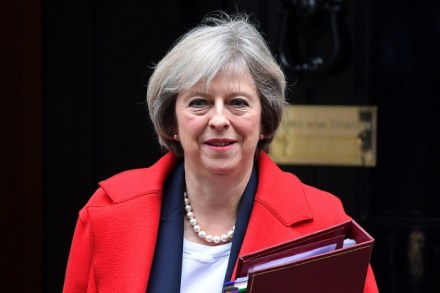
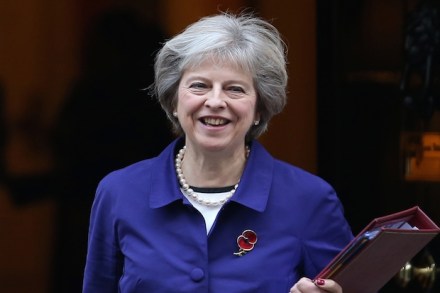
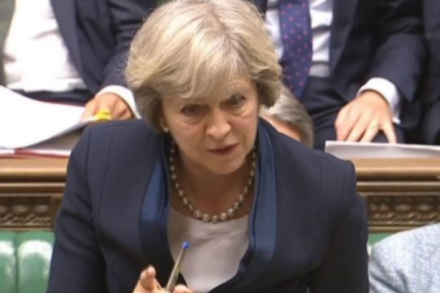
What we know for sure about our secretive new PM is that she uses her clothes as a bush-telegraph. What did the tom-toms tell us? Mrs May was done up like an Evesham house-wife going to dinner with her husband’s boss in about 1950. Neat hair. Navy blue jacket. White top underneath. A rope of fake pearls and just a hint of neck. Across the shires the faithful will have cheered this display of Brief Encounter elegance. She was good at the despatch box, nervous certainly, sometimes stumbling over her words. But she produced a forceful impression of competence and compassion. Hard head. Soft heart. She has ‘grip’ as they say. Terrifying for Labour. She should work on her gags by not working on her gags. Her strain of humour is so dry it can seem effortful. Haughty even.

My best fiend

Anthony Neilson is an Arts Council favourite known for trivial but impenetrable plays with off-putting names like The Wonderful World of Dissocia. His latest effort has another hazard-warning instead of a title. Unreachable starts with an actress auditioning for a dystopian sci-fi movie set in a clichéd future. She lands the role and we cut to the film-lot where more clichés await. Pretentious director Max is furious because the sun won’t stay in one place and he decides to ditch his digital cameras and film instead on old-fashioned celluloid. The shoot is suspended while producers scrabble around for emergency funding. This self-involved storyline would be unbearable if it weren’t for the charming whimsicality of Matt Smith as Max.

PMQs sketch: A final farewell to Dodgy Dave

Nice send off for Cameron at PMQs. Both leaders acquitted themselves well. Cameron was wry, witty and self-deprecating. He claimed to have ‘addressed’ a total of 5500 questions during his premiership. ‘How many I’ve answered I’ll leave to others.’ Corbs got it spot on too and showed us a relaxed, funny, generous side. He asked Cameron to thank his mum for her tip that he should smarten up and wear a suit. ‘He’s taken the advice. He’s looking absolutely splendid,’ beamed Cameron. It was only a throwaway remark but it produced a Richter-scale eruption of mirth.

Friel good factor

Does anyone believe Brian Friel’s libellous blarney? He portrays Ireland in the 20th century as an economic basket case where the starving, the retarded, the crippled and the widowed offer up prayers to a heartless God who responds by heaping their burden ever higher. Friel is popular with British mainlanders who are tickled by the news that their Atlantic coastlines are peopled by picturesque barbarians and suicidal drunkards mired in exquisitely revolting dereliction. You’ll notice that aid agencies use the same technique, and for the same audience, when they portray Africa as a rough and ready paradise where life is organised around the latest borehole dug by a team of gap year Norwegian pole vault champions.

PMQs sketch: Theresa May watches on…

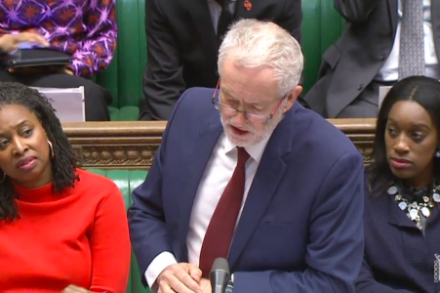
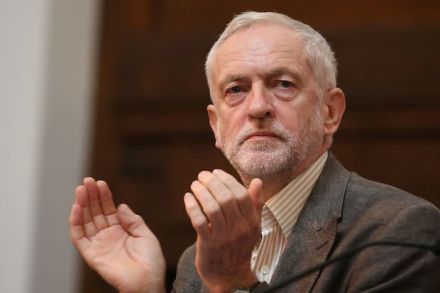
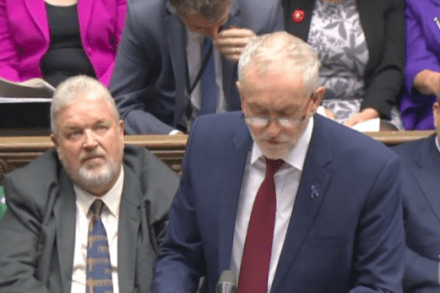
The Labour party’s in-growing toenail, Jeremy Corbyn, (not to be removed without much screaming and blood), behaved like a man on a zero-hours contract today. He skedaddled through his six questions as if dashing away to another gig at 12.30. But doing what? Perhaps auctioning off the ‘Remain’ badges he bought in June at ‘lastminute.com’. At least he’s stopped reciting bleaty letters from Momentum supporters posing as undecided voters. Instead he played the internal politics game. He welcomed the chancellor’s decision to abandon fiscal prudence and to commit Britain to bankruptcy until 2020 and beyond. Big spender Corbyn has always wanted to splash other people’s money around like a dictator’s wife at Jimmy Choos.

Tangled web | 30 June 2016

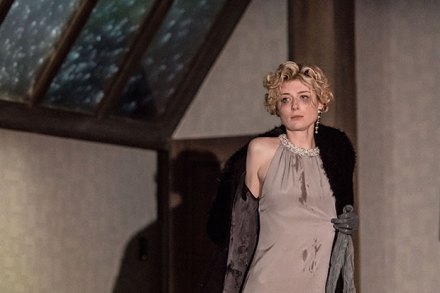
Mike Bartlett’s curious blank-verse drama Charles III became an international hit. His new effort examines the cut-throat world of dark-web espionage. An American traitor named Andrew (Edward Snowden presumably) is hiding out in a Moscow hotel. Enter a flirty, giggling Irishwoman played by Caoilfhionn Dunne, who claims to be British and who teases Andrew over his betrayal of his homeland’s secrets. She evinces an interest in Oscar Wilde and the pair lock horns over footling minutiae. Andrew points out that Barbie dolls are called Sindy in the UK and this seems to demonstrate his familiarity with Britain. But he fails to spot the false cadences of her accent and he doesn’t query her use of the strange term ‘British Metropolitan Police’.

PMQ’s sketch: two plank-walkers at the helm of the ship

Rare to see a plank-walker at the helm of the ship. Today there were two. Cameron has accepted the inevitable and his demeanour at the despatch box was relaxed, amused, peaceable. Buoyant at times. Even foes like Bernard Jenkin exchanged warm words with him. And he handled Corbyn with extreme mildness until a rush of blood seized him at the end. ‘For heaven’s sake, man, go!’ he lashed out. But go where? Jezza’s impersonation of Rasputin is his best performance yet. He’s indestructible. Last weekend he was hacked to pieces by a flash-mob of tooled-up colleagues. He then suffered a thundering defeat in a no-confidence vote which merely boosted his confidence in his powers of survival. Today he stood up and was greeted by three waves of sound.

Face value | 22 June 2016

When Richard III’s bones were unearthed in a Leicester car park, Frankie Boyle suggested the headline ‘Bent royal found at dogging hotspot’. Rupert Goold opens his version of the play by restaging the 2012 excavation as if to inform us that the past and the future are held together by something called time. That glib gesture apart, this is a superb production whose modern-dress aesthetic works, just for once, extremely well. And it works because the costumes are dark, sober and unornamented and this visual restraint moves our attention upwards to the more fertile arena of the face. And what a face Ralph Fiennes has, all meat-cleaver and calculation: the haughty forehead, the deadened eyes, the mistrustful mouth petering out at the edges, the dominant, jeering brow.

I dream of Genie

Gauche, perhaps, to complain about Aladdin but it slightly deserves it. The terrific Genie opens the show and then disappears for 45 minutes while the plot is explained. My squirmy ten-year-old kept whispering Aladdin-related trivia at me in order to occupy himself as the rags-to-riches storyline was laid out in far too much detail. Visually the show is impressive, despite minor flaws. The rangy architectural sets are intricate confections of teetering filigree but they look a little factory-fresh and unlived-in. Behind them the daylight skies are wrongly composed of a single hue (only the night sky has a single hue).

PMQs sketch: What a strange farewell

What a strange farewell. The slickest, sparkiest and most brutal street-fighter the Tory party has produced in a generation found himself agreeing with his worst enemies today. ‘That says something,’ shouted David Cameron (who remains prime minister for the next week or so). ‘We have huge disagreements,’ he explained. And yet despite the fault-lines his Remain campaign enjoys the support of nearly the entire opposition: the Greens, Labour, the Lib Dems, the Northern Ireland parties and Cameron’s bete noire, the SNP. ‘When we all agree,’ he finger-wagged, ‘that really says something.’ Absolutely. It says they’re all deluded. Does poor Cam know he’s finished? At times he seemed to sense it.

Profit and loss | 9 June 2016

Bertolt Brecht took The Threepenny Opera  from an 18th-century script by John Gay and relocated it to Victorian London. This National Theatre version wants to straddle the contemporary and the antique. Mack the Knife, an Afghan war veteran who murders strangers, contracts a bigamous marriage with Polly Peachum, the daughter of a cross-dressing mastermind who runs begging gangs across east London. This laborious set-up takes an hour to establish and the drama gets started only when Polly’s mum vows to rub out Mack at a knocking-shop. A wise dramatist would have placed this threat in the opening scene. But Brecht isn’t a wise dramatist; he’s a preachy one and his purpose is to show that all human sin derives from the profit motive.

PMQs Sketch: Cameron was both the fibber and the whistle-blower

Is Corbo working for the Tories? The Labour leader was such a pushover today that Cameron turned what should have been a televised monstering into a party political broadcast on behalf of left-wing Conservatism. Corbyn raised tax-avoidance, the minimum wage, and short-term contracts -- three of Cameron’s strongest issues. The PM boasted that prosecutions of minimum wage defaulters have leaped fifteen-fold since 2010. On tax evasion, he trilled, ‘I made it the centrepiece of my G8’. And on short-term contracts he reminded the droopy-shouldered Mr Corbyn that exclusivity clauses had been outlawed under the Coalition. Is Corbyn seriously trying to ambush the PM with arguments that were settled a parliament-and-a-half ago?

Wish upon a star

Out come the stars in Kenneth Branagh’s Romeo and Juliet. He musters a well-drilled, celebrity-ridden crew but they can’t quite get the rocket off the launchpad. The stylish setting evokes Italy in the early 1950s. The girls wear New Look frocks and the boys sport tight slacks and shirtsleeves. Christopher Oram’s muted set has bland marble walls and tasteless squared-off pillars like a modern dictator’s palace on the Euphrates. A rare failure. Romeo is played by Game of Thrones inmate Richard Madden, who seems a handsome enough specimen, but Branagh might have asked him to act with his soul rather than his forearms. And he looks too mature.

Royal Court Theatre

If there were an Eddie the Eagle award for theatre — to recognise large reputations built on minuscule achievements — it would go to the Royal Court. Sixty years ago the English Stage Company arrived at ‘the Court’ determined to amaze the world with a new generation of thrusting young geniuses. It won instant notoriety with John Osborne’s Look Back in Anger. This sour bedsit melodrama earned the noisy support of a cabal of reviewers led by Kenneth Tynan who used it to advertise their powers of artistic foresight. Osborne’s next play, The Entertainer, was a cheerless and cumbersome allegory of Britain’s imperial decline, which lacked even the merit of prophecy. It was just a dramatised rehash of the previous decade’s headlines.